Basic Addition Skills Adding up to 1000 Worksheets for Ages 4-7
3 filtered results
-
From - To
Discover our engaging "Basic Addition Skills Adding Up to 1000 Worksheets" designed for children ages 4-7! These interactive worksheets provide a fun and effective way to help young learners master fundamental addition concepts. With colorful visuals and age-appropriate exercises, kids will enjoy solving problems that build confidence and enhance their math skills. Our carefully crafted activities encourage problem-solving, critical thinking, and number recognition while supporting early education. Ideal for homeschooling, tutoring, or classroom use, these worksheets will make learning addition a delightful experience, preparing children for more advanced math concepts. Equip your child with essential skills for a bright mathematical future!
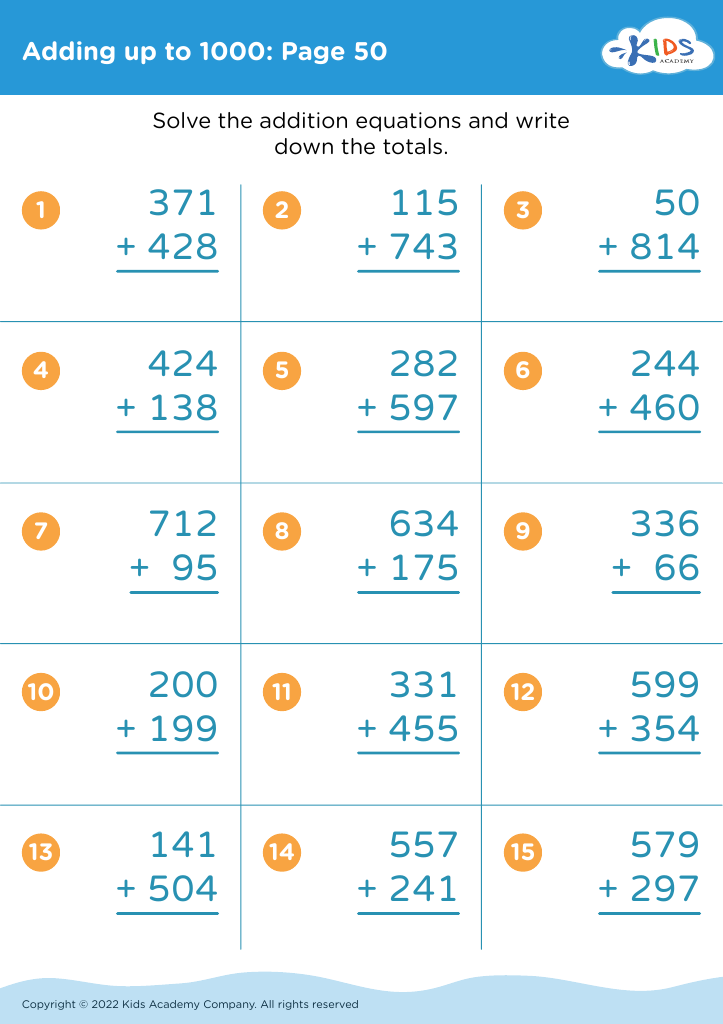
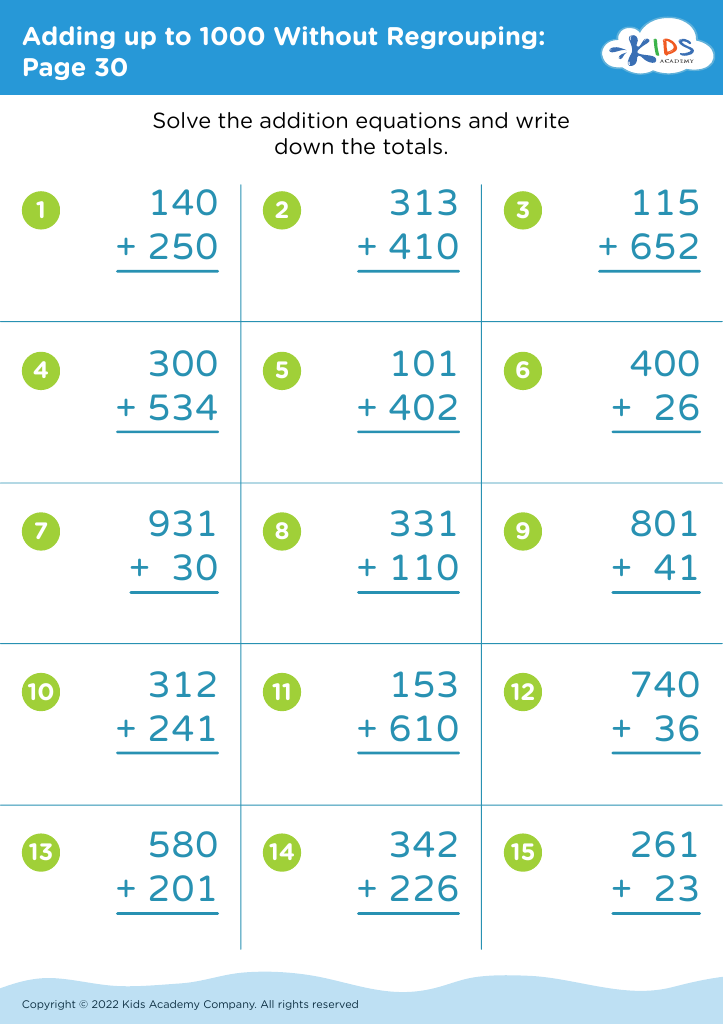
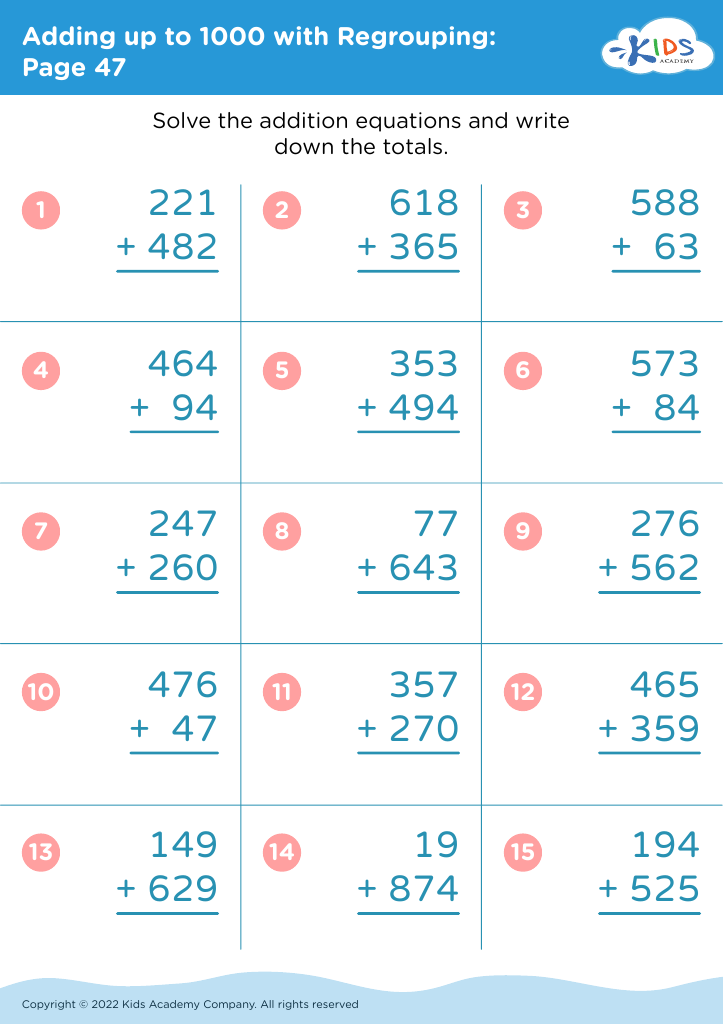



Basic addition skills are foundational for children aged 4-7, forming the building blocks for further mathematical understanding. Mastery of adding numbers up to 1,000 is crucial during these formative years for several reasons.
First, early numeracy skills significantly contribute to a child’s confidence and positive attitude towards math. Ability to add effectively lays the groundwork for complex arithmetic and problem-solving skills needed later in school.
Second, addition skills enhance critical thinking. Children begin to see relationships between numbers, patterns, and begin to tackle more complex concepts, such as grouping and addition strategies, which appear in both math and real-life situations.
Moreover, parents and teachers play vital roles in creating a rich digital-age learning environment, encouraging interactive games and technology to reinforce these skills. Engaging activities can make addition feel less like a chore, fostering a love for learning.
Finally, as society increasingly relies on technology and data, basic math skills facilitate better decision-making in everyday life, such as budgeting or shopping. By nurturing basic addition skills, parents and teachers equip children not only for academic success but also for practical life skills that will serve them well beyond the classroom.








