Basic Math Skills Adding up to 1000 Worksheets for Ages 4-7
13 filtered results
-
From - To
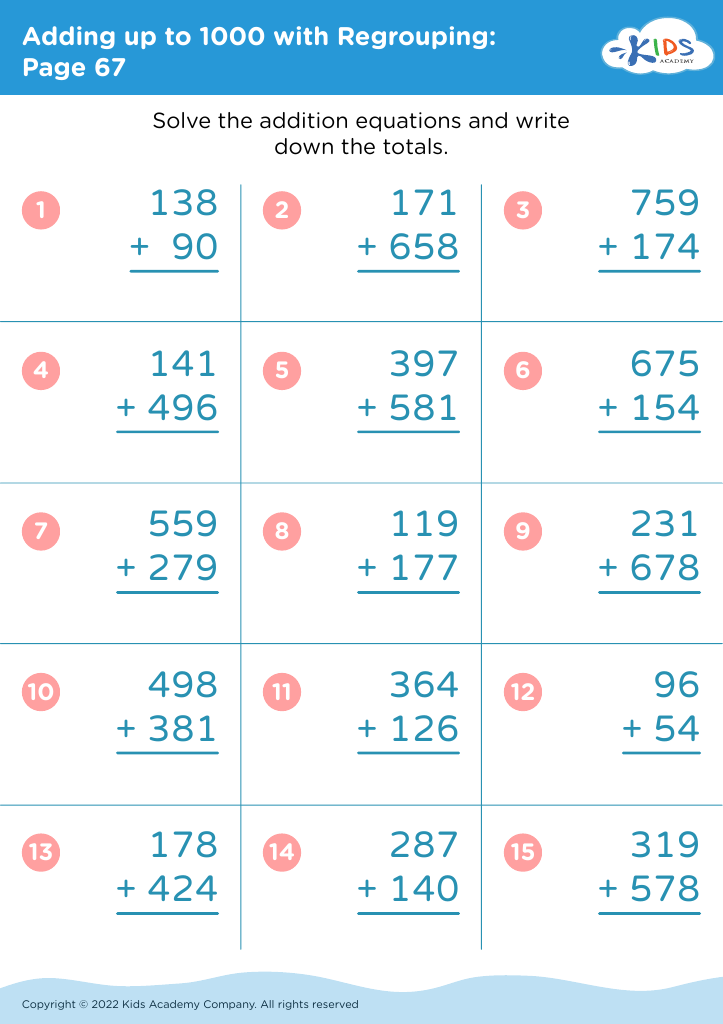
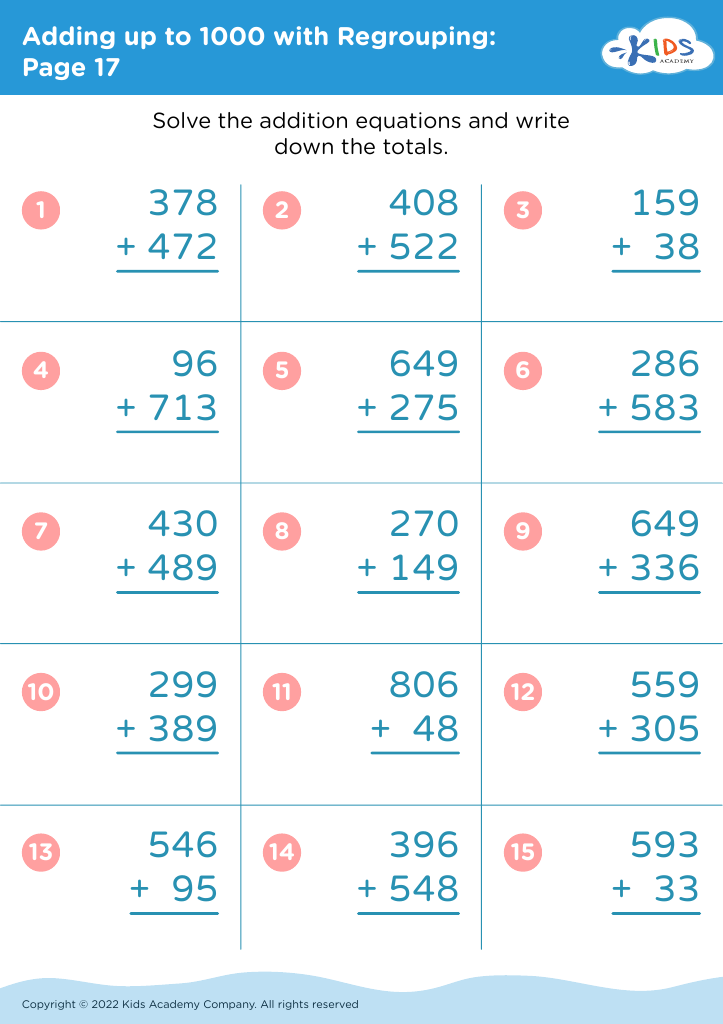
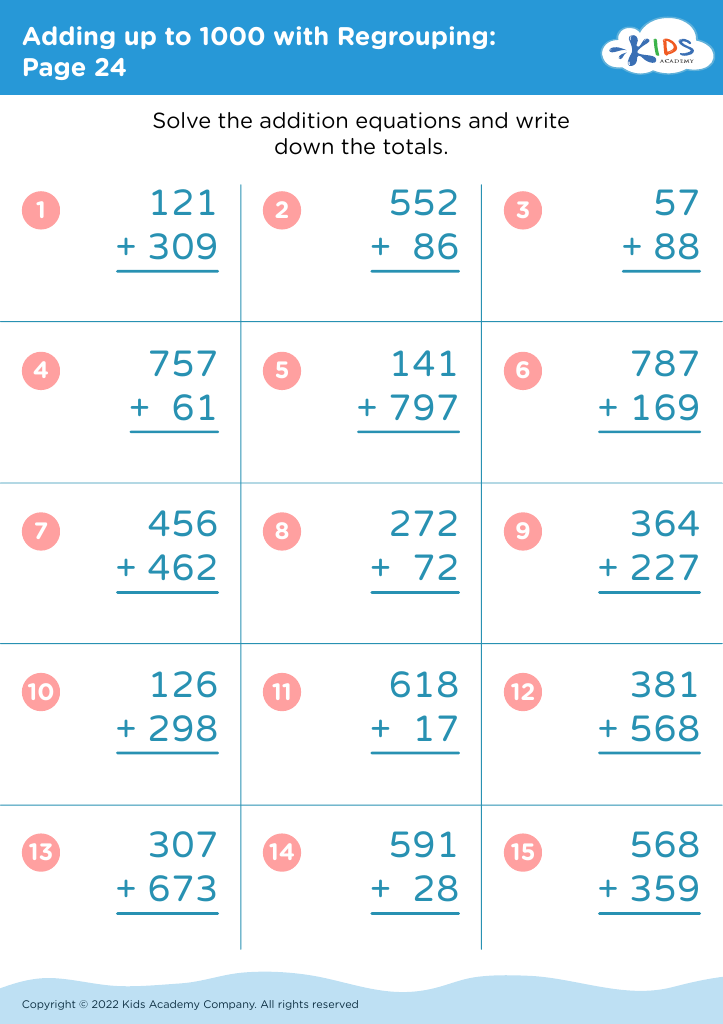
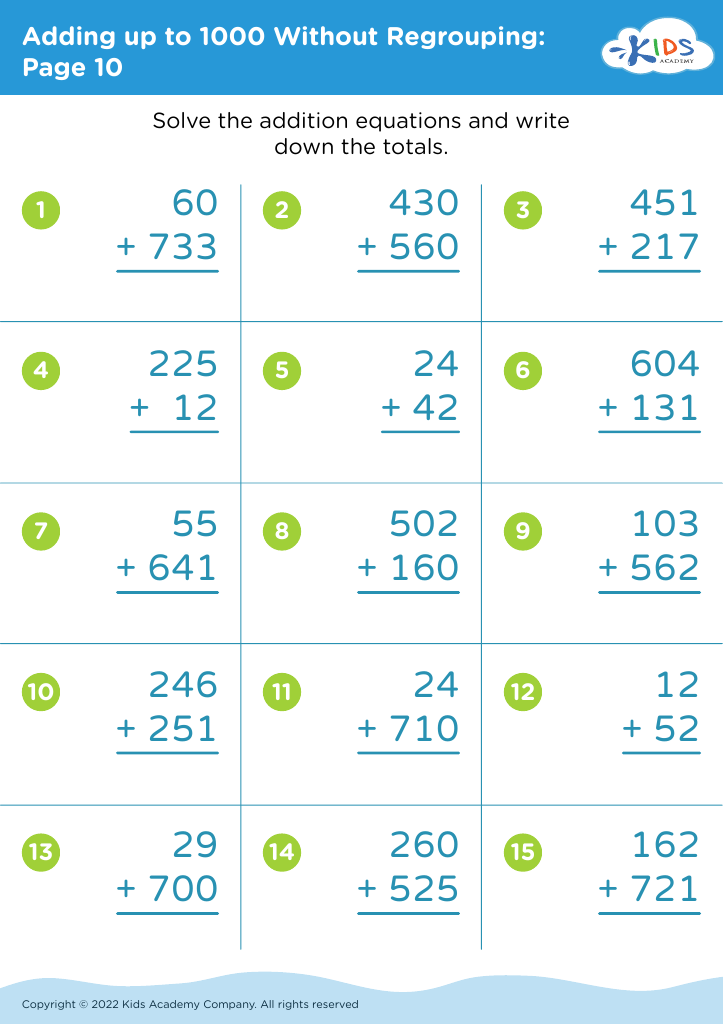
Introduce young learners to the world of numbers with our "Basic Math Skills Adding up to 1000" worksheets, designed for kids aged 4-7. Curated by educational experts at Kids Academy, these engaging printables help children master addition up to 1000 in a fun and stimulating way. Tailored for varied skill levels, the worksheets feature vibrant graphics and interactive exercises that capture attention and simplify learning. They support cognitive development and build essential math foundations crucial for future success. Perfect for classroom use or at-home practice, these materials make math both enjoyable and accessible for early learners!
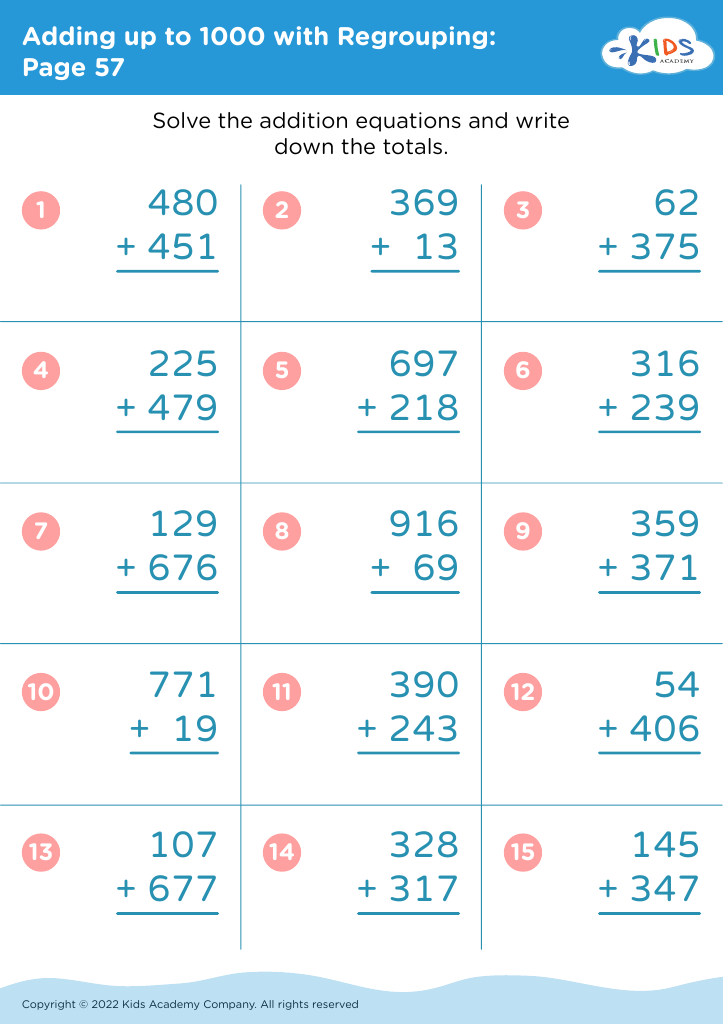
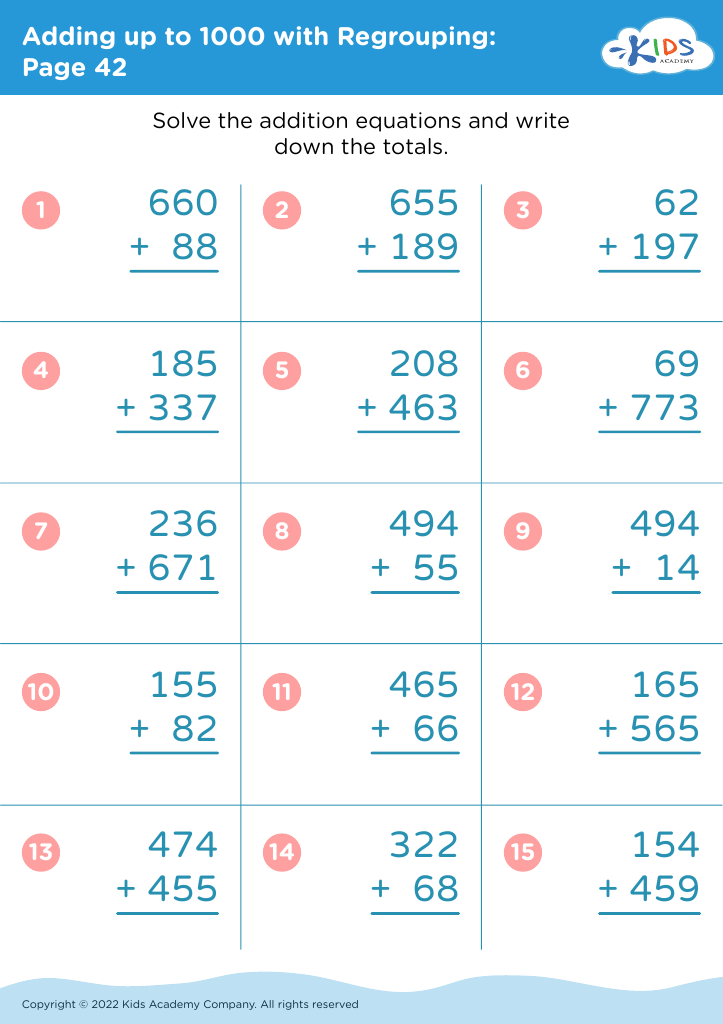
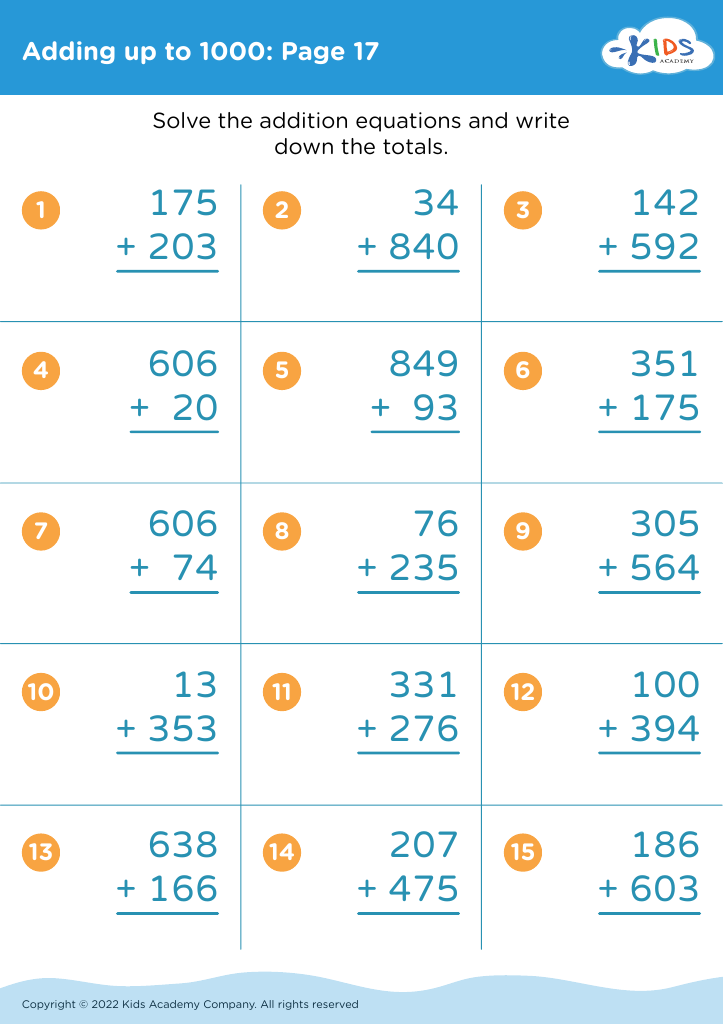
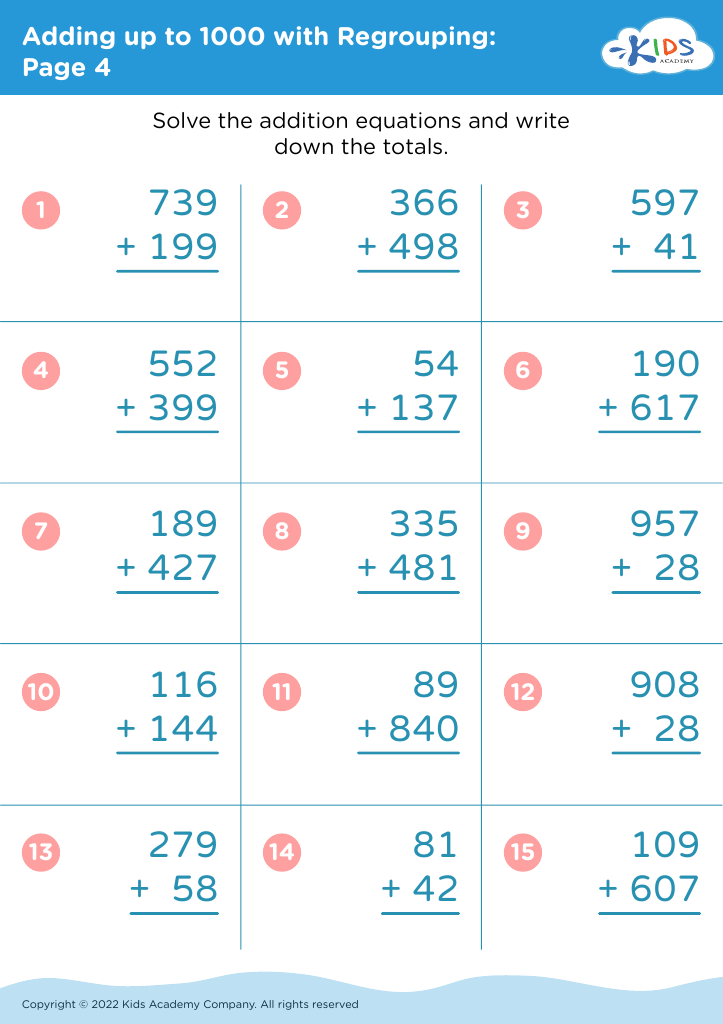
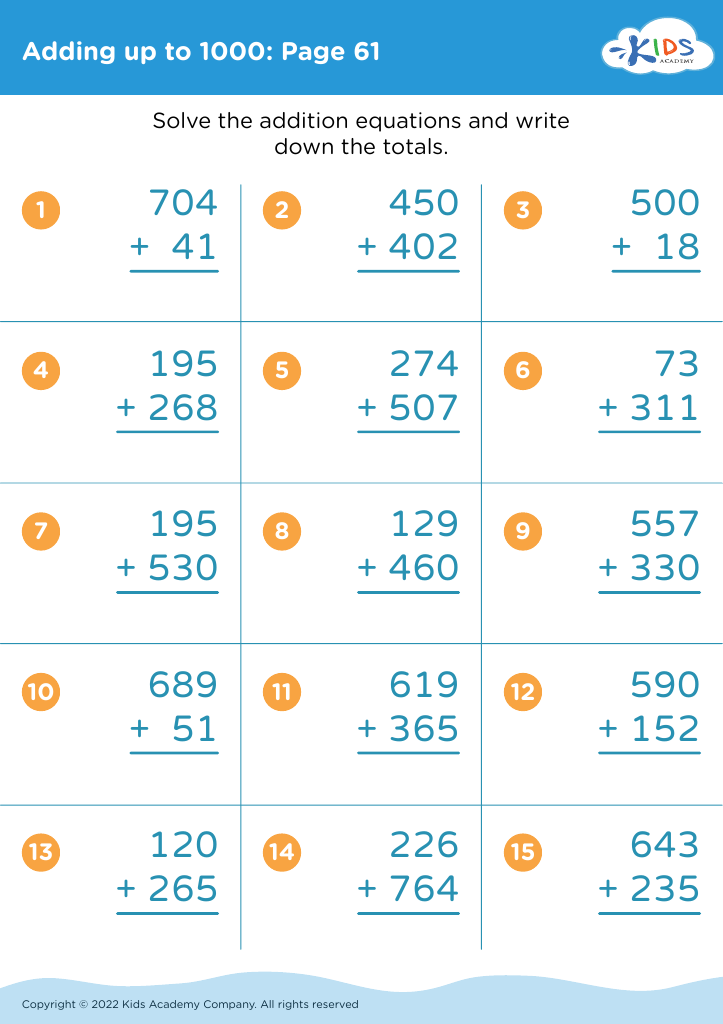
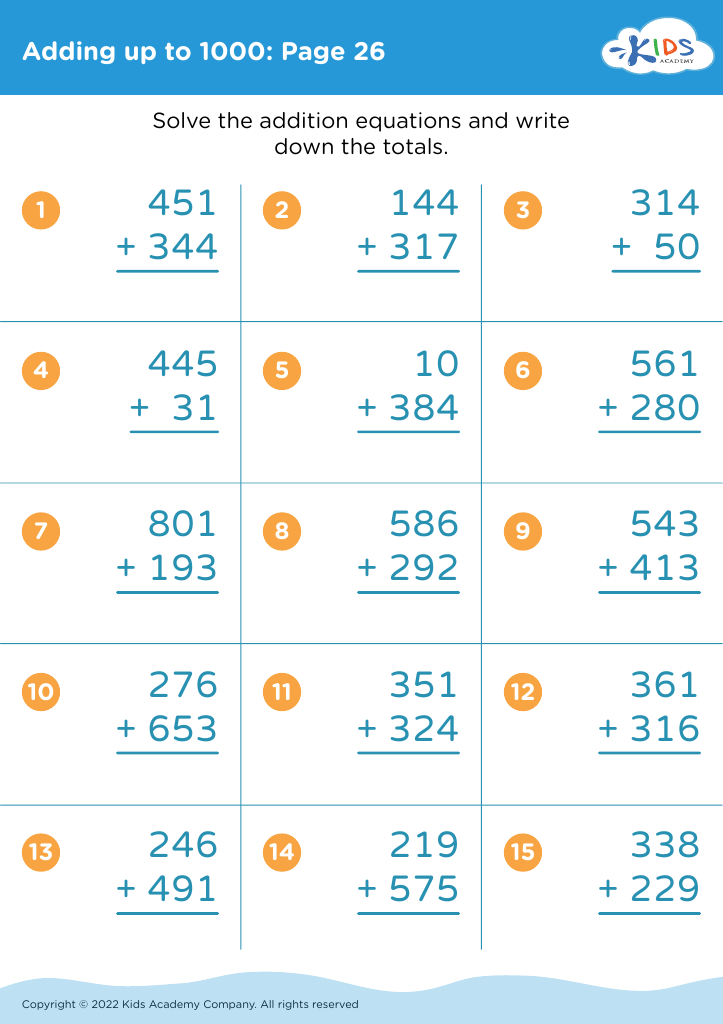
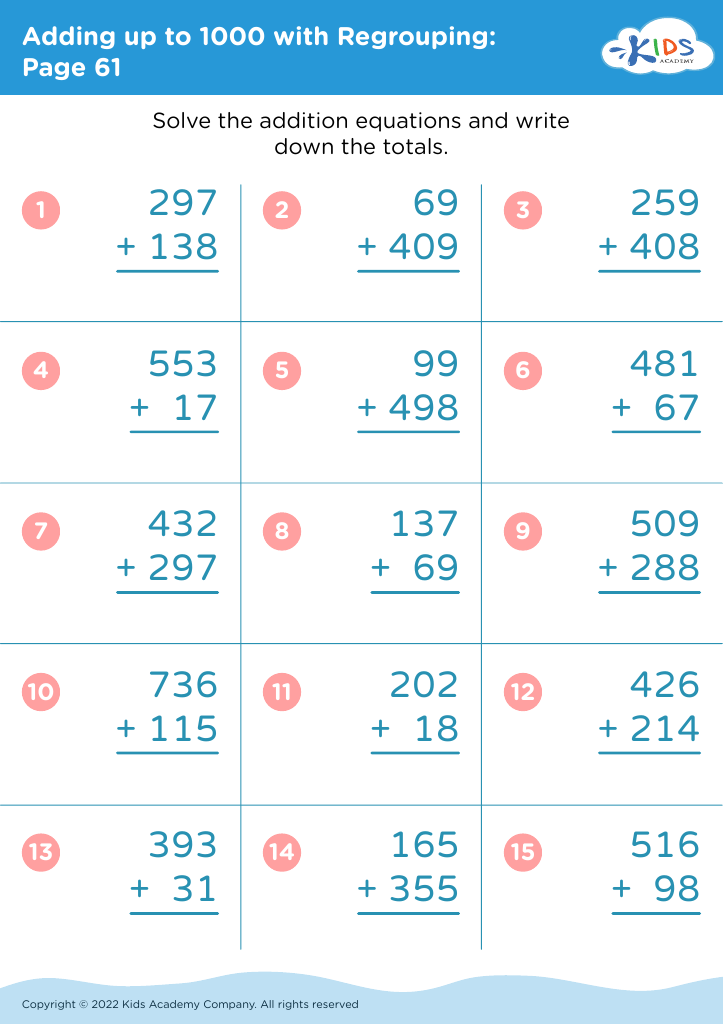
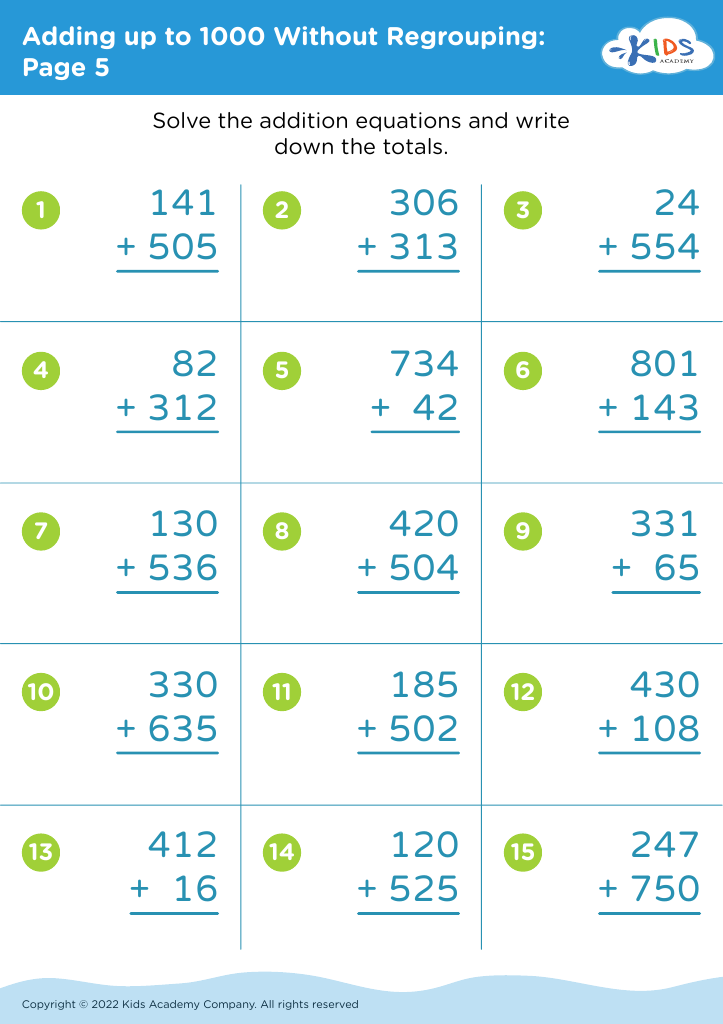
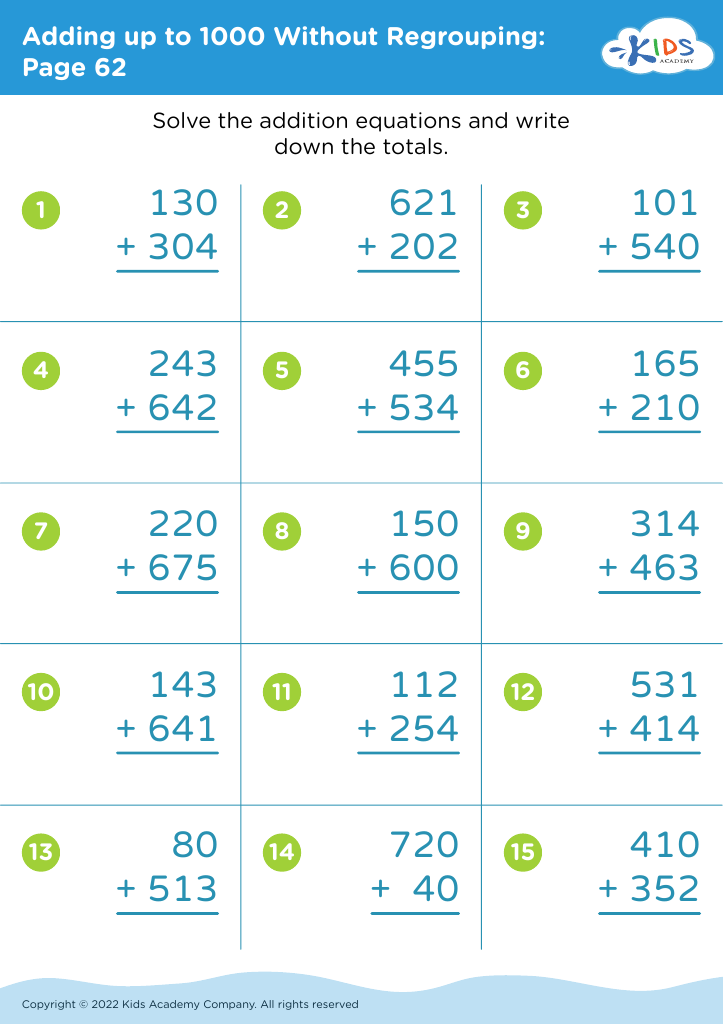



Parents and teachers should prioritize basic math skills, including addition up to 1000 for children ages 4-7, because these early competencies form the cornerstone of future mathematical understanding and everyday problem-solving skills. Establishing a strong numeric foundation during these formative years is crucial, as it enhances cognitive development and builds confidence in young learners.
Firstly, acquiring addition skills up to 1000 helps children grasp number sense, which is the ability to understand, relate, and connect numbers. This fundamental competence influences a child’s ability to tackle more advanced mathematical concepts such as multiplication, division, and algebra. Moreover, competence in basic arithmetic paves the way for logical reasoning and critical thinking, which are essential in academic pursuits and practical life.
Secondly, math is not an isolated skill; it intertwines with various aspects of daily life. Proficiency in addition enables children to manage tasks like counting money, measuring ingredients, and understanding time, fueling their independence and life skills. Furthermore, early mastery of addition helps keep the learning curve gradual and attainable, preventing math-related anxiety or aversion.
Investing effort in teaching children to add up to 1000 at an early age lays a sturdy educational groundwork. It supports academic success, fosters self-assurance, and cultivates lifelong aptitudes essential for personal and professional growth.








