Comparing Fractions Adding up to 1000 Worksheets for Ages 4-7
16 filtered results
-
From - To
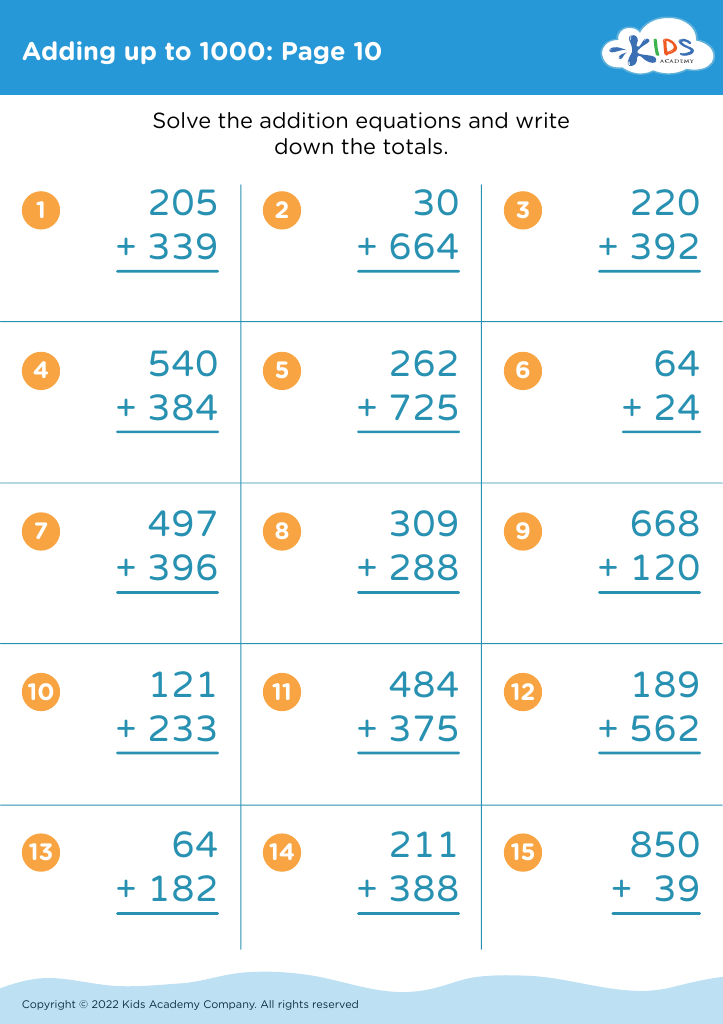
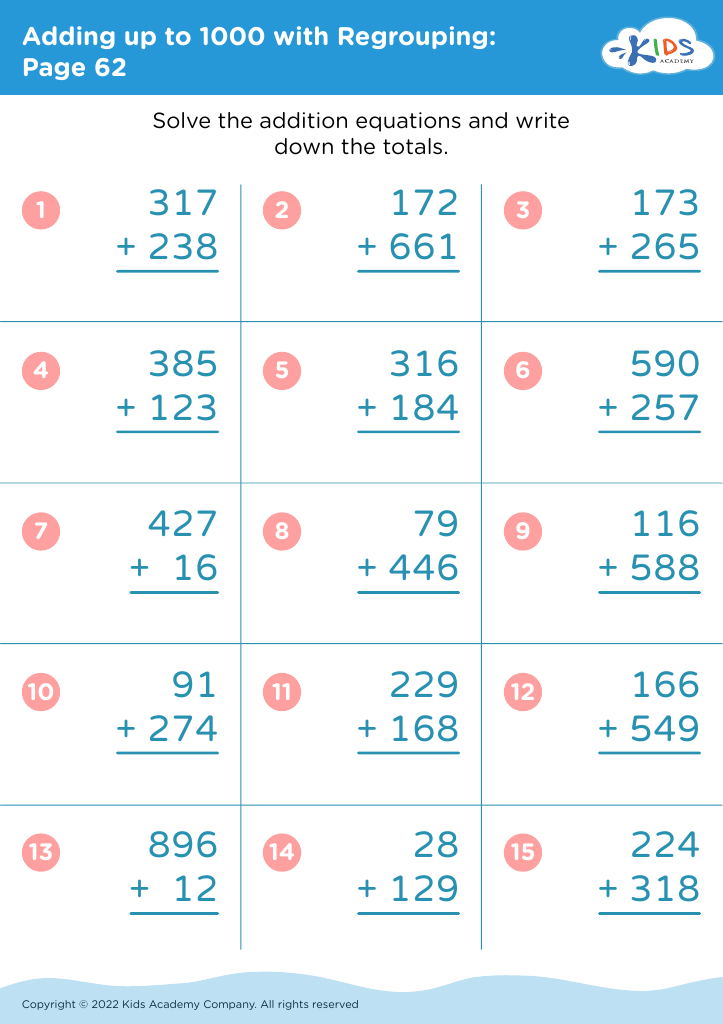
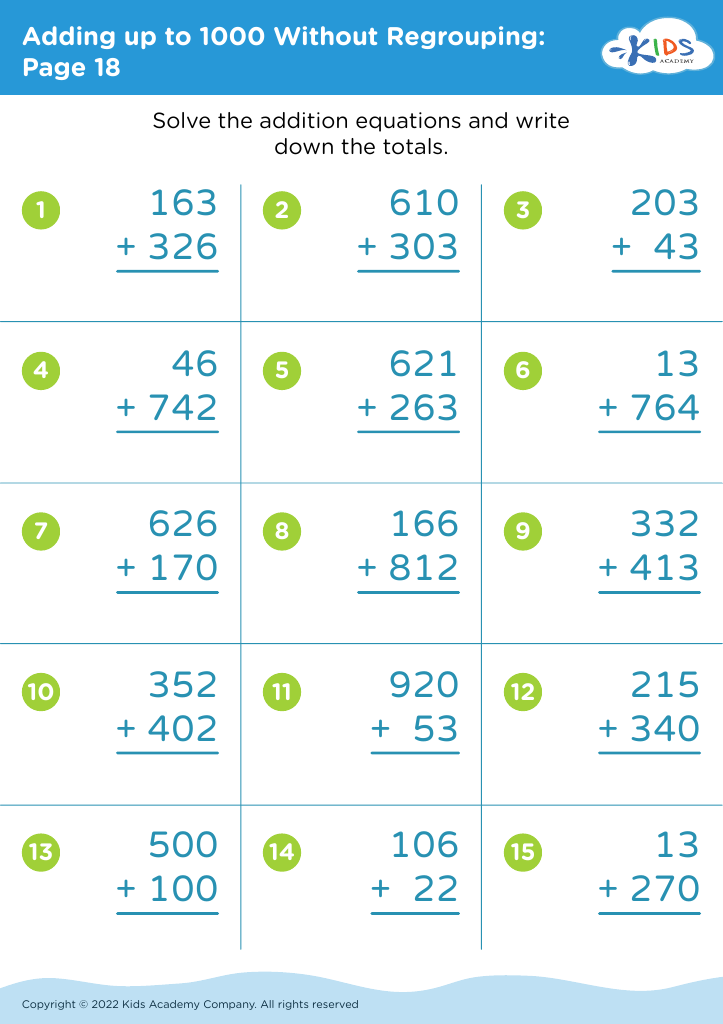
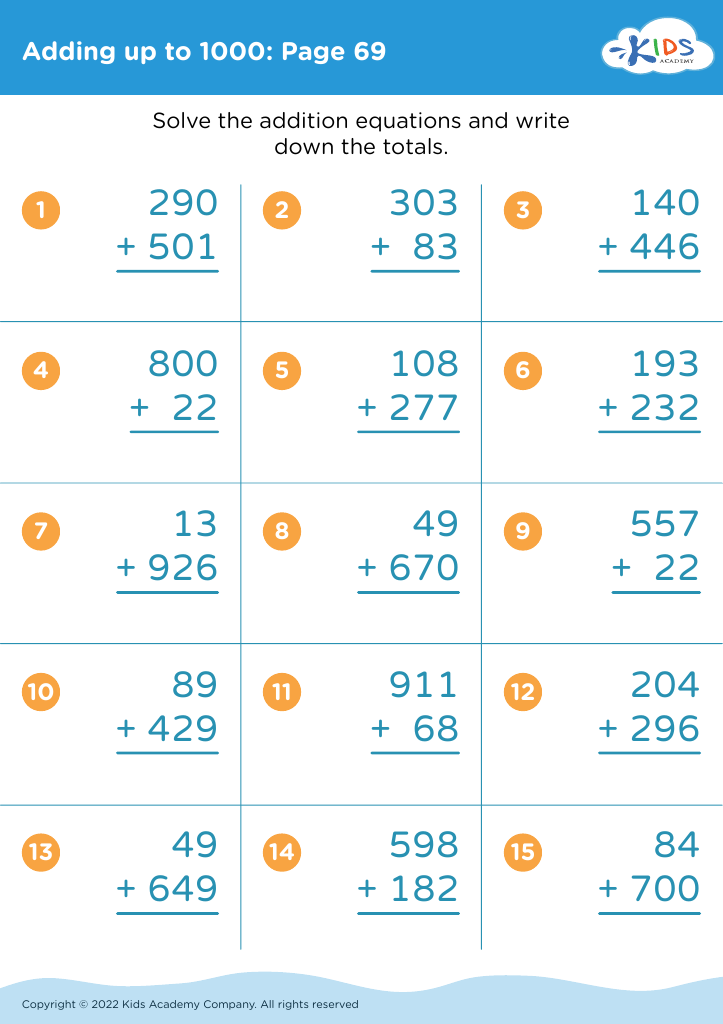
Our "Comparing Fractions Adding up to 1000 Worksheets for Ages 4-7" are meticulously designed to cultivate early math skills in young learners. Through engaging activities, kids will compare fractions and perform simple addition, seamlessly integrated into exercises within their comprehension level. Developed by experienced educators, these worksheets provide a blend of fun and learning, ensuring foundational math skills are built in a joyful, intuitive manner. Perfect for classroom use or at-home practice, the collection aims to boost confidence and proficiency in early arithmetic, setting the stage for future success. Help your child master fractions and numbers up to 1000 with these expertly crafted resources!
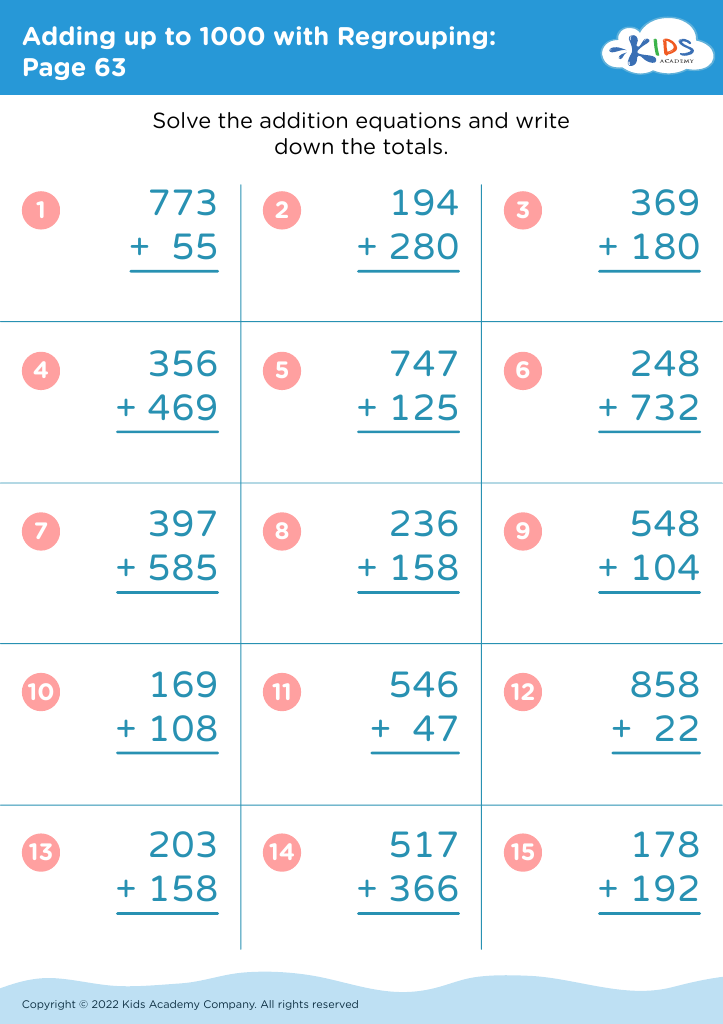
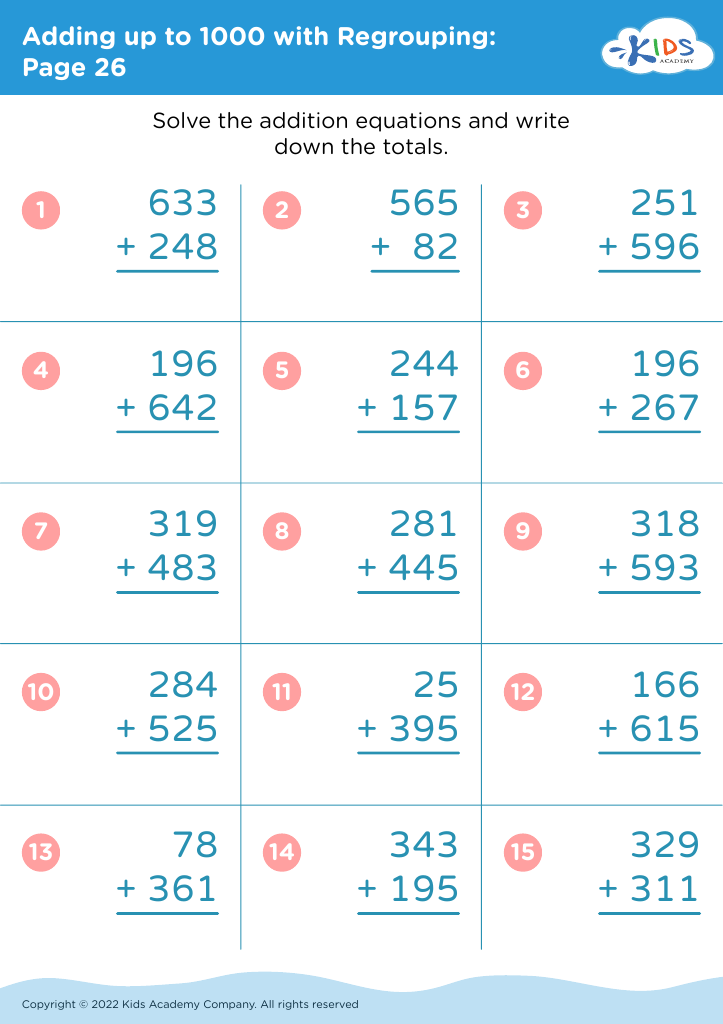
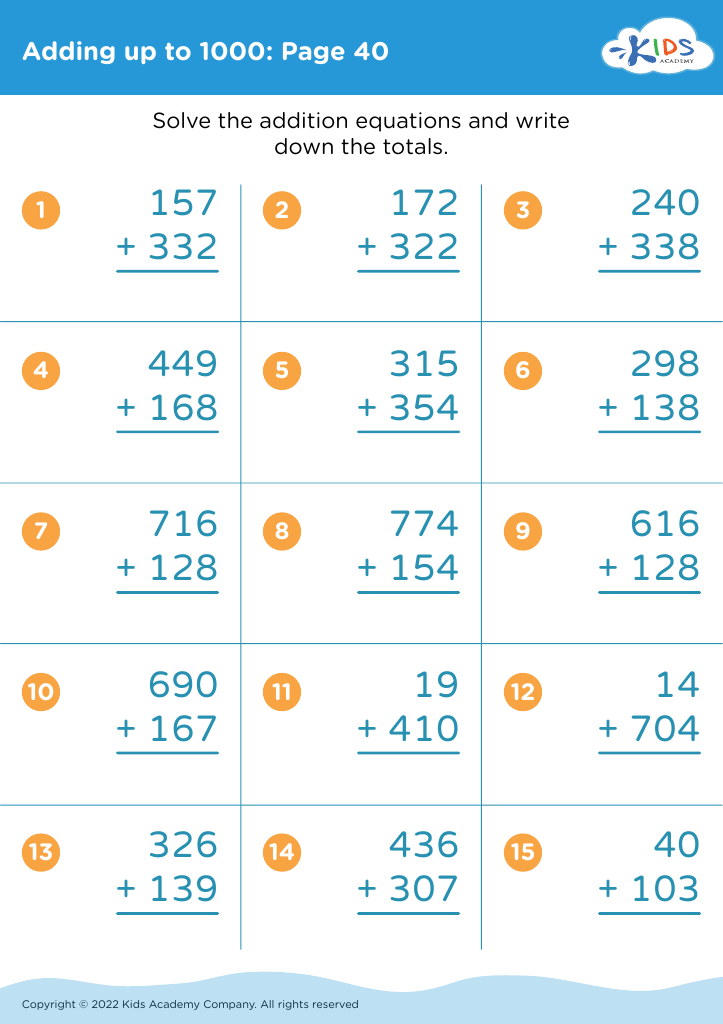
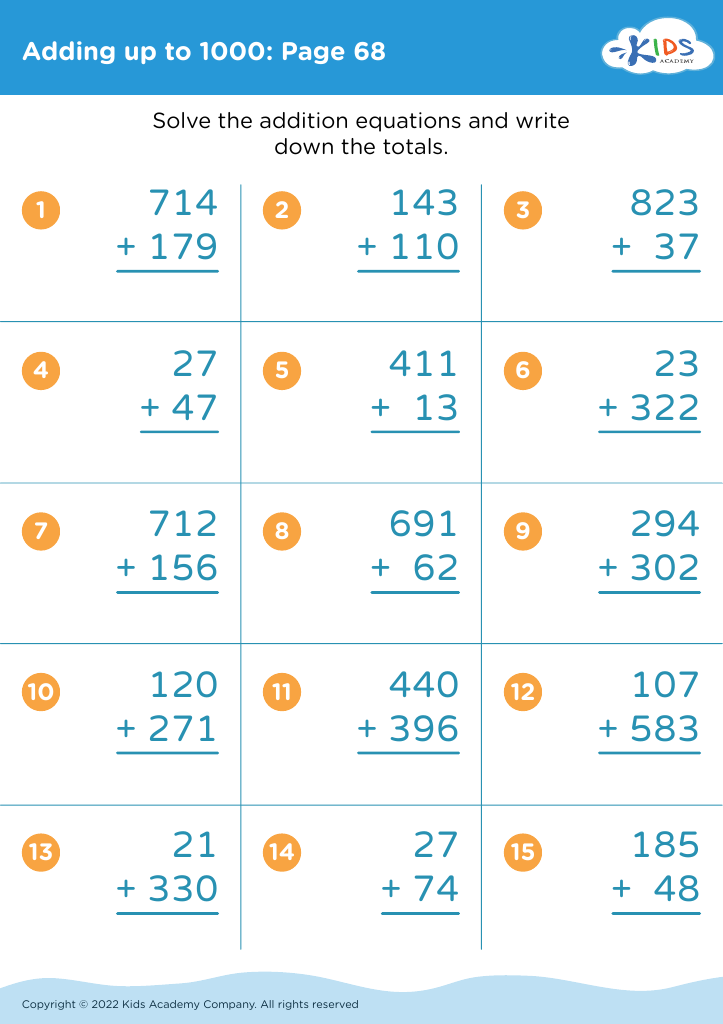
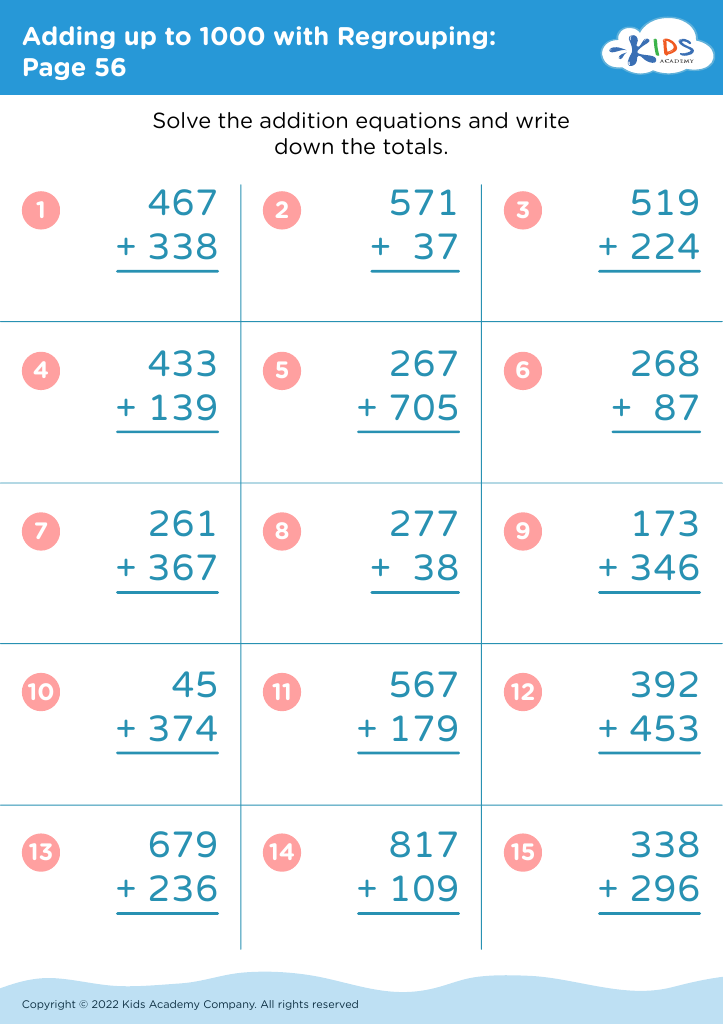
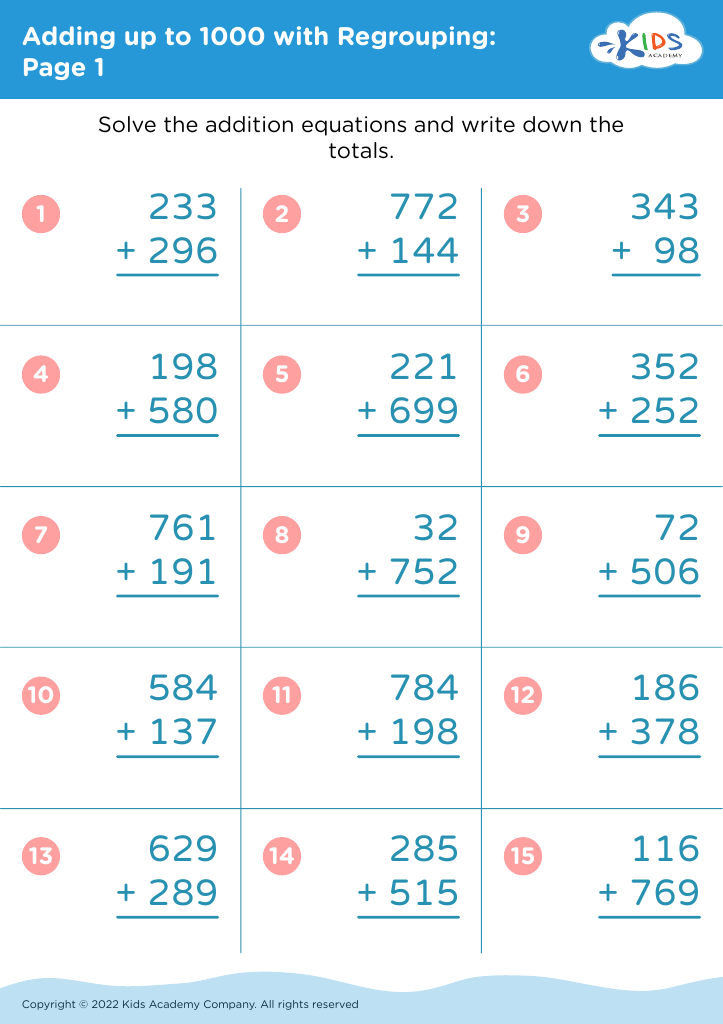
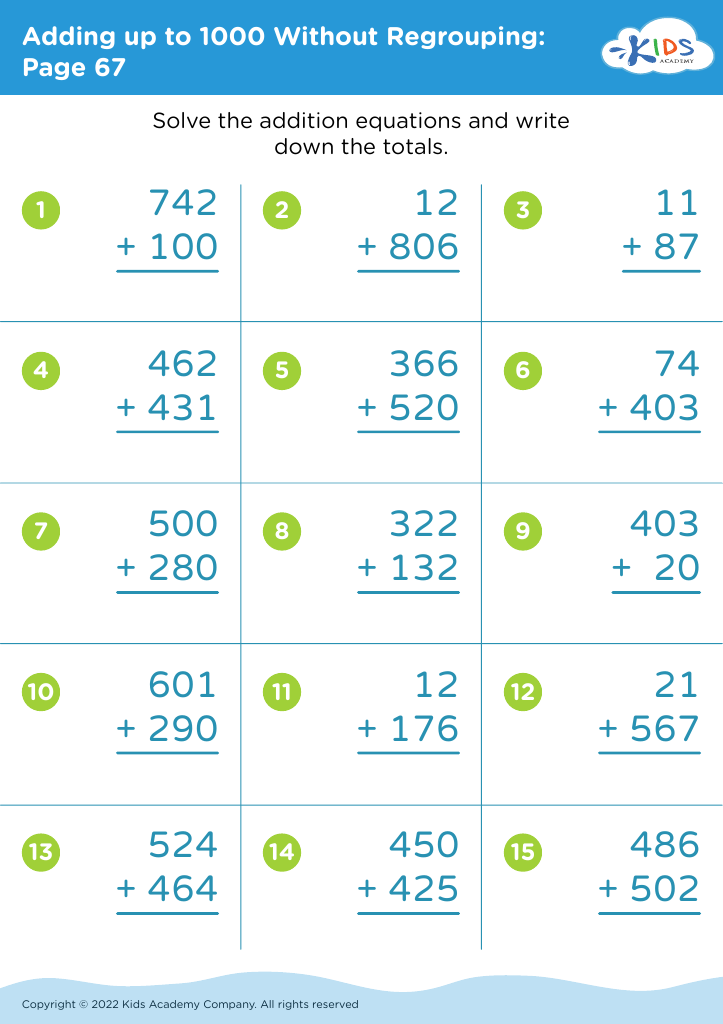
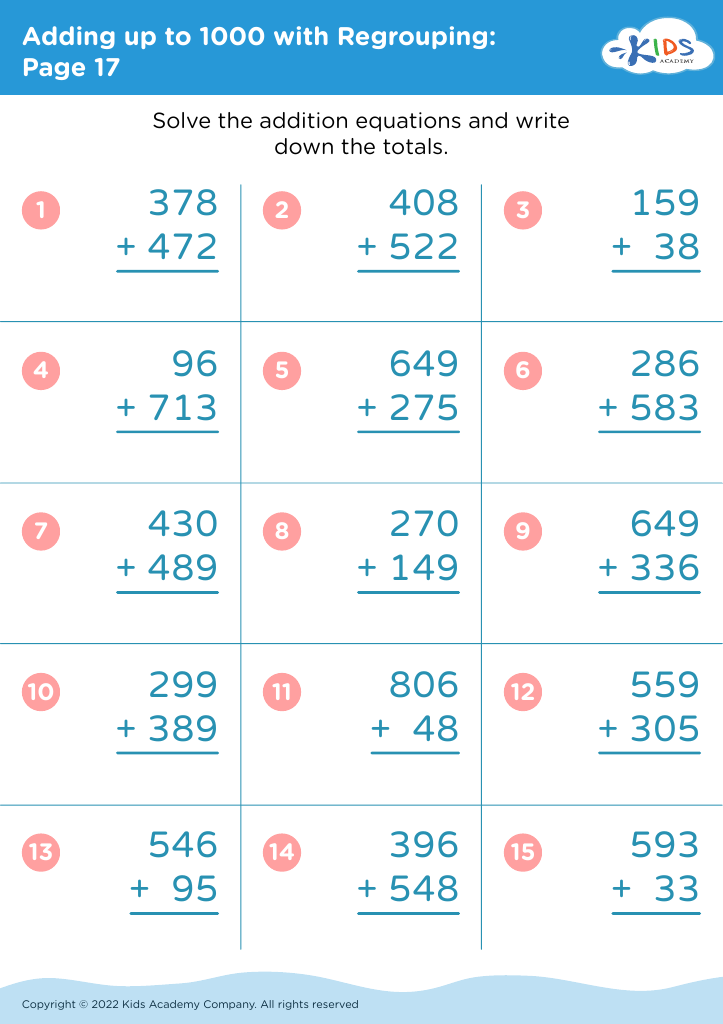
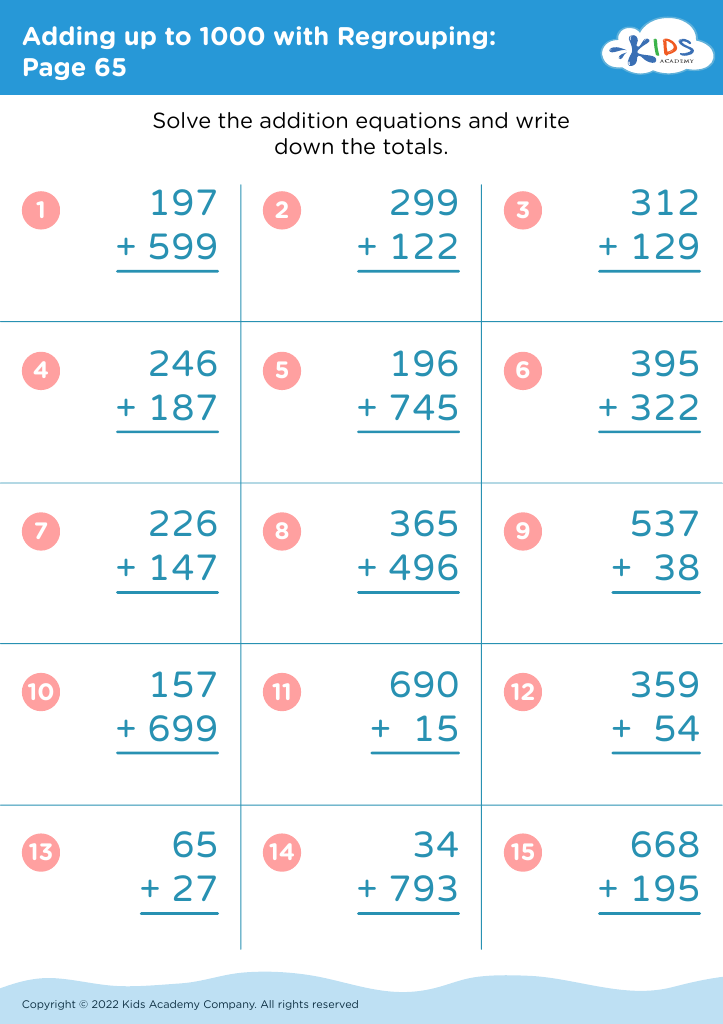
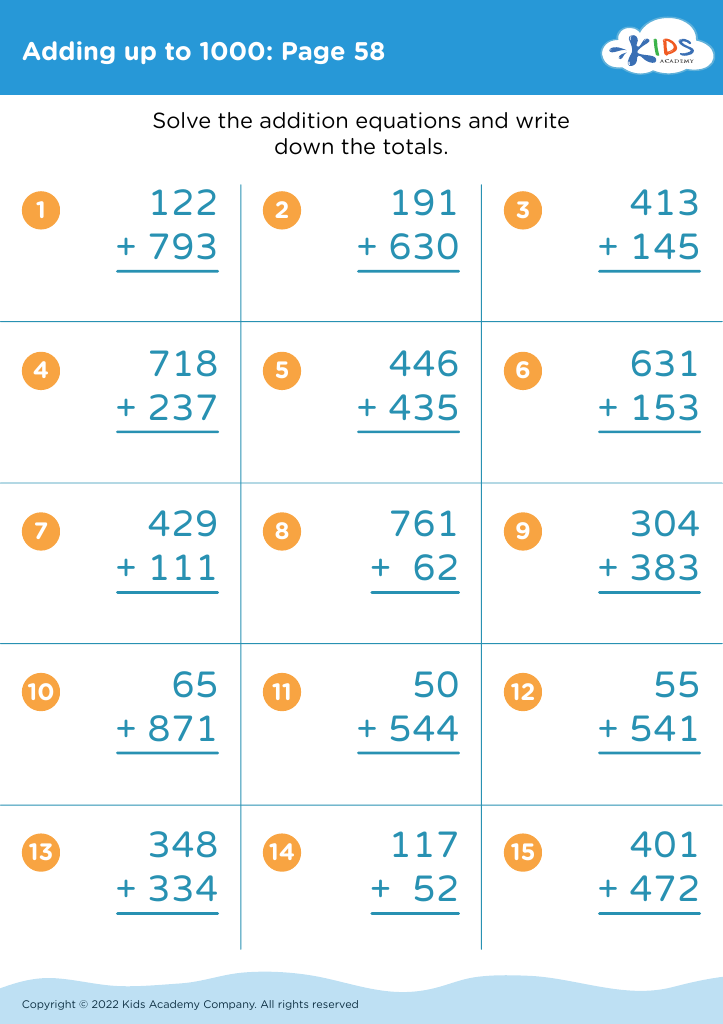
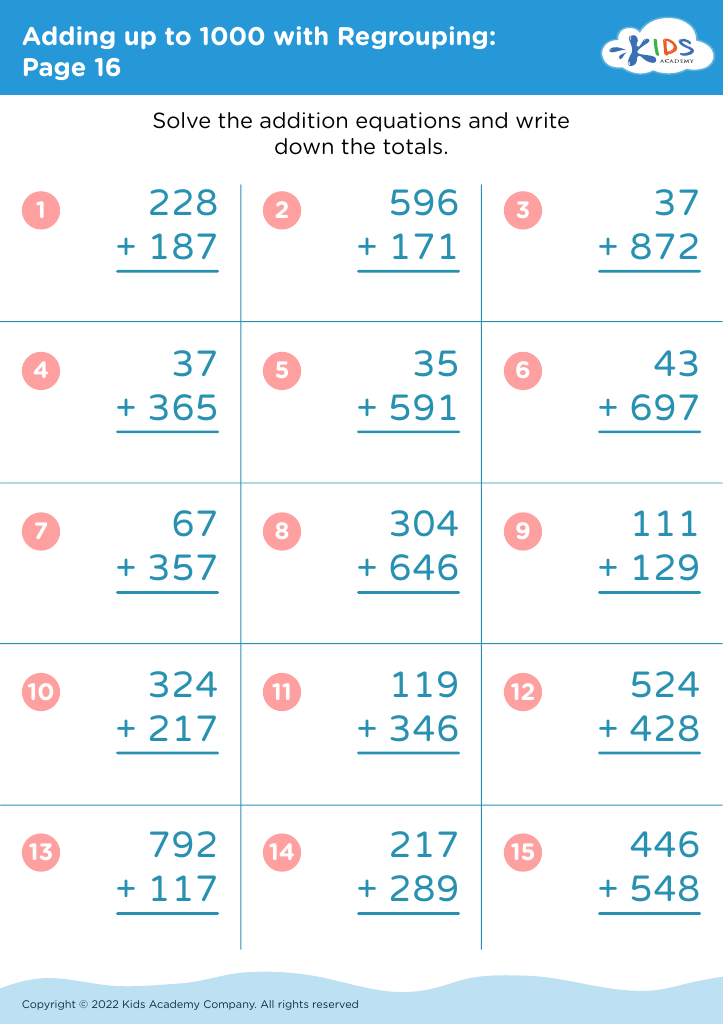
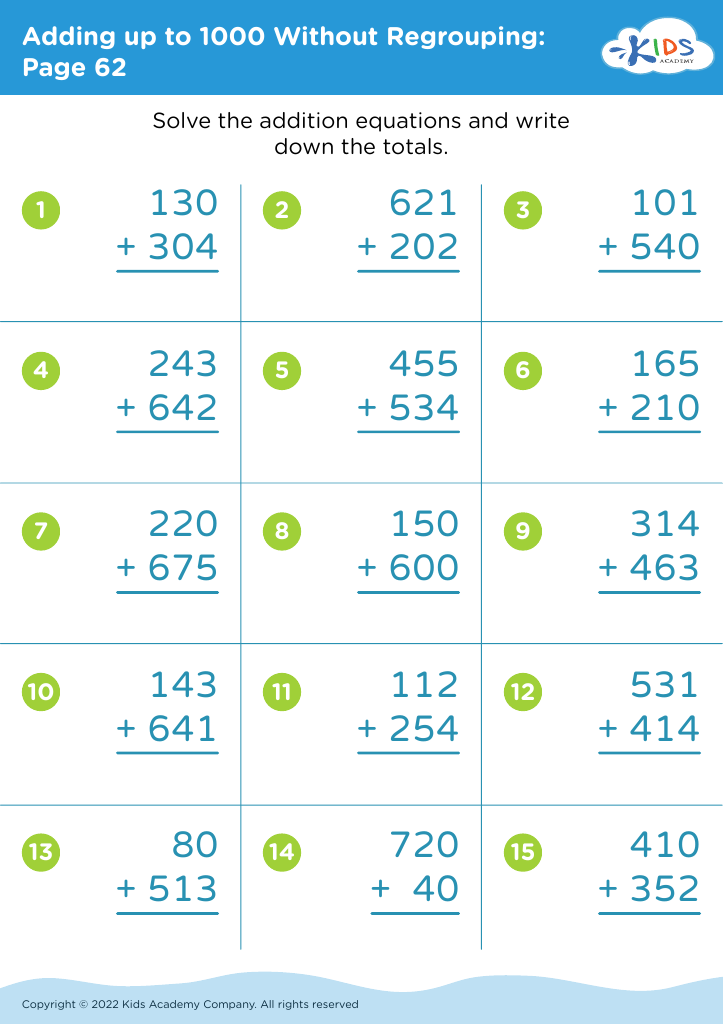



Introducing young children, ages 4-7, to the concept of comparing fractions and the idea of numbers adding up to 1000 lays a fundamental groundwork for their future mathematical understanding. At this age, kids are naturally curious and adept at absorbing new information. Engaging them in these concepts paves the way for a deeper comprehension of math, fostering critical thinking skills and logical reasoning early on.
Fractions help children grasp the idea of parts making up a whole, an essential concept not just in math, but in everyday decision-making and problem-solving activities. For example, sharing toys or food items naturally introduces them to fractions. Additionally, understanding numbers up to 1000 instills a sense of large quantity and scale, enhancing their numerical fluency and ability to perform basic arithmetic operations.
When parents and teachers prioritize these foundational elements, children build confidence in their math abilities. Activities like sorting objects into groups, using fraction tiles, and counting games can make learning enjoyable and effective. Early exposure reduces math anxiety and helps instill a positive attitude towards the subject. Ultimately, these skills are crucial for their success in more advanced mathematics and practical life scenarios, guiding them towards academic achievement and everyday proficiency.








