Critical Thinking Adding up to 1000 Worksheets for Ages 4-7
5 filtered results
-
From - To
Nurture your child's problem-solving skills with our "Critical Thinking Adding up to 1000 Worksheets for Ages 4-7" from Kids Academy. Our expertly designed worksheets combine the fun of learning with critical thinking challenges, enhancing both math and cognitive abilities. Perfect for young learners, these activities make mastering addition engaging and confidence-building. Ideal for the classroom or at-home practice, each worksheet is crafted to develop essential skills, like logical reasoning and number sense, while keeping kids motivated and entertained. Invest in their bright future today with these enriching, interactive resources. Visit Kids Academy to explore the collection!
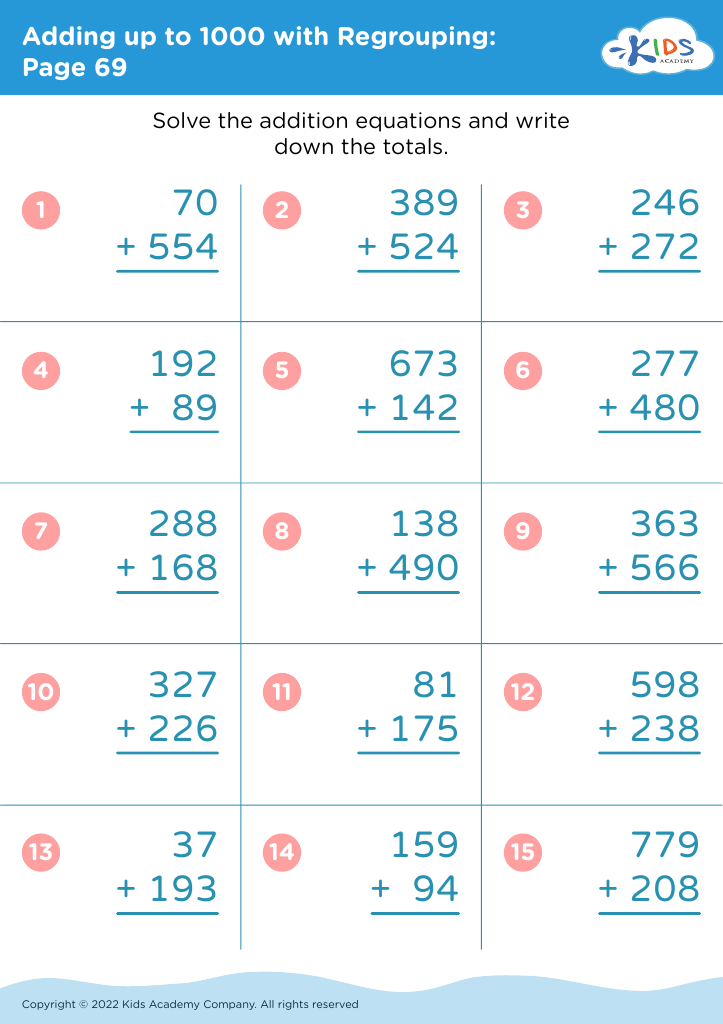
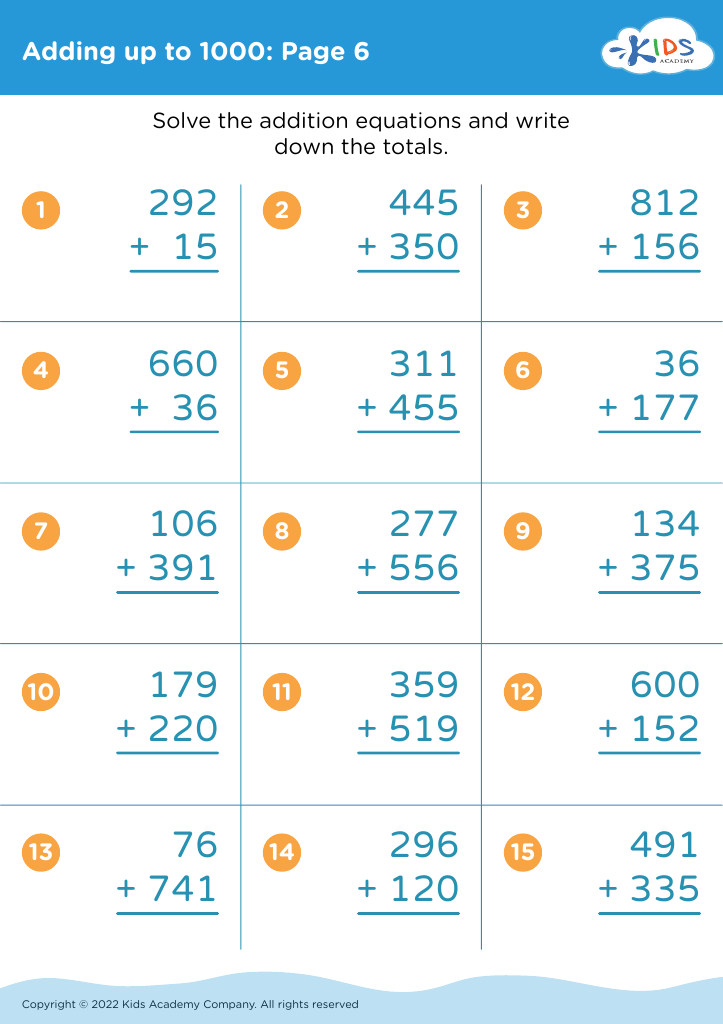
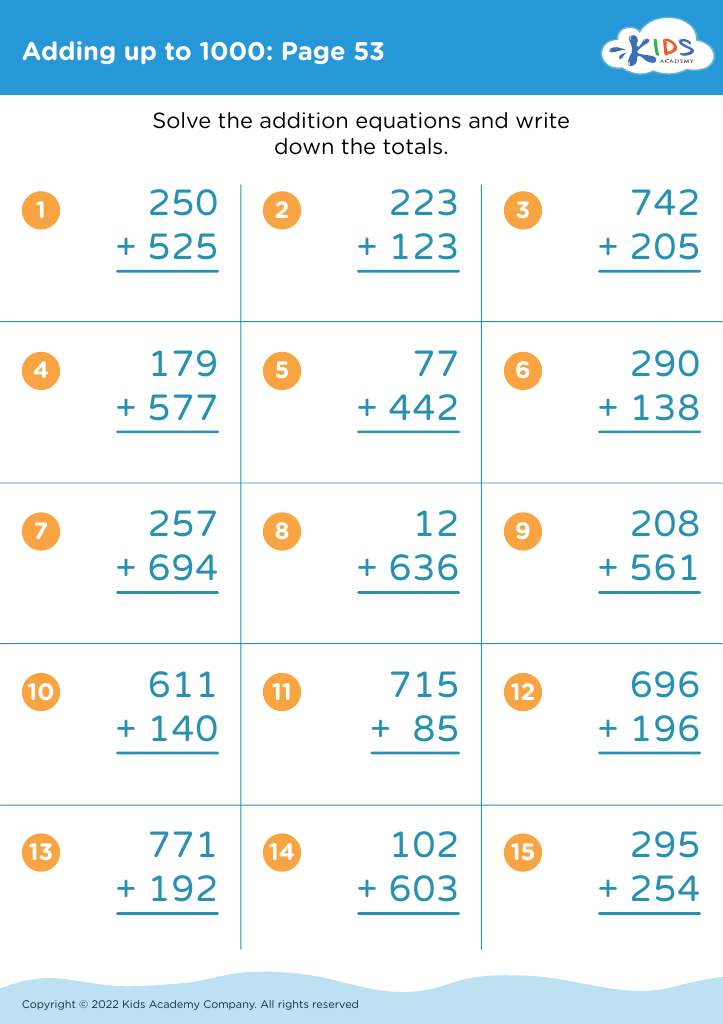
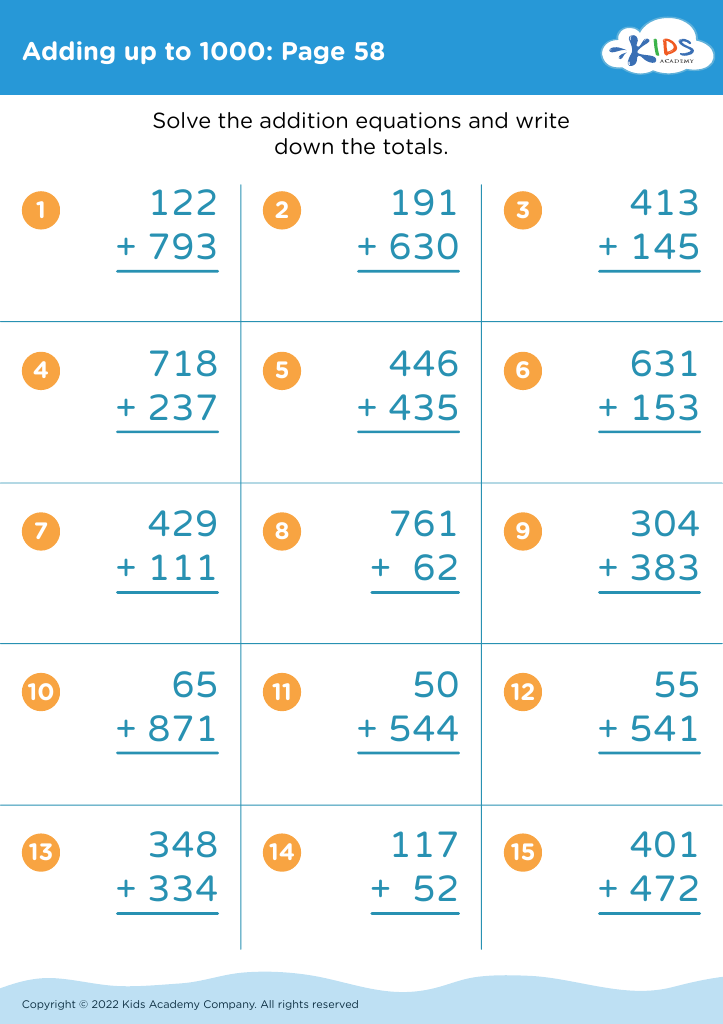
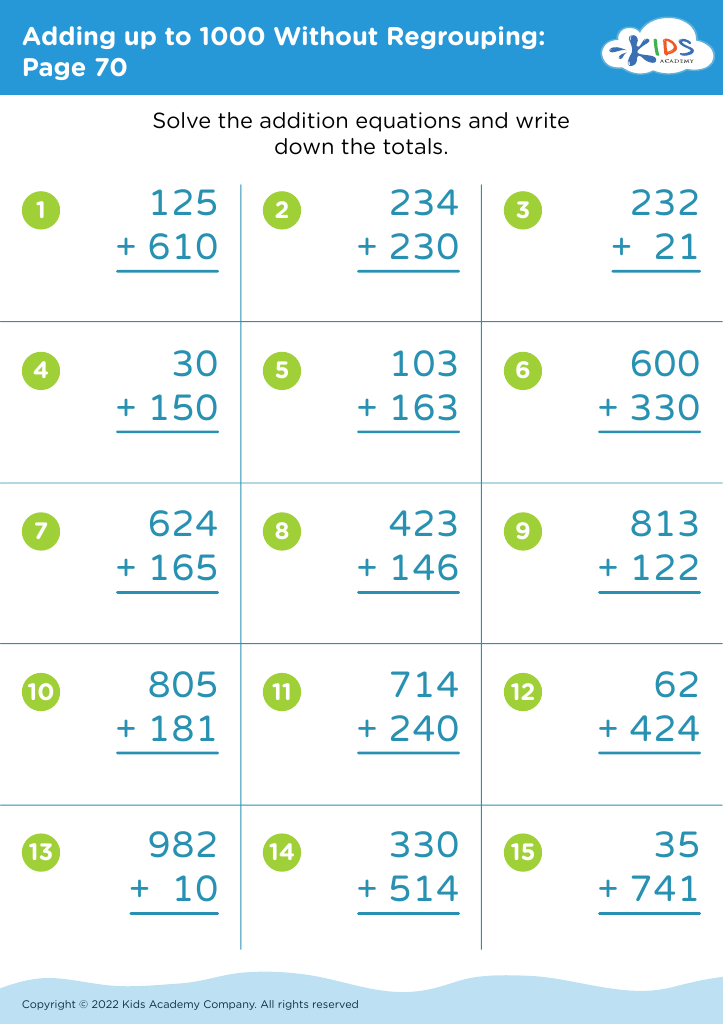



Developing critical thinking skills in early childhood is essential, and integrating concepts such as "Adding up to 1000" expands these abilities powerfully. For young children aged 4-7, this practice surprisingly enhances not just mathematical dexterity but also cognitive agility. Engaging with larger numbers and aiming to add up to 1000 encourages children to understand numerical relationships deeply, fostering mental calculation skills, pattern recognition, and systematic problem-solving approaches.
When parents and teachers prioritize this aspect, they demonstrate the importance of perseverance and attention to detail. Children learn to break down complex problems into manageable parts, a foundational critical thinking skill. Such learning prepares them for more advanced concepts in various subjects later on. Moreover, working towards a significant total like 1000 can cultivate goal-setting behaviors and a sense of achievement upon reaching that goal.
Additionally, incorporating these lessons through fun, practical activities enhances engagement and curiosity. A child counting their collection or adding blocks taps into interactive learning that sticks. Thus, critical thinking paired with numeracy forms the bedrock for lifelong skills that transcend mere arithmetic, nurturing well-rounded, problem-solving individuals. Parents and teachers who invest time in this often find their efforts reflected in the child’s academic and personal growth.








