Fine Motor Skills Adding up to 1000 Worksheets for Ages 4-7
12 filtered results
-
From - To
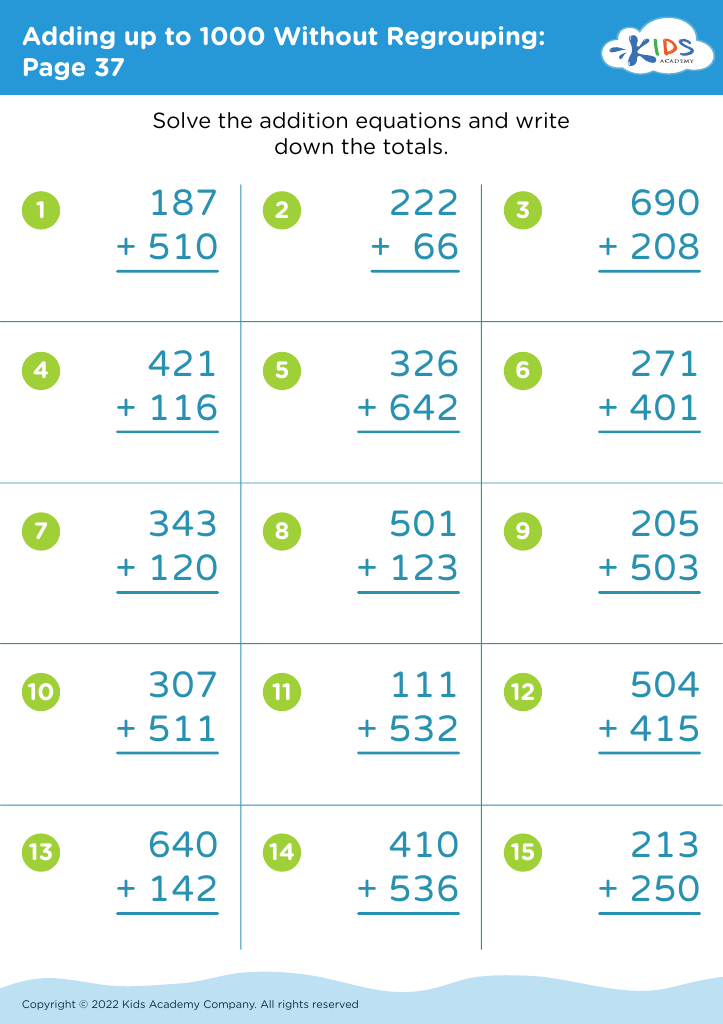
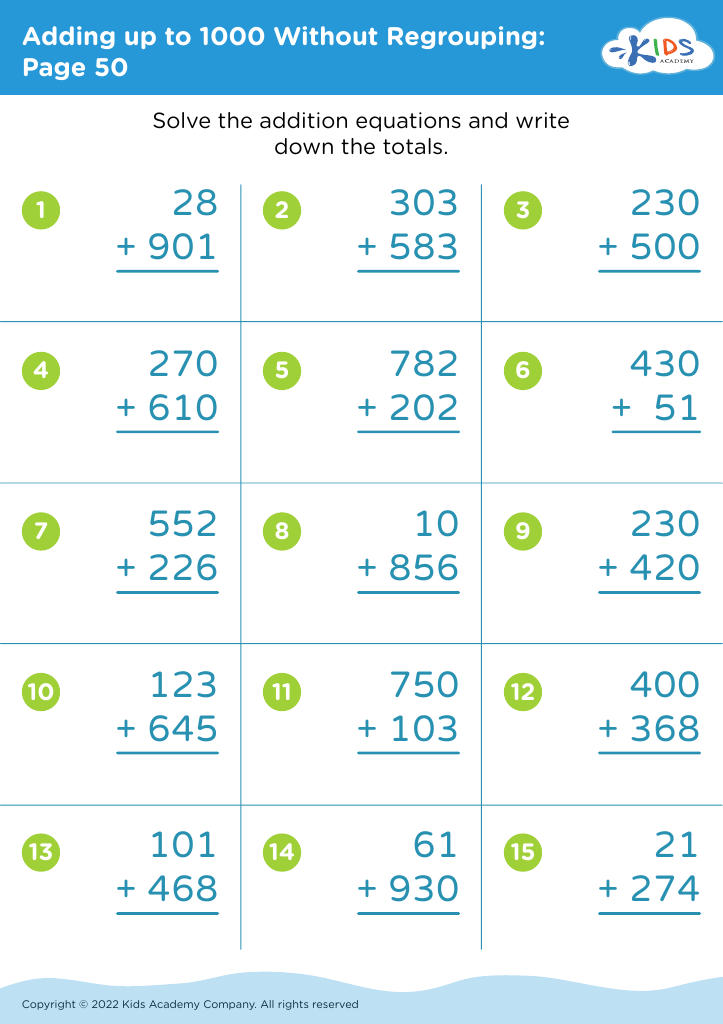
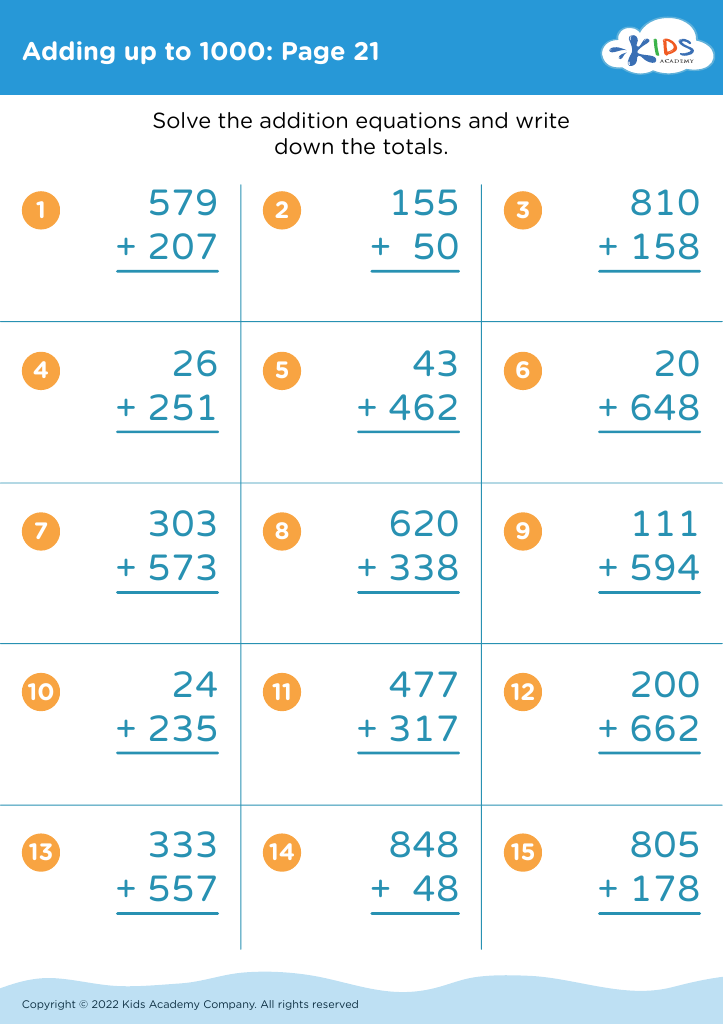
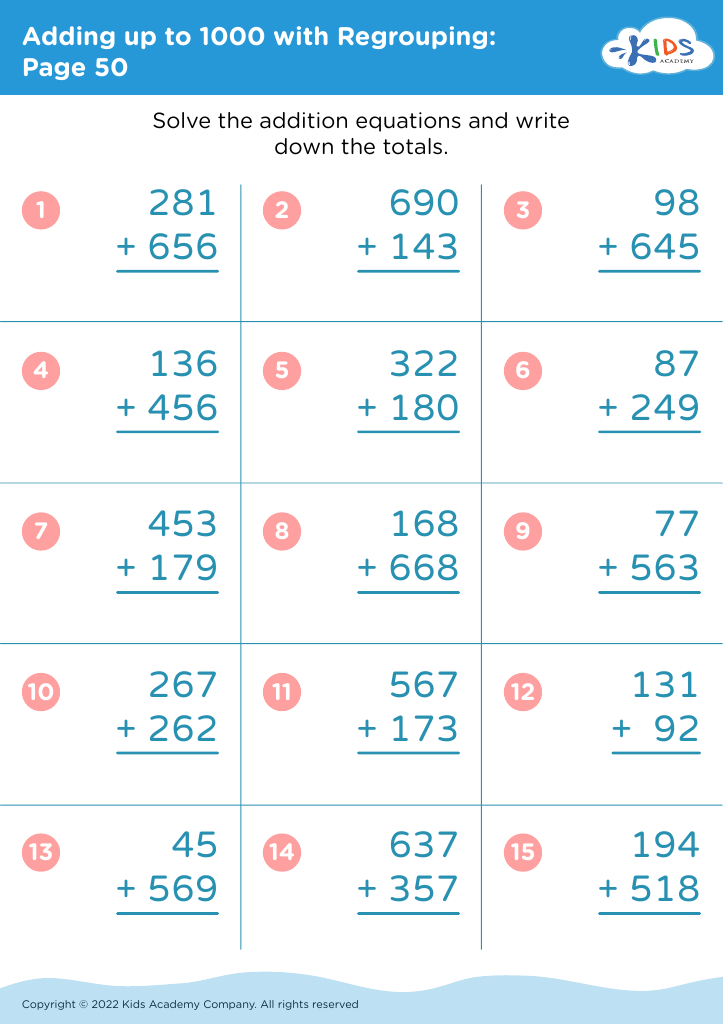
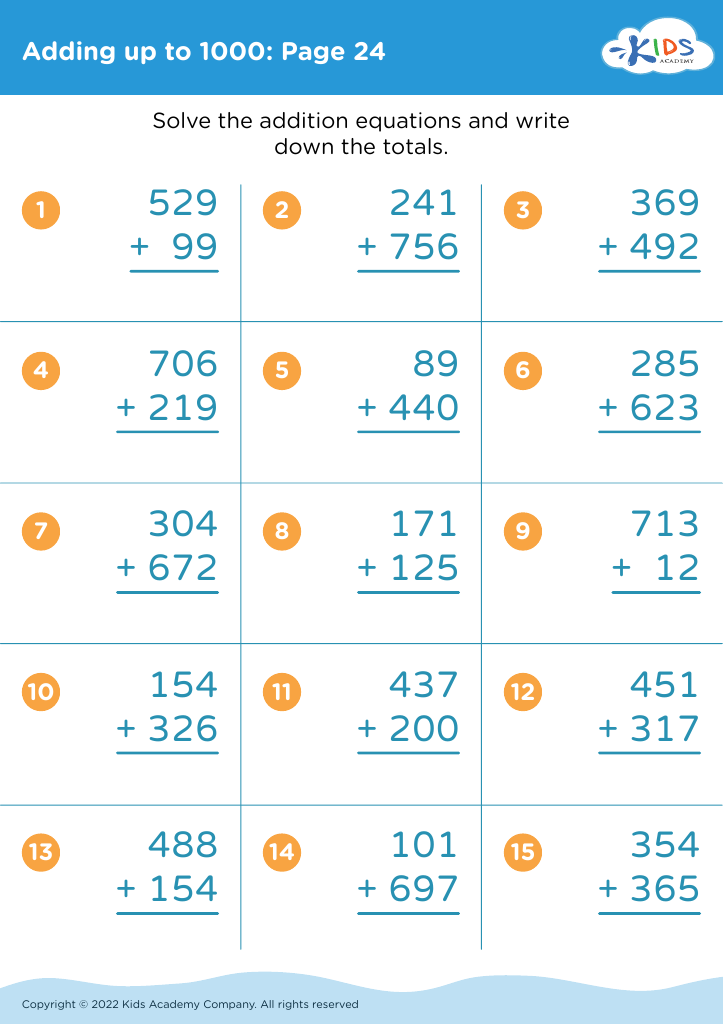
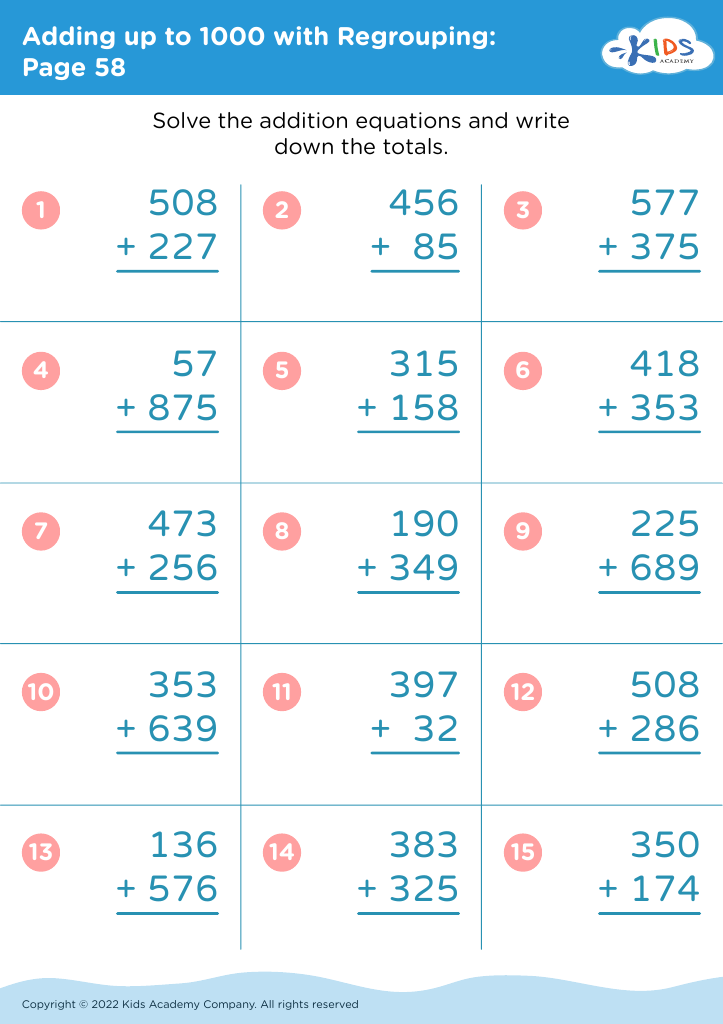
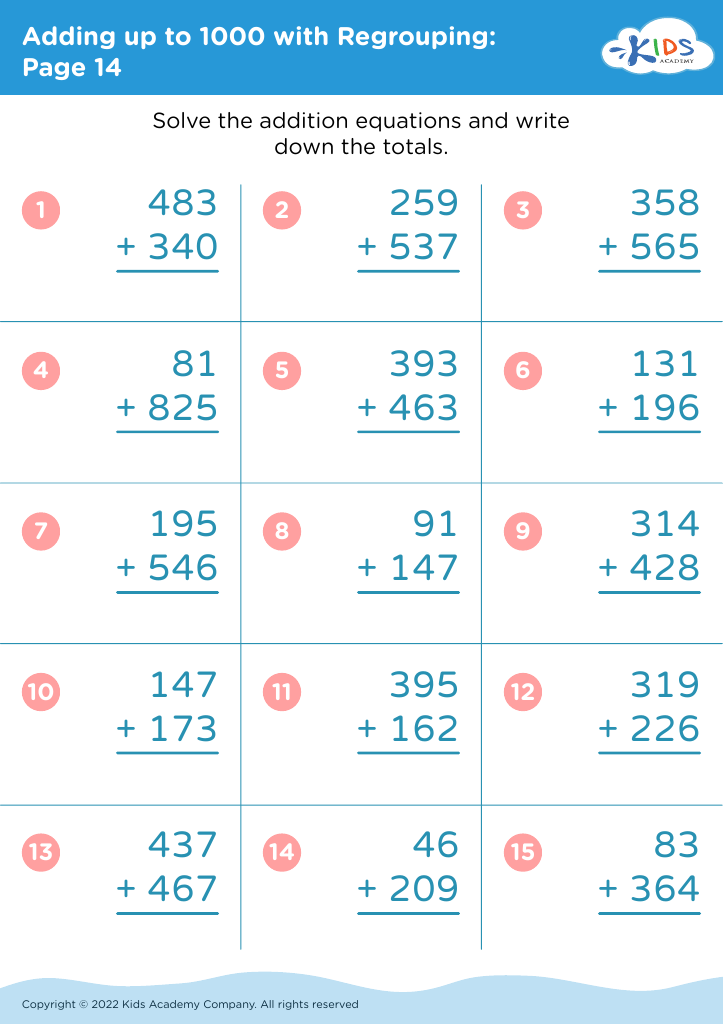
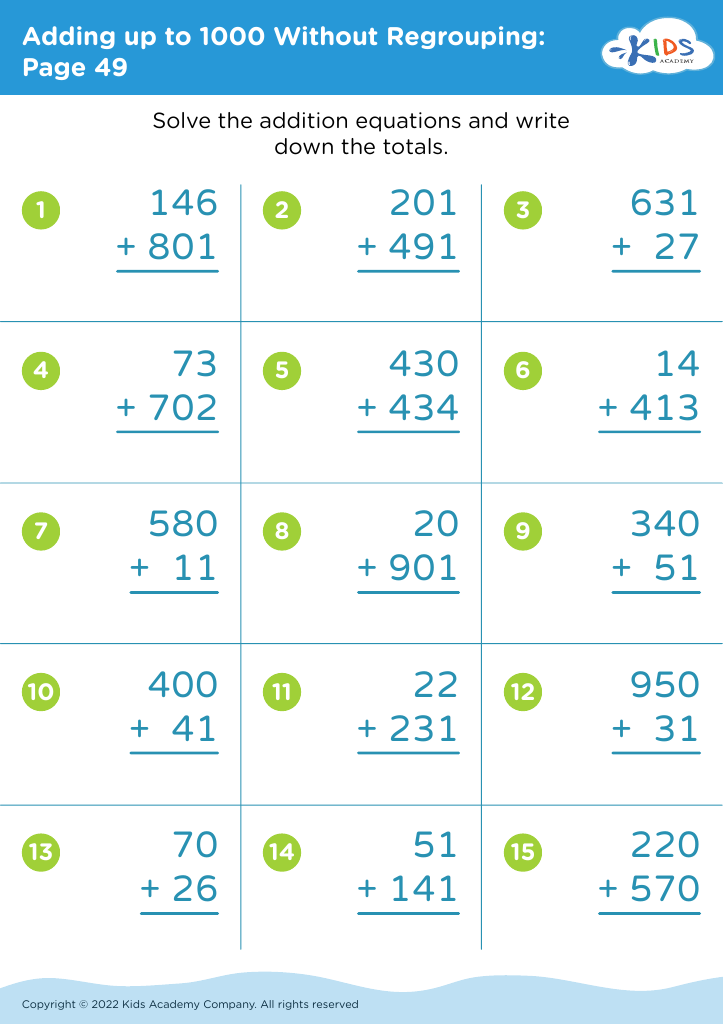
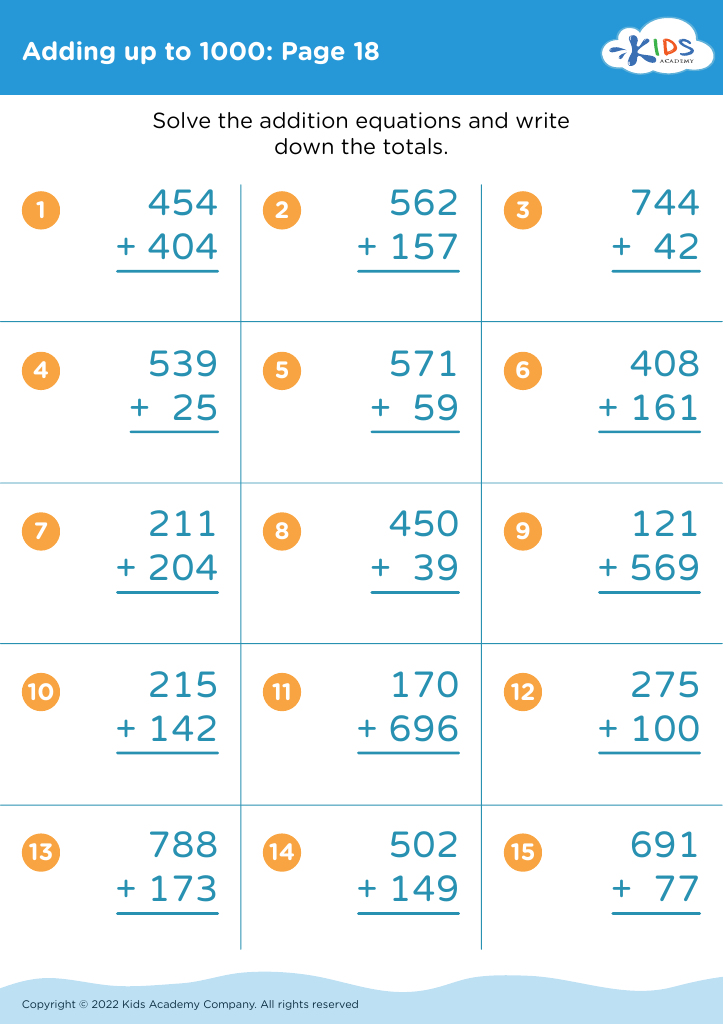
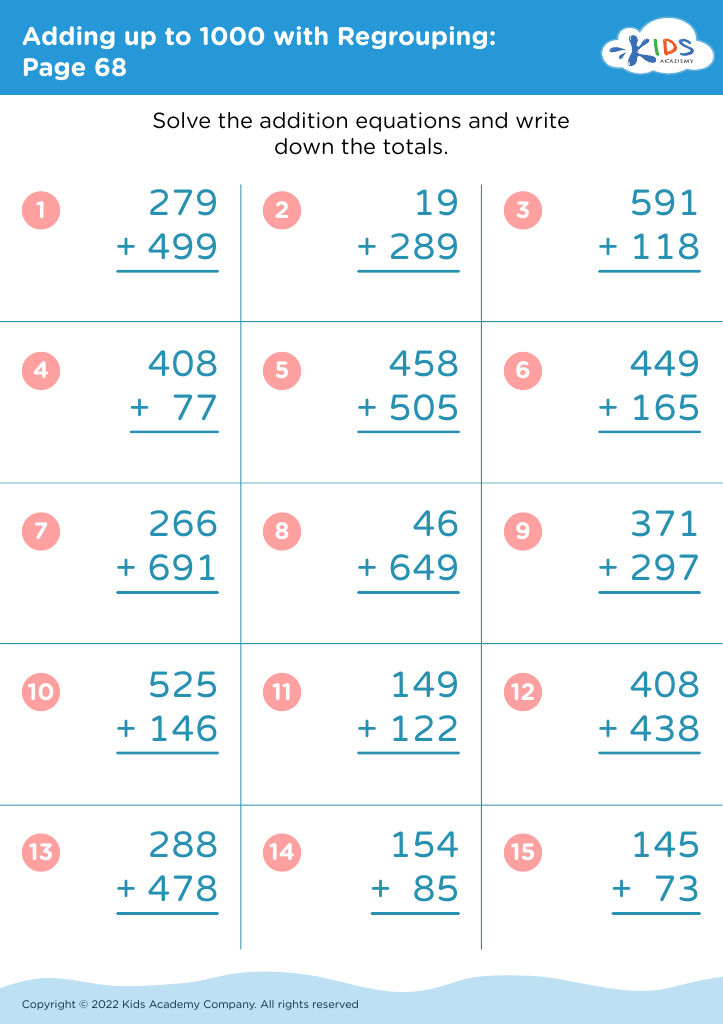
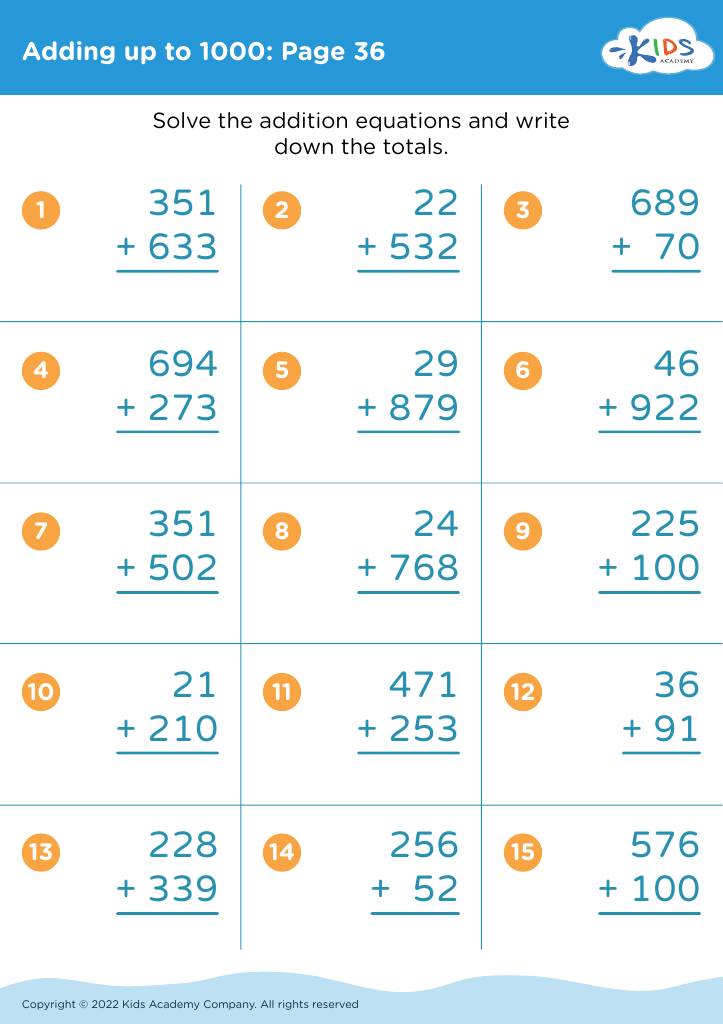
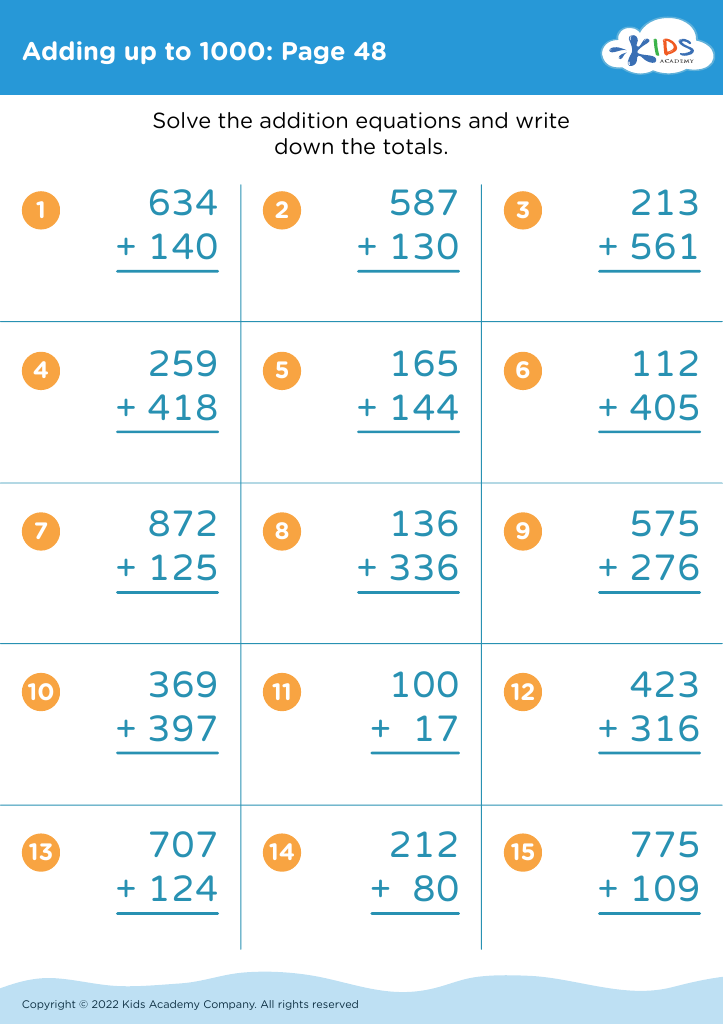
Discover our "Fine Motor Skills Adding up to 1000 Worksheets" designed for children ages 4 to 7. These engaging worksheets not only help young learners grasp essential math concepts but also enhance their fine motor skills through fun and interactive activities. Each worksheet combines colorful illustrations and kids-friendly designs, making learning enjoyable. From tracing numbers to completing simple calculations, these exercises are perfect for developing hand-eye coordination and dexterity. Tailored to meet educational standards, our resources are perfect for at-home learning or classroom use. Stimulate your child's curiosity and skills in math while they strengthen their fine motor abilities today!



Fine motor skills are crucial for children ages 4-7, especially as they relate to everyday tasks and academic success. These skills, which involve small movements typically involving the hands and fingers, play a significant role in a child’s development.
Firstly, fine motor skills enhance a child’s ability to perform daily activities like buttoning shirts, tying shoelaces, and using utensils. Proficient fine motor abilities promote independence, allowing children to accomplish tasks without constant help from parents or teachers.
Secondly, fine motor skills are closely linked to academic tasks such as writing, drawing, and using technology. Children with well-developed fine motor skills find it easier to grasp pencils, create shapes, and participate in craft activities, all of which contribute to their literacy and numeracy development. A strong foundation in fine motor skills enables smoother transitions into more complex academic tasks in later years.
Lastly, encouraging fine motor skills can foster a child's confidence and self-esteem. Mastering these skills provides a sense of achievement and motivation, further sparking their interest in learning.
In summary, parents and teachers should prioritize fine motor skill development to support children's independence, academic readiness, and positive self-image, setting them up for success both in and out of the classroom.








