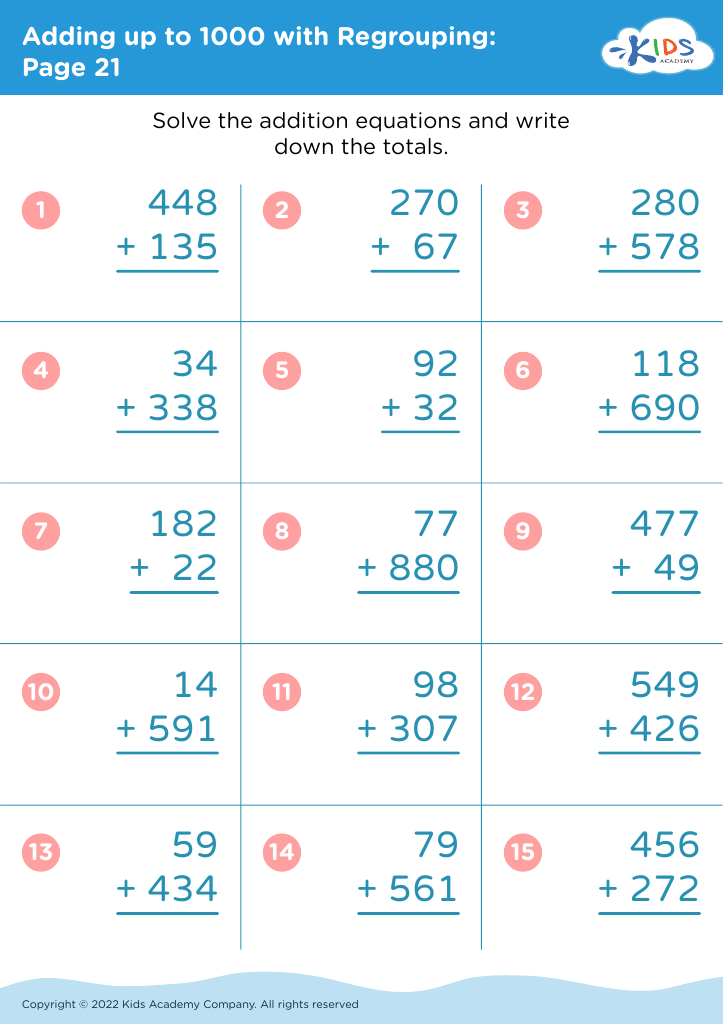
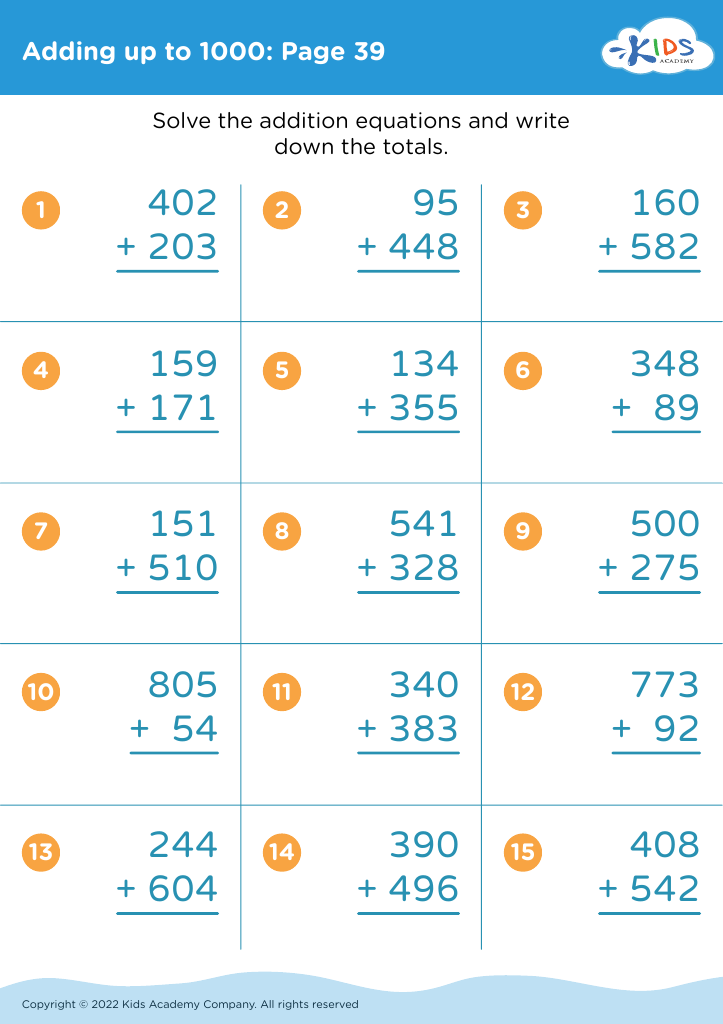
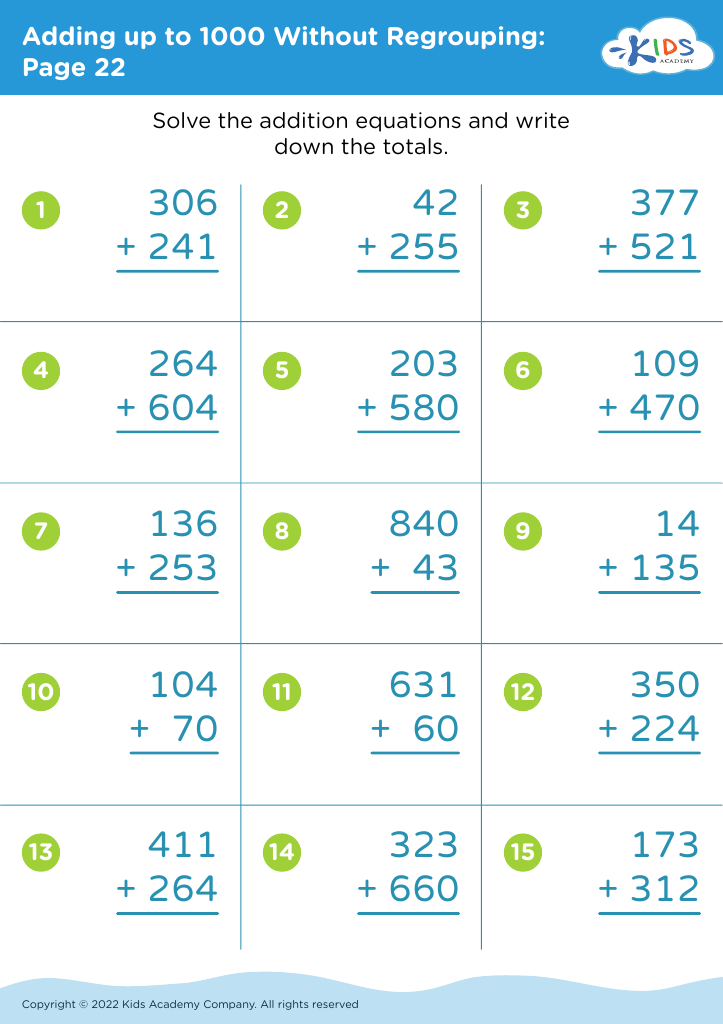
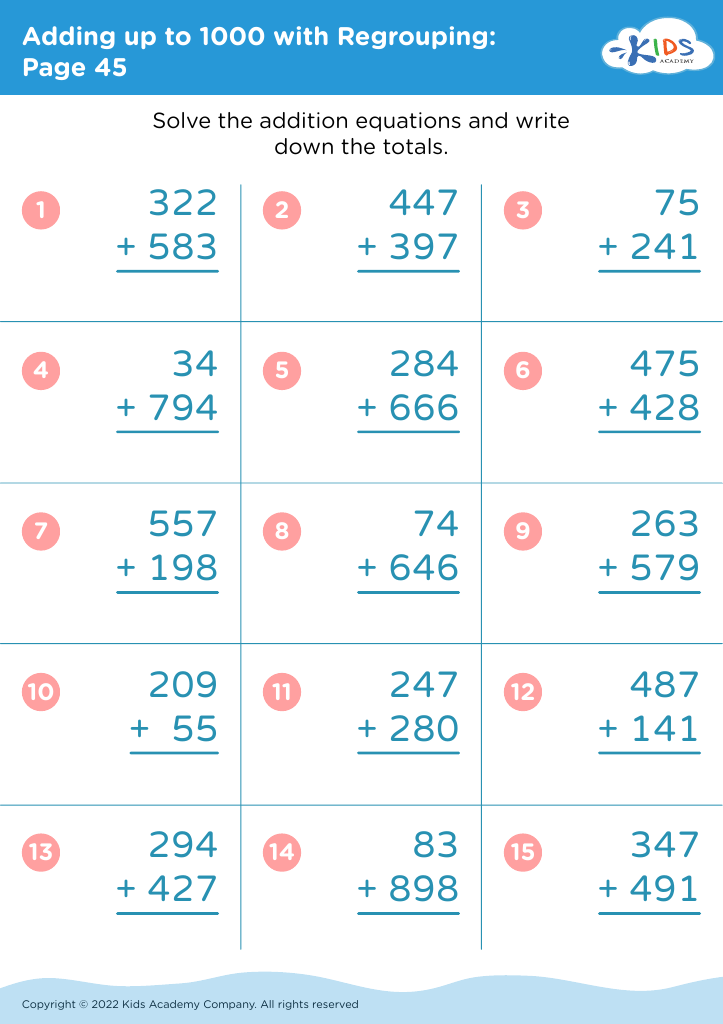
Fine motor skills (writing) Adding up to 1000 Worksheets for Ages 4-7
5 filtered results
-
From - To
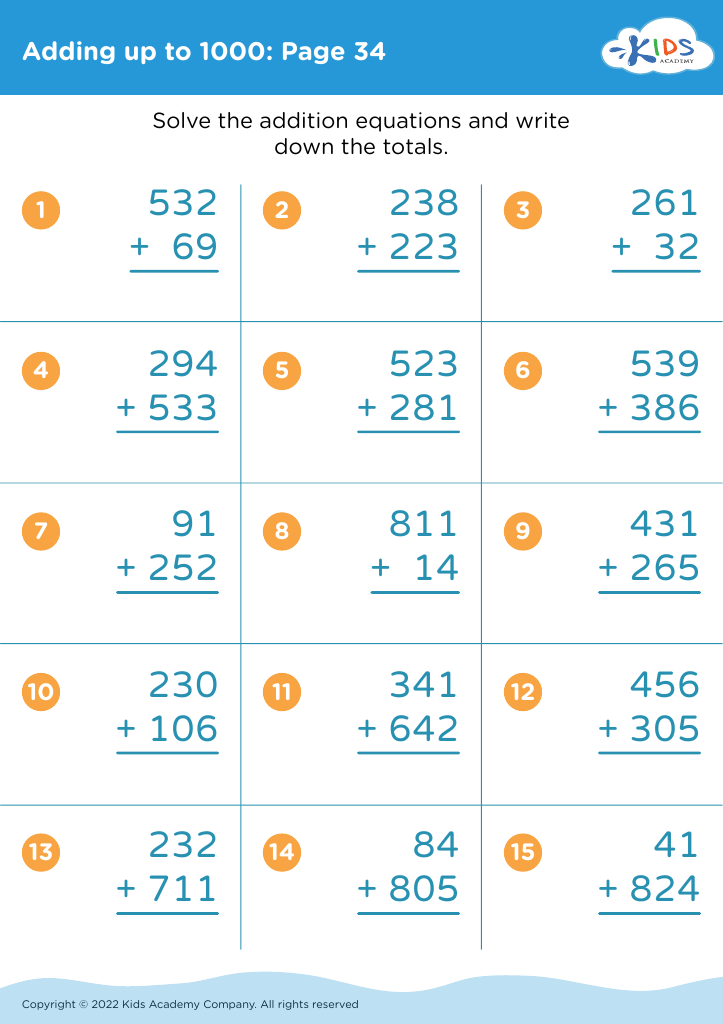
Enhance your child's fine motor skills and writing abilities with our "Adding up to 1000 Worksheets for Ages 4-7." Designed specifically for young learners, these engaging worksheets help children practice their number writing while reinforcing essential math concepts. Our interactive exercises nurture fine motor development through tracing and writing numbers, making learning both educational and enjoyable. Ideal for preschool and early elementary students, these resources encourage hand-eye coordination and dexterity. Support your child's confidence in math and essential writing skills today! Explore our collection and watch your little one thrive in their learning journey.



Fine motor skills are crucial for children aged 4-7, as they form the foundation for their writing development and overall academic success. At this stage, competencies like holding a pencil, cutting with scissors, and even basic coloring require coordination and control from their smaller muscles. As children master these skills, they become more confident and independent learners, able to express their ideas through writing effectively.
Furthermore, fine motor skills impact everyday tasks such as dressing, eating, and crafting, which are essential for a child’s self-sufficiency and social integration. Importantly, these skills also correlate with cognitive development; the act of writing enhances critical thinking and problem-solving abilities.
For parents and teachers, fostering fine motor skills is vital. Activities like coloring, drawing, and crafting not only make learning fun but also vitalize essential development. Integrating hands-on activities into daily routines supports fine motor enhancement in playful ways.
In summary, by prioritizing fine motor skills, parents and teachers can significantly influence children's academic readiness, boost their confidence, and foster independence. Recognizing this significance is crucial for guiding children towards success in school and in life.








