Identify shapes Adding up to 1000 Worksheets for Ages 4-7
4 filtered results
-
From - To
Enhance your child’s math skills with our "Identify Shapes Adding up to 1000 Worksheets" designed for ages 4-7. These interactive worksheets are perfect for young learners to grasp basic geometry while boosting their addition skills up to 1000. Featuring engaging activities with colorful shapes, children will identify, count, and add shapes to strengthen both their math and cognitive skills. Perfect for home or classroom use, these worksheets provide a fun, effective way to foster a love for learning and build a solid math foundation. Download now for hours of educational fun!
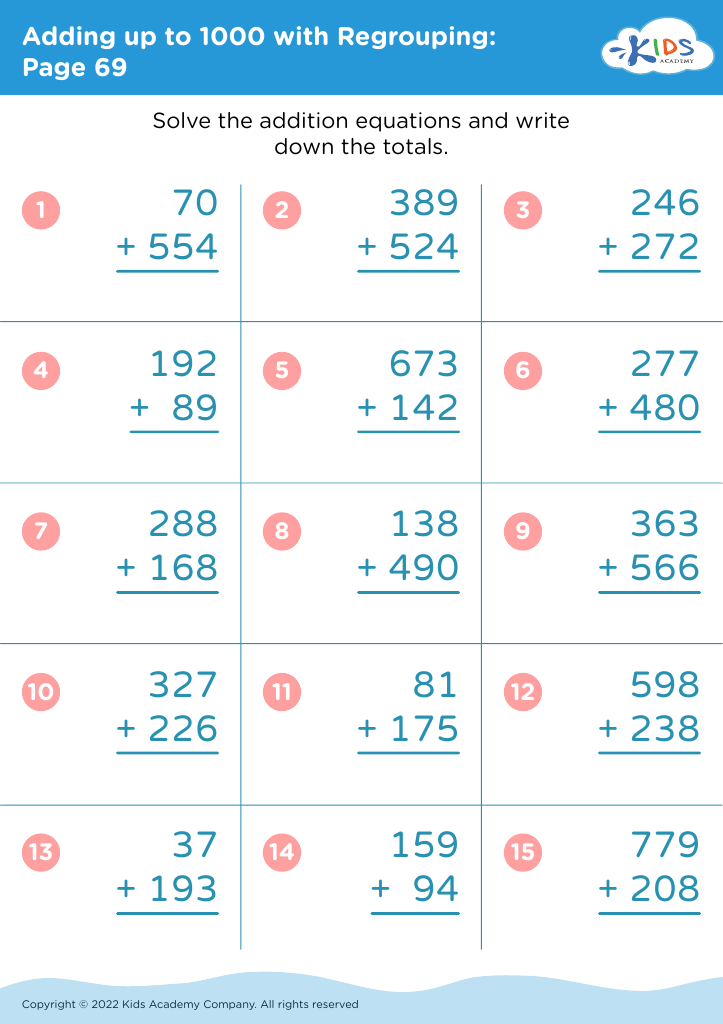
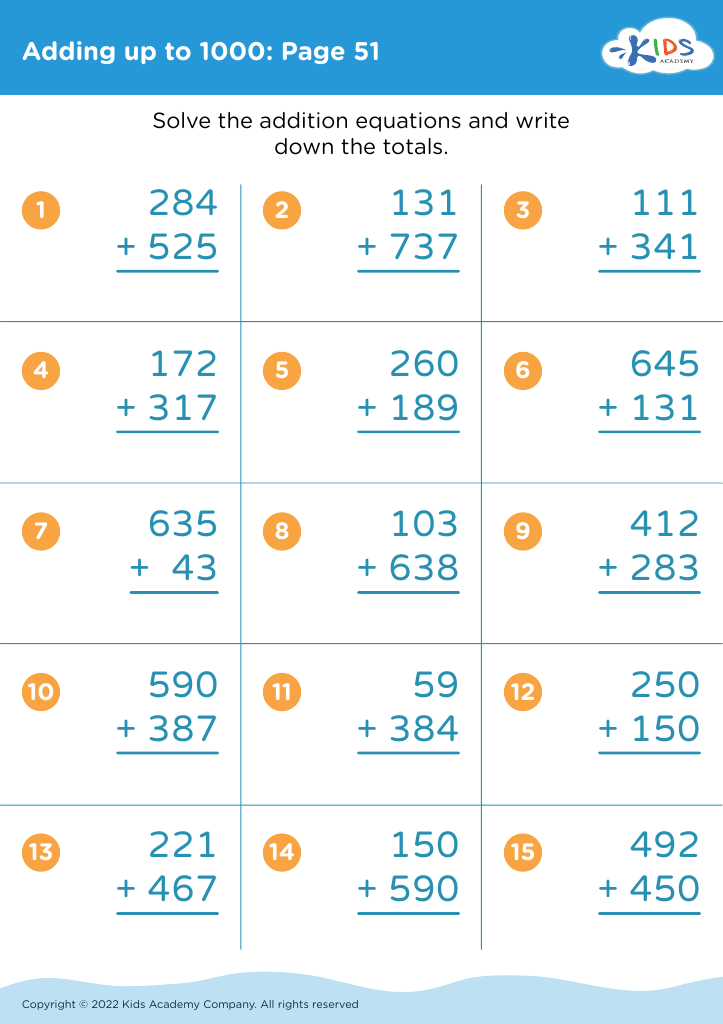
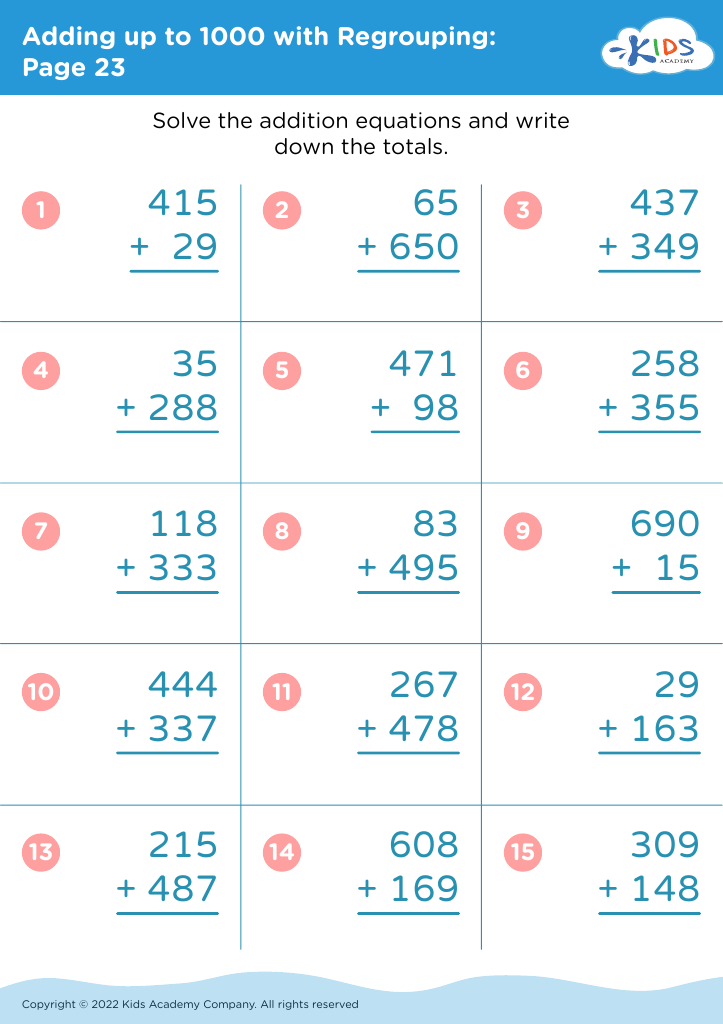
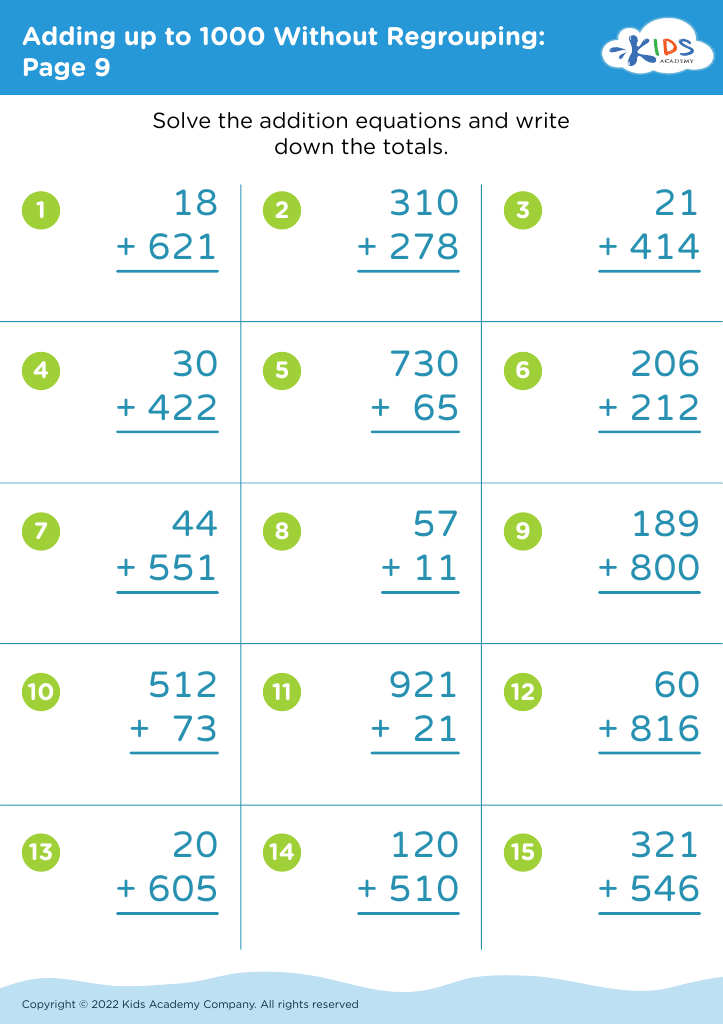



Introducing young children to concepts like identifying shapes and adding up to 1000 at an early age establishes a strong foundation for their future academic success. For ages 4-7, engaging with shapes fosters critical thinking and spatial awareness. Recognizing shapes helps children understand the world around them and improves their ability to follow directions and solve puzzles. Knowing geometric shapes also paves the way for learning more complex math and science concepts.
Meanwhile, early exposure to adding numbers up to 1000 might sound ambitious, but this can be introduced gradually through play and practical activities. Understanding numbers and basic addition enhances cognitive development, promoting logical reasoning and problem-solving skills. Mastery of these skills is beneficial not only in mathematics but also in everyday situations, such as handling money or measuring ingredients while cooking.
Parents and teachers should care about these skills because they cultivate a growth mindset and boost confidence in children. By nurturing curiosity and providing ample opportunities for practice through fun and engaging activities, adults can make learning enjoyable and meaningful. Investing time in teaching these foundational skills paves the way for academic achievements and life skills that children will use throughout their lifetime.








