Improve math skills Adding up to 1000 Worksheets for Ages 4-7
6 filtered results
-
From - To
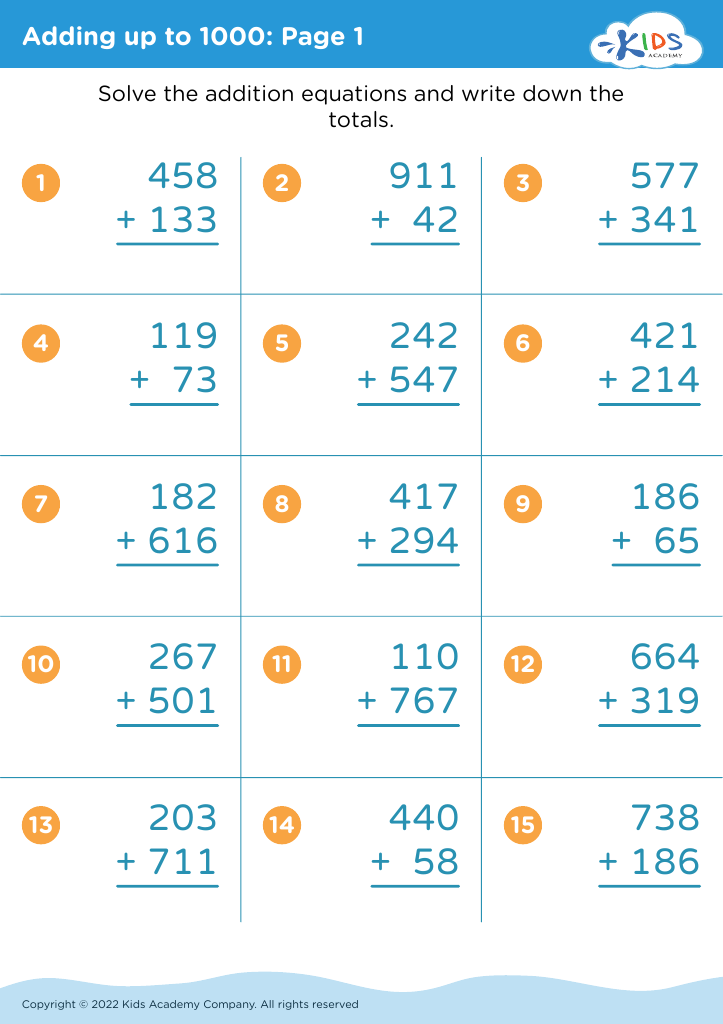
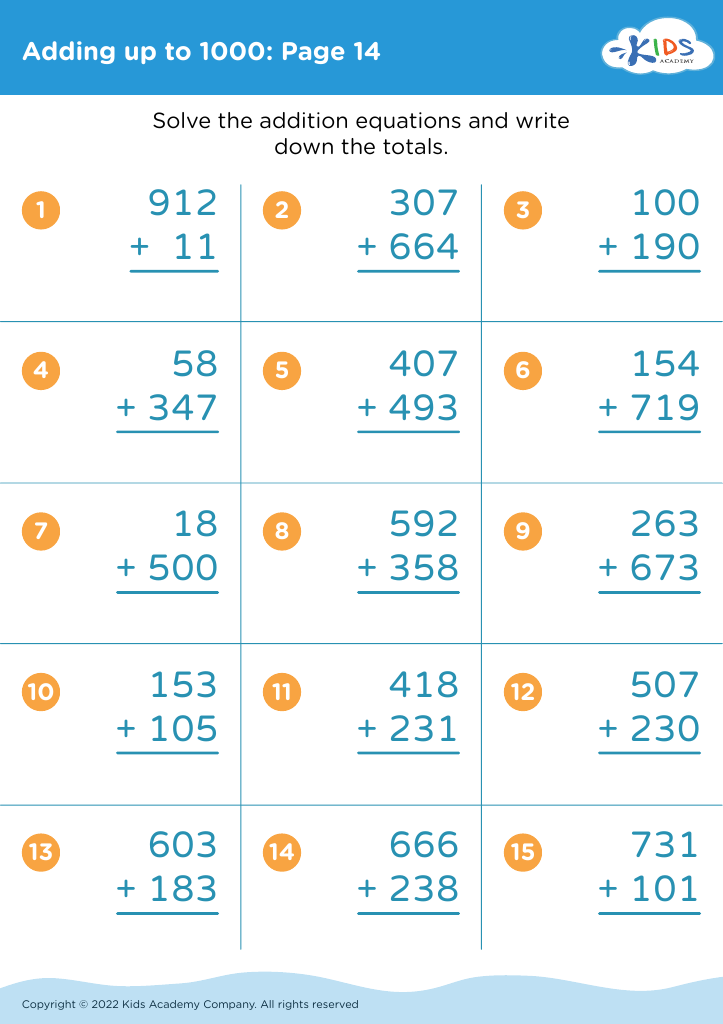
Discover our engaging "Improve Math Skills: Adding Up to 1000 Worksheets" designed specifically for children ages 4-7. These interactive worksheets aim to bolster young learners' mathematical abilities through fun and hands-on activities focused on addition. Each worksheet is crafted to cater to various skill levels, ensuring that every child can confidently practice adding up to 1000 while developing critical thinking skills. Our thoughtfully designed resources promote number recognition, problem-solving, and mathematical fluency in an enjoyable way. Start your child's math journey today, and watch them build a strong foundation for future learning success! Explore our worksheets now!
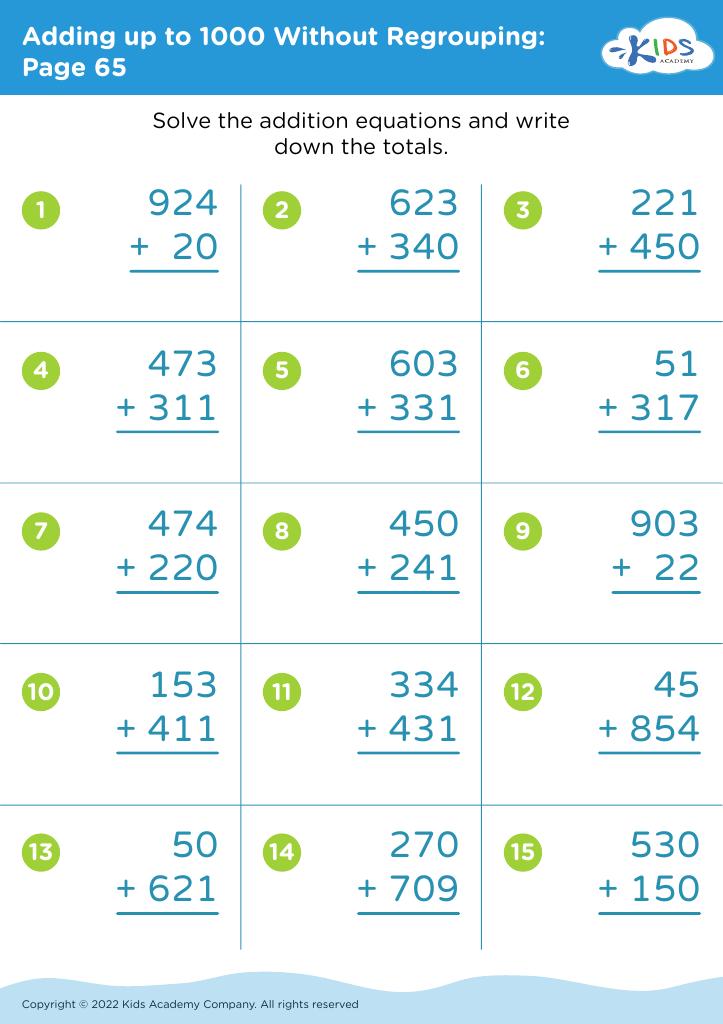
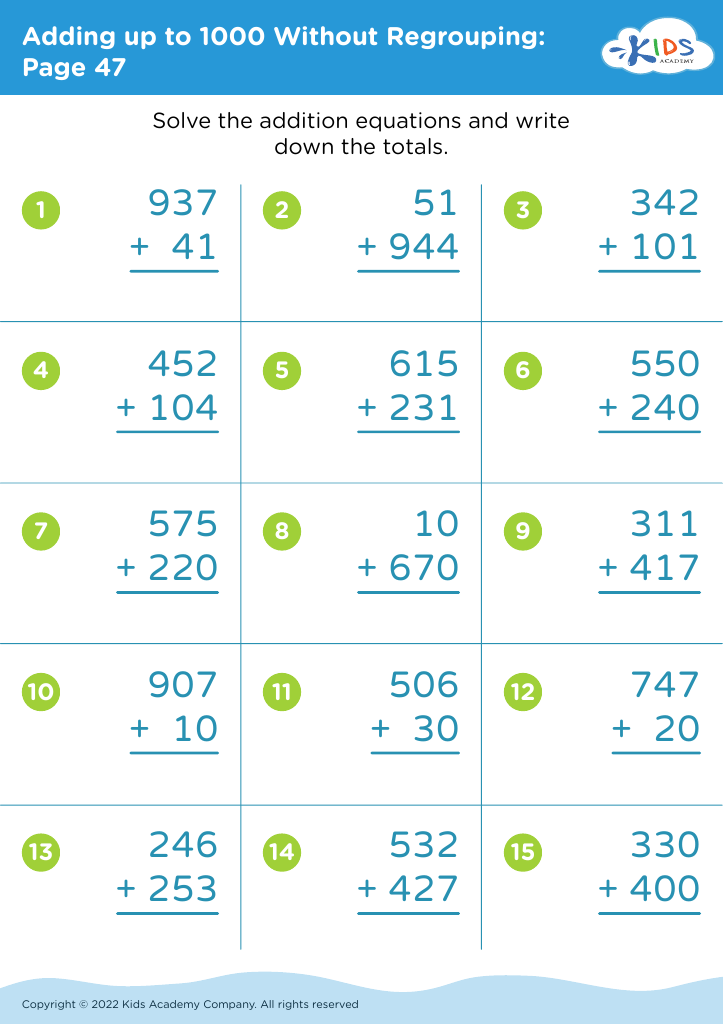
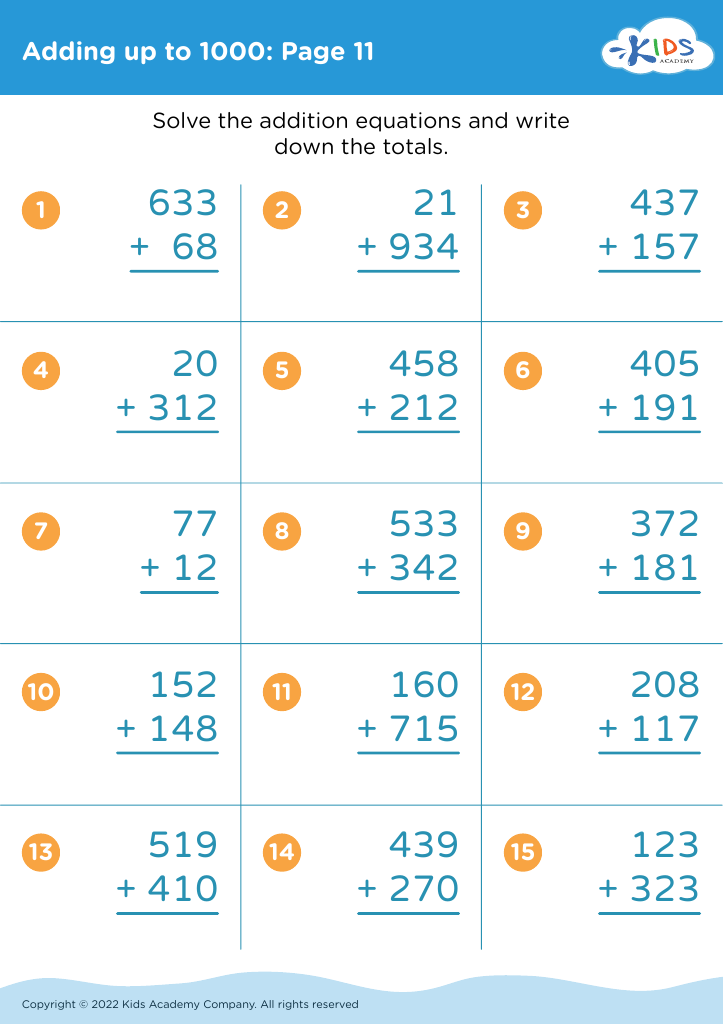
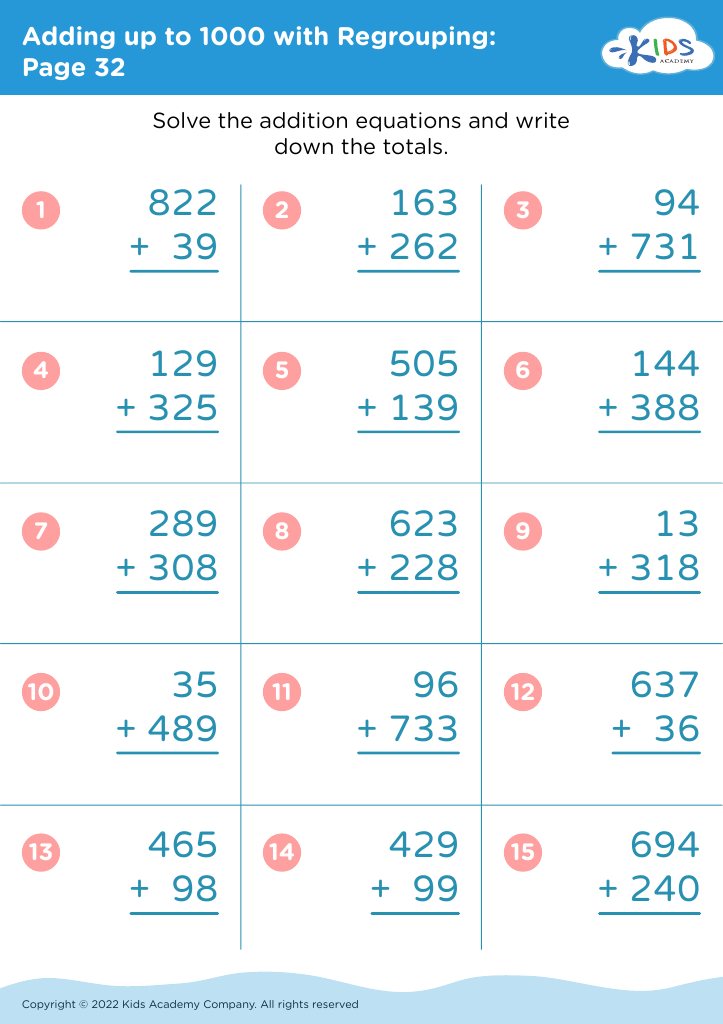



Improving math skills, particularly adding up to 1000, is essential for children aged 4-7 for several reasons. First, foundational math concepts are critical in early education, as they form the basis for more complex calculations later in their academic journey. Mastering basic addition not only helps children develop arithmetic fluency but also strengthens their problem-solving skills and logical thinking.
Furthermore, early math proficiency is linked to greater confidence in STEM (Science, Technology, Engineering, and Mathematics) subjects. Mastering addition can foster a positive attitude towards learning math, helping children view it as an enjoyable challenge rather than a daunting task. As they grow, this confidence can translate into higher achievement and a willingness to tackle more advanced concepts.
Lastly, acquiring these skills can enhance children's overall academic performance. Math literacy is not isolated; it supports skills in reading and comprehension as well. Parents and teachers play a crucial role in creating engaging, supportive environments that allow children to explore and practice these skills. By prioritizing addition, adults can equip young learners with essential tools for success in school and future endeavors, ultimately laying the groundwork for lifelong learning and achievement.








