Improving counting skills Adding up to 1000 Worksheets for Ages 4-7
4 filtered results
-
From - To
Enhance your child's counting skills with our "Improving Counting Skills: Adding up to 1000 Worksheets" designed for ages 4-7. These engaging worksheets build a strong foundation in arithmetic by guiding young learners through incremental challenges. Each sheet is crafted to make addition exciting and intuitive, helping children gain confidence in their math abilities. With colorful illustrations and child-friendly instructions, our worksheets transform learning into a fun adventure. Ideal for both classroom and home use, these exercises ensure kids develop essential math skills early on, setting the stage for future success in more advanced math concepts. Start exploring now and watch your child's counting skills thrive!
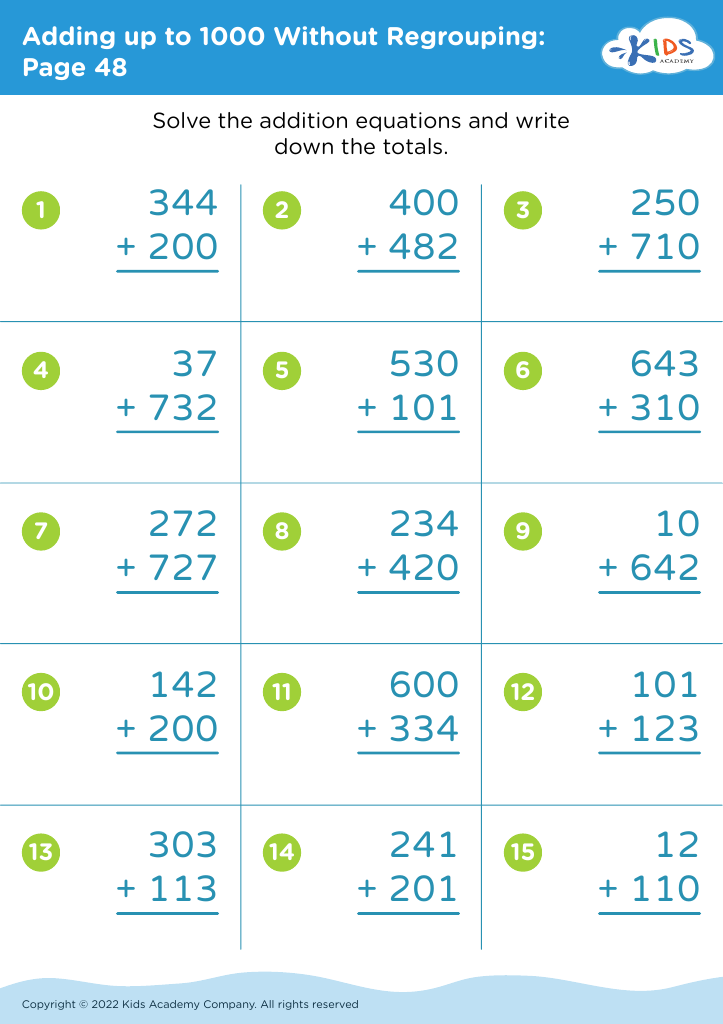
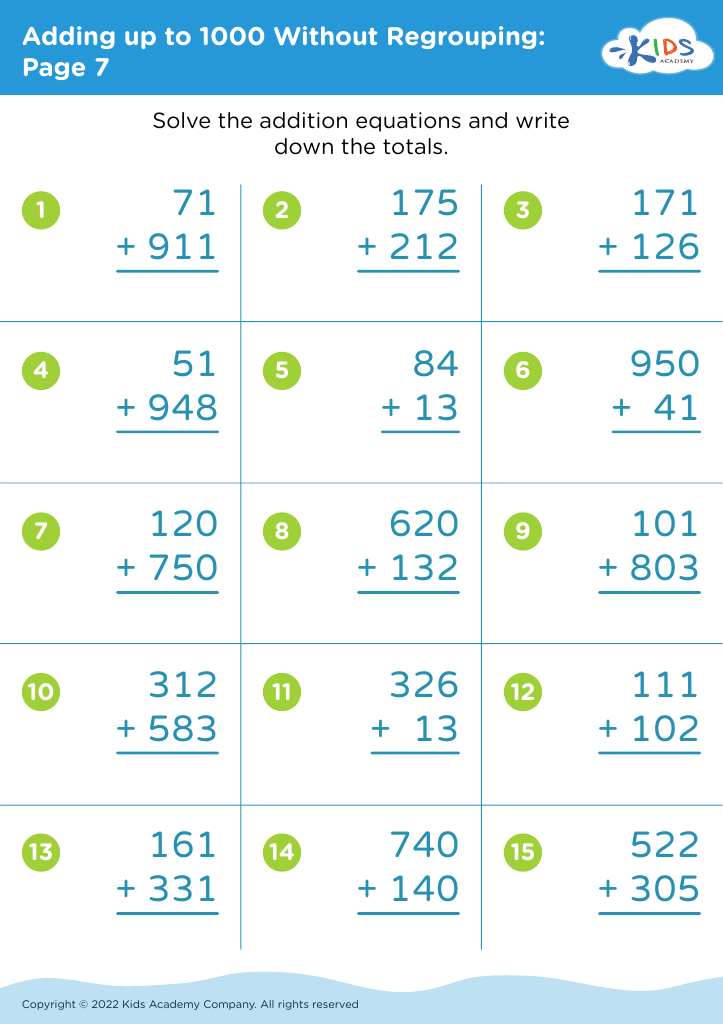
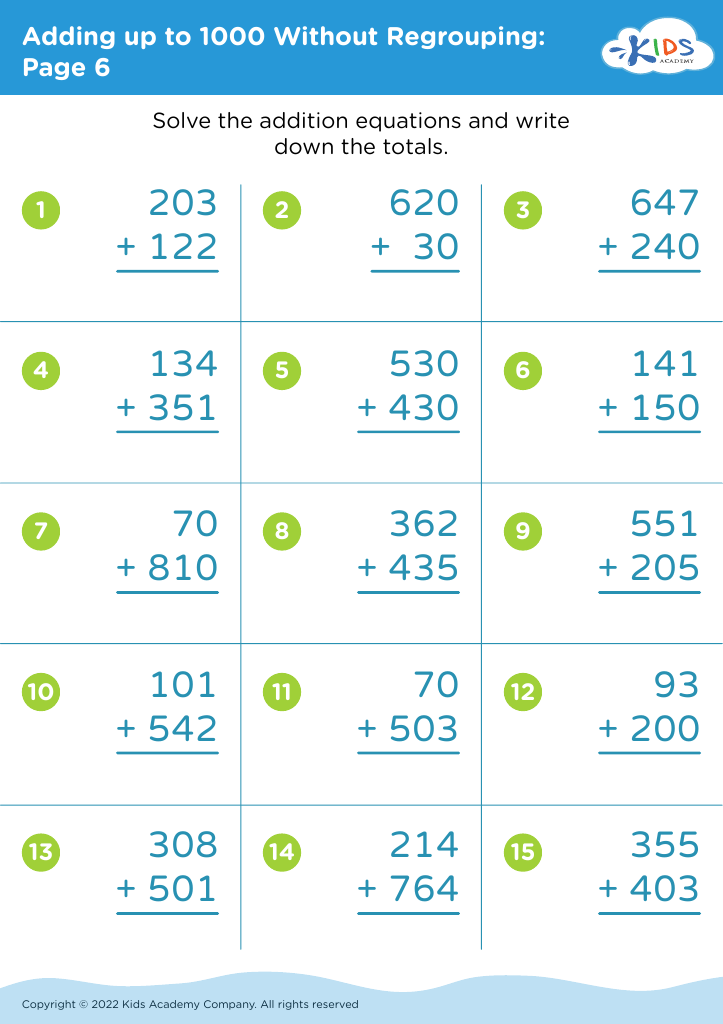
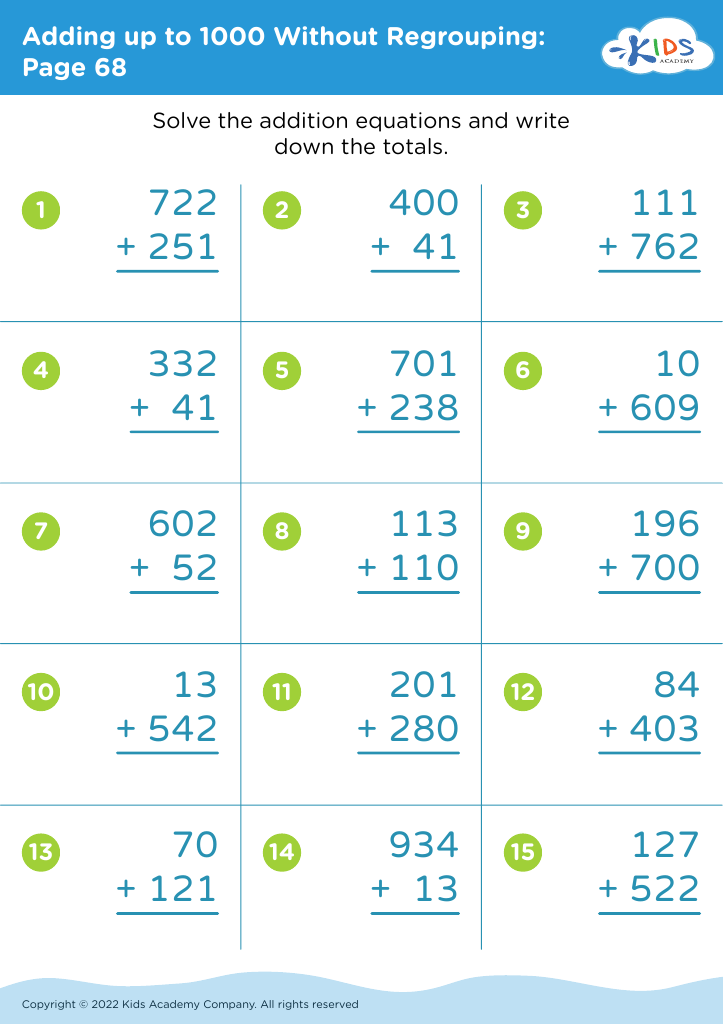



Improving counting skills, especially the ability to add up to 1000, is crucial for children aged 4-7 for several reasons. First and foremost, numeracy is a foundational skill that supports more complex mathematical understanding in later years. When children develop strong counting and addition skills early on, they build confidence in their mathematical abilities, which can result in a positive attitude towards learning math.
At this age, cognitive development is highly receptive to numeracy skills. Activities involving counting and addition engage children in problem-solving, foster critical thinking, and enhance their ability to process numerical information. These skills are not only paramount for mathematical success but also beneficial for everyday functions such as time management, following recipes, or handling money.
Moreover, early proficiency in math can predict academic achievement in other areas, as it strengthens logical reasoning abilities that are transferable to subjects like science and reading comprehension.
Furthermore, consistency in teaching these skills encourages perseverance and attention to detail. Using fun and relatable methods, whether through games, interactive apps, or practical examples, keeps the learning experience enjoyable and meaningful for young minds. Committing to nurturing these skills lays a solid groundwork for future educational endeavors and overall academic success.








