Number identification Adding up to 1000 Worksheets for Ages 4-7
3 filtered results
-
From - To
Welcome to our engaging "Number Identification Adding up to 1000 Worksheets" designed specifically for kids ages 4-7! These worksheets offer a fun and interactive way for young learners to explore number recognition and enhance their counting skills. With a focus on numbers up to 1000, children will enjoy various activities that promote visual learning and solidify their understanding of numeric concepts. Our thoughtfully crafted exercises foster essential math skills while ensuring an enjoyable learning experience. Perfect for classroom use or at-home practice, these worksheets aim to build confidence and foundational math skills in your child. Let's make learning numbers exciting!
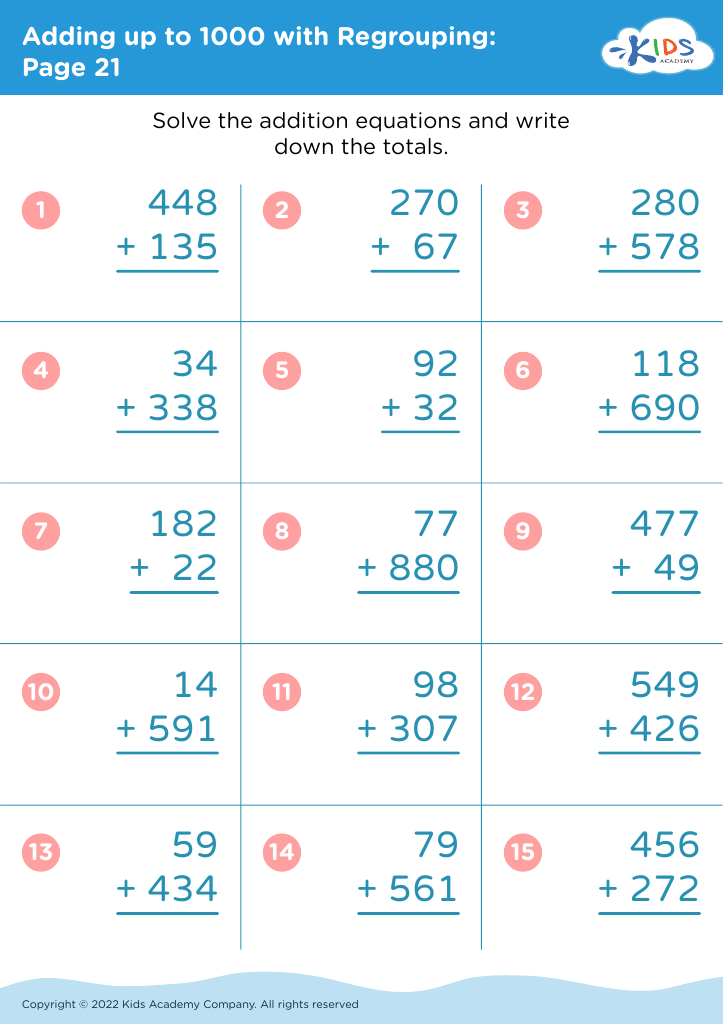
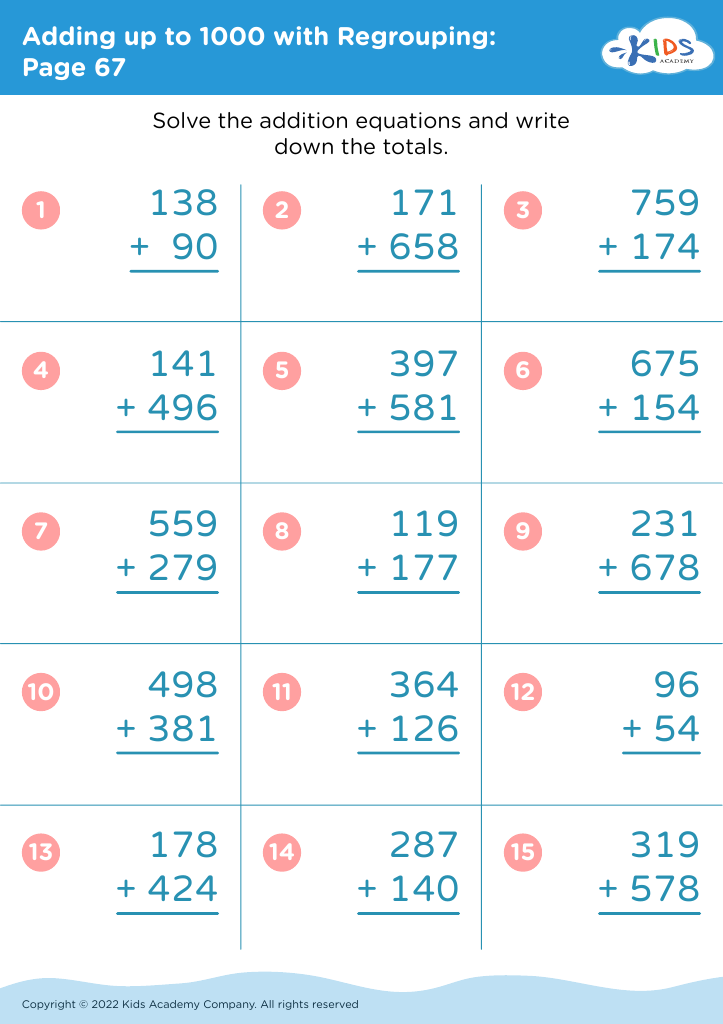
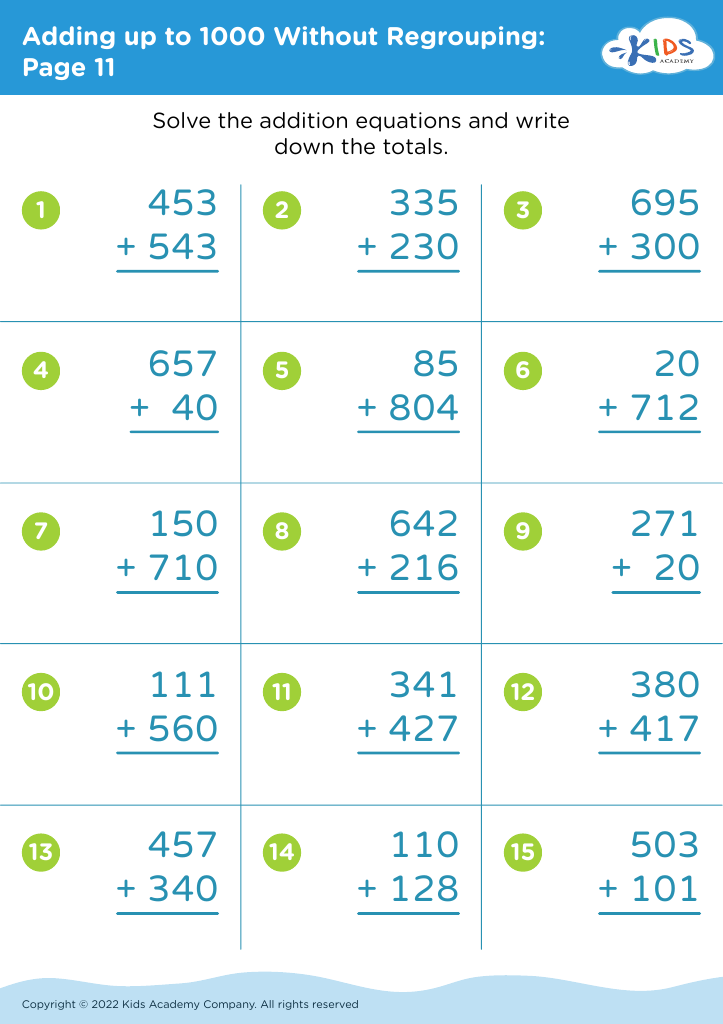



Number identification and addition skills, particularly in the range of up to 1000, are fundamental aspects of early mathematics education for children aged 4-7. Mastering these skills equips young learners with essential numeracy competencies that form the foundation for more advanced mathematical concepts.
Key reasons why parents and teachers should prioritize this aspect of learning include cognitive development, problem-solving abilities, and everyday application. Strong number identification skills enhance a child's ability to recognize patterns, understand quantities, and grasp the concept of place value, which is crucial for any further mathematical learning.
Additionally, the ability to add numbers effectively up to 1000 fosters a sense of accomplishment and boosts confidence. When children succeed in solving numerical problems, they are more likely to embrace challenges in other subjects associated with logical thinking and reasoning.
Moreover, with a growing reliance on calculations in daily life—such as when shopping, budgeting, or time management—these skills empower children to navigate their environment confidently. Collectively, these benefits underscore the need for parents and teachers to engage children in playful, meaningful math activities, thereby creating a supportive culture of learning that guides them toward academic success and prepares them for lifelong mathematical understanding.








