Number Recognition Adding up to 1000 Worksheets for Ages 4-7 - Page 2
31 filtered results
-
From - To
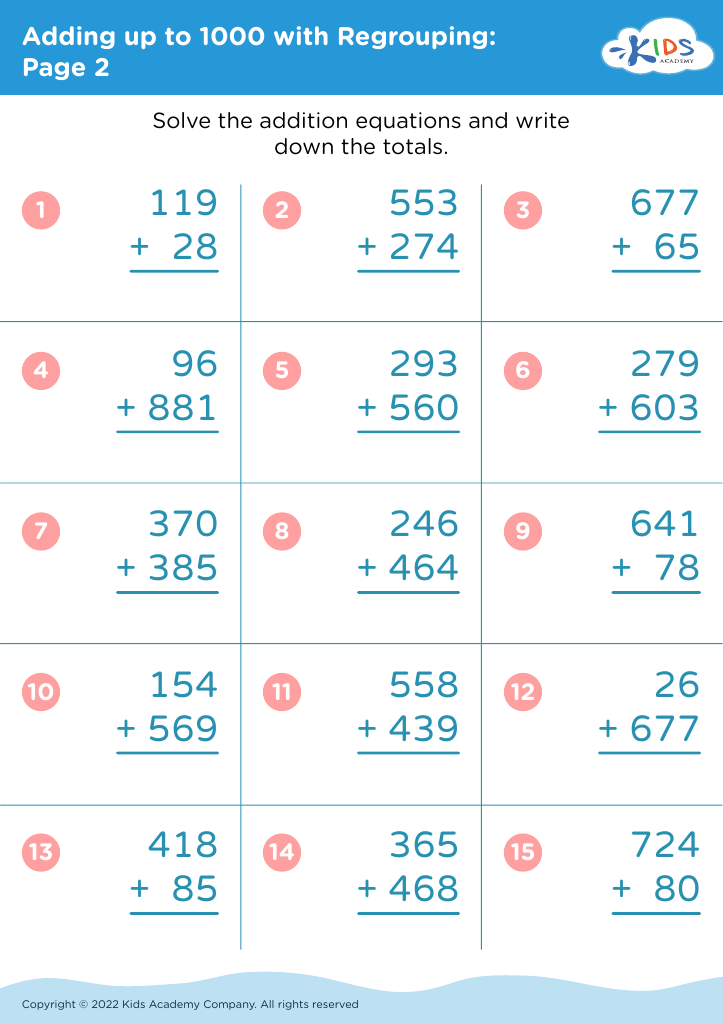
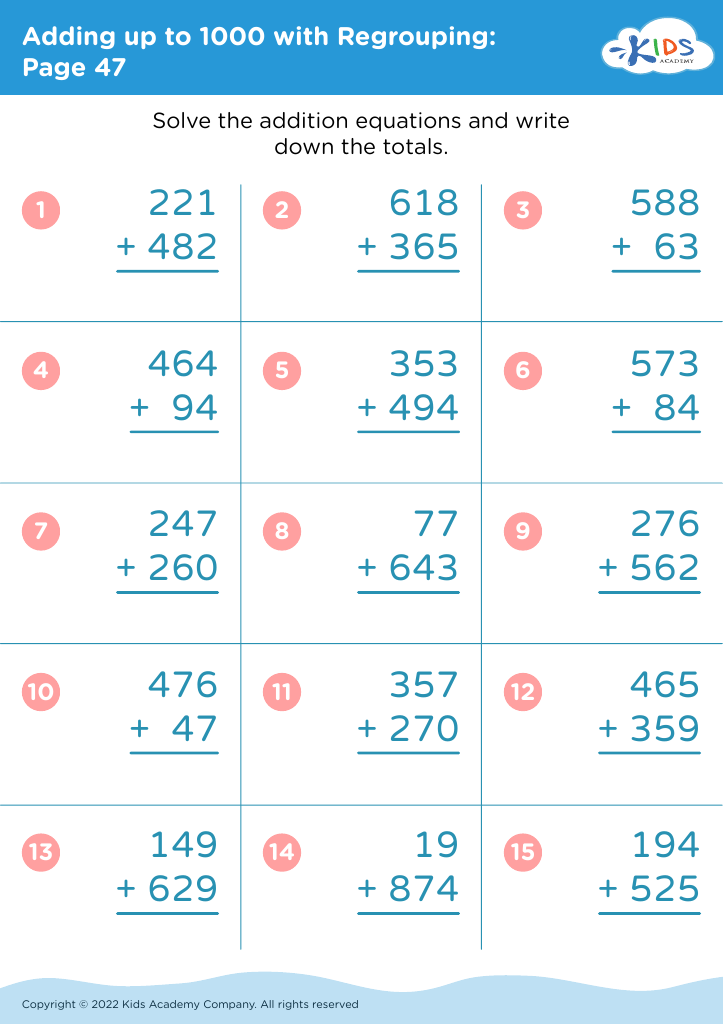
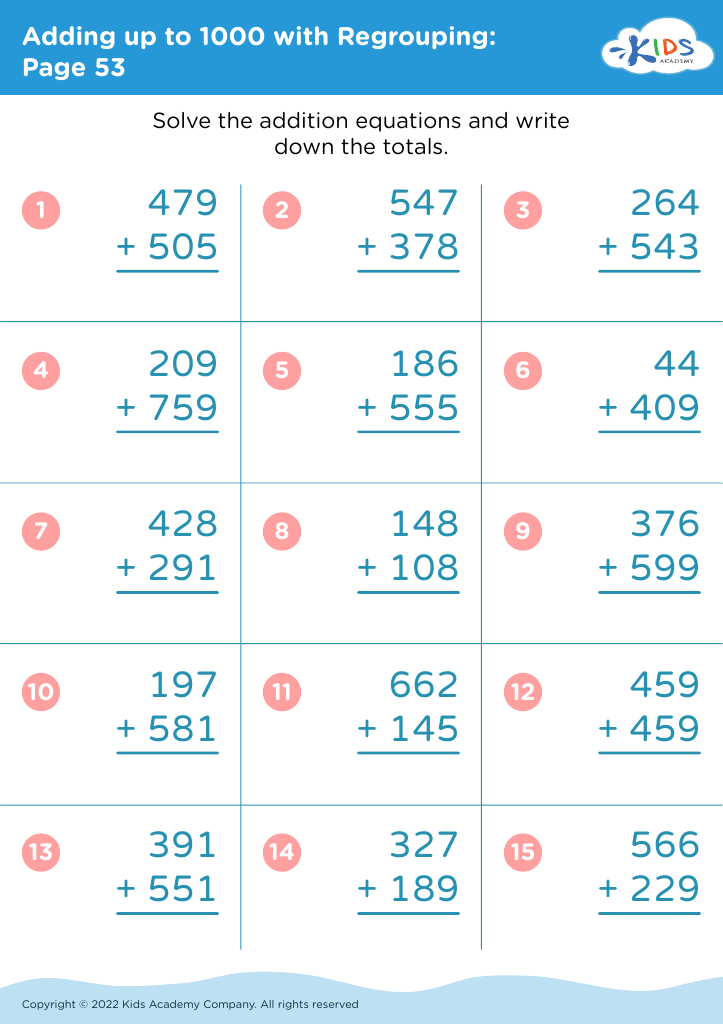
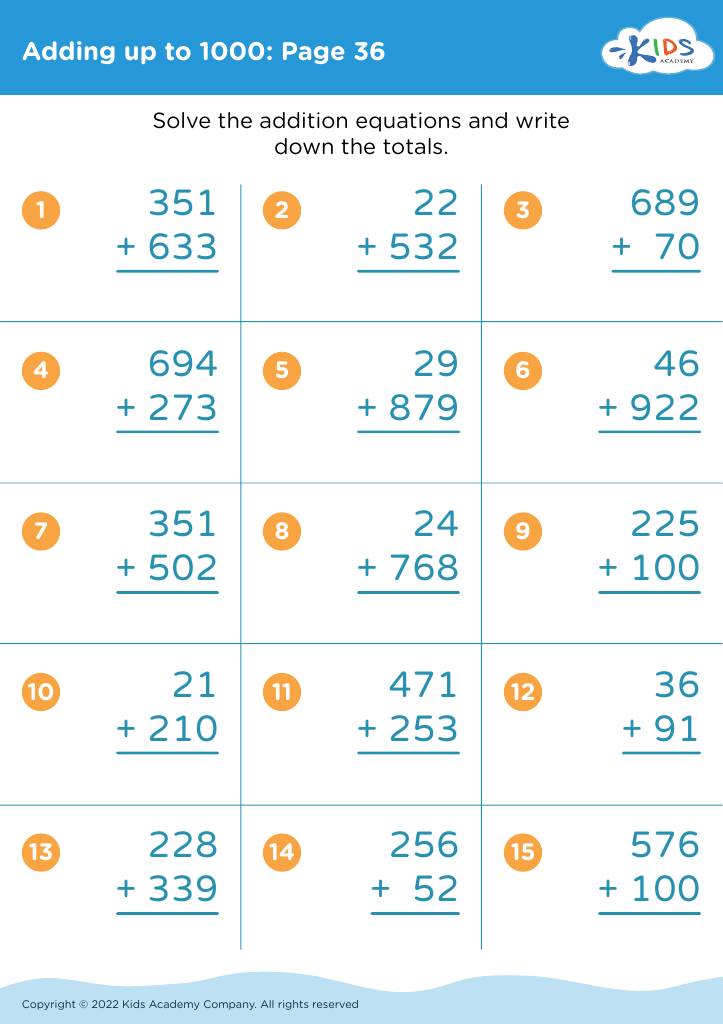
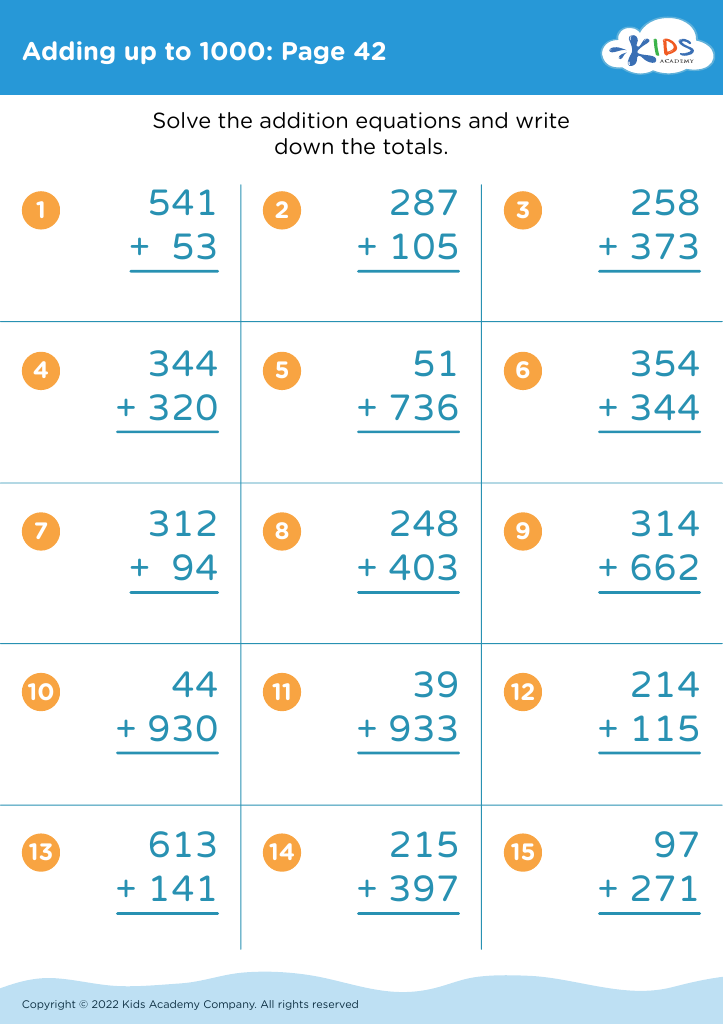
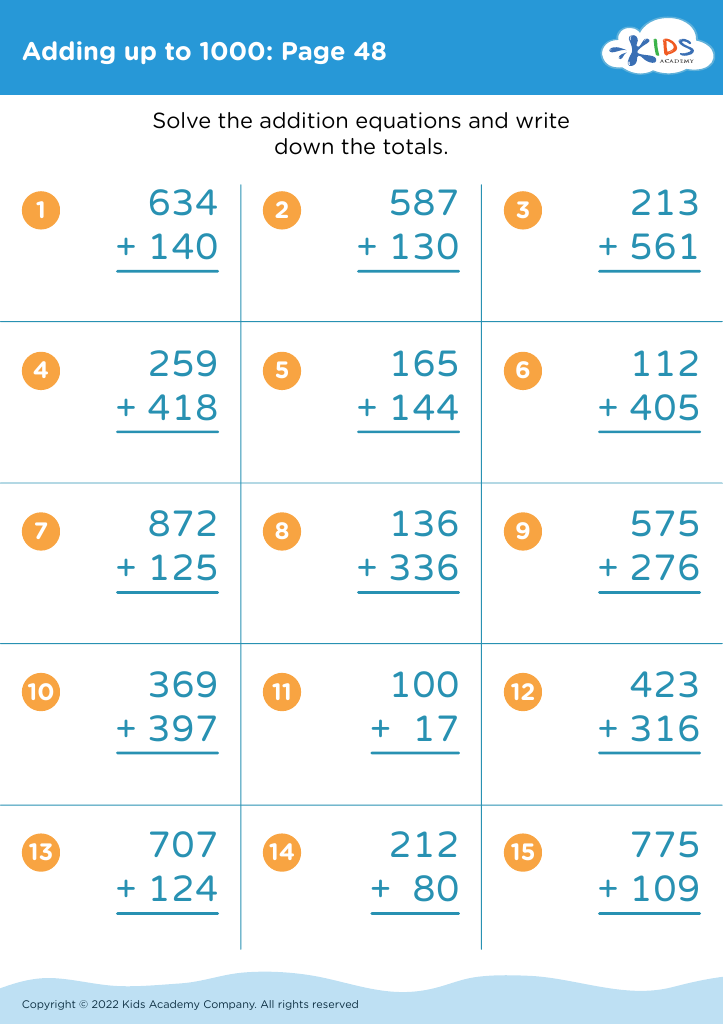
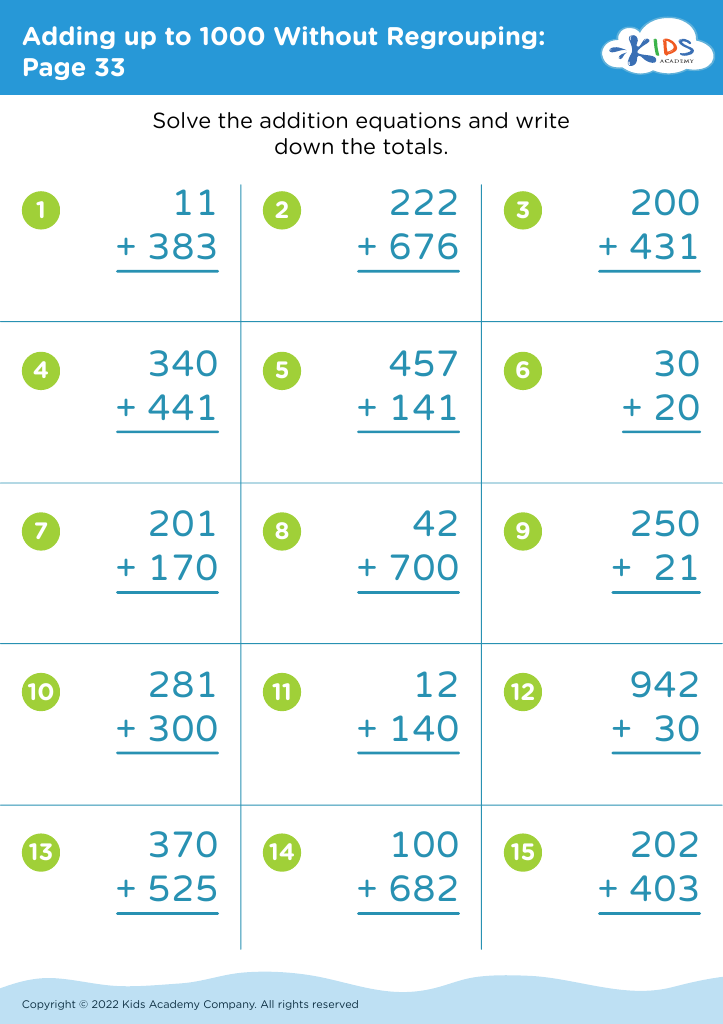




Parents and teachers should prioritize number recognition and addition up to 1000 for children ages 4-7 because these skills lay the essential foundation for future mathematical understanding and everyday life application. During these formative years, children's brains are highly receptive to learning basic concepts that they will build upon as they progress in school.
First, number recognition and the ability to add up to 1000 empowers children to develop strong numerical literacy. Recognizing numbers helps them understand their environment, such as reading prices, telling time, and interpreting quantities. As they become comfortable with numbers, their confidence in handling math-related tasks in their daily lives increases.
Second, early proficiency in number recognition and addition is critical for academic achievement. These skills form the bedrock for more complex mathematical concepts like subtraction, multiplication, and division that children will encounter as they advance to higher grades. Mastery of these foundational skills can lead to greater success and enthusiasm for learning in general.
Finally, fostering these skills enhances problem-solving and critical-thinking abilities. As children practice adding numbers, they develop logical thinking, attention to detail, and cognitive flexibility. All these cognitive skills are not just vital for math but are also important for overall intellectual development and effective decision-making in various contexts.
Investing effort in teaching number recognition and addition to young children thus prepares them for a lifetime of learning and problem-solving.








