Number Sequencing Adding up to 1000 Worksheets for Ages 4-7
5 filtered results
-
From - To
Empower your child’s math skills with our engaging "Number Sequencing Adding up to 1000 Worksheets," tailored for kids ages 4-7. These thoughtfully designed worksheets help young learners develop their number sequencing abilities, building a solid foundation in math. Through fun and interactive exercises, children will practice recognizing patterns and ordering numbers up to 1000, enhancing their confidence and competency. Perfect for both classroom use and at-home practice, these worksheets support critical-thinking and problem-solving skills in a bright and engaging manner. Elevate your child’s learning experience with our easy-to-download and print resources!
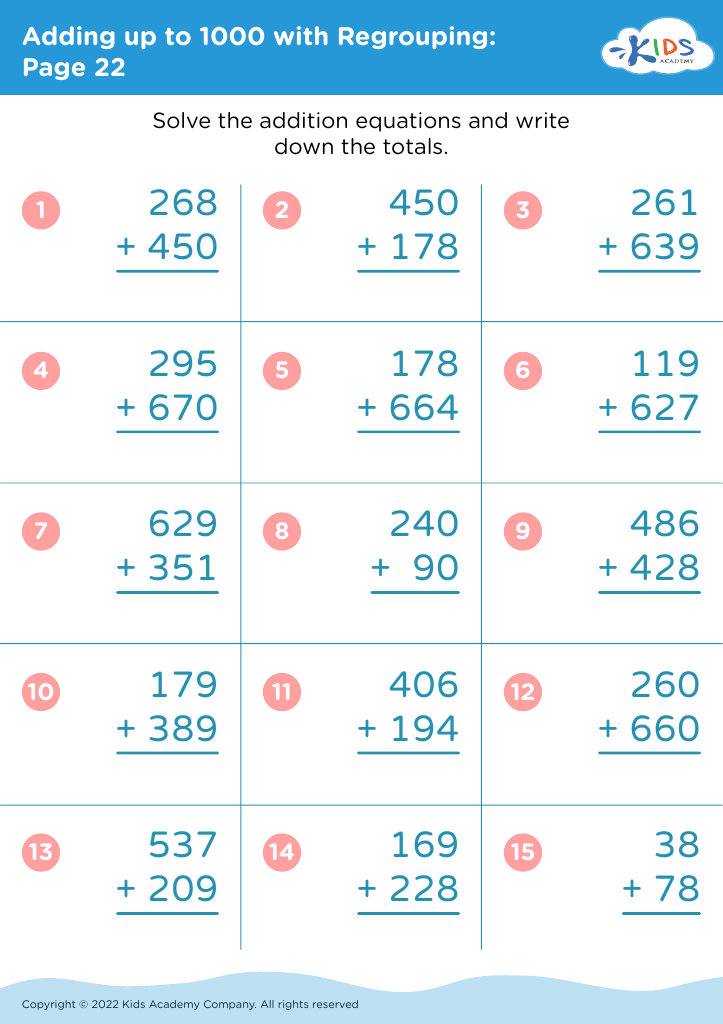
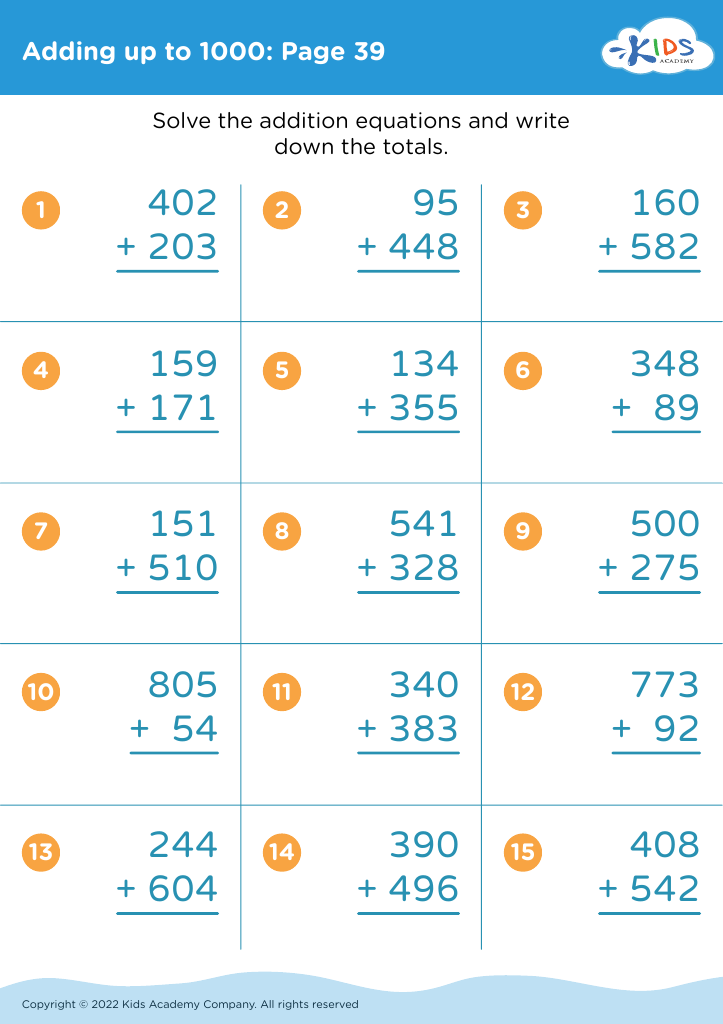
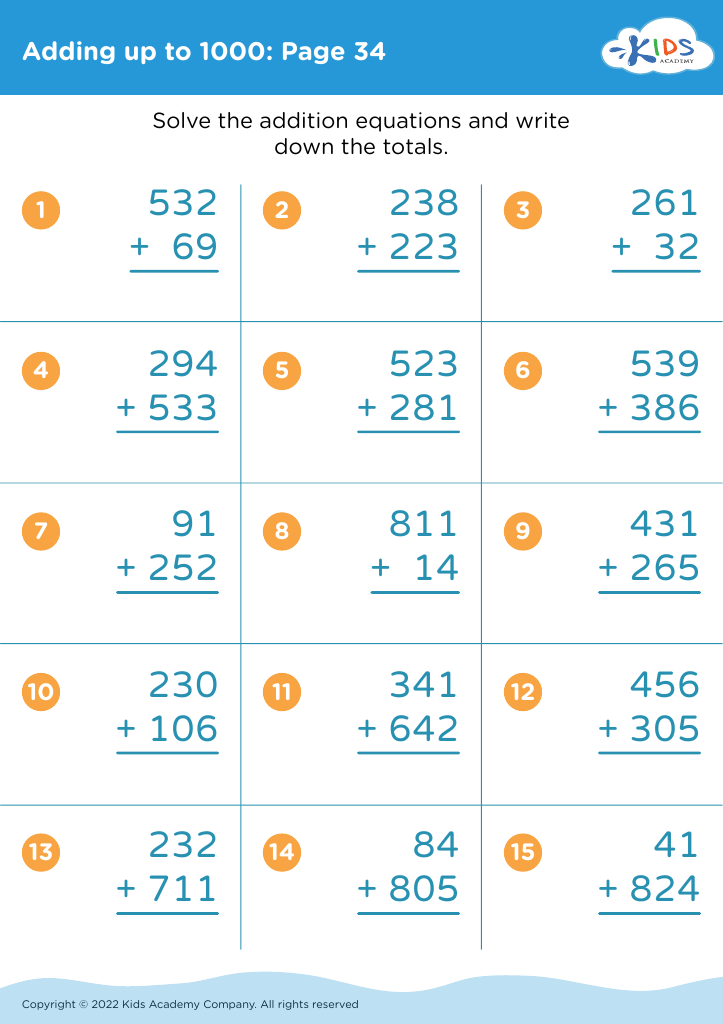
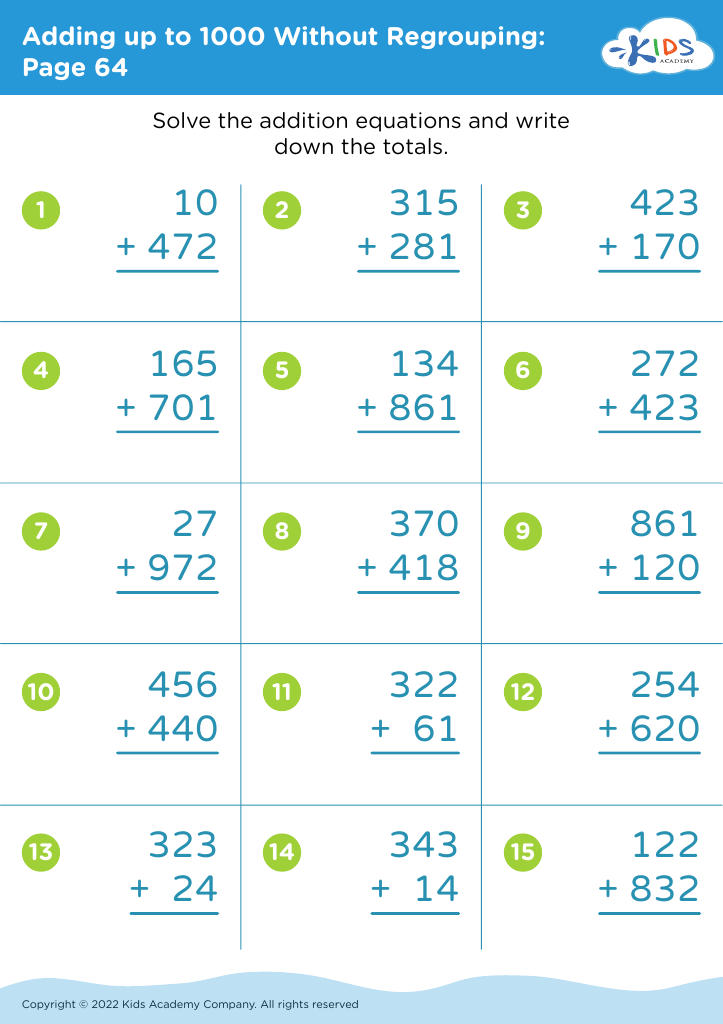
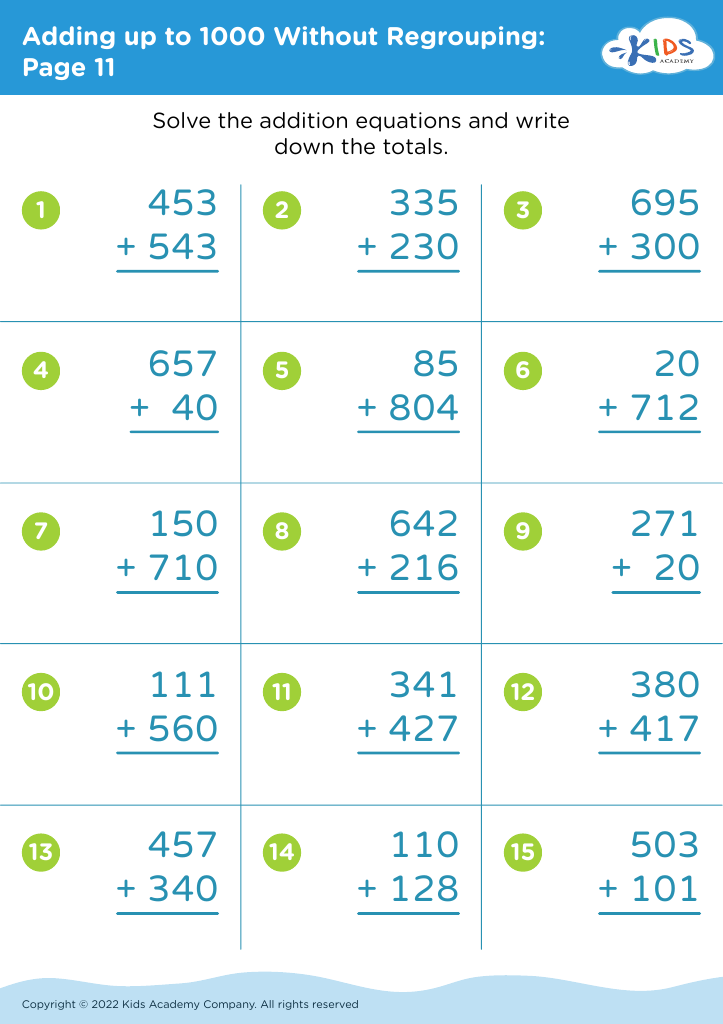



Number sequencing and addition up to 1000 for ages 4-7 are foundational skills that play significant roles in early childhood education. For parents and teachers, fostering these skills at an early age is essential because it provides a strong arithmetic base. Understanding number sequences helps children grasp the order and relationship between numbers, crucial for later mathematical concepts, including place value, addition, and subtraction. These foundational skills contribute to a child’s ability to follow more complex math problems with ease.
Moreover, by mastering basic addition, children gain confidence in their mathematical abilities, which enhances their overall academic confidence. Focusing on numbers up to 1000 challenges young learners to think critically and expand their cognitive abilities beyond simple single-digit arithmetic. These skills are integral in real-life situations, such as counting money, measuring objects, or understanding time.
Early exposure also aids in the development of pattern recognition, a critical thinking skill that transcends math and is applicable across various subjects. Additionally, engaging with sequences and large numbers fosters curiosity and excitement about learning math, creating a positive and encouraging mathematical environment. Therefore, parents and teachers should prioritize number sequencing and addition as these early experiences set the stage for future academic success and mathematical literacy.








