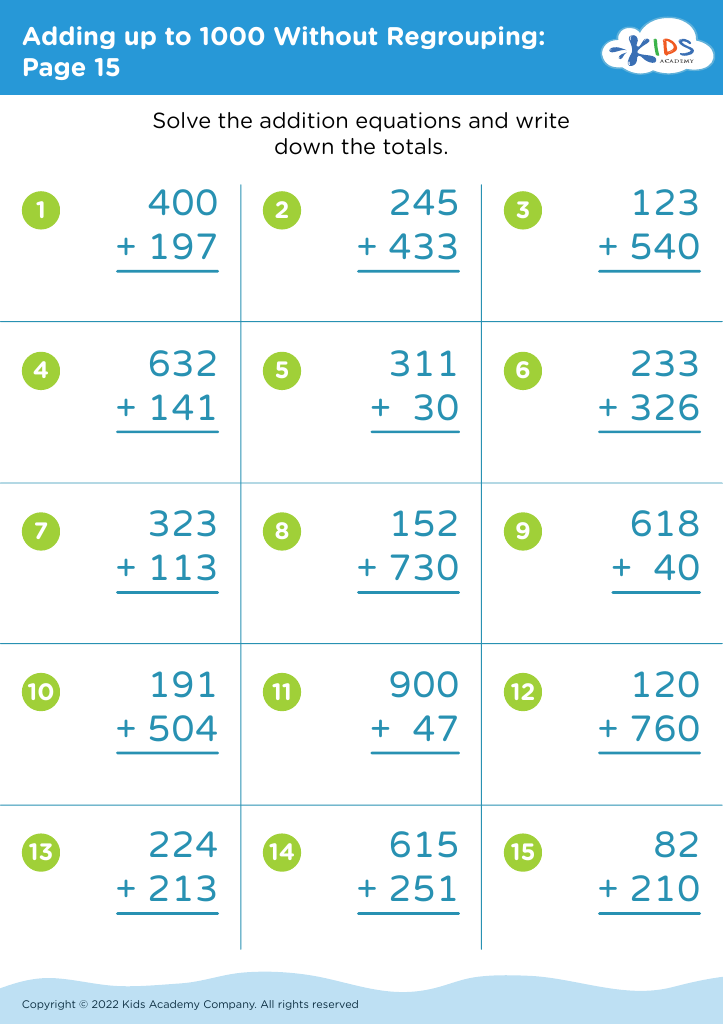




Problem-solving skills are fundamental to a child's development, particularly for those aged 4-7, as they form the basis for critical thinking and effective decision-making. By fostering these skills in young children, parents and teachers lay the groundwork for academic success and lifelong learning.
At this age, children are naturally curious and eager to explore their surroundings. Engaging them in problem-solving activities helps develop cognitive skills that enhance their understanding of concepts like numbers, patterns, and logical reasoning. Activities that encourage problem-solving can range from puzzles and games to interactive storytelling, which stimulates creativity and critical thinking.
Furthermore, problem-solving promotes resilience. Children learn to approach challenges with a positive mindset, understanding that mistakes are part of learning. This encourages persistence and adaptability, qualities that are vital as they encounter more complex tasks in their schooling.
In addition to academic benefits, strong problem-solving skills contribute to social and emotional development. Children learn to collaborate with peers, articulate their thoughts, and negotiate solutions, fostering healthy relationships. Therefore, cultivating these skills in early education not only supports academic achievement but also equips children with essential life skills necessary for their future.








