Shape identification Adding up to 1000 Worksheets for Ages 4-7
6 filtered results
-
From - To
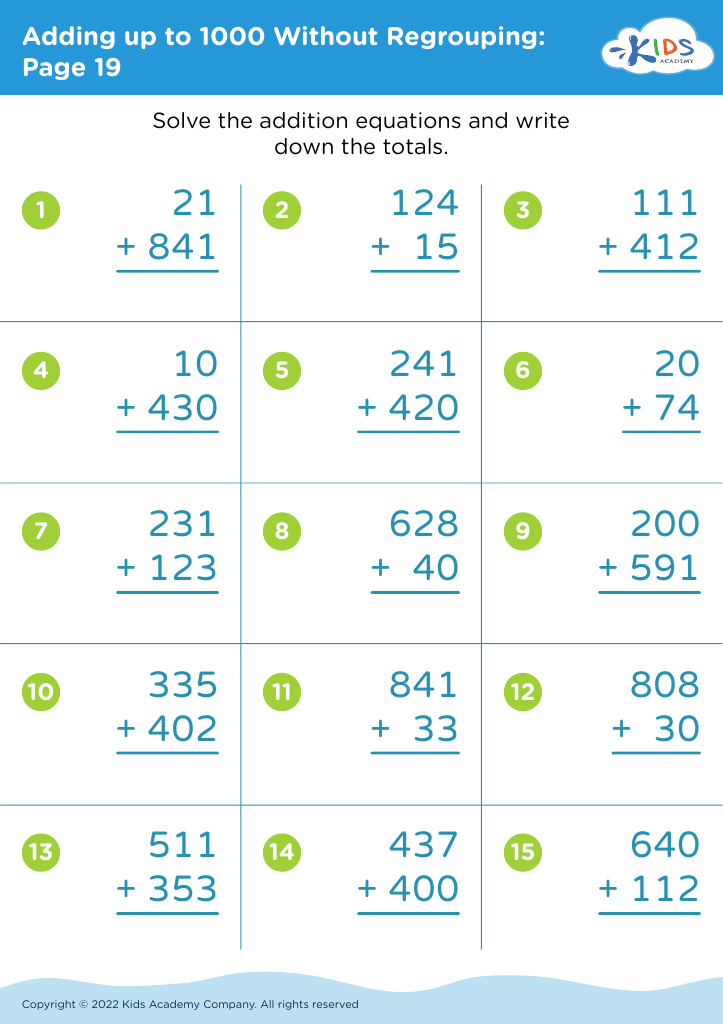
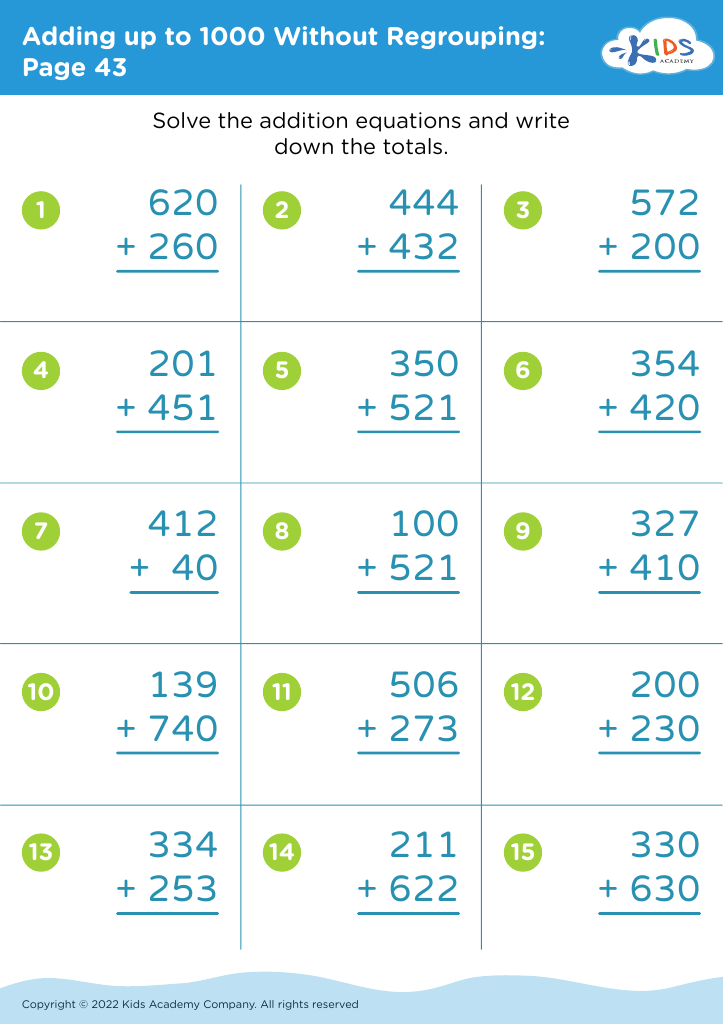
Discover a fun and engaging way to enhance your child's learning with our Shape Identification worksheets designed for ages 4-7. This collection features 1000 innovative and interactive activities that not only promote shape recognition but also encourage essential math skills such as addition and subtraction. Perfect for early learners, these worksheets combine colorful illustrations and hands-on exercises, making learning enjoyable. Each worksheet is tailored to progress in difficulty, ensuring that children can develop their skills at their own pace. Kickstart your child's educational journey with these comprehensive resources that bridge the gap between fundamental shapes and foundational math concepts!



Shape identification is a fundamental skill that lays the groundwork for numerous areas of learning in young children, particularly those aged 4-7. First, recognizing shapes fosters critical thinking and problem-solving skills, which are essential in math and science as children advance in their education. By learning to identify and classify shapes, children develop spatial awareness, enabling them to understand and navigate their environment effectively.
Furthermore, shape identification enhances a child’s vocabulary and language skills. As they describe various shapes and their attributes, such as sides and angles, children acquire new words and concepts, enriching their communication abilities. This language development is crucial during the formative years, as it contributes to their overall literacy skills.
In addition, engaging in shape-related activities can spark creativity and imagination. Parents and teachers can use shapes to create art, build structures, or even explore geometry through play, making learning enjoyable and interactive.
Lastly, strong shape identification skills contribute to early numeracy, helping children understand patterns, symmetry, and even basic addition or subtraction in the context of shapes. By prioritizing shape identification in early education, parents and teachers give children the tools they need to succeed academically and creatively in their formative years.








