Understanding patterns Adding up to 1000 Worksheets for Ages 4-7
5 filtered results
-
From - To
Explore our "Understanding Patterns Adding Up to 1000 Worksheets" designed for children ages 4-7. These engaging worksheets help young learners recognize and create patterns, enhancing their math skills while making additions up to 1000 more intuitive. Through colorful activities, playful illustrations, and clear instructions, kids will develop their problem-solving abilities and gain confidence in their arithmetic skills. Perfect for home or classroom use, our resources not only cover foundational mathematics but also encourage critical thinking and creativity. Jumpstart your child’s journey in math with fun and interactive pattern recognition exercises that make learning enjoyable and effective!
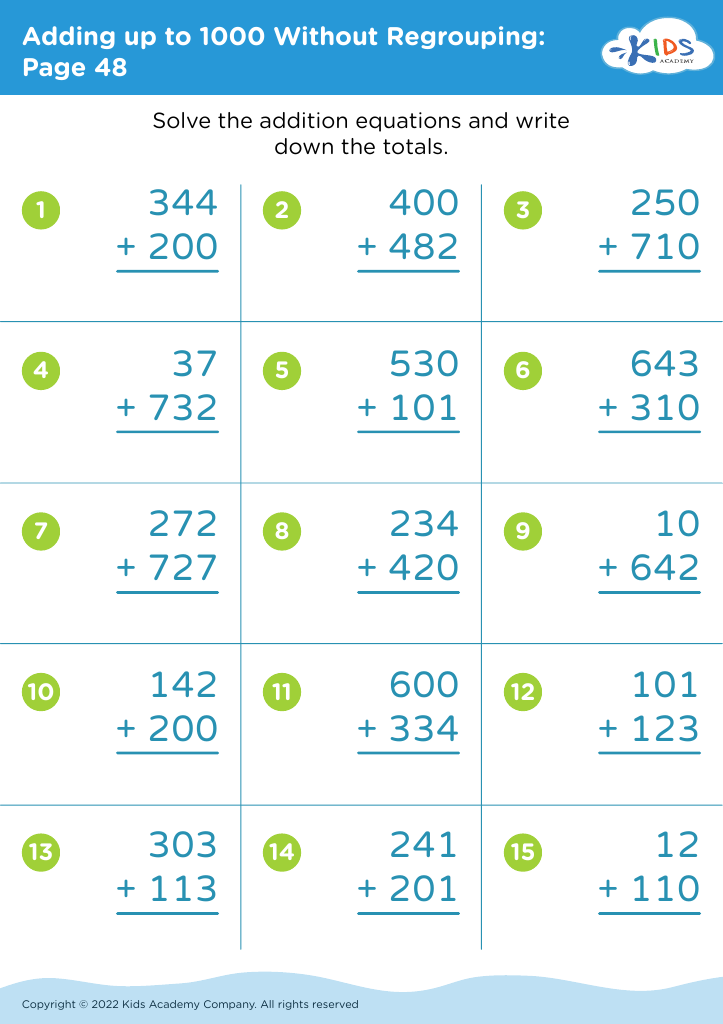
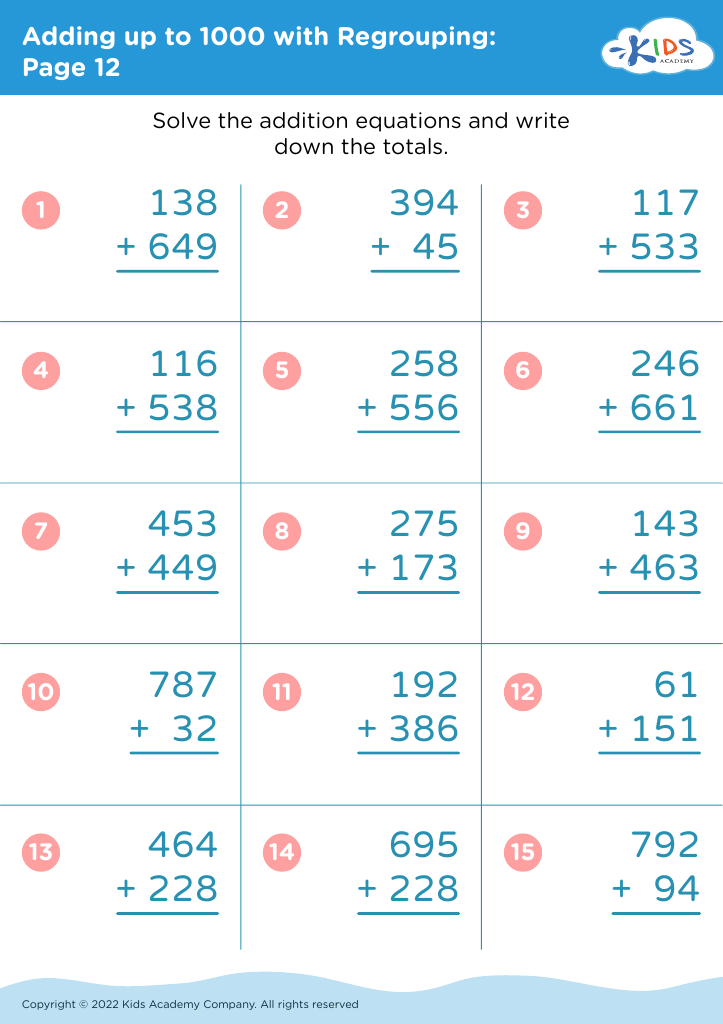
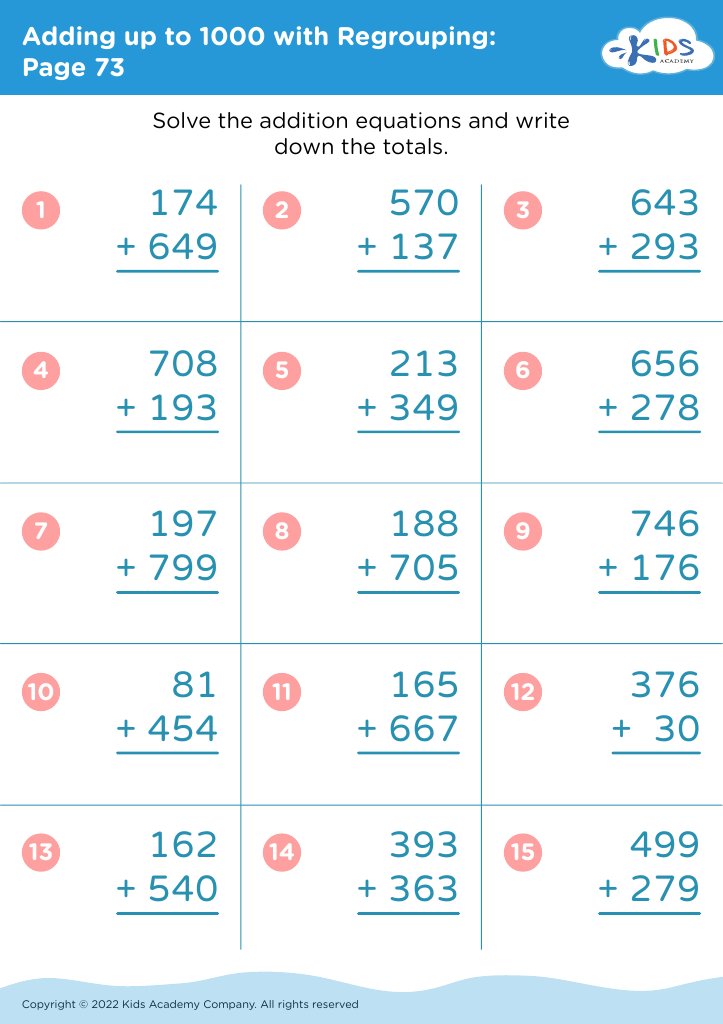
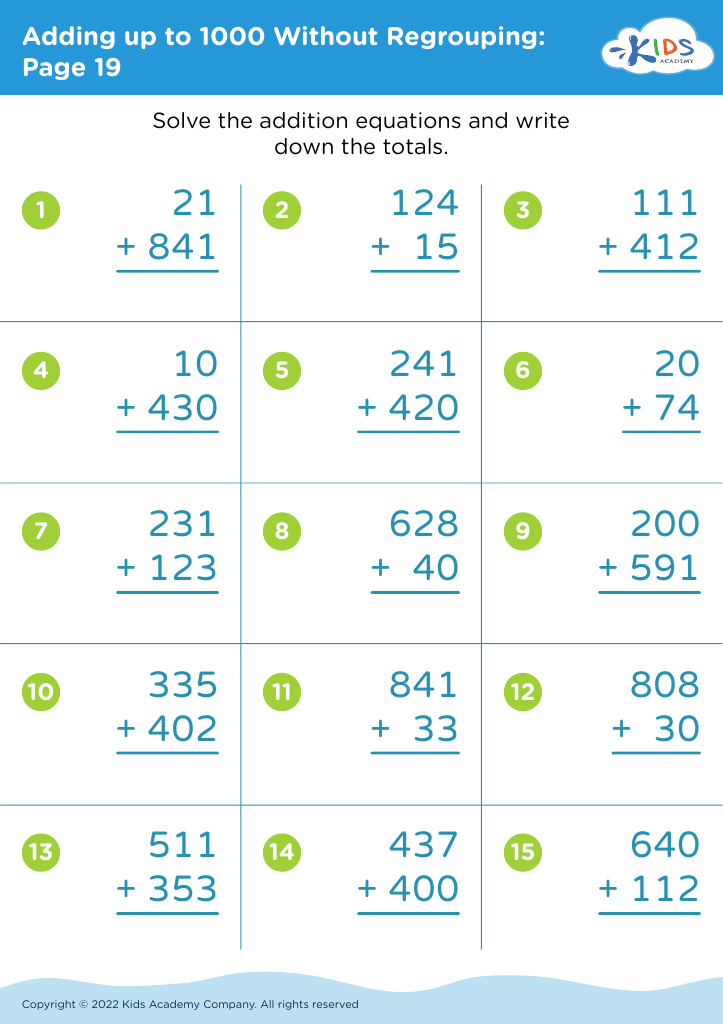
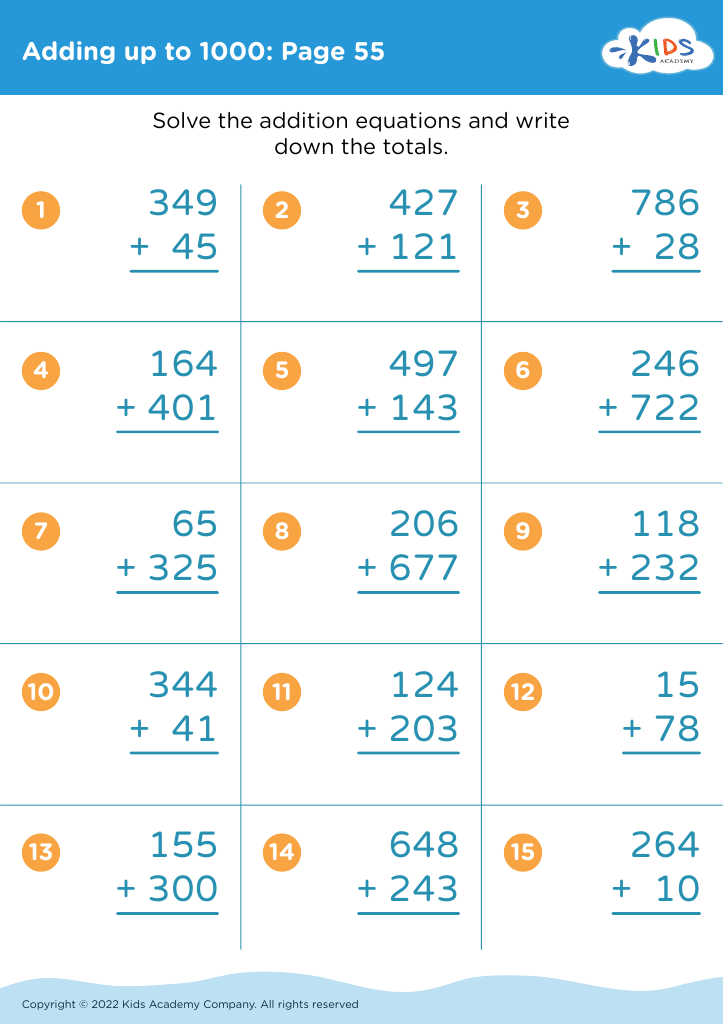



Understanding patterns and the concept of adding up to 1000 is crucial for children aged 4-7 as it lays the foundation for their mathematical development. At this early stage, children are naturally curious and eager to learn through exploration. Recognizing patterns helps them make sense of the world around them, encouraging critical thinking and problem-solving skills. When they engage with numbers, identifying sequences and corresponding values, they build a conceptual framework that contributes to their overall mathematical understanding.
For parents and teachers, fostering an environment where children learn to add up to 1000 is essential. This initiates their acquaintance with larger numbers in a fun and manageable way, igniting their enthusiasm for math. Understanding how to manipulate and combine numbers not only enhances computational skills but also plays a vital role in developing a student's confidence and independence in learning.
Moreover, teaching patterns supports other subjects such as science and art, where understanding sequences and designs is beneficial. By nurturing these skills early on, parents and teachers equip children with tools necessary for future academic successes, reinforcing a positive attitude towards math that can last a lifetime. Investing time in this foundational concept yields lasting benefits in a child’s education and cognitive development.








