Understanding sequencing Adding up to 1000 Worksheets for Ages 4-7
3 filtered results
-
From - To
Explore our "Understanding Sequencing: Adding up to 1000" worksheets designed for children aged 4 to 7! These engaging activities help young learners grasp the concept of sequencing numbers while building their addition skills. Through colorful visuals and fun tasks, kids will learn to recognize patterns in numbers and enhance their understanding of the mathematical sequence. Perfect for classroom use or at-home learning, these worksheets encourage critical thinking and improve problem-solving abilities. Help your child develop a strong foundation in math with this essential resource that makes learning enjoyable and effective. Start their math journey today!
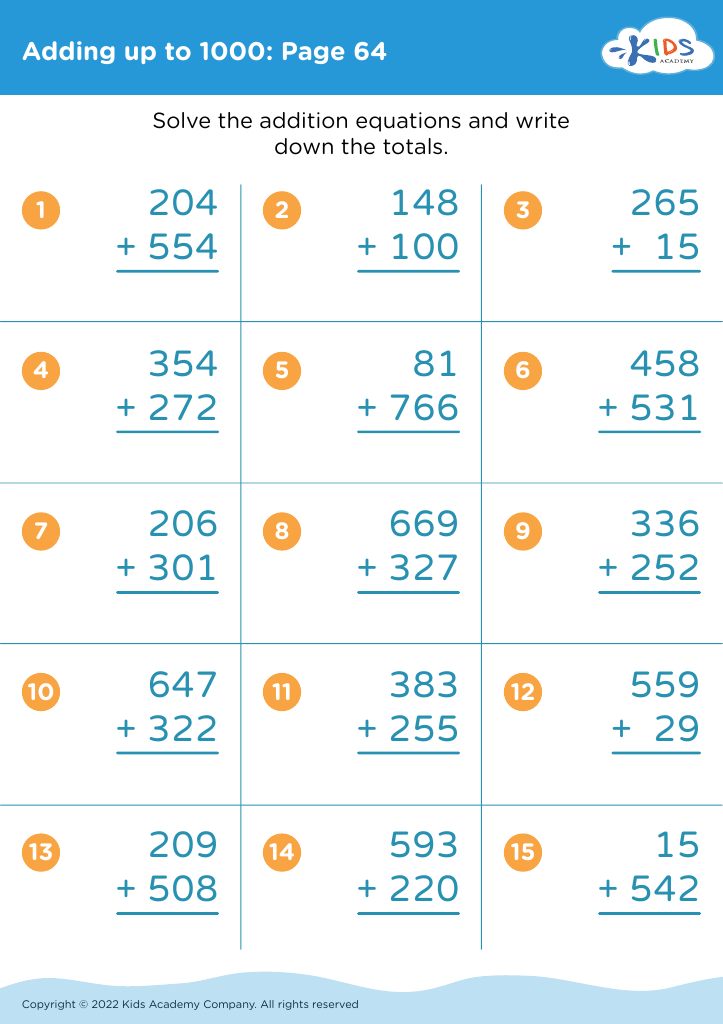
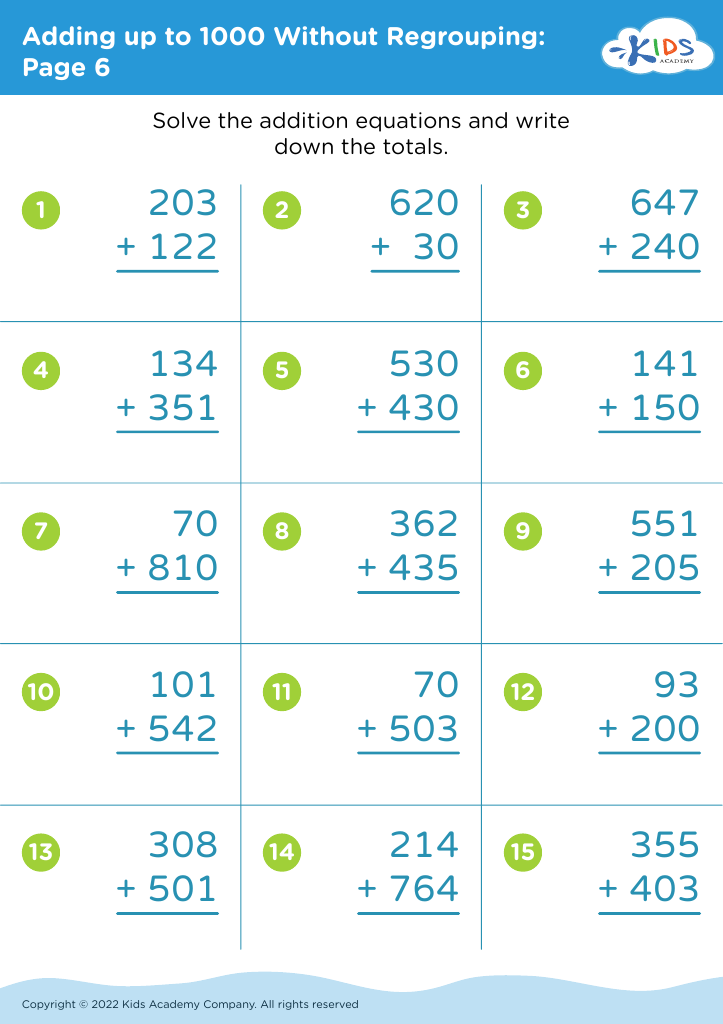
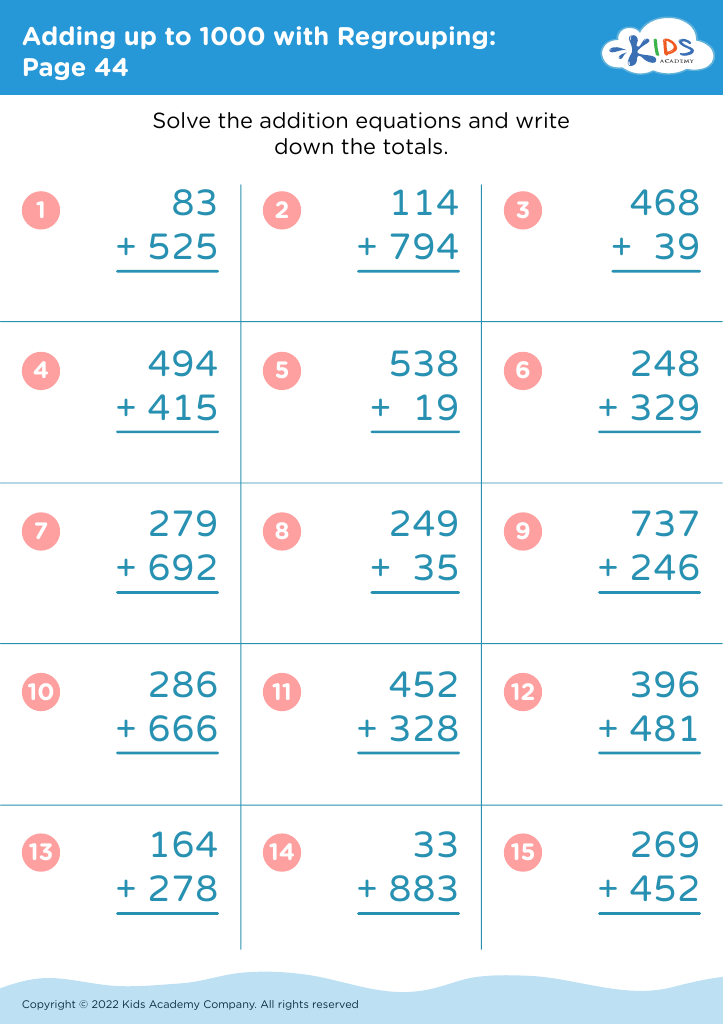



Understanding sequencing and the concept of adding up to 1000 are crucial for children ages 4-7, as they form foundational skills for both mathematics and cognitive development. For parents and teachers, recognizing the significance of these skills can profoundly impact a child's education and future learning.
Sequencing helps children develop skills in logical organization and problem-solving. It teaches them how to arrange items or events in a specific order, which is a key factor in areas like literacy, comprehension, and math. For example, understanding the sequence of numbers aids in counting, which is essential for addition and overall mathematical proficiency.
Adding up to 1000 encourages children to explore large numbers and “place value” concepts, providing a deeper understanding of mathematics. This knowledge not only enhances their computational abilities but fosters critical thinking, allowing them to break down complex problems into manageable parts. Additionally, mastering these skills at a young age builds confidence and instills a positive attitude towards math, reducing anxiety around the subject later on.
In essence, imparting the principles of sequencing and adding up to 1000 equips children with essential tools for academic success, sets the stage for effective problem-solving, and promotes a love of learning that can last a lifetime.








