Understanding symmetry Adding up to 1000 Worksheets for Ages 4-7
4 filtered results
-
From - To
Introducing the "Understanding Symmetry Adding up to 1000 Worksheets for Ages 4-7"–the perfect blend of engaging math practice and fun. Designed to foster STEM skills in young learners, our worksheets cover essential concepts. Through vibrant and interactive activities, children explore symmetrical patterns while mastering addition skills within 1000. Ideal for building a strong mathematical foundation, they also nurture critical thinking and problem-solving abilities. Tailored for early graders, the worksheets provide valuable practice through enjoyable exercises that inspire learning. Unlock the pathway to mathematical confidence and creativity with our comprehensive worksheets!
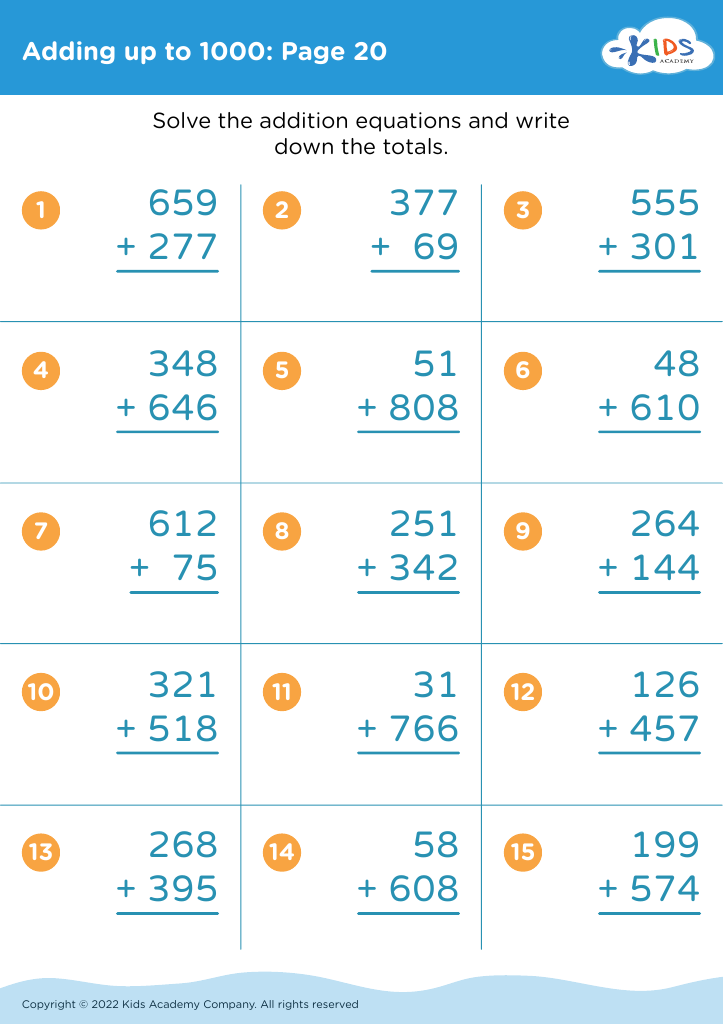
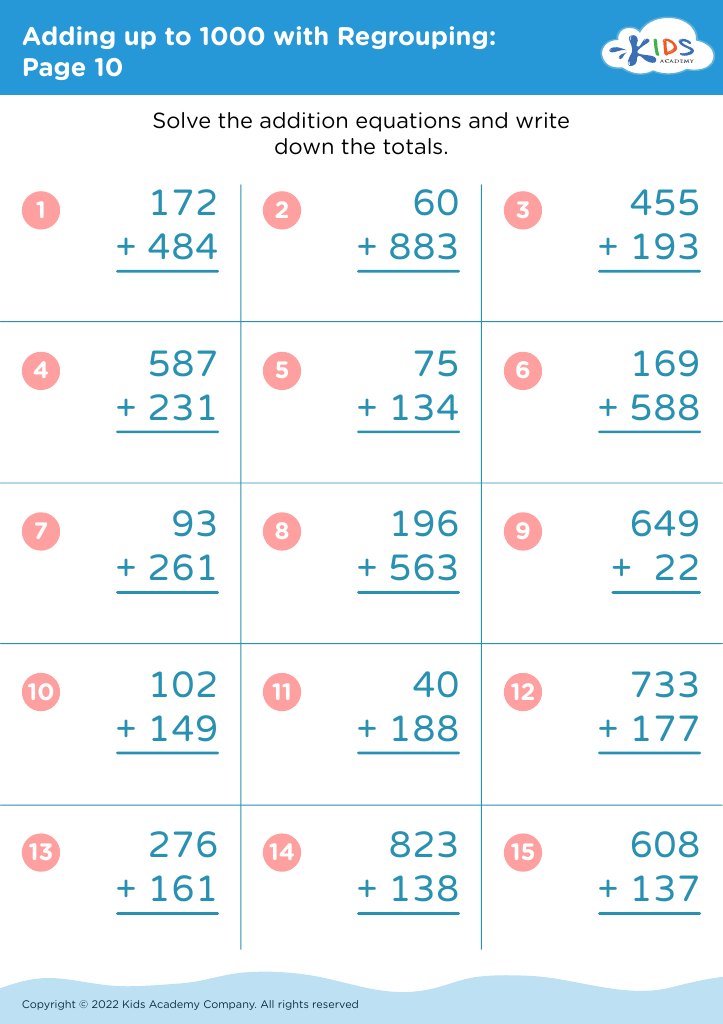
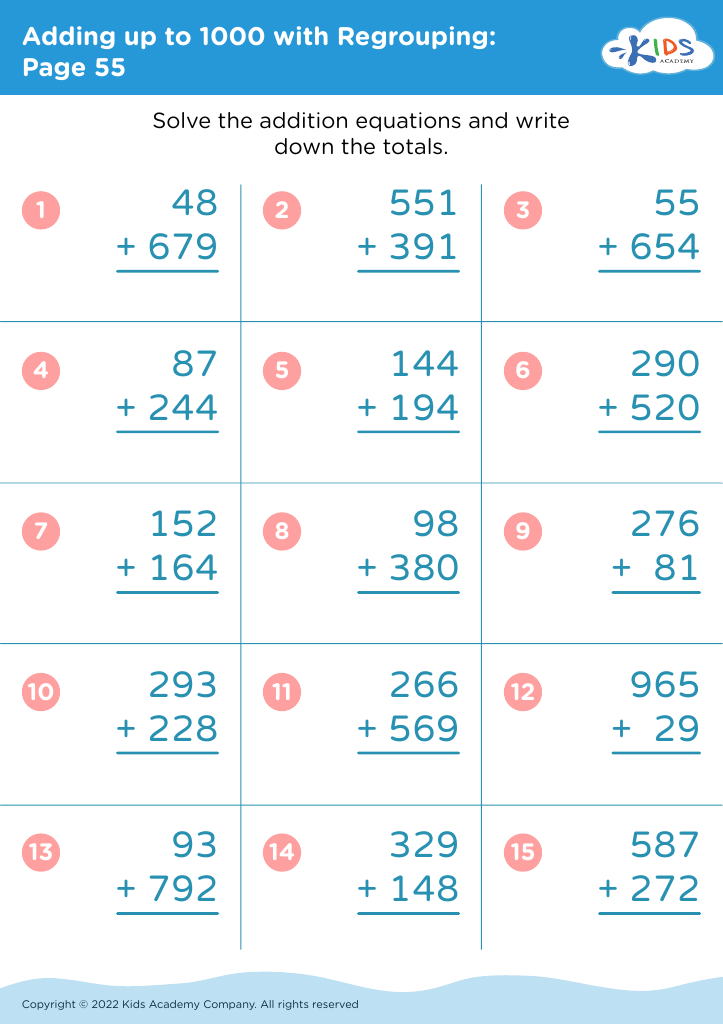
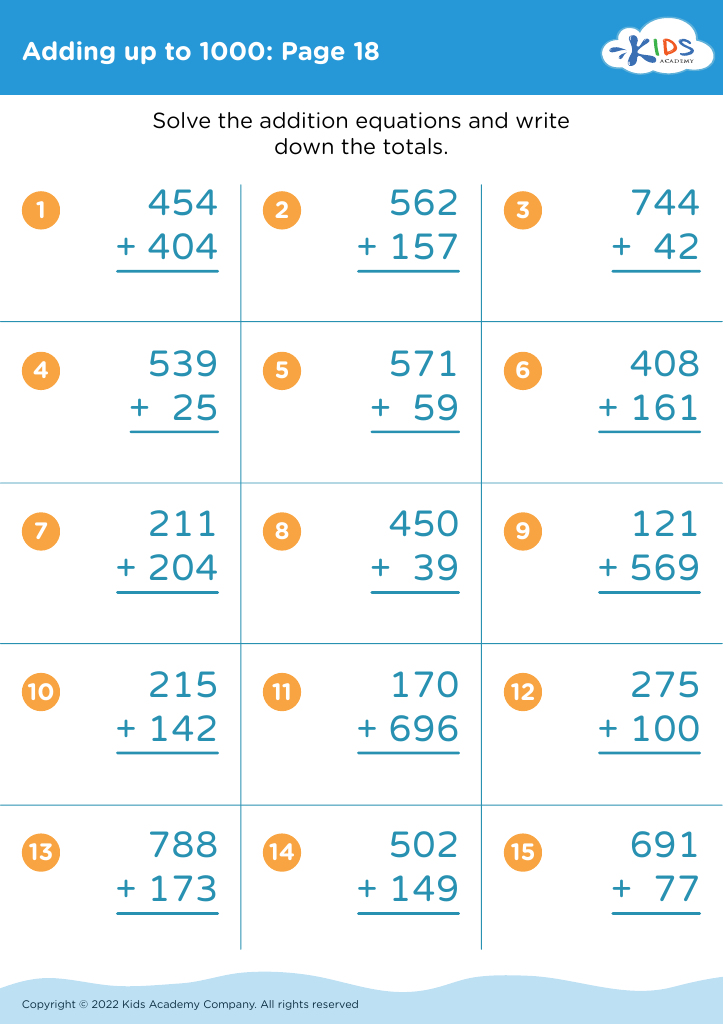



Understanding symmetry and the ability to add up to 1000 are crucial early math skills that foster foundational cognitive development in children between the ages of 4-7. Symmetry plays a key role in helping children recognize patterns, build spatial awareness, and develop critical thinking skills. When children identify symmetrical objects or create symmetrical drawings, they learn about balance and proportion, which are essential concepts not just in math but in everyday problem-solving and artistic expression.
Adding up to 1000, on the other hand, is pivotal for developing numerical fluency and a solid understanding of place value. It enhances a child's ability to perform more complex arithmetic operations and sets the groundwork for more advanced mathematical concepts. Engaging with large numbers early on can also help demystify big figures, making them less intimidating when encountered in later contexts like science, history, or daily life.
Additionally, mastering these skills boosts a child's confidence, encourages a positive attitude towards learning, and ignites curiosity. Parents and teachers should thus promote these mathematical areas to cultivate a robust academic foundation, fostering an environment where problem-solving and critical thinking are part of everyday life and learning, setting children up for future success.








