Understanding time Adding up to 1000 Worksheets for Ages 4-7
3 filtered results
-
From - To
Explore our "Understanding Time: Adding Up to 1000 Worksheets" designed for children ages 4-7. These engaging resources introduce young learners to the concept of time while reinforcing their addition skills up to 1000. Featuring colorful visuals and interactive activities, our worksheets help kids grasp important time concepts like hours, minutes, and daily routines. With a blend of math and time understanding, these worksheets foster critical thinking and enhance problem-solving abilities. Ideal for both classroom and at-home learning, our materials ensure learning is fun and effective. Download now and give your child the tools to master time while building foundational math skills!
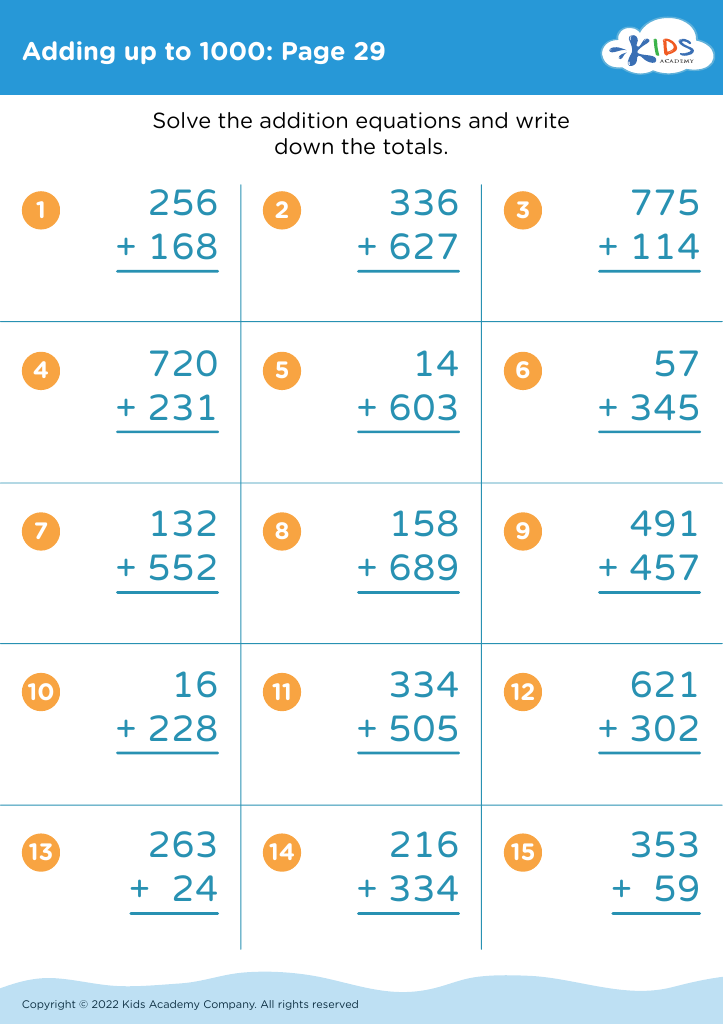
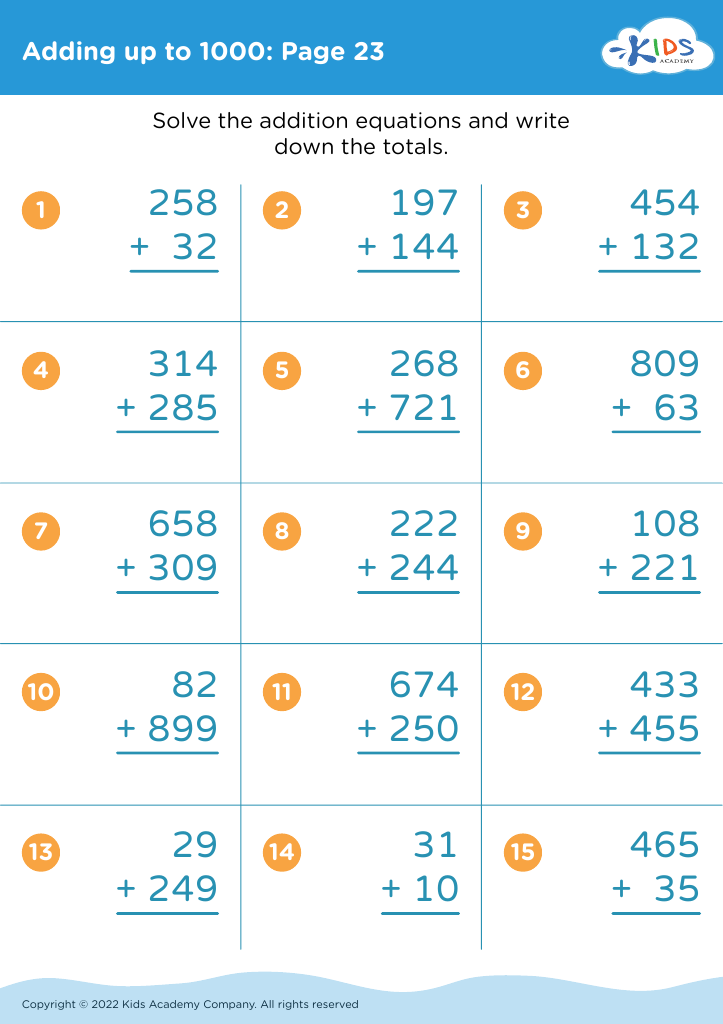
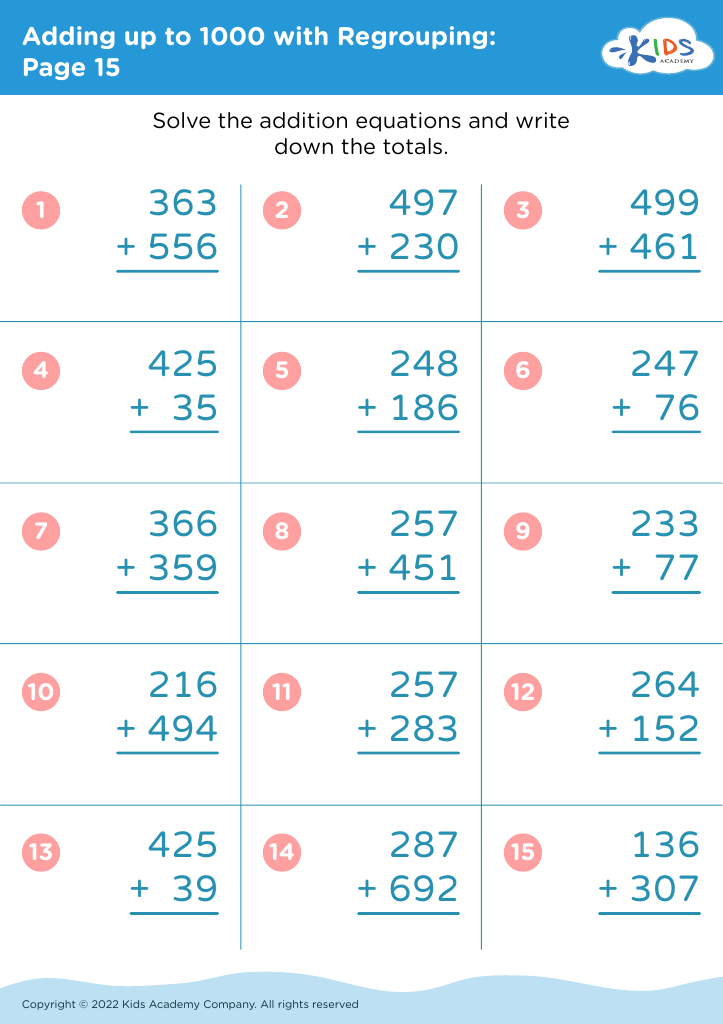



Understanding time and developing foundational numeracy skills is crucial for children aged 4-7, particularly when it comes to concepts like adding up to 1000. This age group is a critical period for cognitive and social development. By grasping time concepts, children learn important life skills such as responsibility, organization, and the ability to anticipate future events, which help them navigate their daily lives more effectively.
As they progress with numbers and addition, reaching a milestone like summing up to 1000 helps cultivate their problem-solving abilities and enhances their mathematical understanding. This mathematical fluency is essential, not only for academic success in subjects like science and technology but also for developing logical reasoning skills.
Parents and teachers play a significant role in reinforcing these concepts through activities and games that engage children in fun ways. By caring about their understanding of time and numbers, caregivers are cultivating a sense of competence and confidence in young learners. Additionally, these foundational skills set the stage for more complex mathematical concepts in the future. Overall, prioritizing these skills early equips children for lifelong learning and equips them with tools they will use in everyday life.








