


%20(1).jpg)




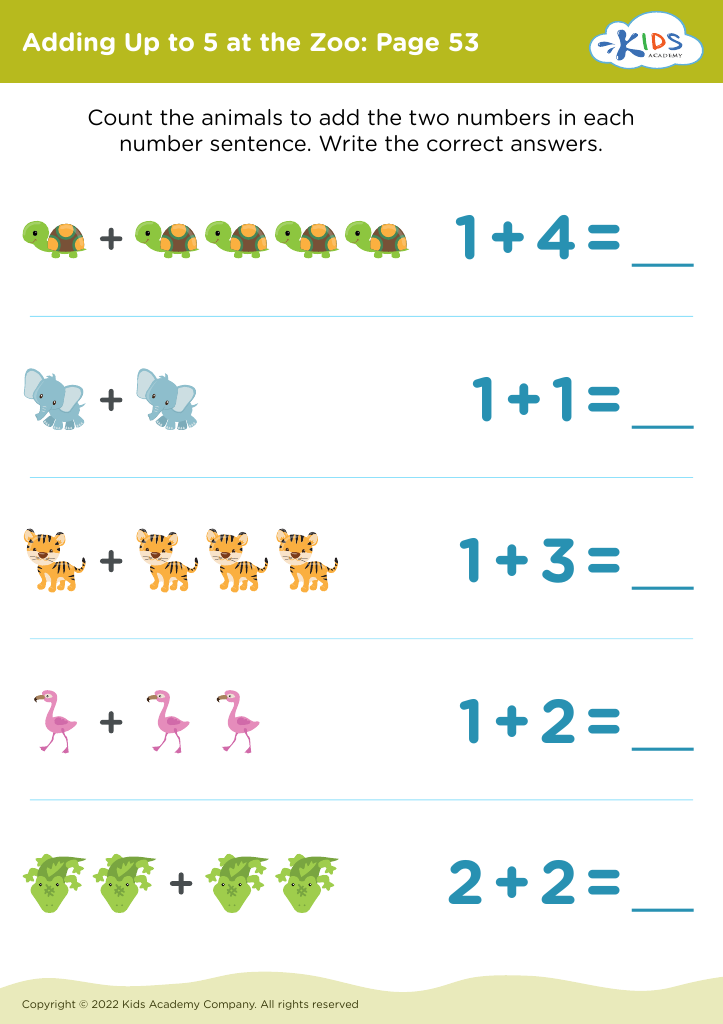
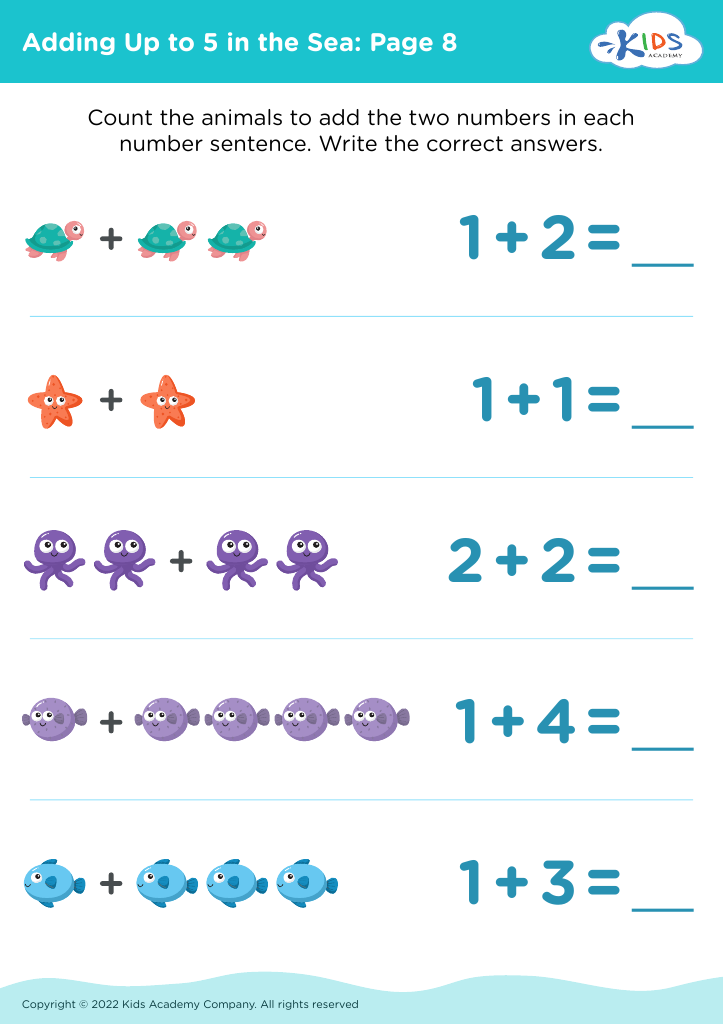
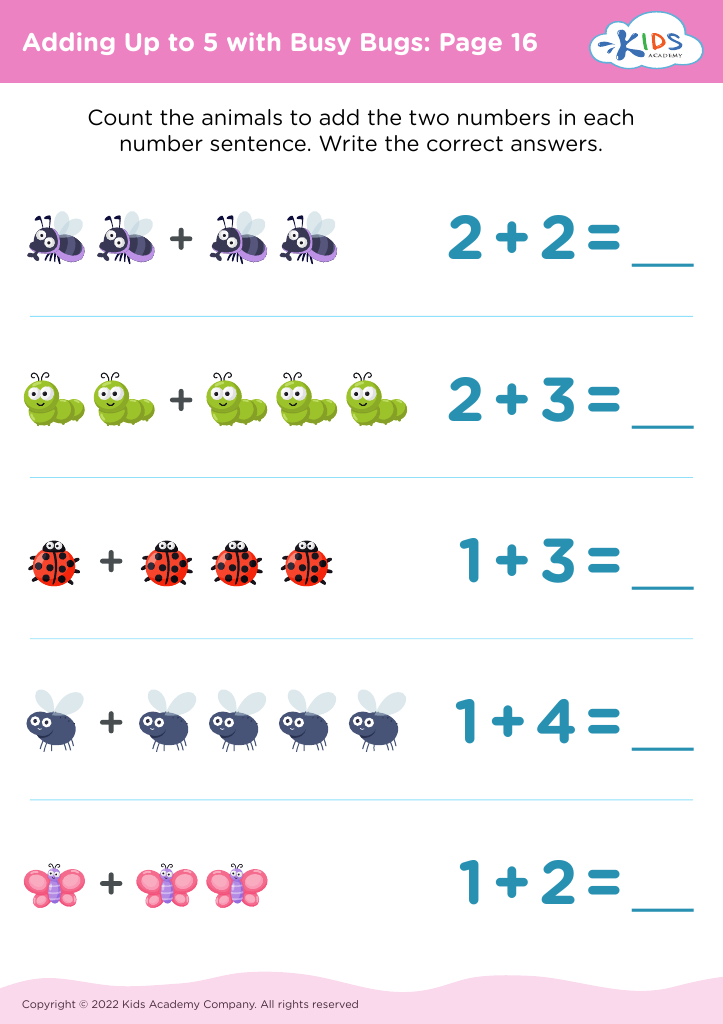
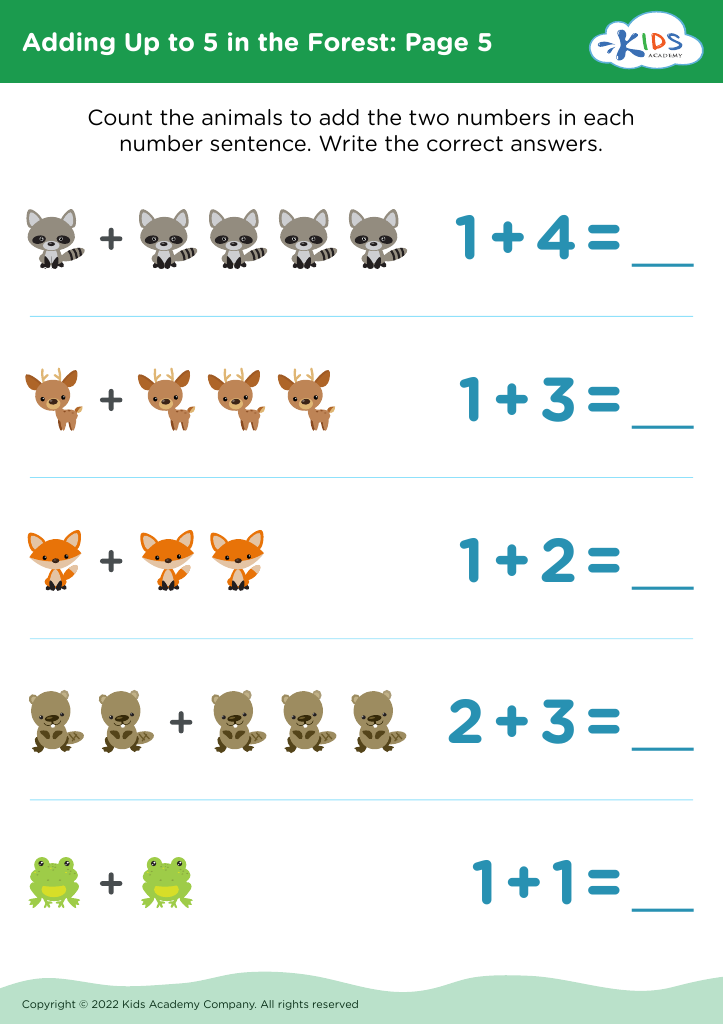
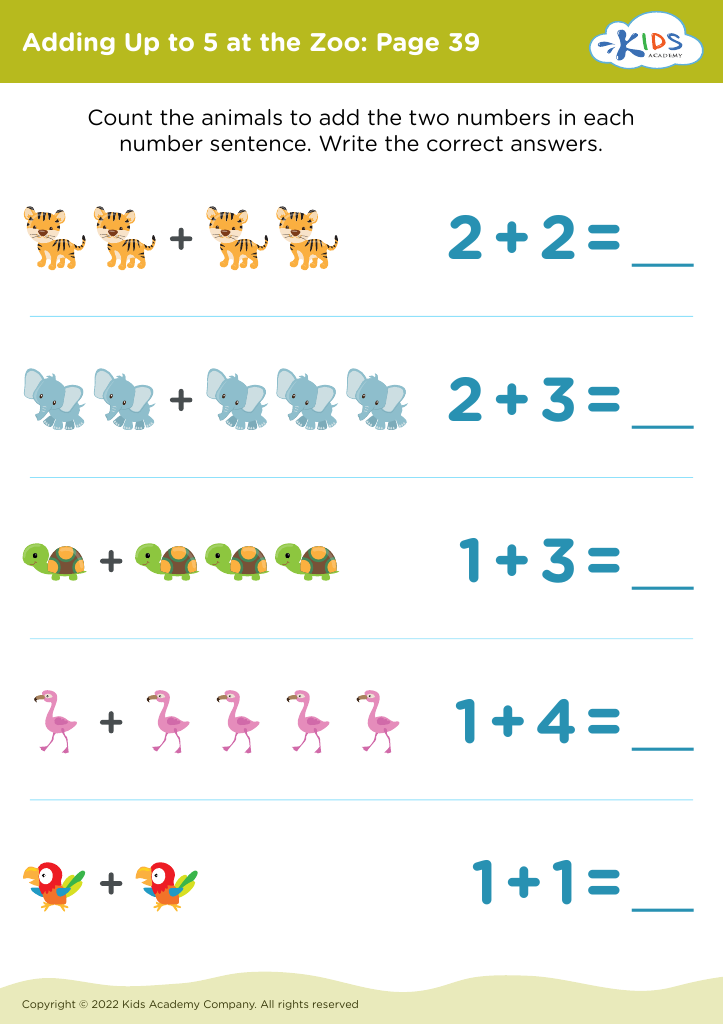
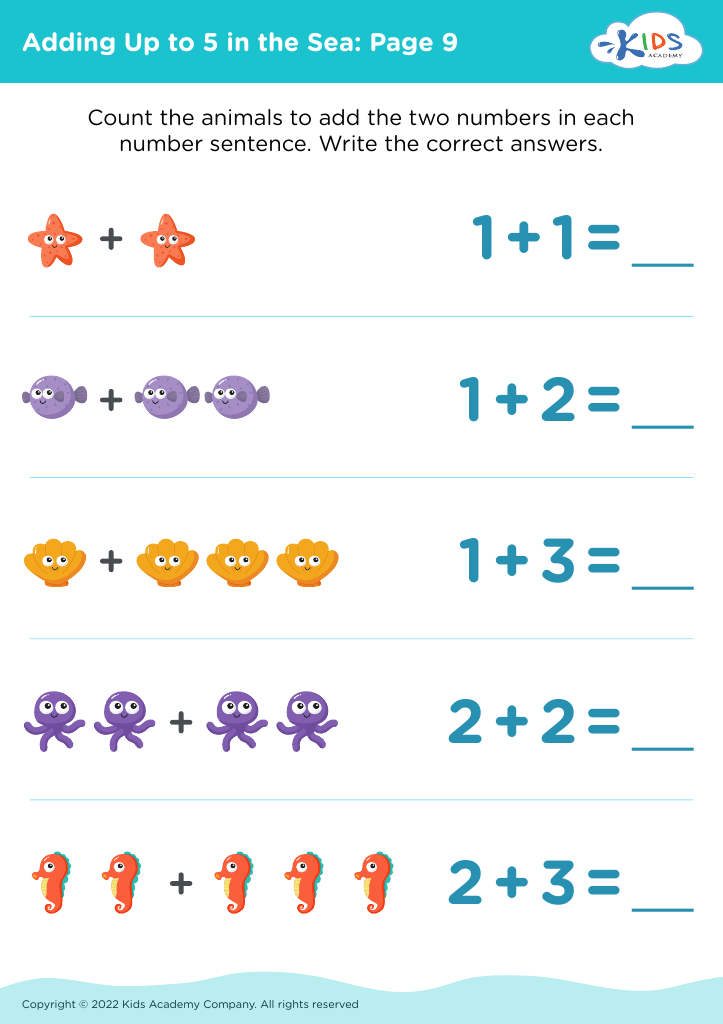
Developing addition skills, particularly the ability to add up to 5, is crucial for children aged 4-7. This foundational math skill is not just about numbers; it lays the groundwork for overall cognitive development and critical thinking. Mastering addition enhances problem-solving abilities, helping children approach daily activities with confidence and logic.
For parents and teachers, supporting this skill fosters early math literacy, encouraging a positive attitude toward learning. When children grasp the concept of addition, they build self-esteem as active participants in their education. It also serves as a building block for more complex math concepts later on, such as subtraction, multiplication, and even algebra.
Additionally, early proficiency in addition encourages children to engage in collaborative play involving counting games, which develops social skills as they learn to take turns and share ideas. This interactive learning can strengthen bonds between parents and children, as engaging in fun activities can enhance family learning experiences.
Ultimately, cultivating addition skills up to 5 is essential for young learners. It enriches their cognitive abilities, supports emotional development, and paves the way for future academic success, making it a priority for families and schools alike.








