Visual-motor skills Adding Up to 5 Worksheets for Ages 4-7
3 filtered results
-
From - To
Enhance your child's visual-motor skills with our "Adding Up to 5" worksheets designed for ages 4-7. These engaging sheets help young learners improve hand-eye coordination while mastering basic addition. Colorful images and interactive exercises make learning fun, ensuring kids stay motivated and focused. Our worksheets are perfect for developing foundational math skills, preparing your child for future academic success. Easy to download and print, they are ideal tools for both classroom activities and homeschooling. Unlock your child's potential by turning math practice into an exciting adventure with these visually stimulating worksheets!
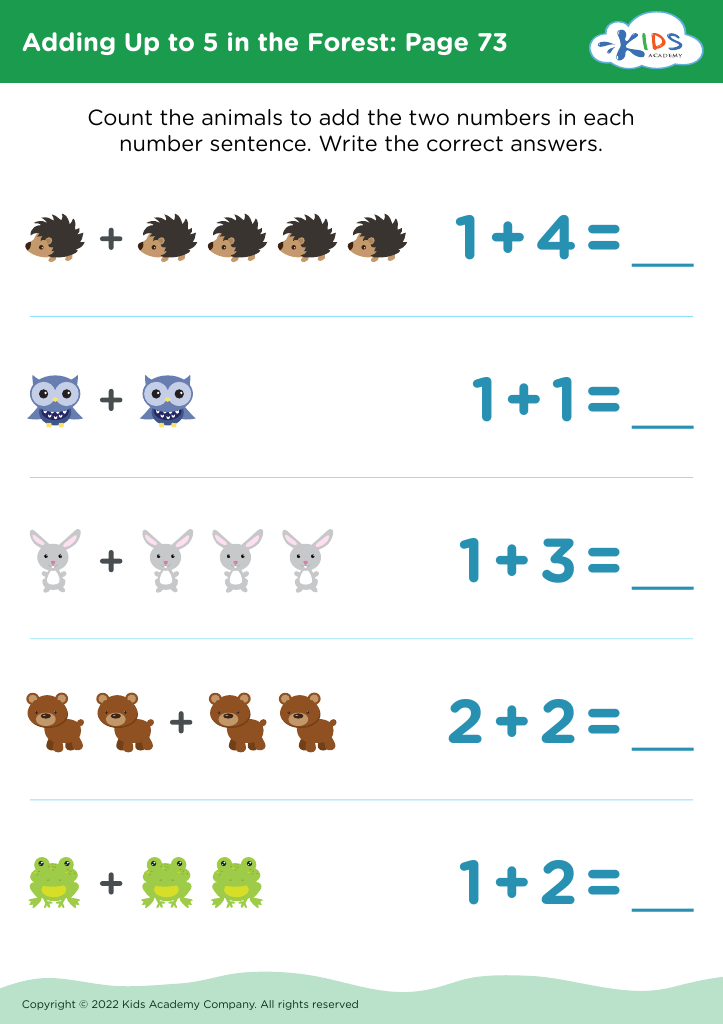
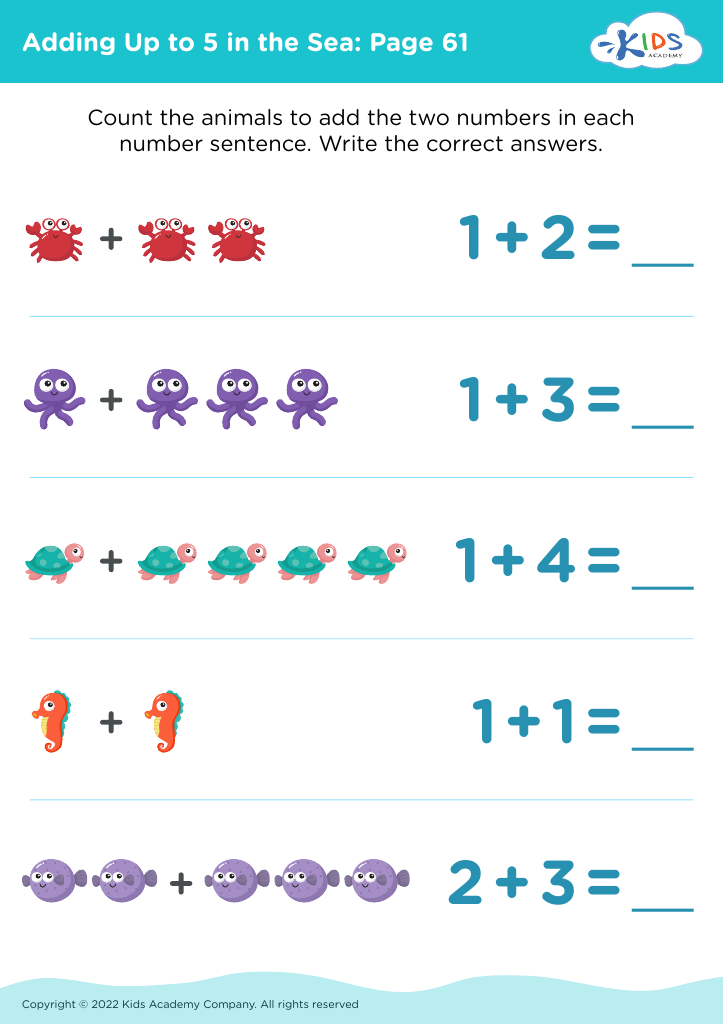
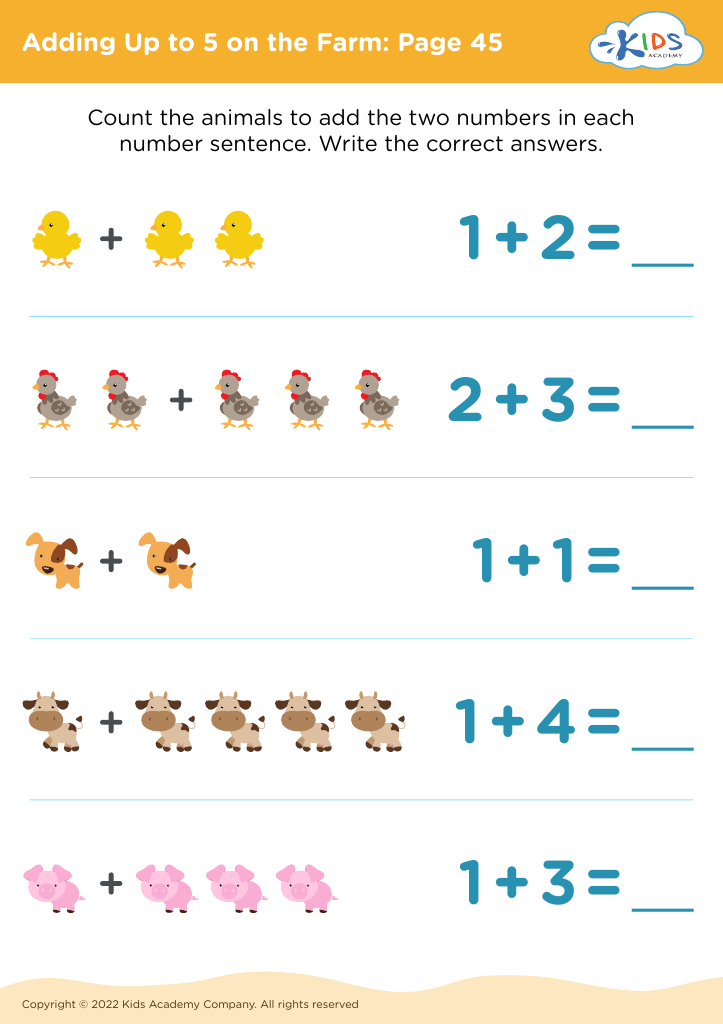








Visual-motor skills involve the coordination of visual perception and motor control, crucial for early childhood development. For children aged 4-7, mastering visual-motor tasks like adding up to 5 is foundational for both academic and practical success. These skills enhance children's ability to perform essential activities such as writing, drawing, cutting, and even participating in sports, all of which require precise hand-eye coordination.
Engagement in activities that reinforce adding up to 5 aids cognitive development by enhancing number recognition, arithmetic, and problem-solving abilities. It offers a base for more complex mathematical concepts, crucial for later academic achievements. By mastering simple additions, children build confidence and develop a positive attitude toward learning, fostering a stronger academic self-esteem.
Parents and teachers should emphasize visual-motor skills to identify and support children who may struggle with these foundational tasks early on. Early intervention in honing these skills can pinpoint learning or developmental delays, allowing for timely assistance.
In summary, visual-motor skills involving simple addition are critical as they underpin broader educational and developmental milestones. Prioritizing these skills will ensure a smooth transition to more sophisticated studies and everyday tasks, forming a robust foundation for lifelong learning and adaptability.








