Visual Perception Skills Adding Up to 5 Worksheets for Ages 4-7
4 filtered results
-
From - To
Boost your child's math and visual perception skills with our "Visual Perception Skills Adding Up to 5 Worksheets" tailored for ages 4-7. These engaging printables help young learners to finely tune their ability to recognize numbers and patterns while mastering simple addition. By matching, counting, and identifying, children build a solid foundation in early math concepts. Perfectly designed for preschool to first grade, our worksheets provide a fun and interactive way to enhance learning at home or in the classroom. Ignite a love for math and watch your child's confidence soar! Download now at Kids Academy.
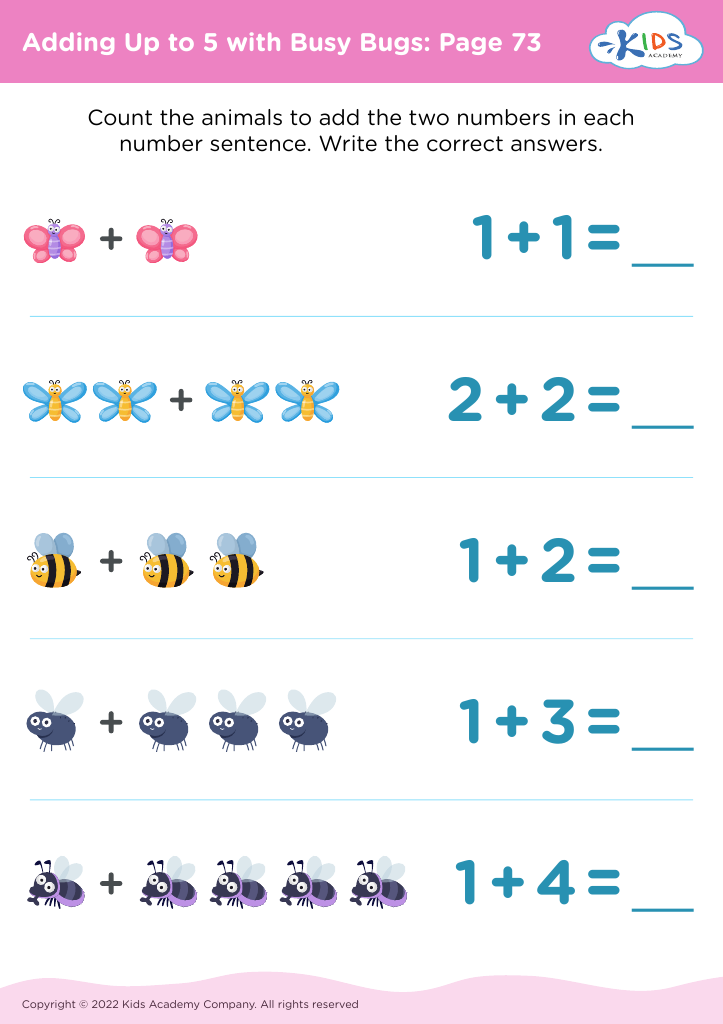
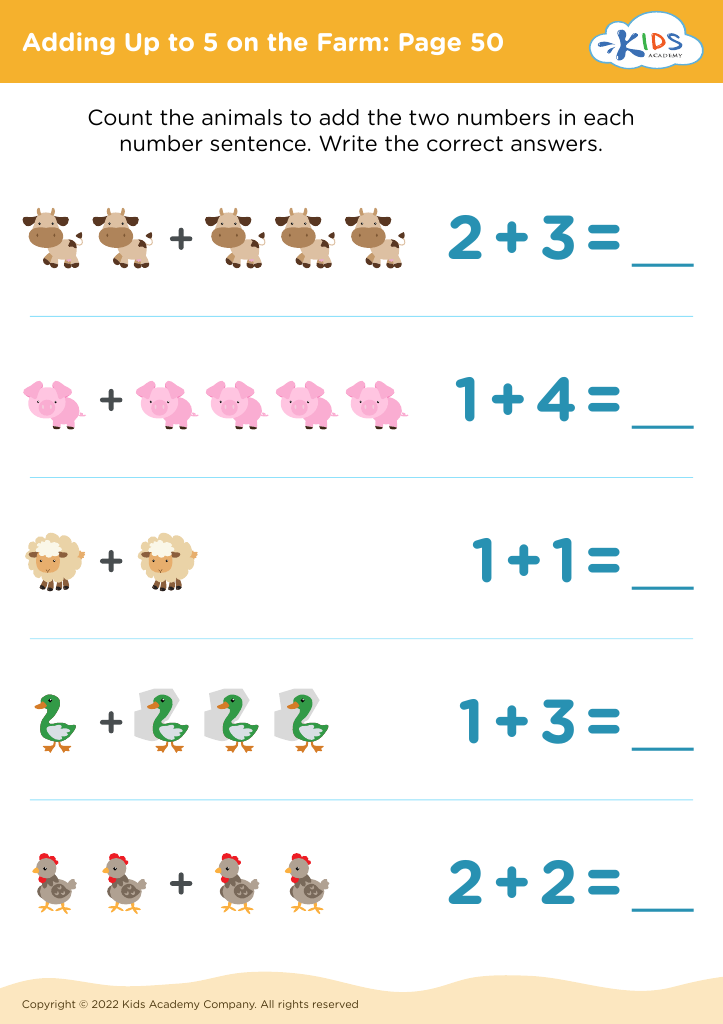
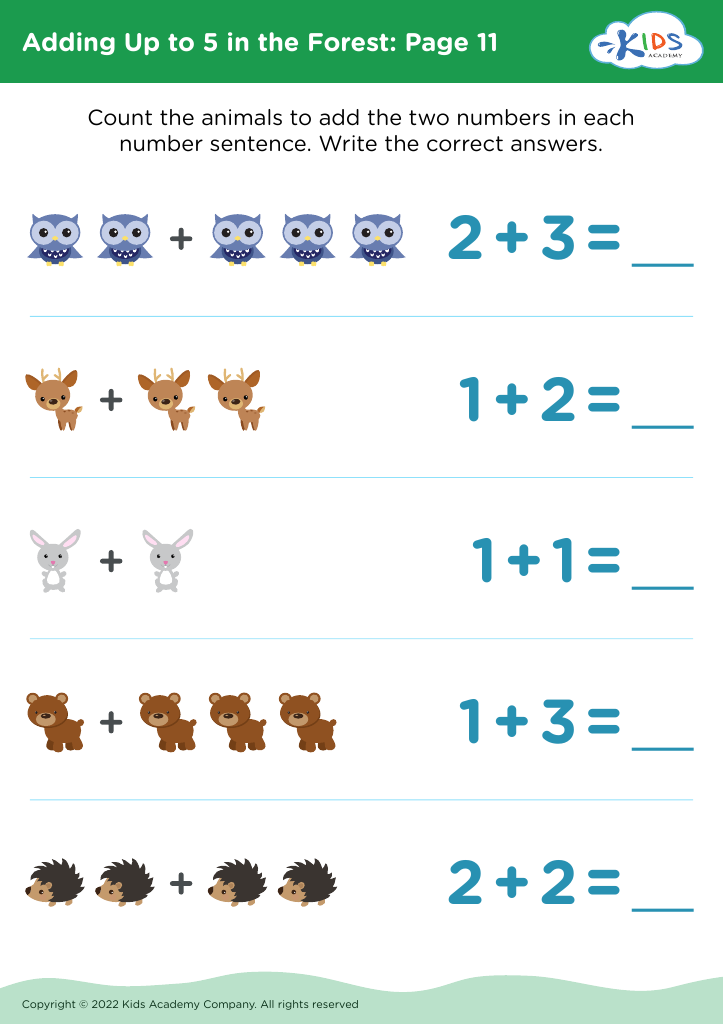
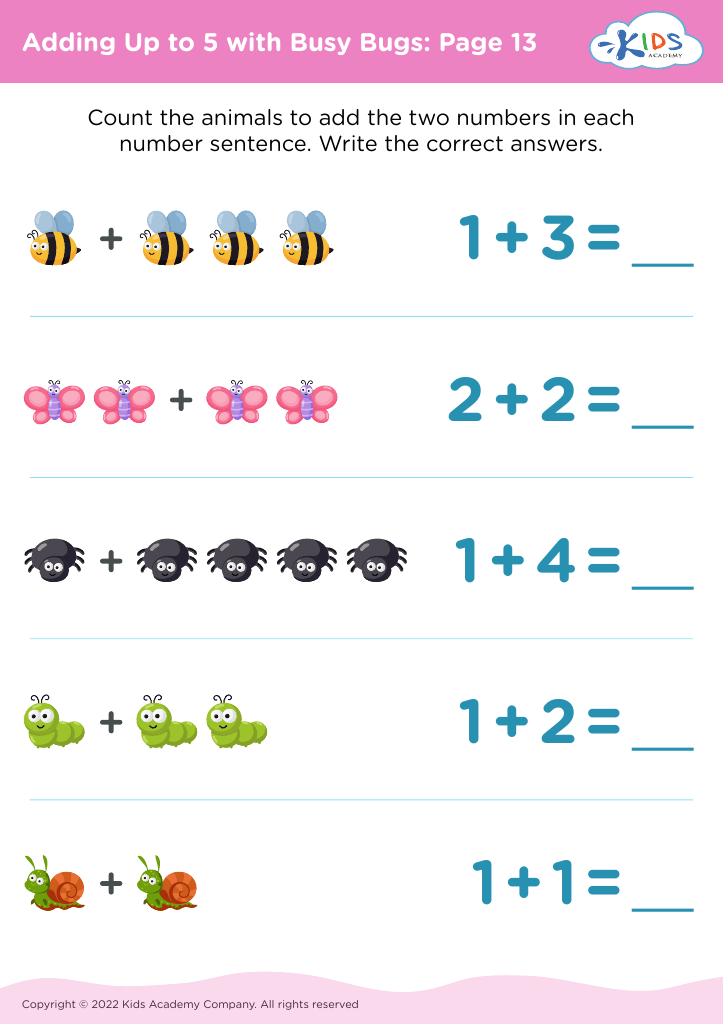


.jpg)



%20(1).jpg)

Visual perception skills are crucial in early childhood education as they lay the foundation for a child's future academic success, particularly in mathematics. Between the ages of 4-7, a child's brain experiences rapid development, making it a pivotal period to nurture these skills. Teaching children to recognize numbers and quantities, particularly in exercises that involve adding up to 5, helps solidify their understanding of basic mathematical concepts.
Mastering visual perception skills allows children to better discern shapes, patterns, and spatial relations, all of which are fundamental in not only math but also reading and writing. For example, recognizing how objects or numbers relate to one another spatially helps kids solve simple addition problems and perceives numeric patterns, setting the stage for more advanced math concepts.
Moreover, early success in math fosters a positive attitude toward learning and boosts self-esteem. When children confidently add numbers up to 5, they develop essential critical thinking and problem-solving skills. Focusing on visual perception also aids children in organizing visual information more efficiently, which is valuable across various subjects.
Thus, parents and teachers should pay special attention to nurturing visual perception skills to ensure a solid academic foundation, promoting lifelong success and a love of learning in young children.








