Addition Practice Adding up to 50 Misc Worksheets for Ages 4-7
5 filtered results
-
From - To
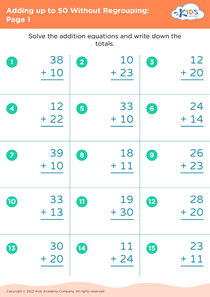
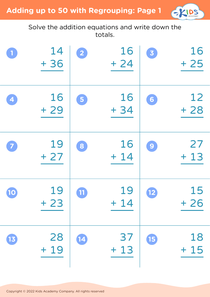
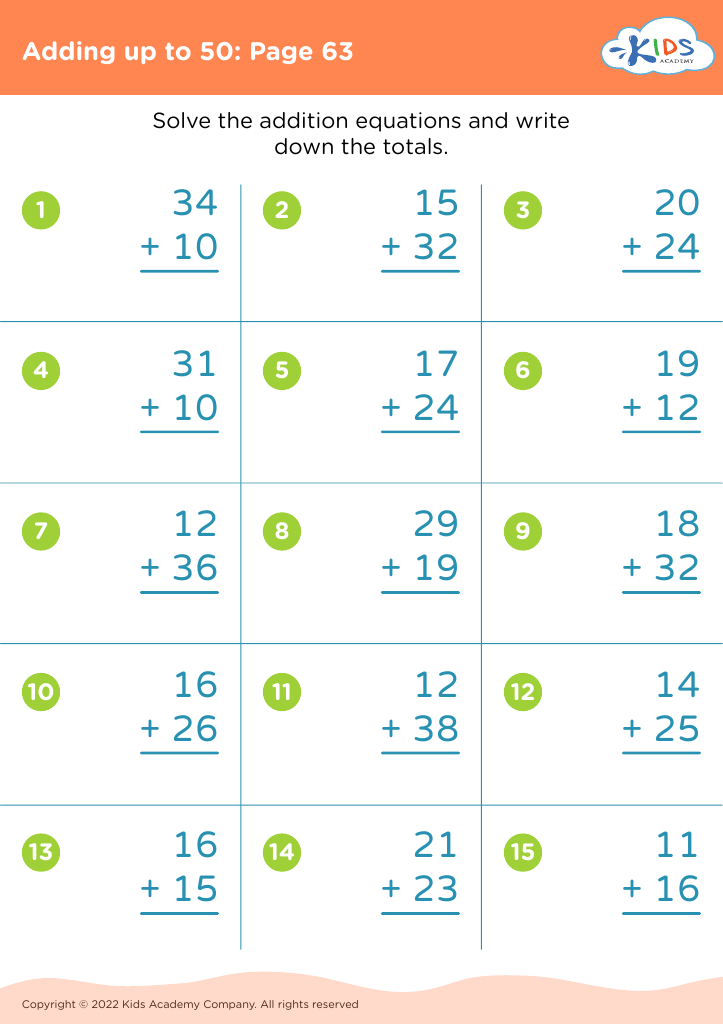
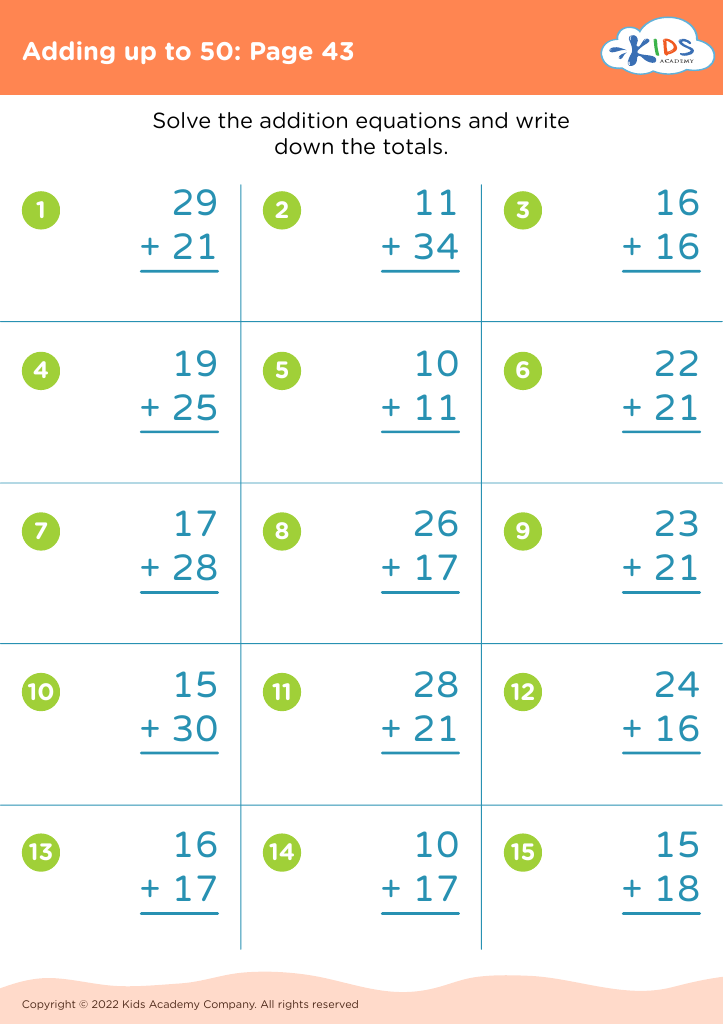
Explore our engaging "Addition Practice: Adding Up to 50" worksheets designed specifically for children ages 4 to 7! These colorful and interactive resources help develop essential math skills while keeping learning fun. Perfect for both classroom and home use, our miscellaneous worksheets offer varied activities that encourage students to practice addition up to 50. From simple equations to more challenging problems, these worksheets cater to different learning levels, ensuring each child builds confidence in their math abilities. Enhance your teaching toolkit and support young learners on their journey to mastering addition today! Download and print our fun worksheets now!
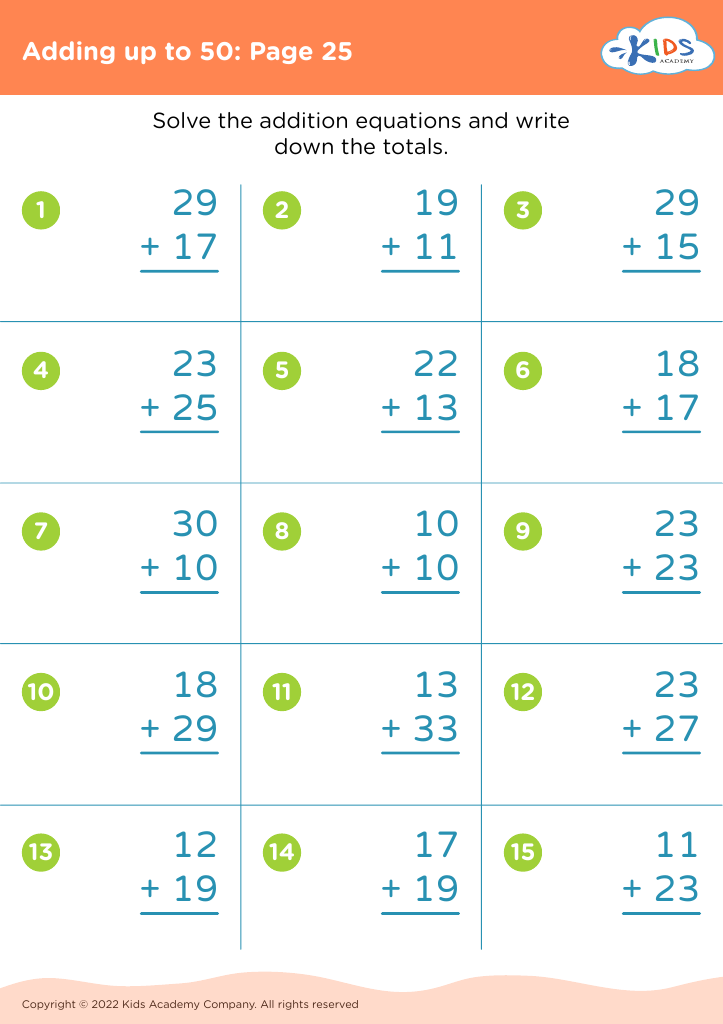
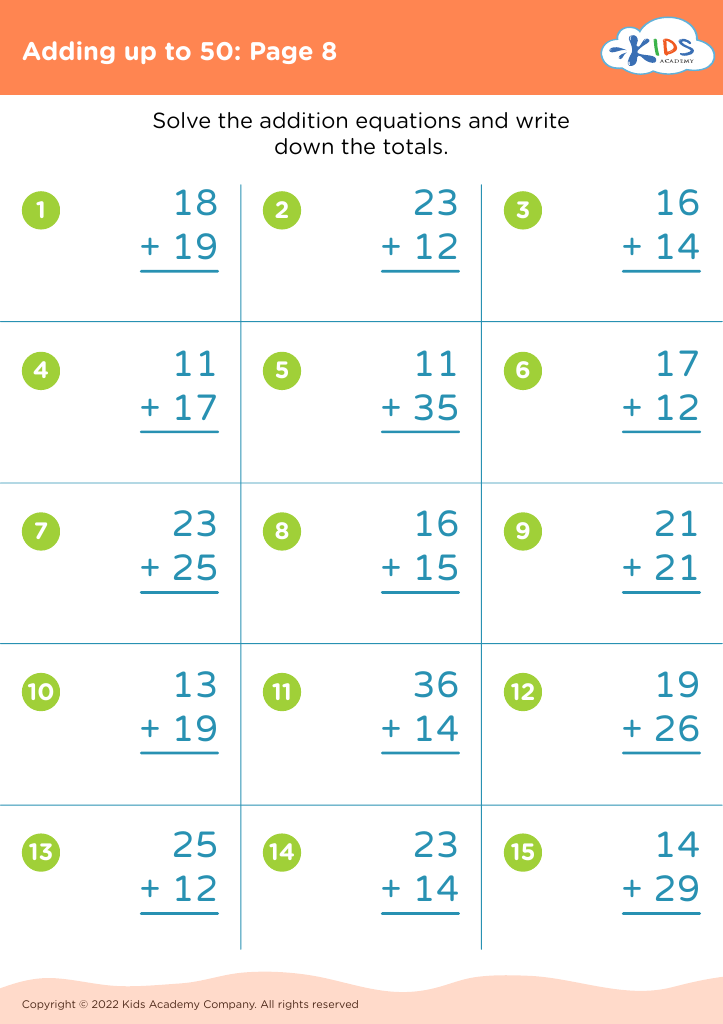
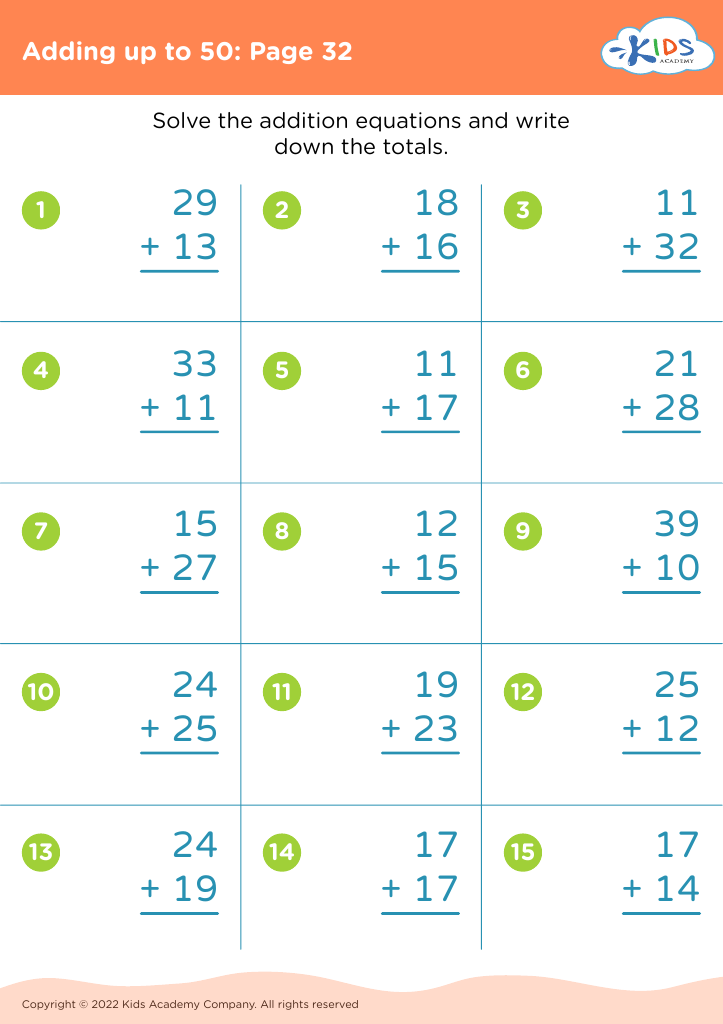


Parents and teachers should care about addition practice, particularly for adding up to 50 for children aged 4-7, because early math skills form the foundation for later learning. Mastering addition is crucial as it builds confidence and prepares children for more complex mathematical concepts in the future. Engaging with numbers helps young learners develop critical thinking and problem-solving abilities.
Additionally, practicing addition enhances cognitive development and fine motor skills. Children learn to recognize patterns, improve their memory, and develop concentration through repetitive practice. A solid understanding of basic addition supports skills they will encounter in daily life, involving budgeting, time management, and planning.
Moreover, interactive and fun addition activities can promote emotional and social skills—children often learn collaboratively during math games, fostering teamwork and communication. For parents, encouraging math practice can also create strong, bonding experiences, enriching family time.
By prioritizing addition practice, parents and teachers lay the groundwork for higher-level math skills, cultivating not just capable mathematicians but also confident learners eager to tackle challenges ahead. In a world increasingly driven by numbers, nurturing these skills is crucial for every child’s success.