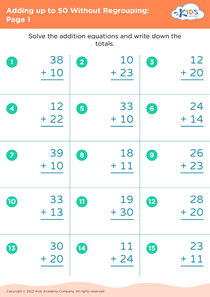
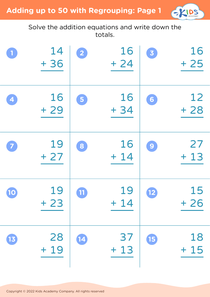
Basic Math Skills Adding up to 50 Misc Worksheets for Ages 4-7
5 filtered results
-
From - To
Boost your child's math confidence with our "Basic Math Skills: Adding up to 50" worksheets, specially designed for ages 4-7. These engaging, printable activities offer a fun way for young learners to master addition skills, building a solid foundation in mathematics. Featuring a variety of colorful worksheets, students will practice adding numbers in a variety of contexts, enhancing their problem-solving abilities. Ideal for home or classroom use, these worksheets will help reinforce critical math concepts while keeping learning enjoyable. Start your child’s math journey today and watch them progress with excitement and ease! Download now to explore the fun of math!
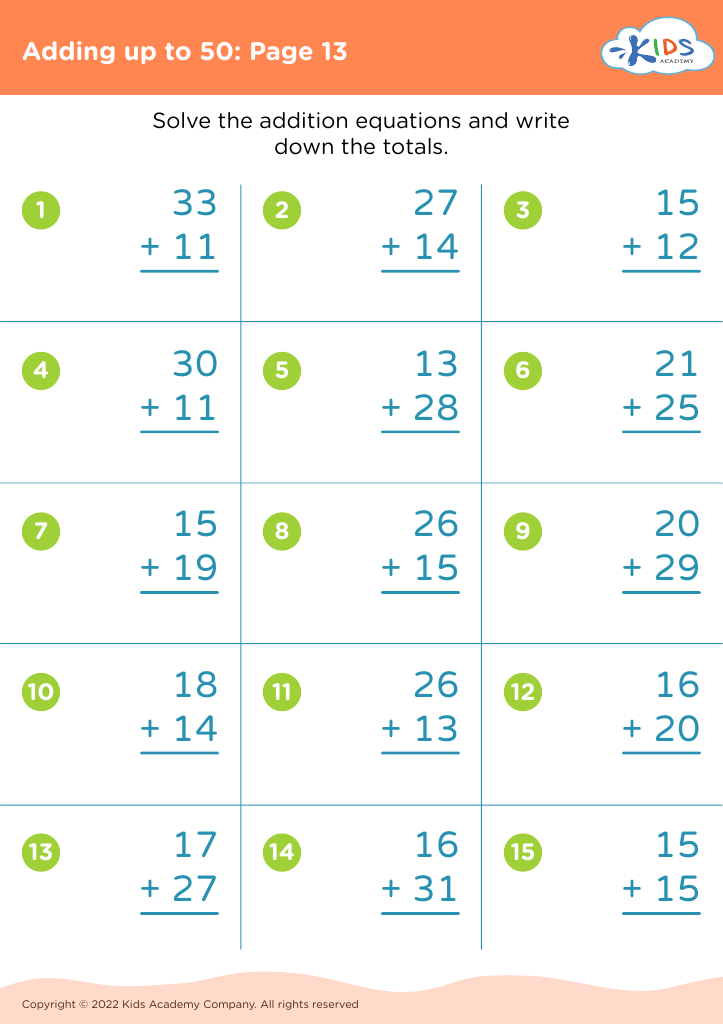
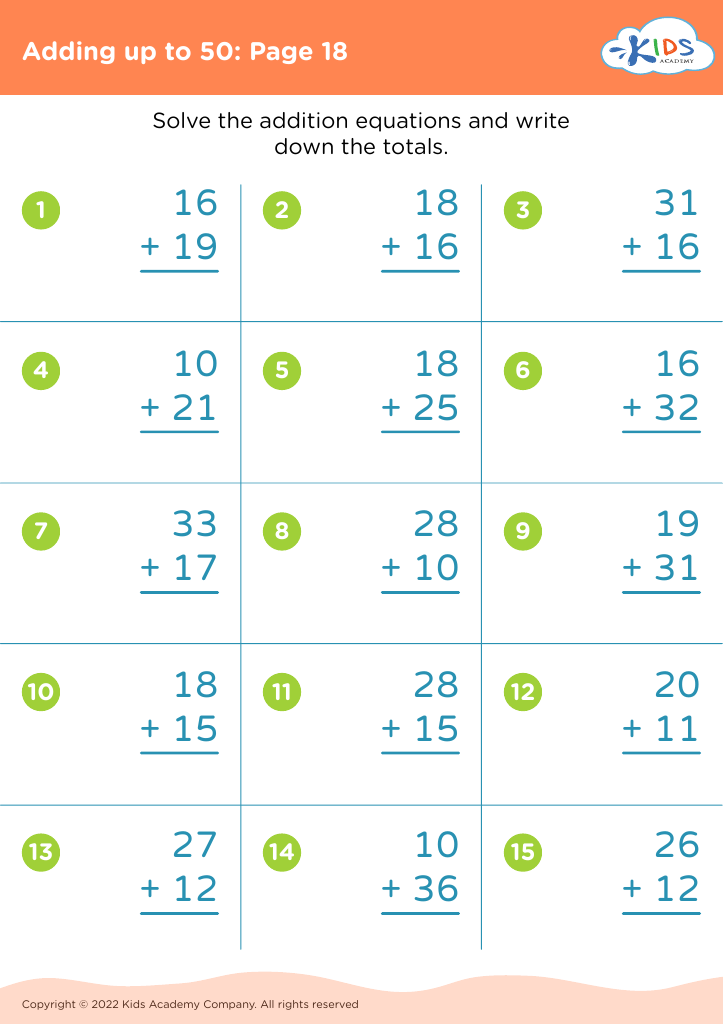
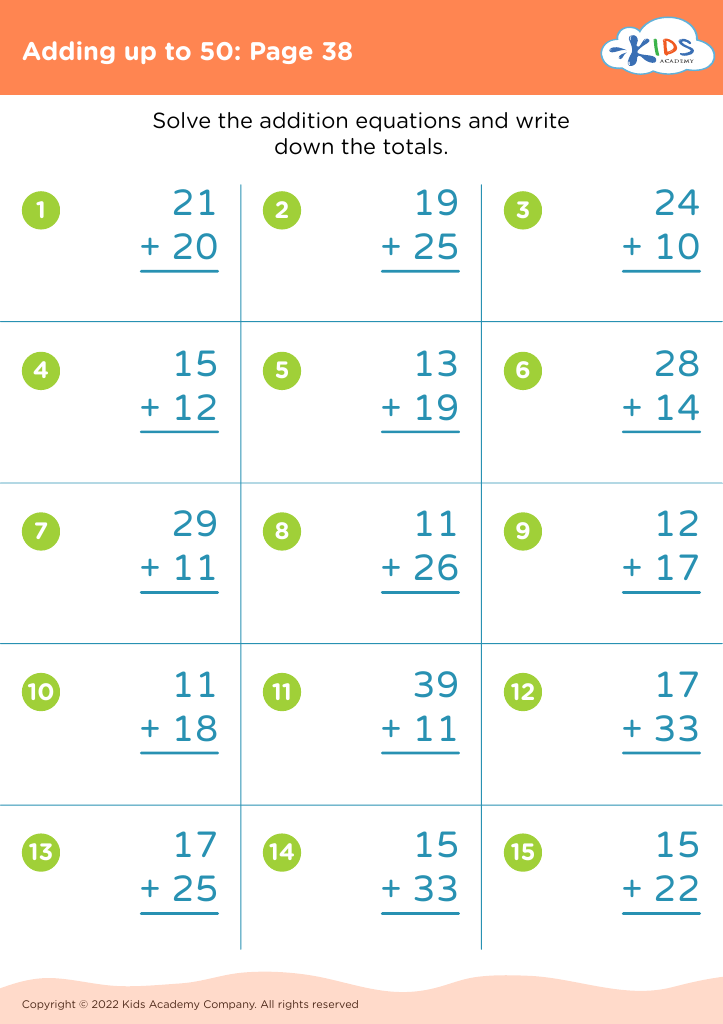
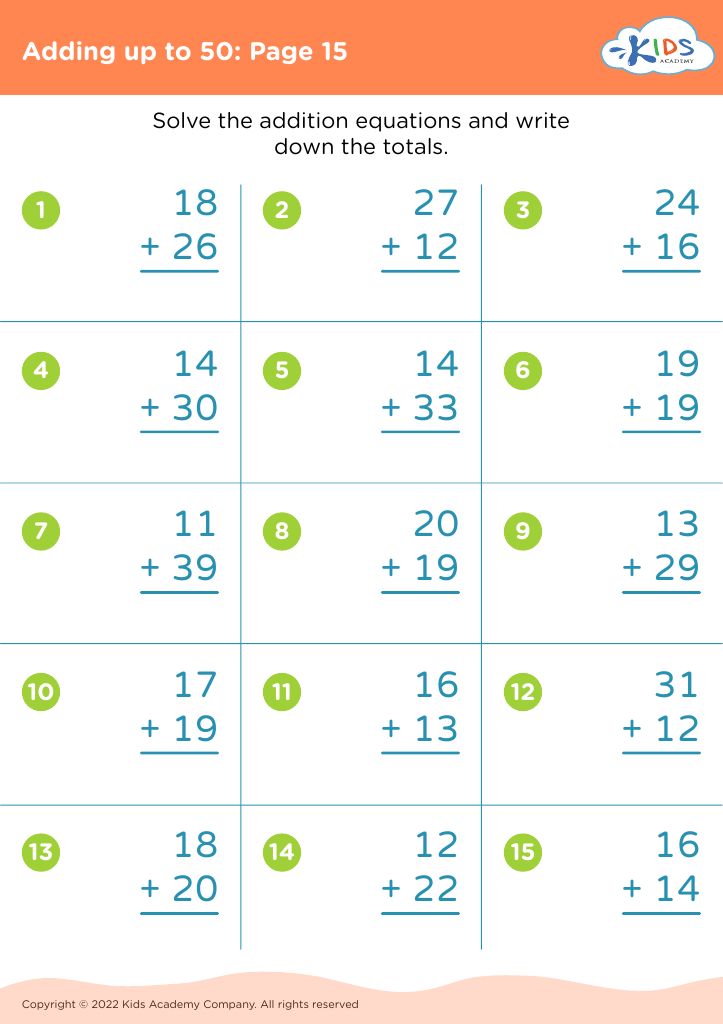
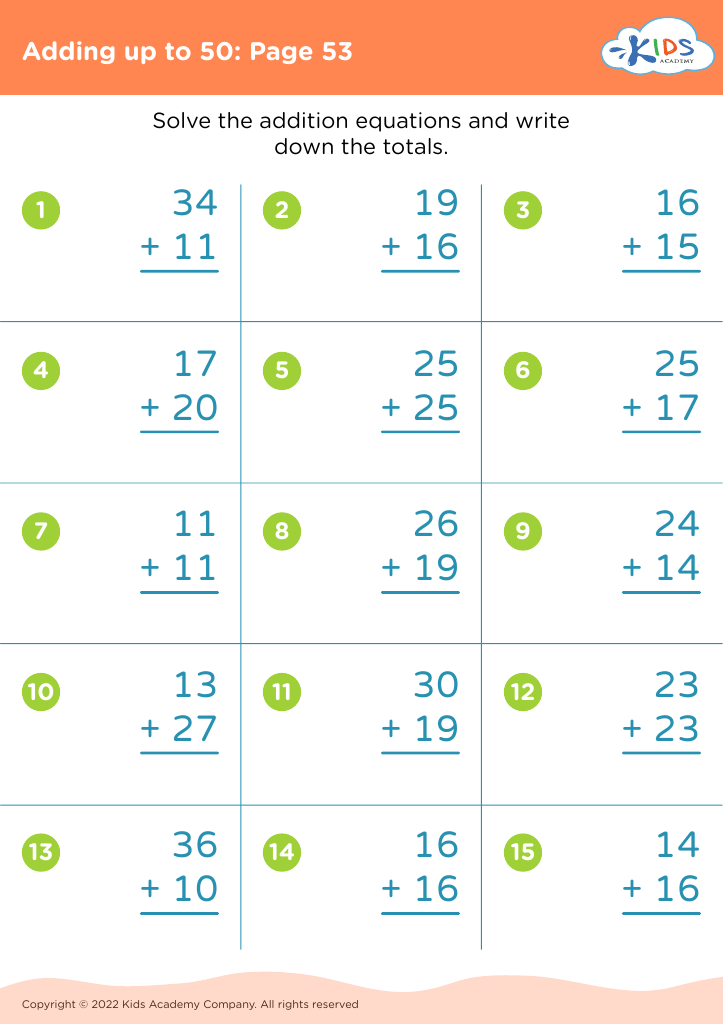


Parents and teachers should prioritize teaching basic math skills, particularly adding up to 50, for children aged 4-7 due to its foundational role in cognitive development. Mastering addition functions not only enhances a child's number sense but also builds problem-solving skills that are essential for their academic journey. At this age, children are naturally curious and eager to learn; nurturing their math skills can instill a lifelong love for numbers.
Moreover, understanding basic addition supports children in everyday situations, from counting objects to handling money. As they learn these essential skills, children develop critical thinking abilities, enabling them to approach more complex concepts in later grades with confidence. This early math fluency sets the stage for future learning in mathematics and other subjects, making it easier to tackle algebra, geometry, and more.
Additionally, strong basic math skills can improve children's self-esteem and confidence. Achieving small goals in math encourages a positive learning attitude and motivates them to engage further. Therefore, fostering an environment where adding numbers up to 50 is prioritized can significantly enhance children's overall academic skills and future opportunities. Engaging activities, games, and real-life applications can make this learning process enjoyable and effective.