Fraction comparison Adding up to 50 Misc Worksheets for Ages 4-7
4 filtered results
-
From - To
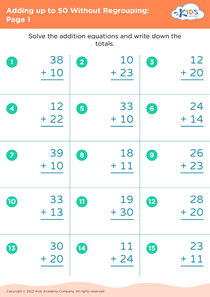
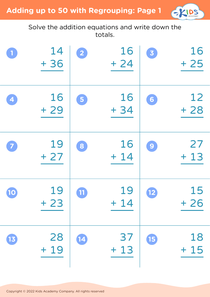
Explore our engaging and educational "Fraction Comparison Adding Up to 50 Misc Worksheets" tailored for children ages 4-7. Designed to enhance early math skills, these worksheets provide a fun way for young learners to understand the concepts of fractions while comparing and adding numbers up to 50. Each activity encourages critical thinking and problem-solving in an enjoyable manner, making math exciting! With colorful illustrations and easy-to-follow instructions, our resources ensure kids grasp essential math concepts in a playful setting. Perfect for home or classroom use, these worksheets help nurture confidence and mastery in math for your little learners!
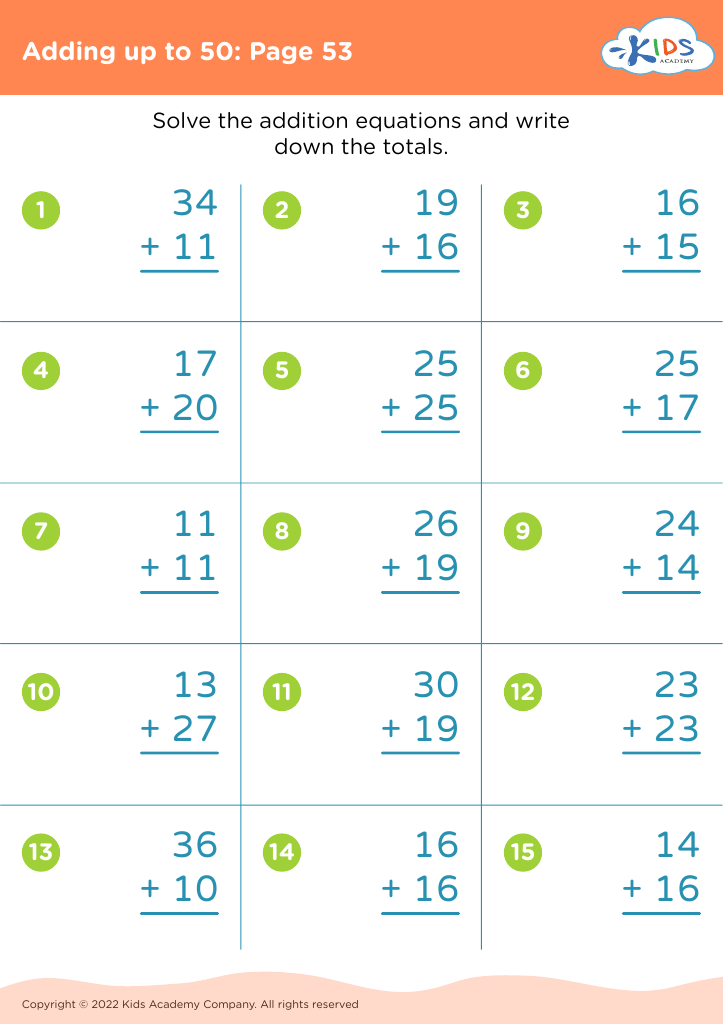
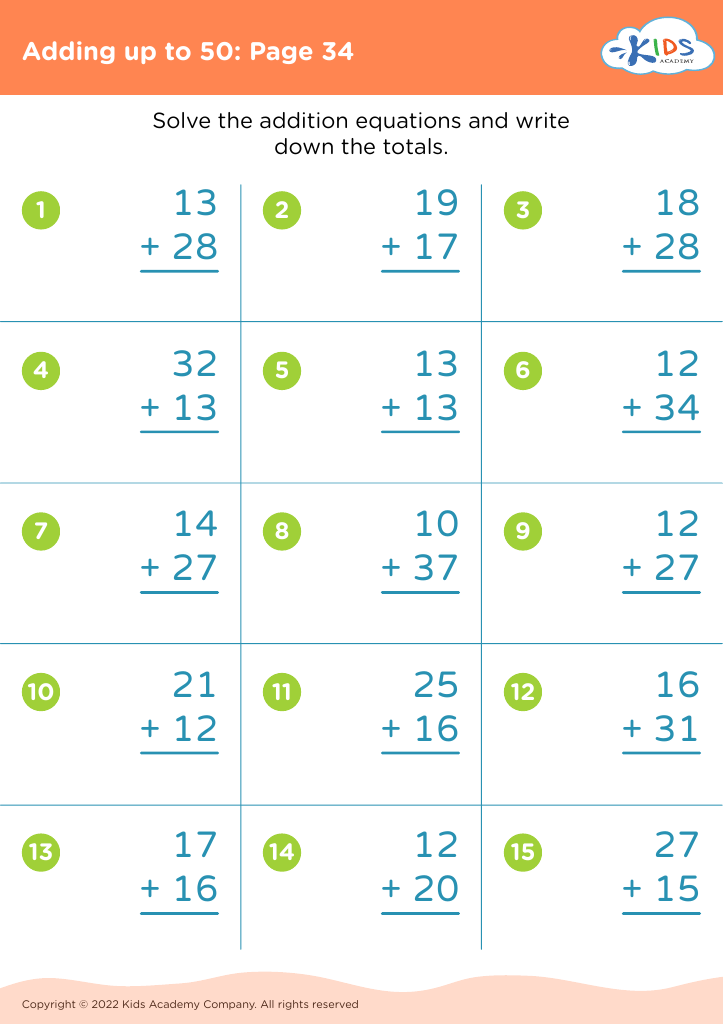


Understanding fraction comparison and basic addition is vital for children aged 4-7 as it lays the groundwork for essential mathematical skills used throughout their educational journey and daily life. At this stage, children are developing their cognitive abilities, and engaging with concepts like fractions helps them grasp the idea of parts of a whole.
Parents and teachers should care about introducing fraction comparison because it promotes critical thinking and problem-solving skills. Through activities involving fractions, children learn to analyze quantities, which fosters their ability to make comparisons. For example, understanding that 1/2 is larger than 1/4 not only makes math relatable but also encourages logical reasoning.
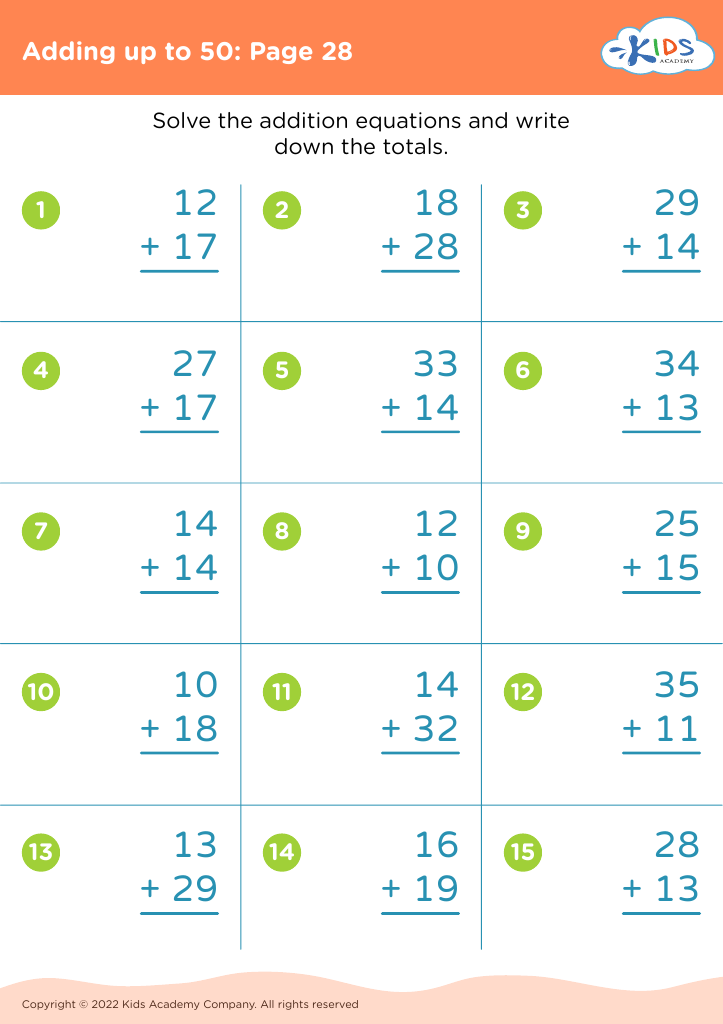
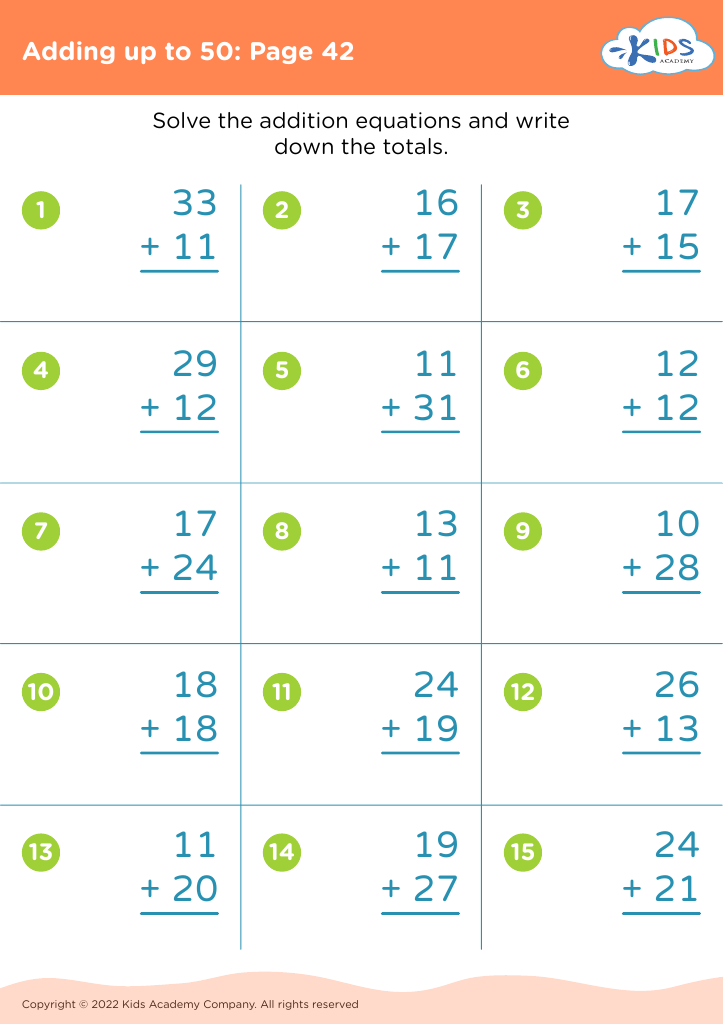
Moreover, developing addition skills that culminate in totals up to 50 reinforces their number sense and operational fluency. This competence supports children in solving more complex problems during their later education. It’s crucial for parents and teachers to provide early and engaging math experiences, making learning fun and interactive.
Ultimately, building a strong mathematical foundation in these early years enhances a child’s confidence and equips them with the tools necessary for future academic success. Supporting their comprehension of these concepts creates a love for learning, ensuring they thrive as learners.