Fraction simplification Adding up to 50 Misc Worksheets for Ages 4-7
5 filtered results
-
From - To
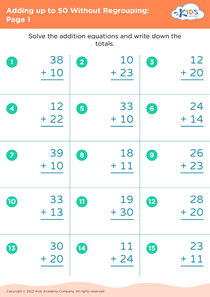
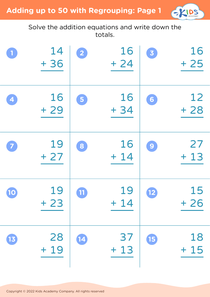
Introduce your young learners to the exciting world of fraction simplification with our engaging worksheets designed for ages 4-7! This collection features a variety of fun activities that simplify fractions, making math accessible and enjoyable for early learners. With a focus on adding up to 50, these worksheets reinforce essential math skills while promoting confidence and understanding. Each activity encourages hands-on practice, helping children grasp complex concepts through visual learning methods. Perfect for classrooms or at-home learning, these kid-friendly worksheets ensure that your students build a strong foundation in math, setting them up for future success. Dive into the learning fun today!
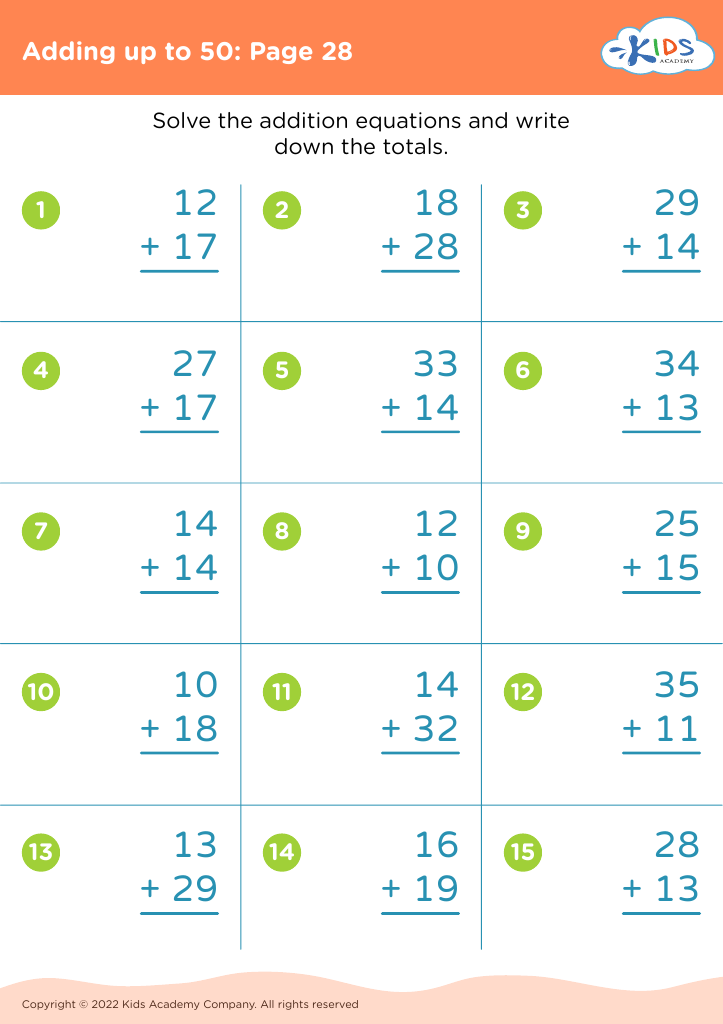
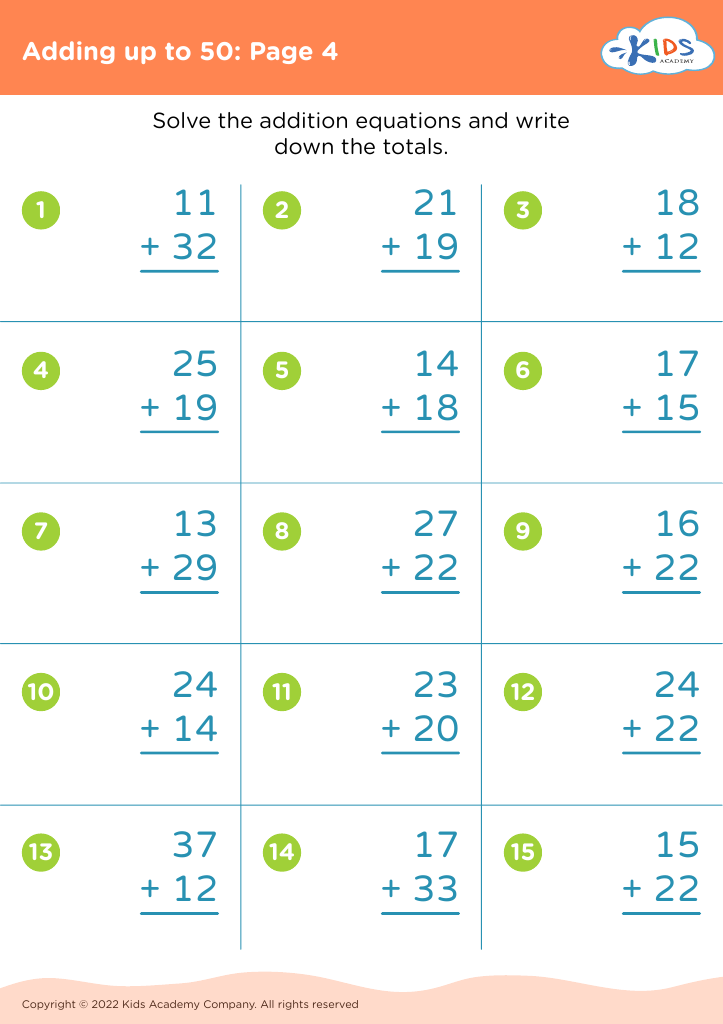
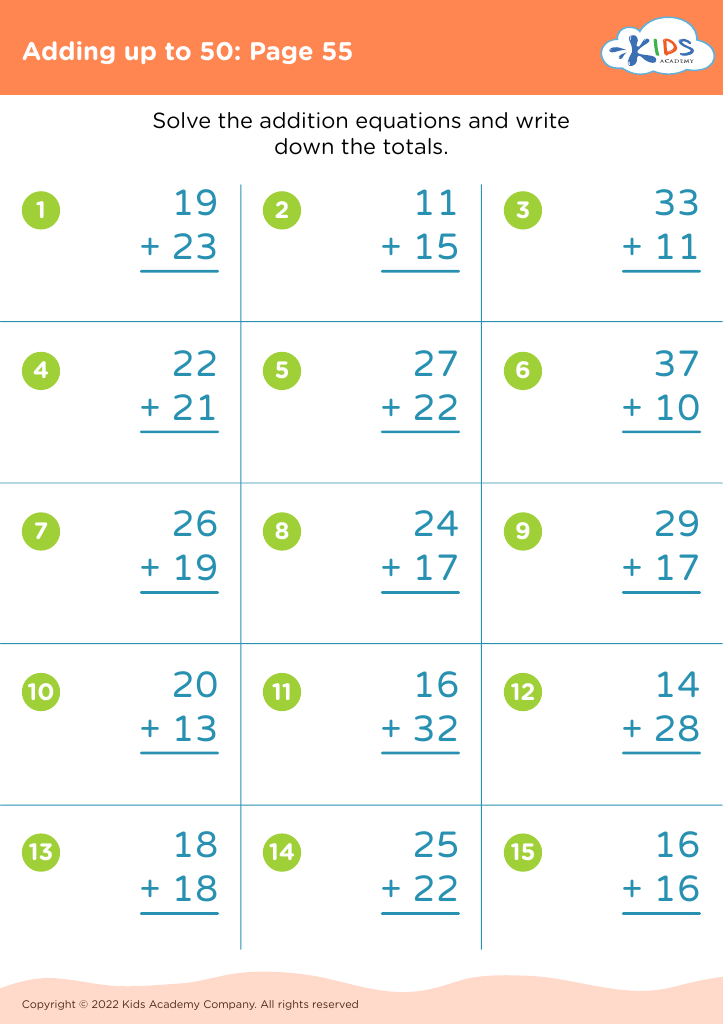
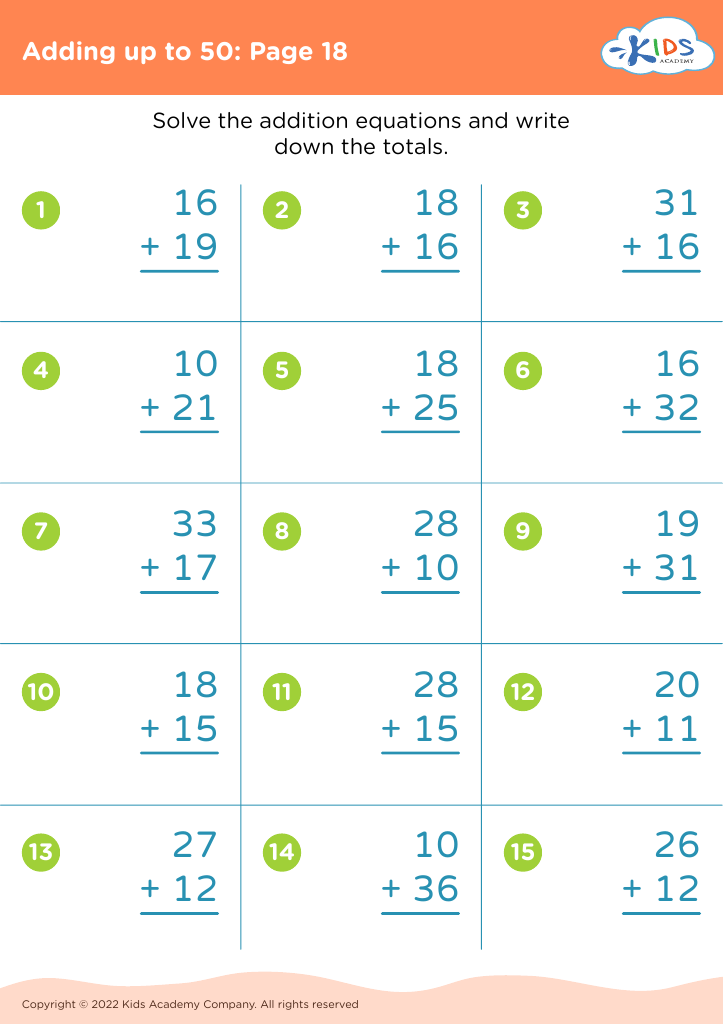
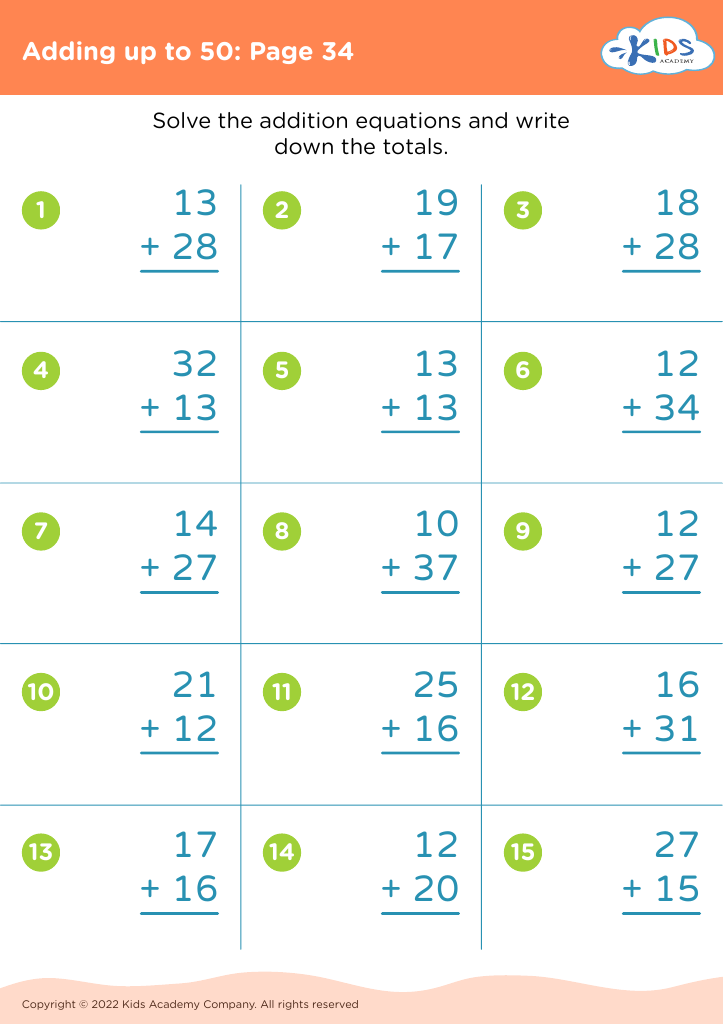


Parents and teachers should care about fraction simplification and adding up to 50 for children aged 4-7 because these foundational concepts play a critical role in developing essential mathematical skills. Understanding fractions is crucial as it introduces children to the idea of part-to-whole relationships, helping them grasp more complex math concepts later in life. Simplifying fractions teaches them to recognize equivalent relationships, which enhances their problem-solving skills and boosts their confidence in math.
Additionally, scenarios involving numbers that add up to 50 provide practical applications of addition, encouraging mental math and promoting number sense. Engaging with such exercises fosters computational fluency and sharpens children’s ability to work with numbers, making them comfortable with larger numbers as they progress through school.
Moreover, these activities provide opportunities for interactive learning between parents and students, strengthening their relationship while making math fun. Ultimately, mastering fraction simplification and adding skills equips young learners with the tools they need to succeed academically and in everyday situations, laying a strong foundation for future learning in mathematics and critical thinking.