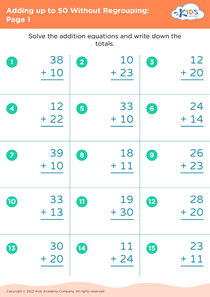
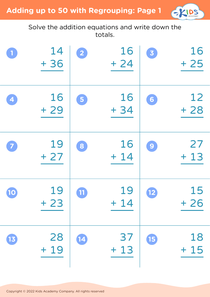
Problem-Solving Skills Adding up to 50 Misc Worksheets for Ages 4-7
10 filtered results
-
From - To
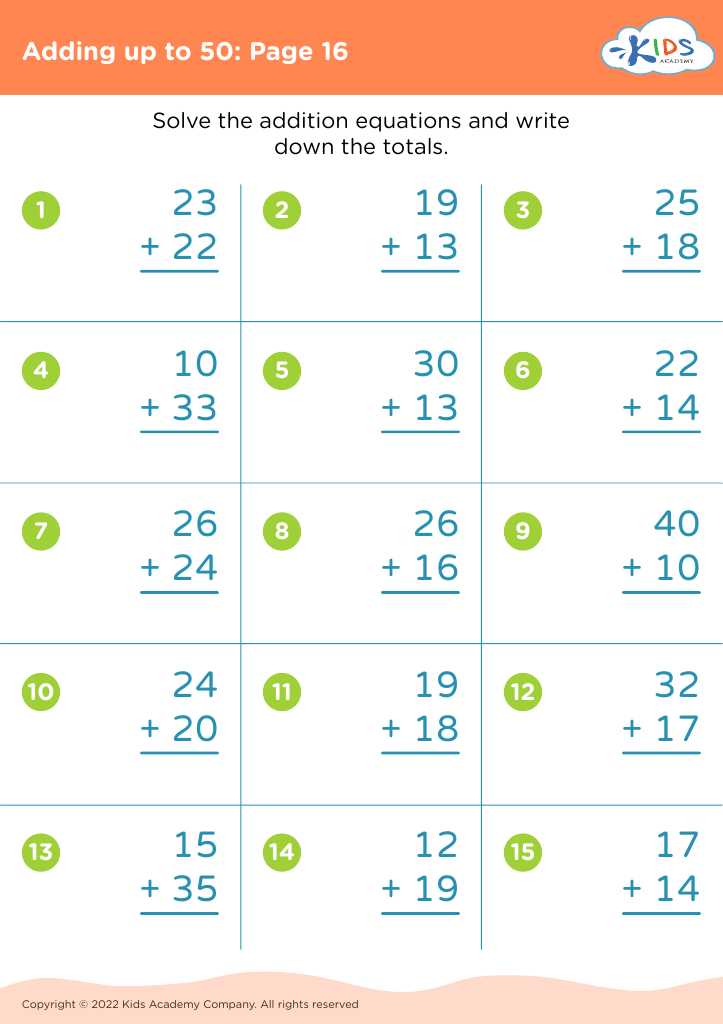
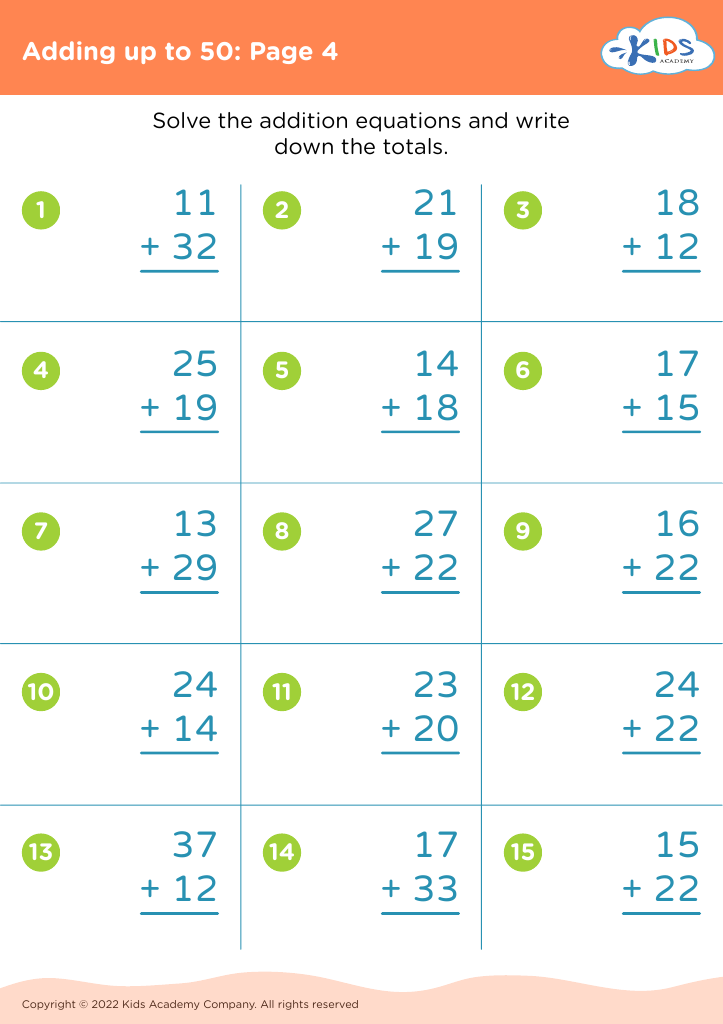
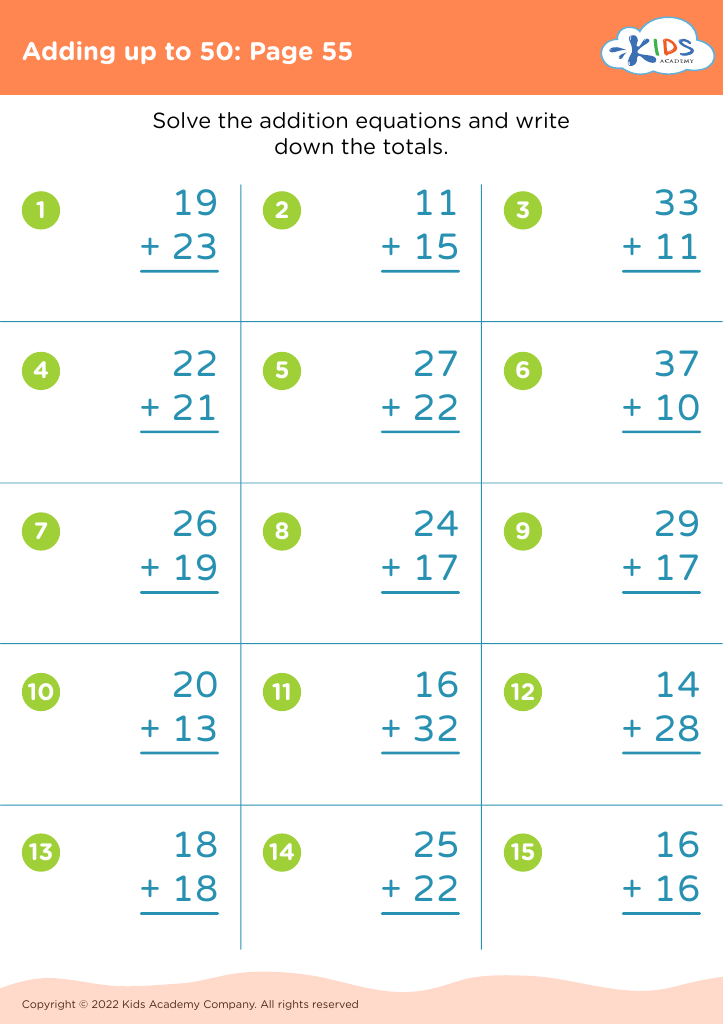
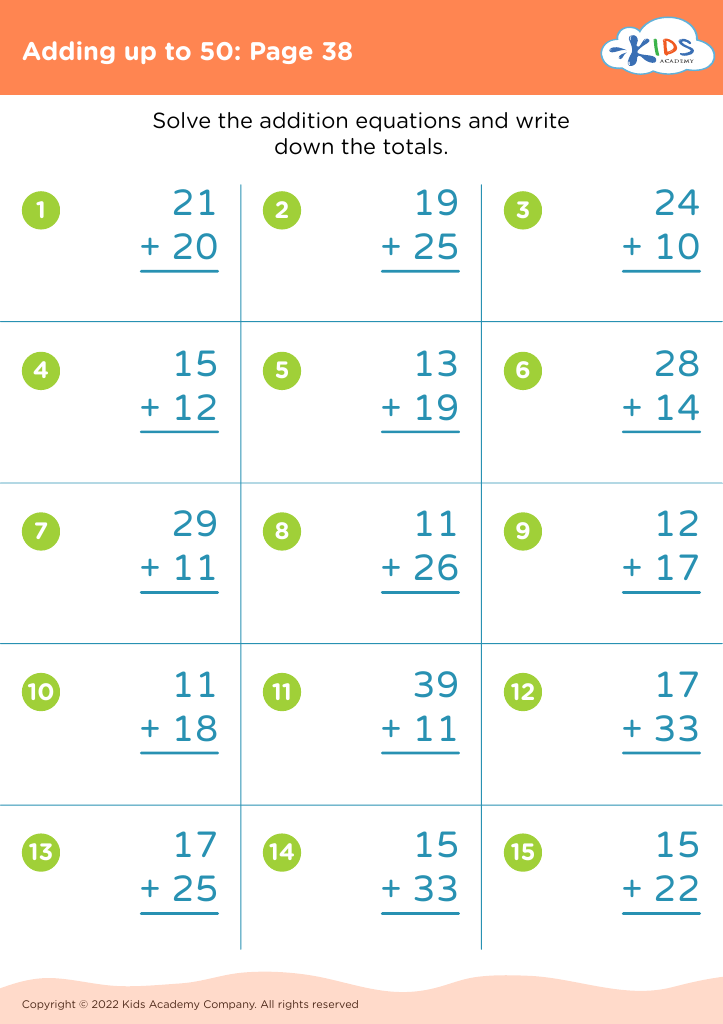
Discover a variety of engaging worksheets designed to enhance problem-solving skills for children aged 4-7. Our "Adding up to 50 Misc Worksheets" offer fun and educational activities to help young learners master addition within 50 while building critical thinking abilities. These printable worksheets feature vibrant illustrations and diverse exercises, ensuring kids stay motivated and entertained. Ideal for parents and educators, they provide an excellent resource for reinforcing math concepts at home or in the classroom. Equip your child with essential problem-solving tools, and watch their confidence and proficiency in math soar. Join us in creating a strong foundation for future learning!
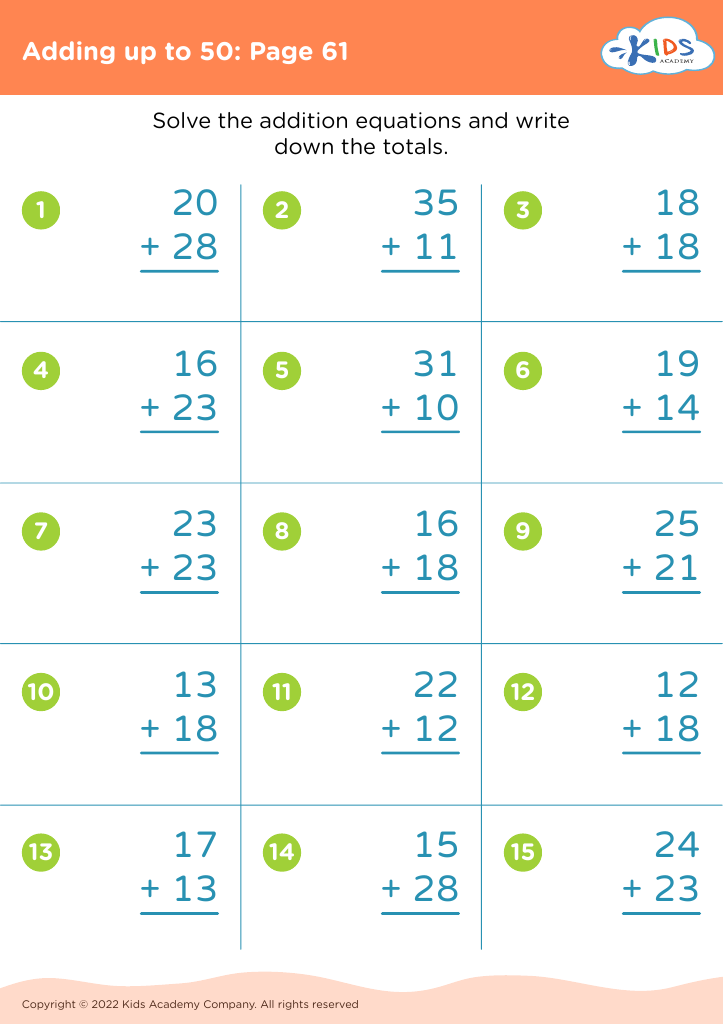
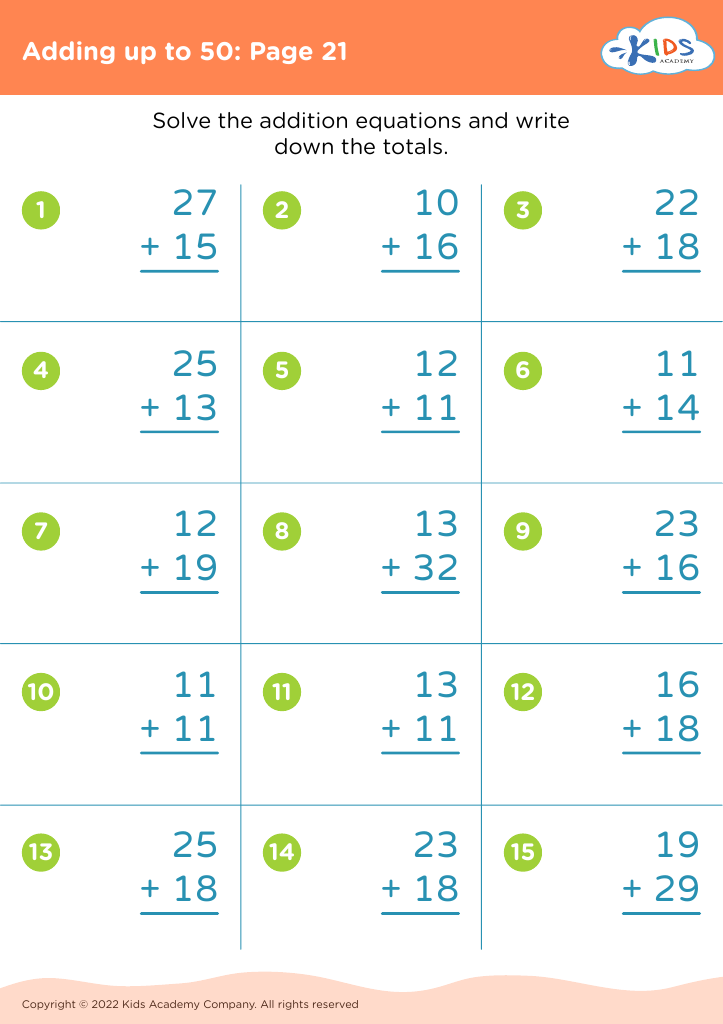
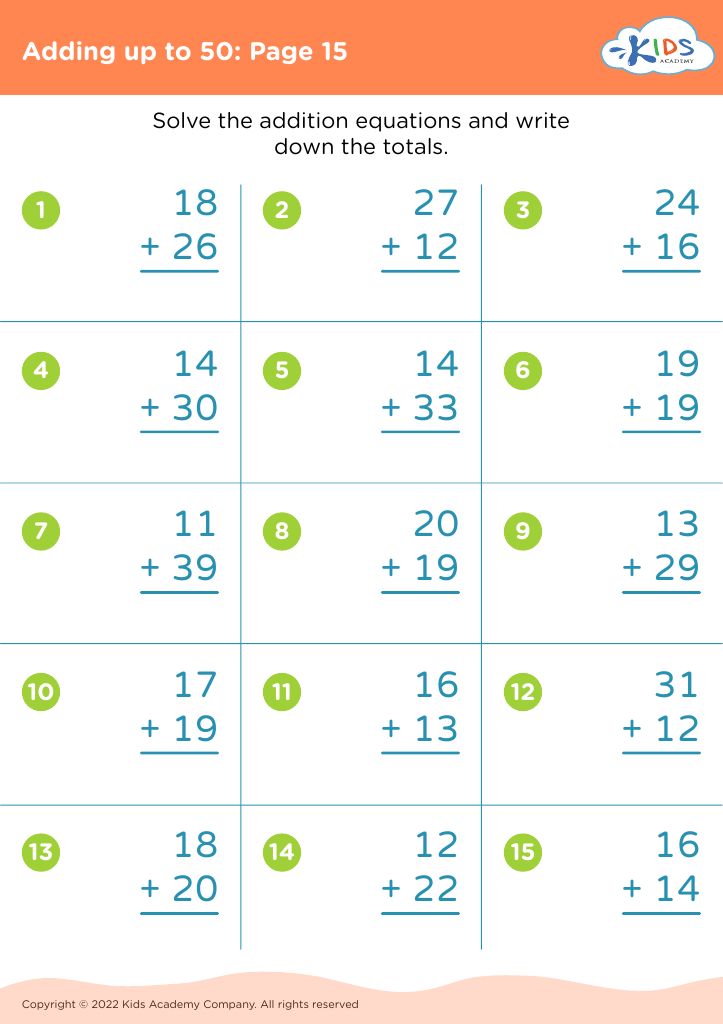
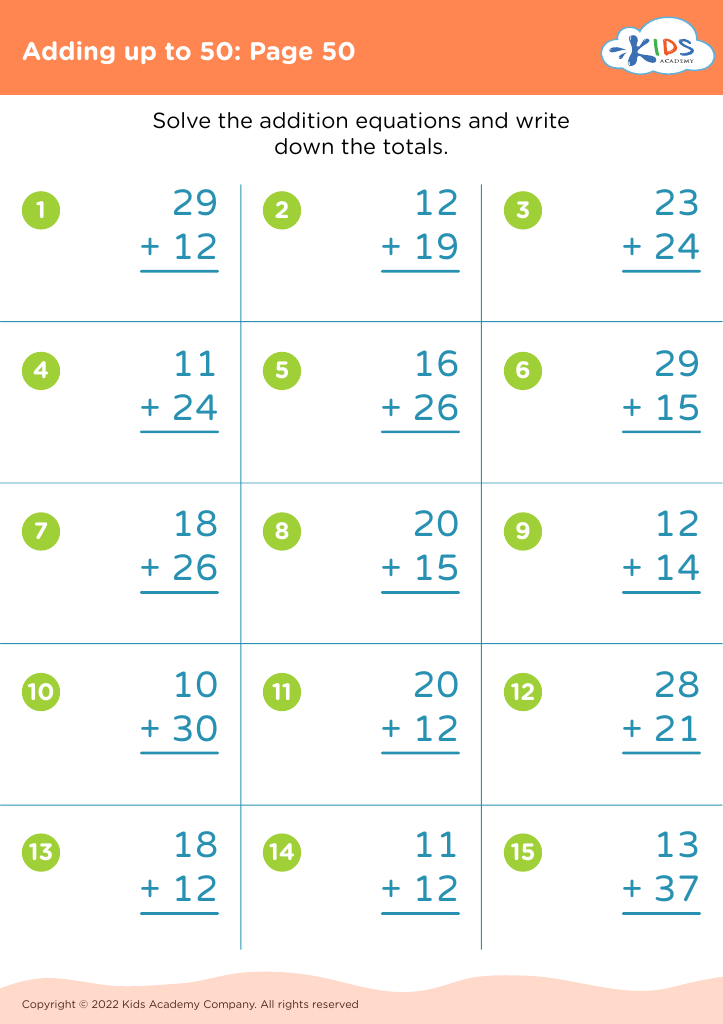
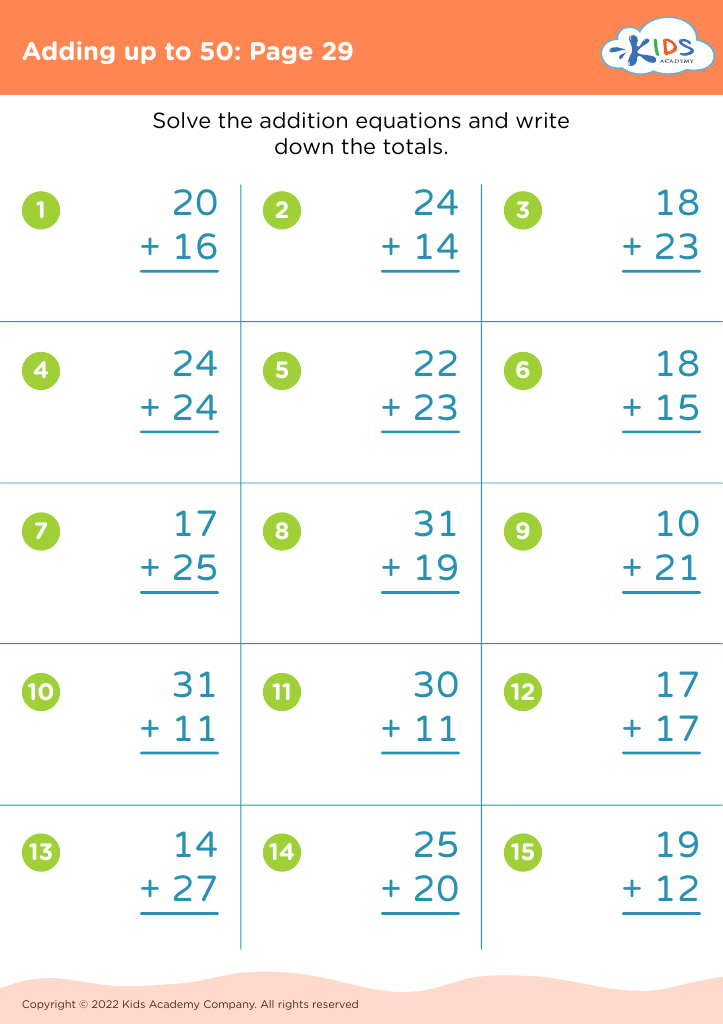
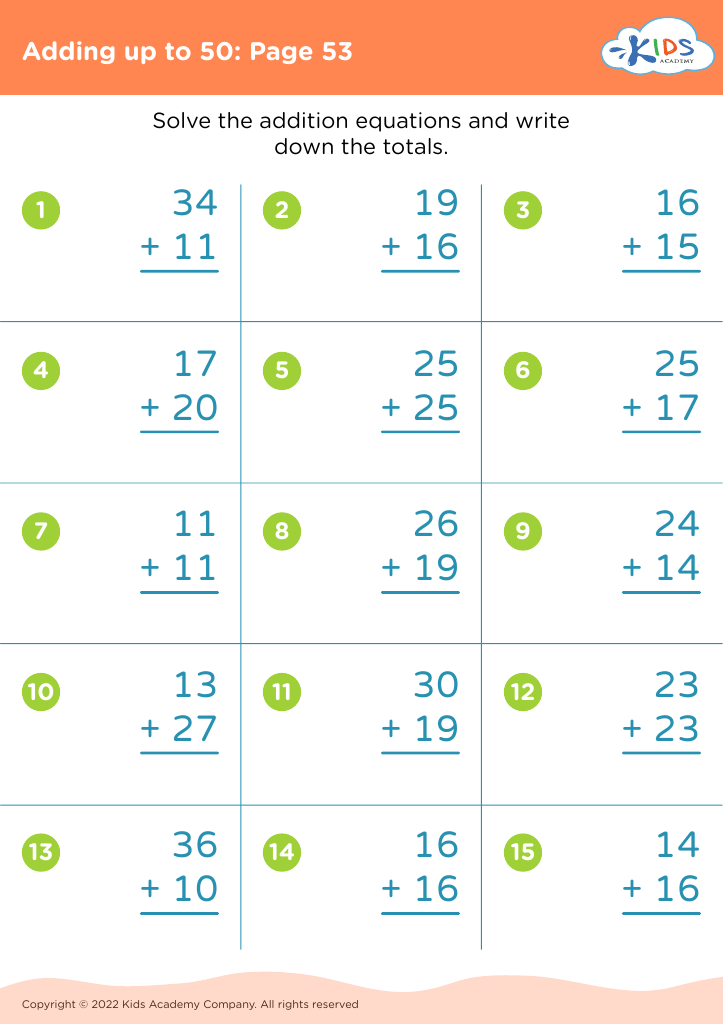


Parents and teachers play a crucial role in nurturing young minds. Fostering problem-solving skills, especially through activities like adding up numbers to 50, can significantly impact a child’s cognitive development and future academic success. Here’s why it matters:
Foundational Skills: Early exposure to basic addition helps build a strong mathematical foundation. Young children who practice these skills are likely to grasp more complex math concepts more easily.
Critical Thinking: Solving addition problems enhances critical thinking and logical reasoning. It encourages students to identify patterns, make connections, and develop strategies to find solutions.
Confidence Boost: Successfully solving problems fosters a sense of accomplishment and boosts self-confidence. This positive reinforcement can motivate children to tackle challenging tasks, both in and outside the classroom.
Real-World Relevance: Basic arithmetic is used in everyday life, from counting toys to handling money. By practicing addition, children become more comfortable navigating real-world situations involving numbers.
Attention and Focus: Working through math problems helps improve a child’s attention span and concentration. These skills are essential for learning and participating in various educational activities.
Parents and teachers should care because these early mathematical problem-solving skills set the stage for lifelong learning, fostering intellectual growth, and offering practical benefits that extend beyond the classroom. Prioritizing these skills in early education creates a strong, confident foundation for future academic and personal success.