Simplifying Fractions Adding up to 50 Misc Worksheets for Ages 4-7
4 filtered results
-
From - To
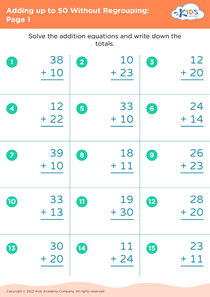
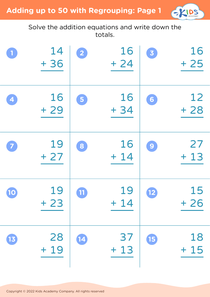
Discover our engaging "Simplifying Fractions: Adding Up to 50" worksheets, designed specifically for children aged 4-7. These fun and interactive resources help young learners grasp the concept of simplifying fractions while practicing their addition skills. Our worksheets provide a variety of exercises that make learning enjoyable, allowing children to build a strong foundation in math. With colorful visuals and age-appropriate challenges, your child will develop confidence and improve their abilities in a playful way. Perfect for homeschooling, classrooms, or just for fun, these worksheets make math exciting and accessible for early learners. Start your child's adventure in math today!
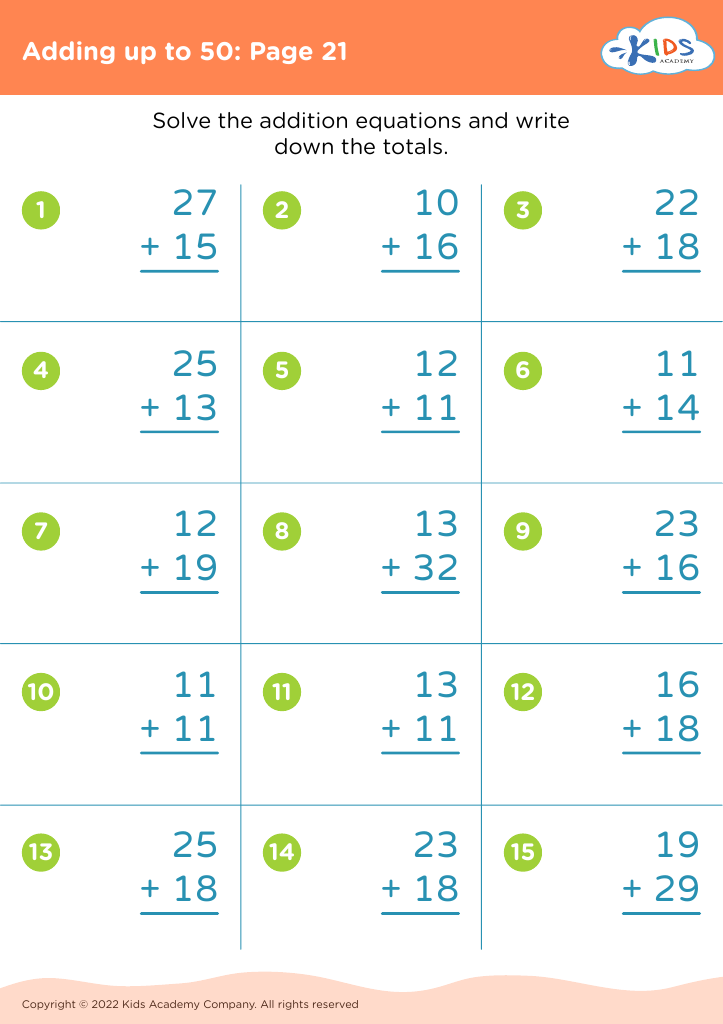
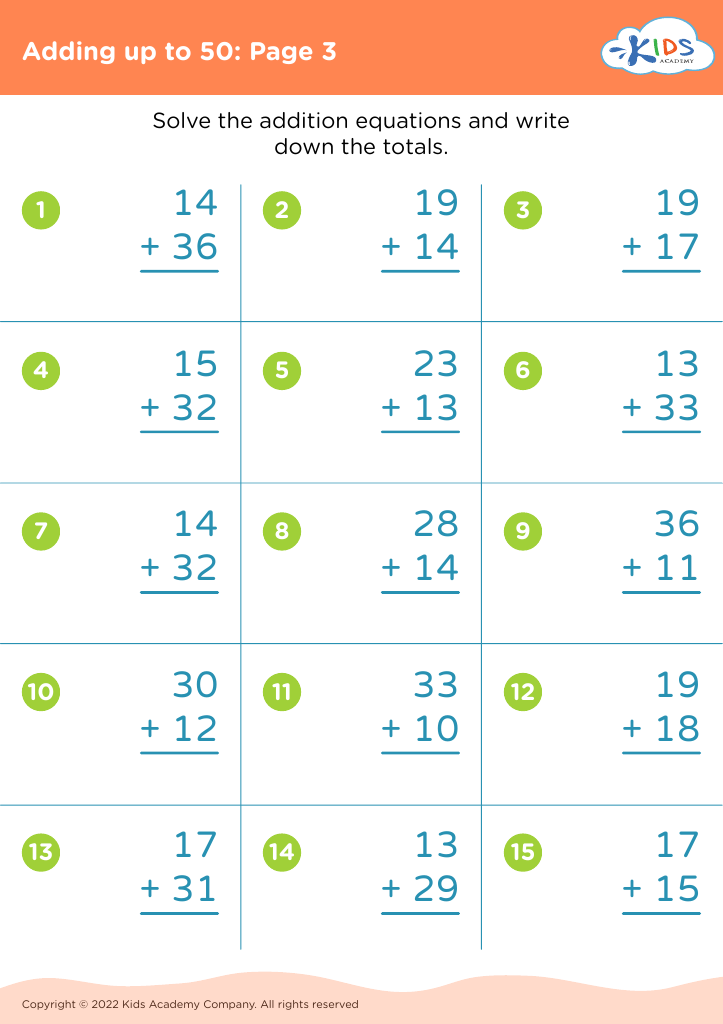
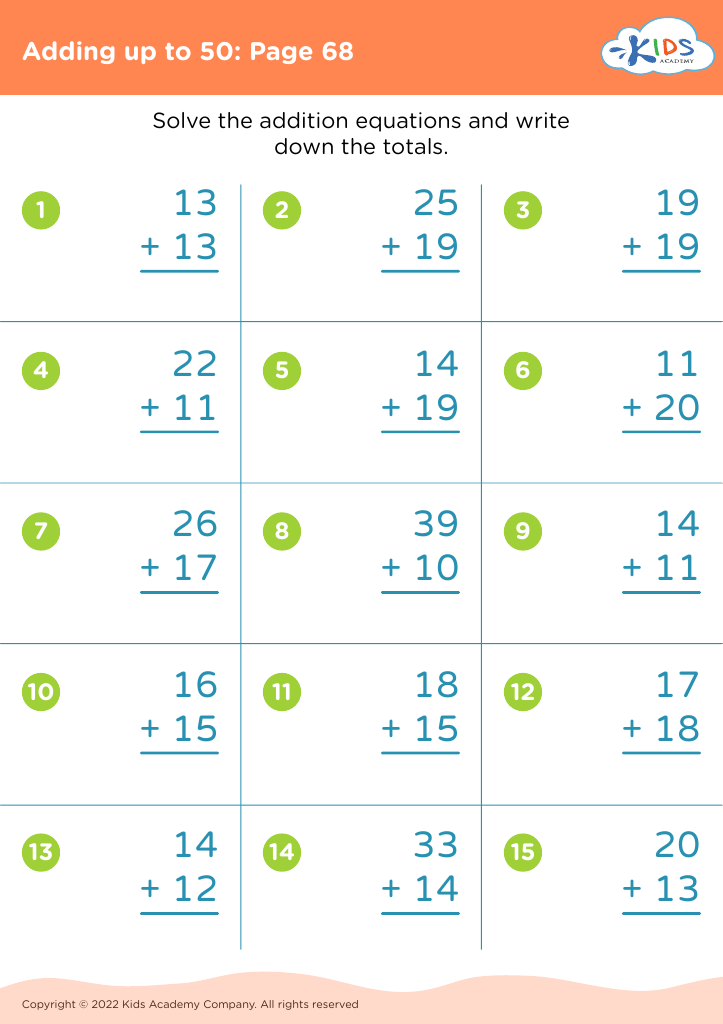
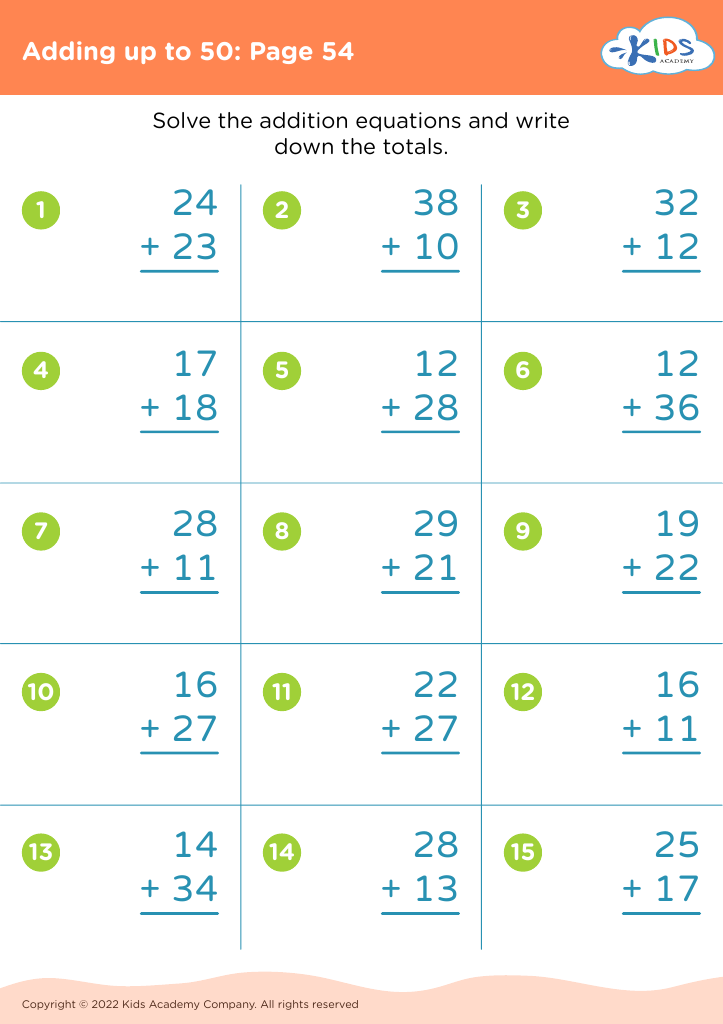


Simplifying fractions and engaging with addition concepts, such as "Adding up to 50,” are fundamental skills for young learners aged 4-7. Understanding these concepts fosters critical mathematical thinking and builds a strong foundation for future learning.
First, simplifying fractions introduces students to the idea of equivalence, helping them understand relationships between numbers beyond mere memorization. This enhances their problem-solving abilities and improves their analytical skills. As they learn to find simpler forms of fractions, children also develop patience and perseverance, traits that are valuable in all areas of learning.
Similarly, mastering addition up to 50 bolsters a child’s confidence in basic arithmetic, ensuring they feel secure in their math skills. Essential for daily life, these skills promote numeracy and problem-solving, crucial elements for successful academic journeys. Additionally, collaborative activities surrounding these topics, involving parents or teachers, encourage communication and teamwork, which are vital social skills.
Finally, investing time in these concepts instills a love for mathematics at an early age, making learning exciting and relevant. Thus, both parents and teachers play an essential role in nurturing these skills, which prepare children for more complex mathematical challenges in the future.