Understanding adjectives Adding up to 50 Misc Worksheets for Ages 4-7
4 filtered results
-
From - To
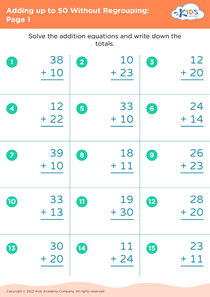
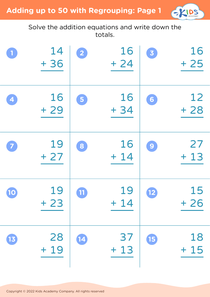
Uncover the creative world of adjectives and the exciting challenge of adding up to 50 with our diverse range of worksheets designed for children ages 4-7. Our "Understanding Adjectives Adding up to 50 Misc Worksheets" offer a fun and educational blend of language and math skills, catering to young learners' developmental needs. These worksheets encourage children to explore descriptive words while practicing fundamental addition skills, all through engaging and interactive exercises. Perfect for improving vocabulary, enhancing math proficiency, and fostering a love for learning, our resources are a valuable addition to any early grade curriculum. Explore now and boost your child's educational journey!
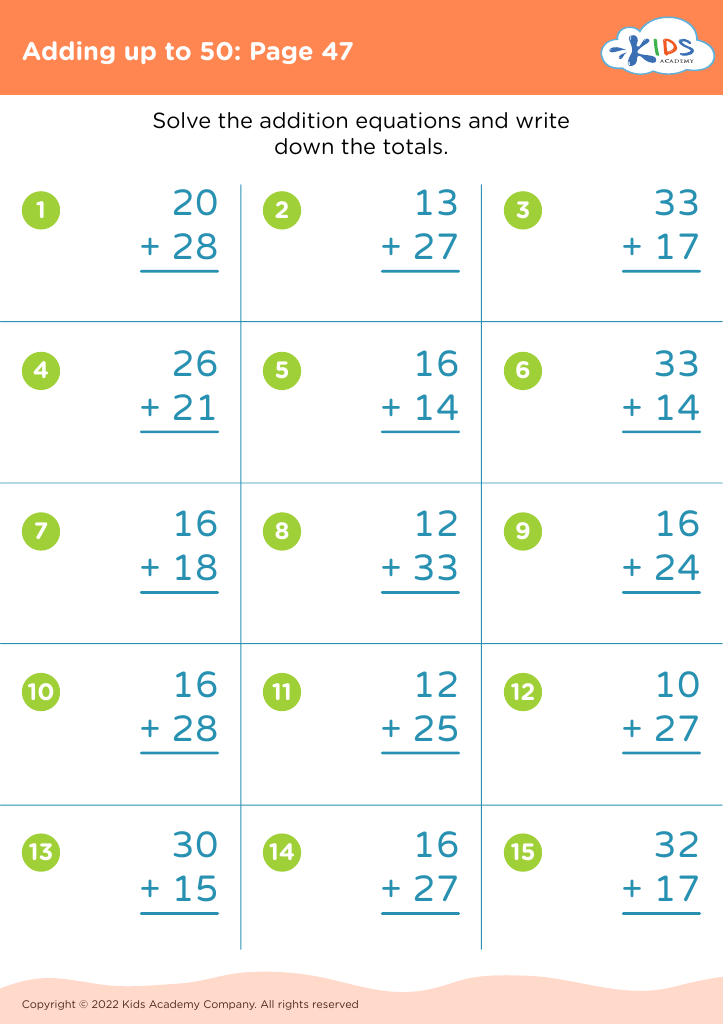
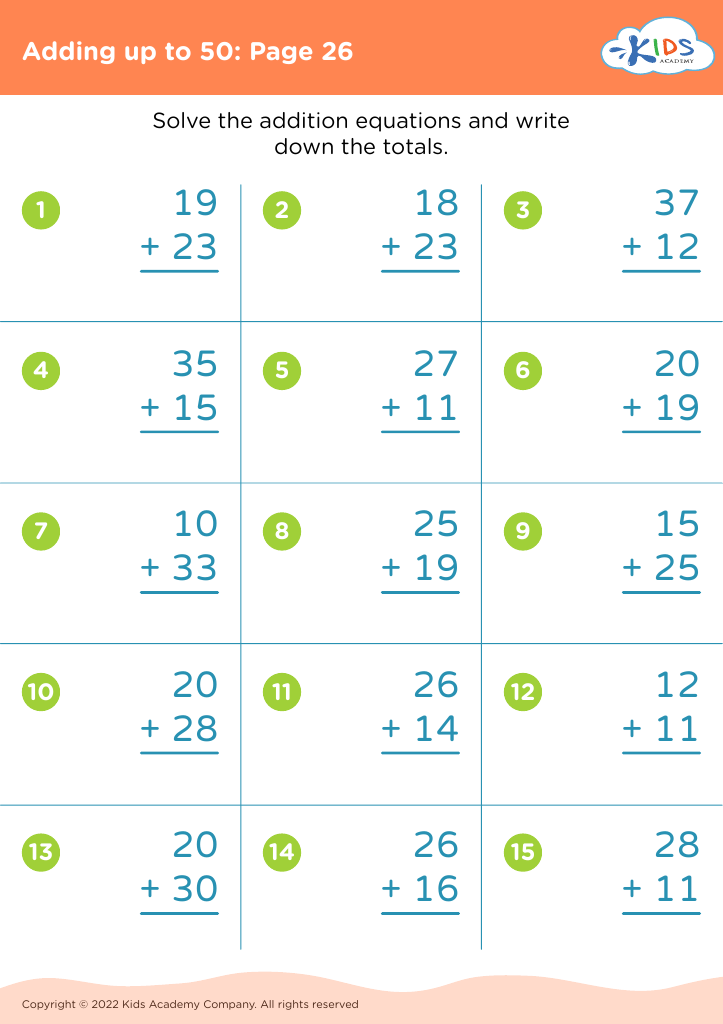
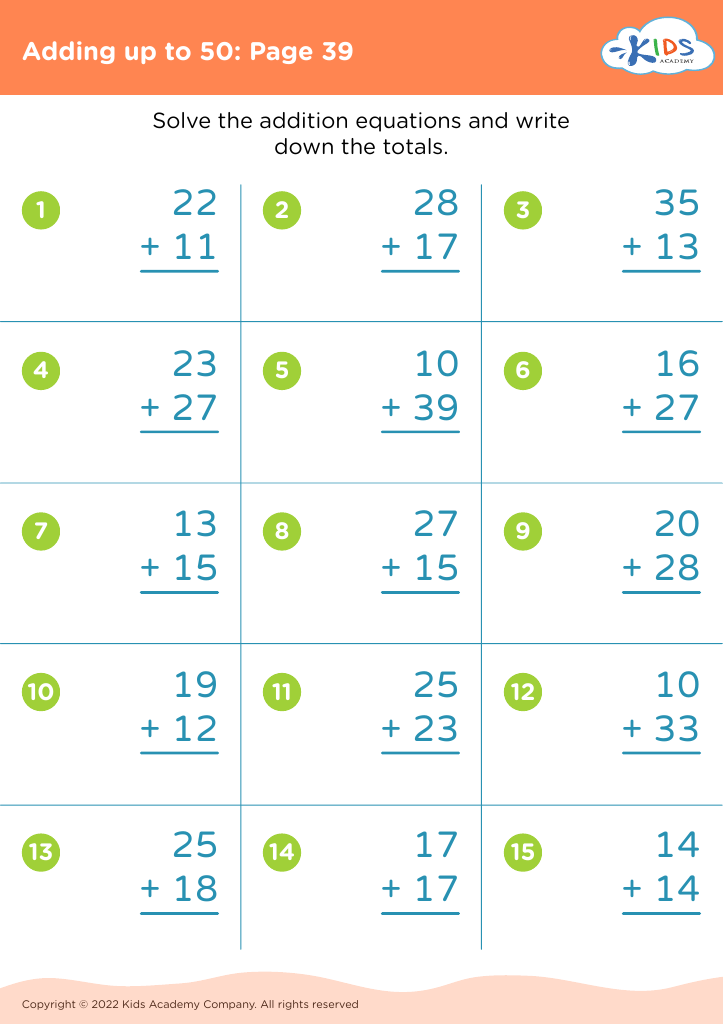
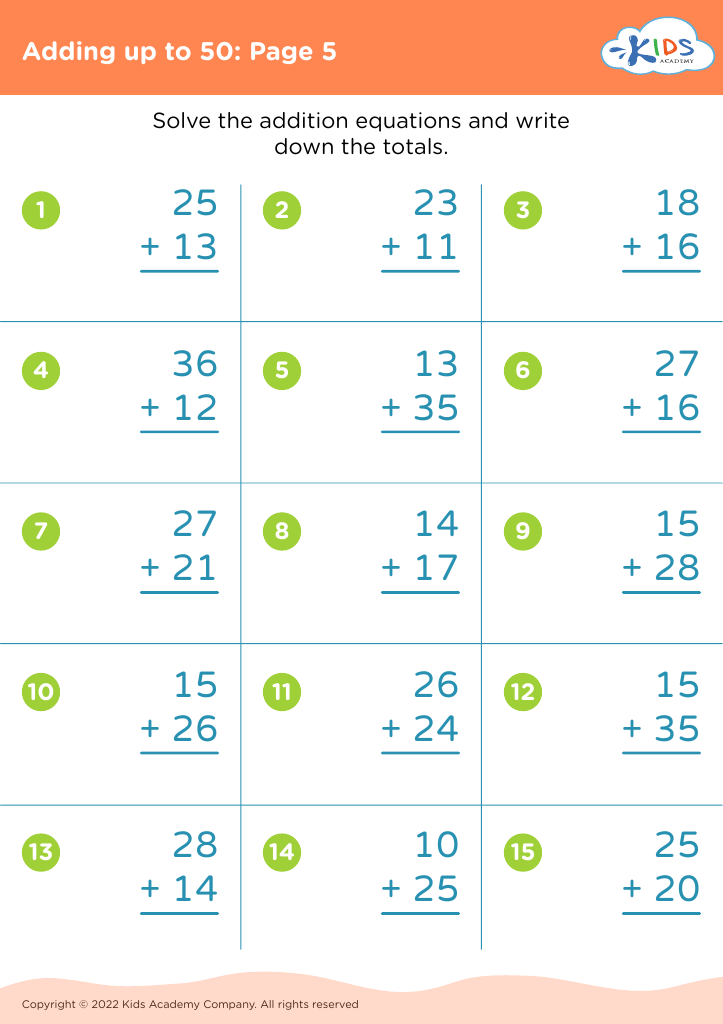


Understanding adjectives, mastering basic addition up to 50, and grasping miscellaneous foundational concepts are crucial for children aged 4-7 and offer numerous benefits that parents and teachers should be aware of.
First, learning adjectives enriches a child’s vocabulary and enhances their descriptive language skills. This allows them to express their thoughts, feelings, and experiences more clearly and creatively, fostering effective communication and social interaction. It also helps in reading comprehension, as children can better understand and enjoy stories.
Secondly, grasping addition up to 50 lays the groundwork for future mathematical concepts. Mastery in basic addition is a building block for more complex operations such as subtraction, multiplication, and division. It also enhances problem-solving skills and logical reasoning, which are valuable not only in academics but in everyday life, from understanding time to managing money.
Finally, introducing miscellaneous foundational concepts such as grouping, counting, and recognizing patterns develops a well-rounded cognitive foundation. These activities improve fine motor skills, foster curiosity, and encourage independent thinking.
Investing in these early educational milestones creates a strong base for continuous learning, academic success, and overall cognitive development, making it essential for parents and teachers to prioritize and support these early learning goals.