Understanding fractions Adding up to 50 Misc Worksheets for Ages 4-7
17 filtered results
-
From - To
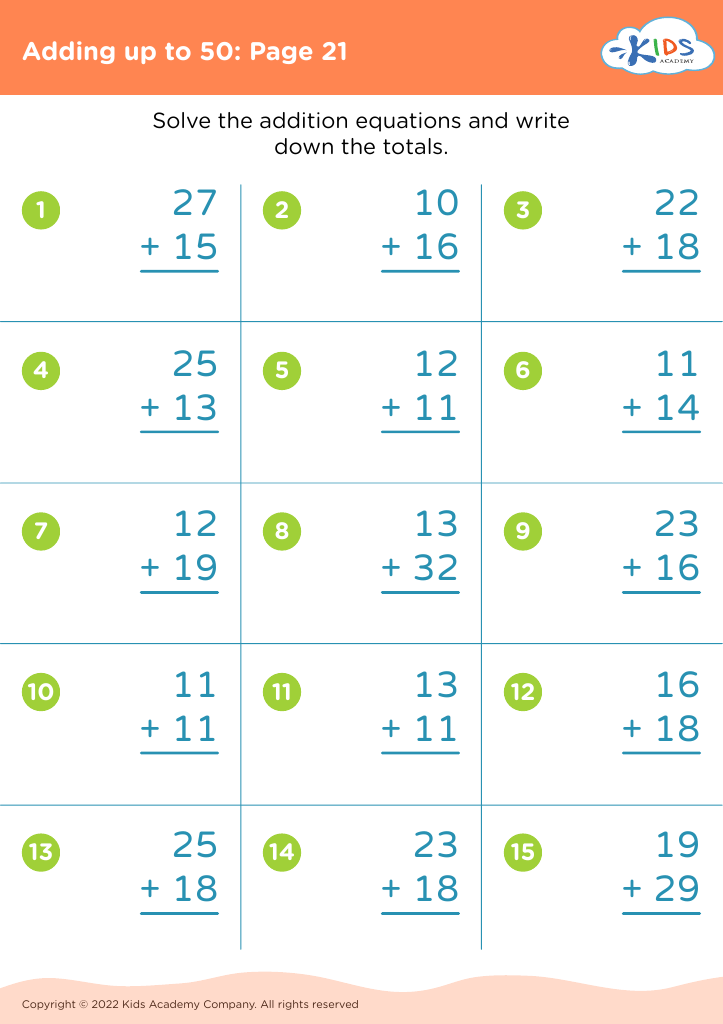
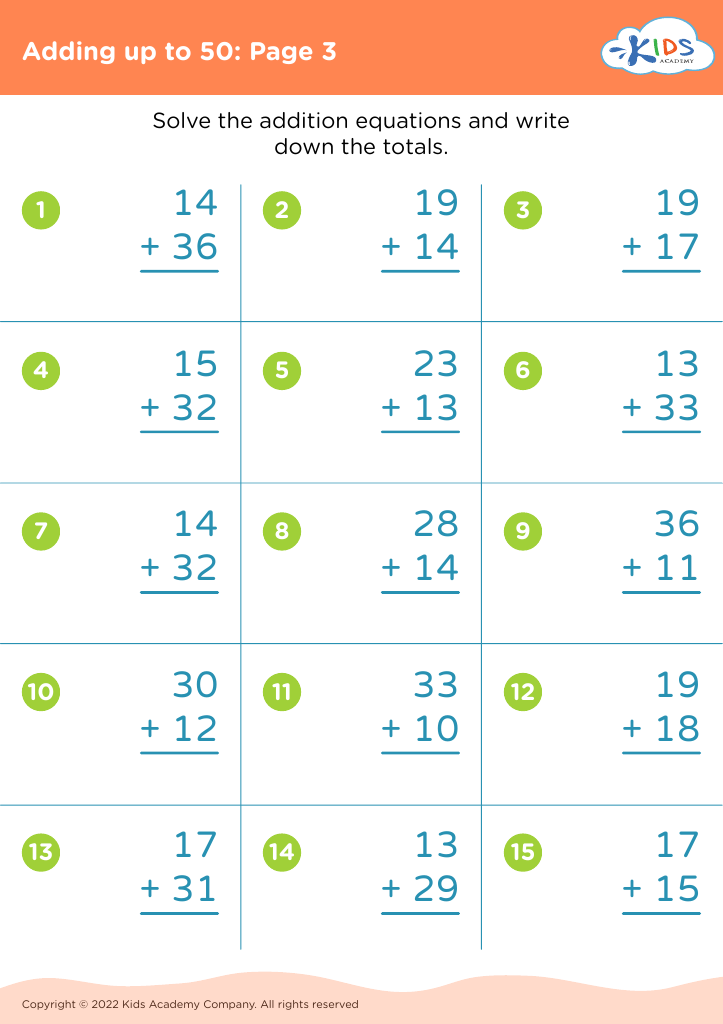
Enhance your child's math skills with our “Understanding Fractions - Adding up to 50” miscellaneous worksheets, designed for ages 4-7. These printable resources simplify complex concepts like fractions, helping young learners grasp essential mathematics in a fun, engaging way. Each worksheet blends colorful visuals with interactive exercises, guiding children through the basics of fractions and addition. Ideal for early-grade students, our worksheets foster confidence and proficiency in math by incorporating creative problem-solving techniques. Download today to support your child’s mathematical journey and build a strong foundation for future success!
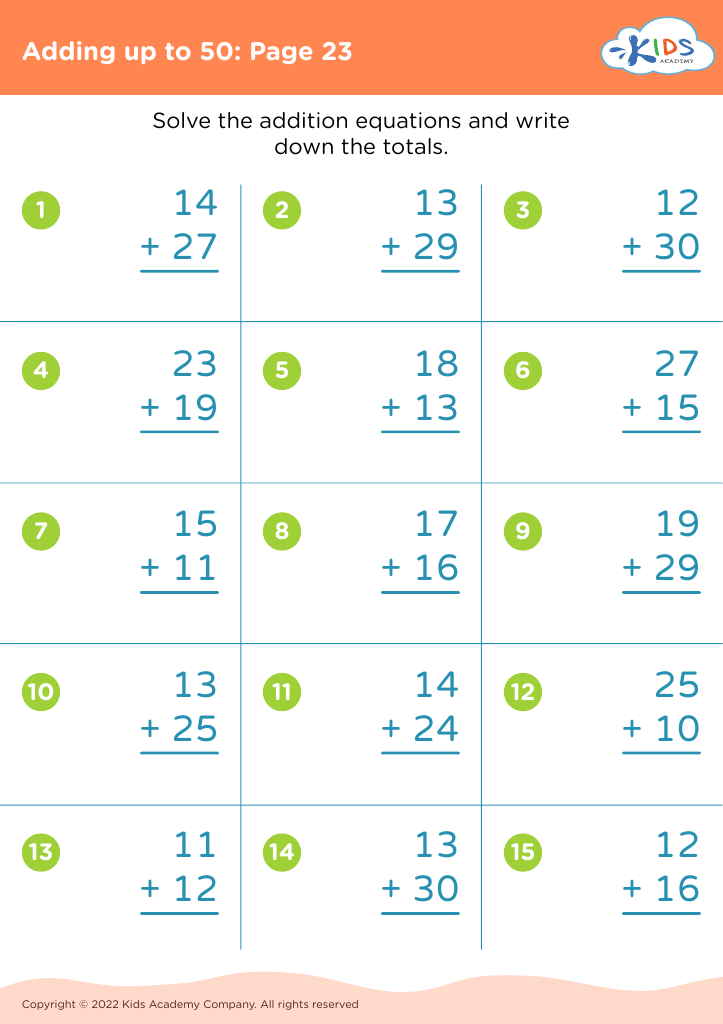
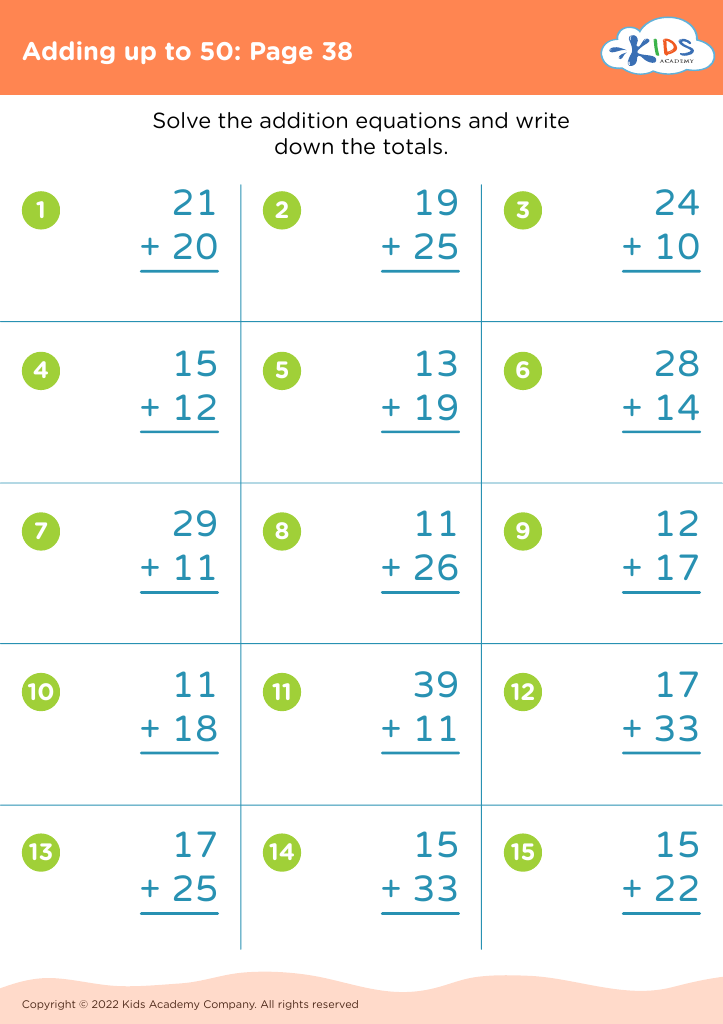
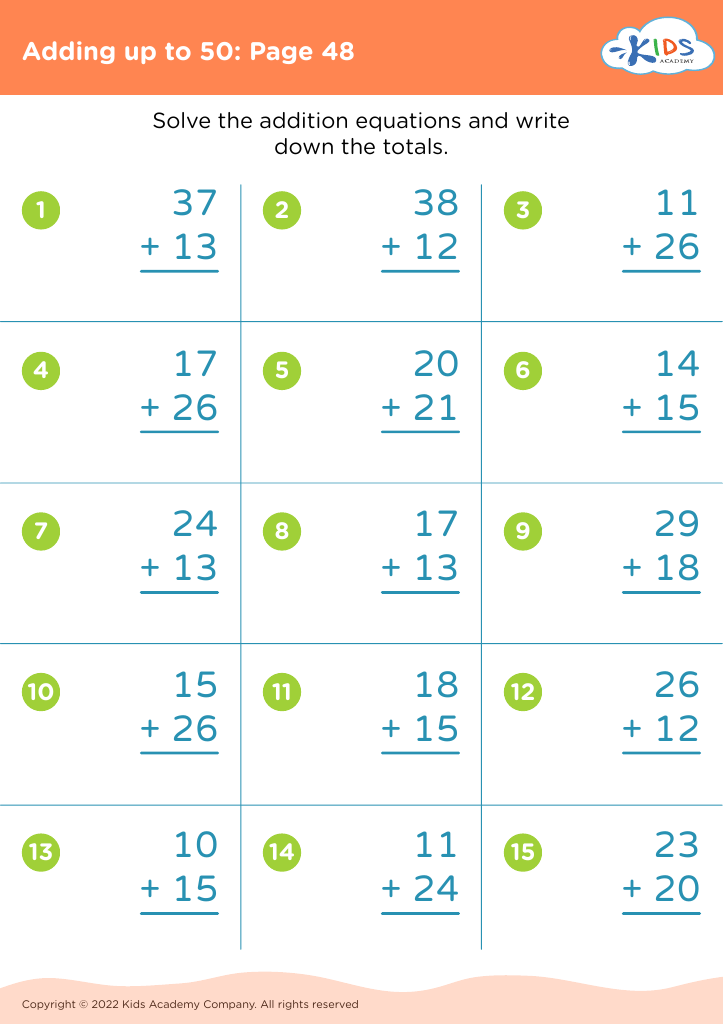
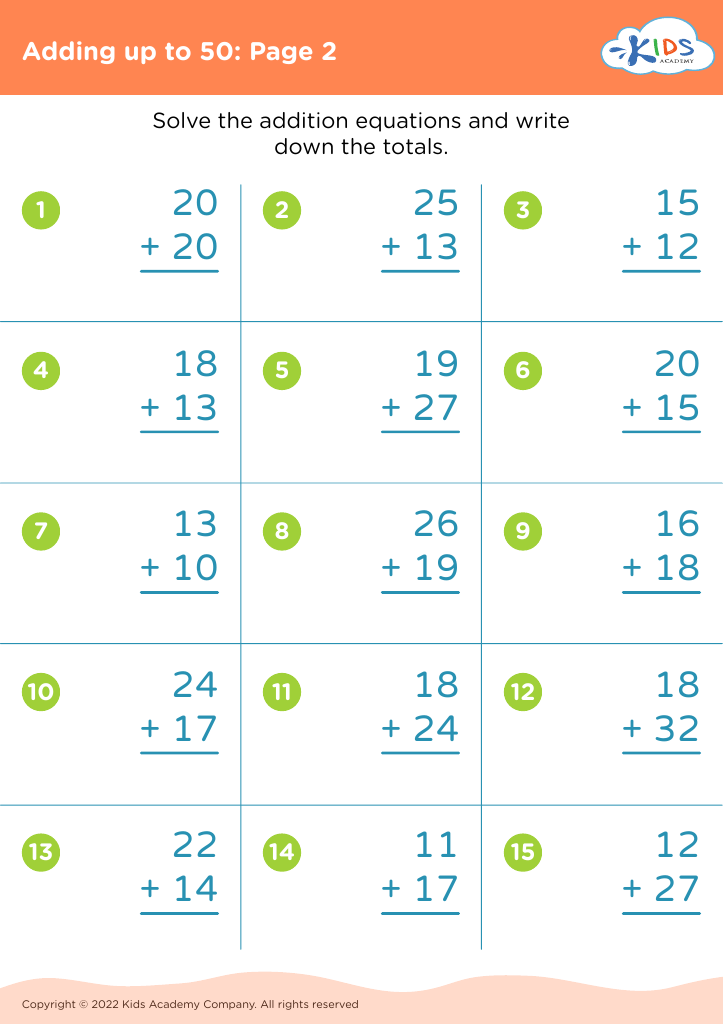
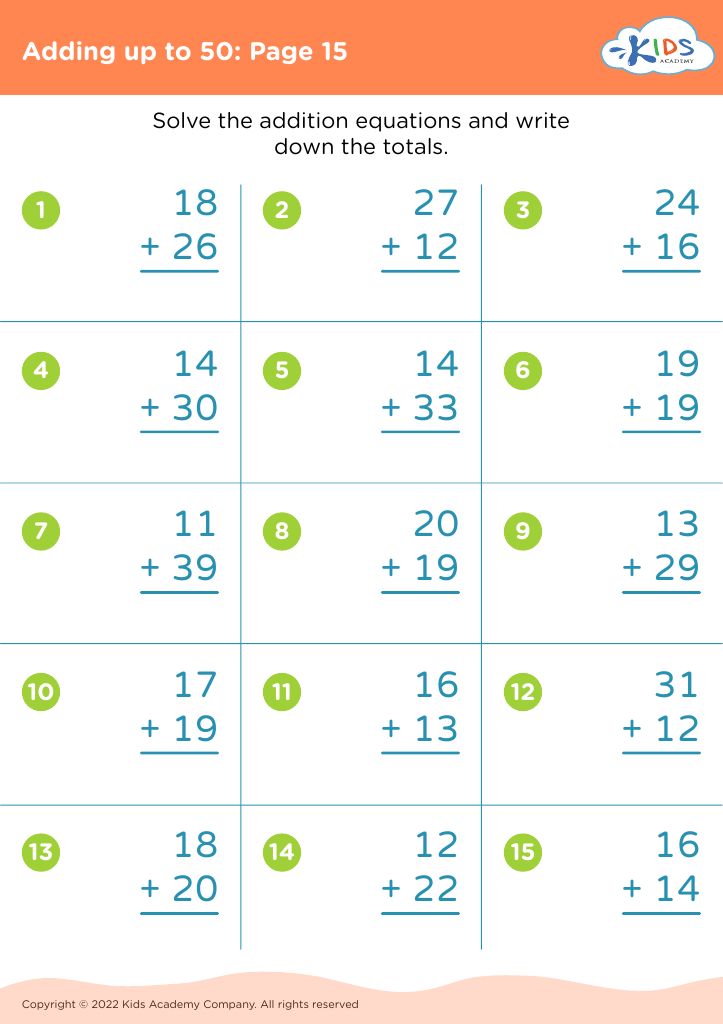
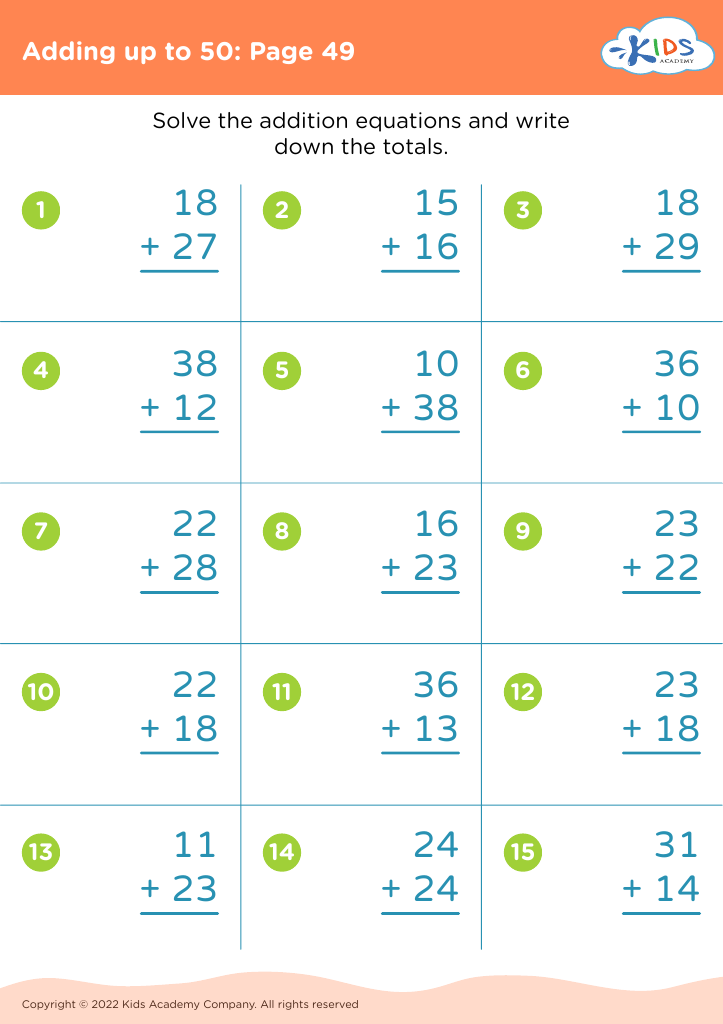
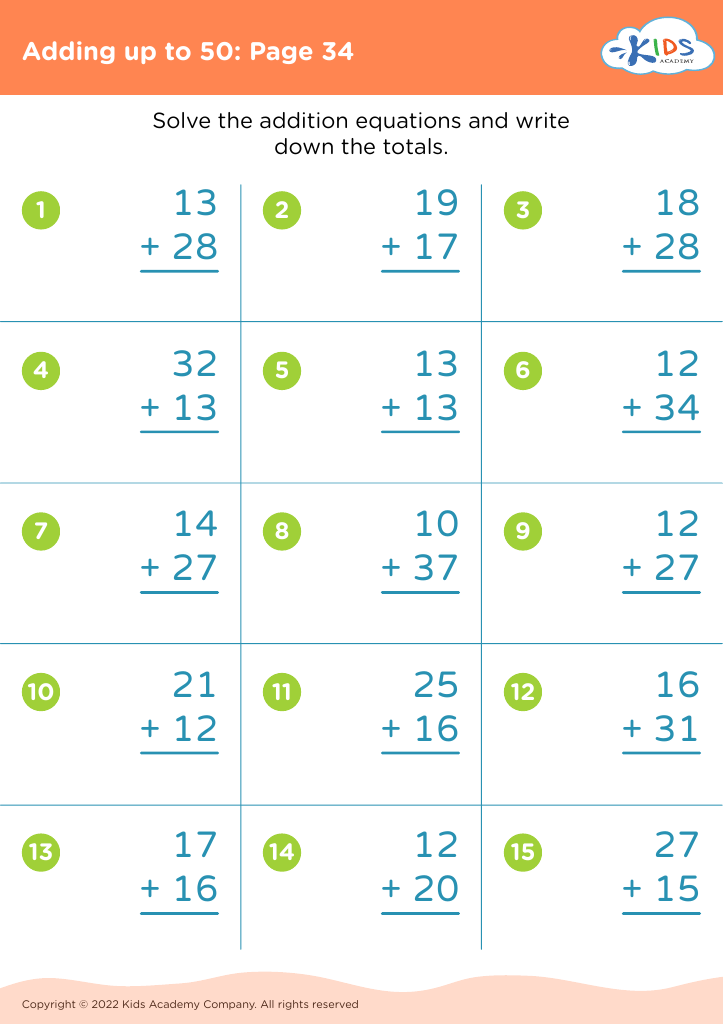


Understanding fractions, sums up to 50, and other miscellaneous math skills are foundational components of a child's early education that significantly impact cognitive and academic development. At ages 4-7, children are in a crucial stage of brain development, particularly in mathematical reasoning and problem-solving.
Understanding fractions introduces concepts of division, parts of a whole, and proportionality. These skills are critical not only in math but in everyday activities such as sharing and measuring. Visual and hands-on activities, like cutting a sandwich or sharing toys using fractions, help solidify these concepts in a child's mind.
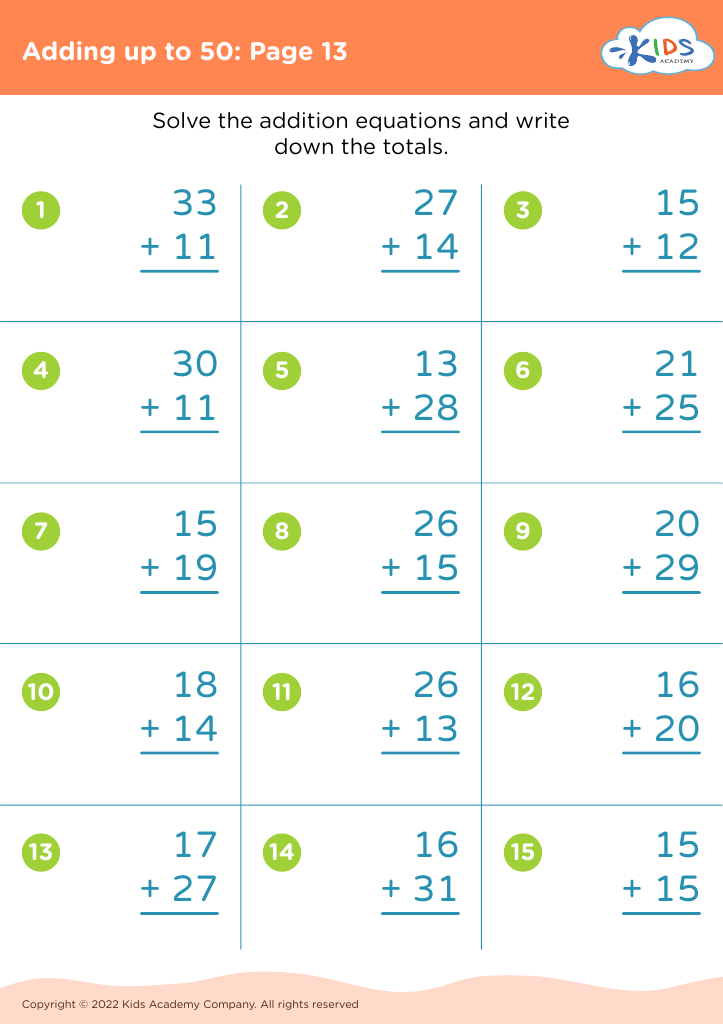
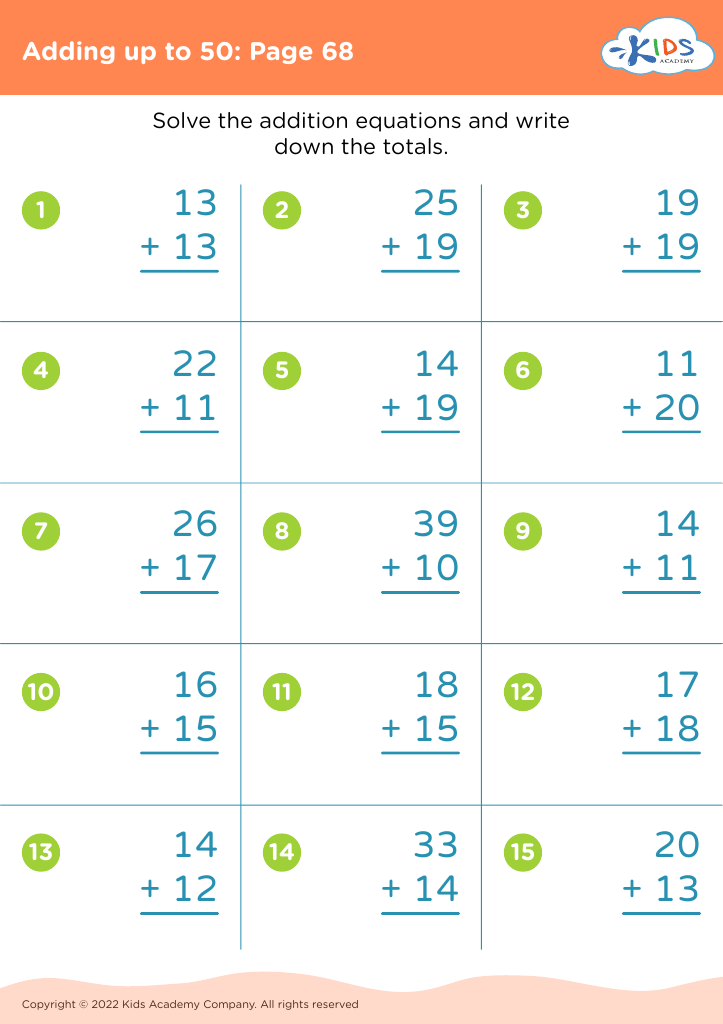
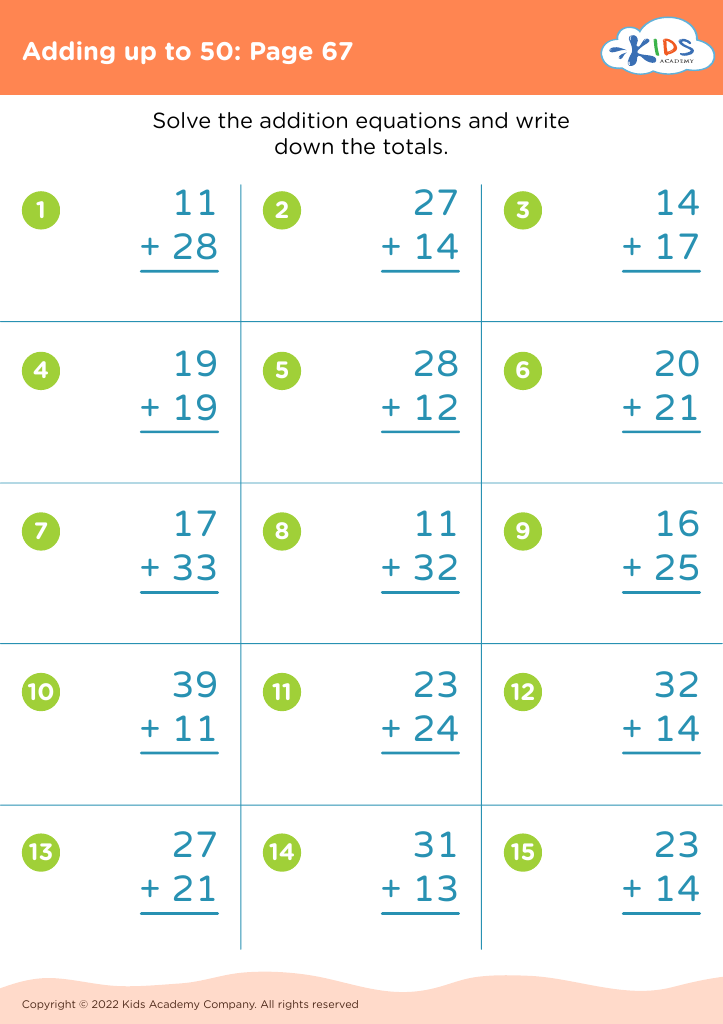
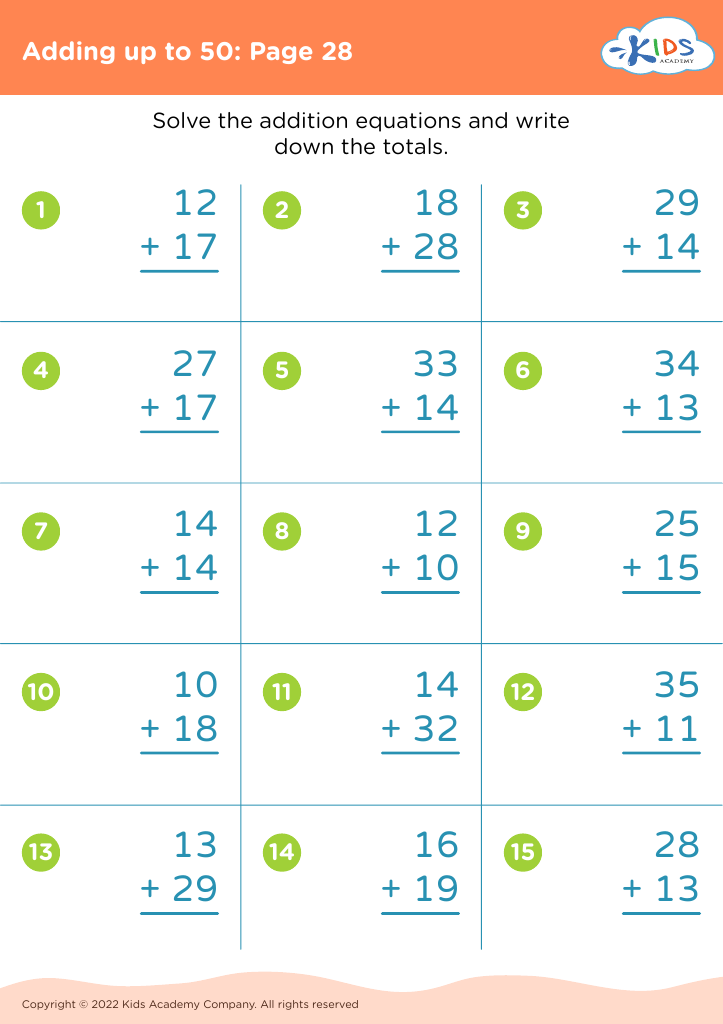
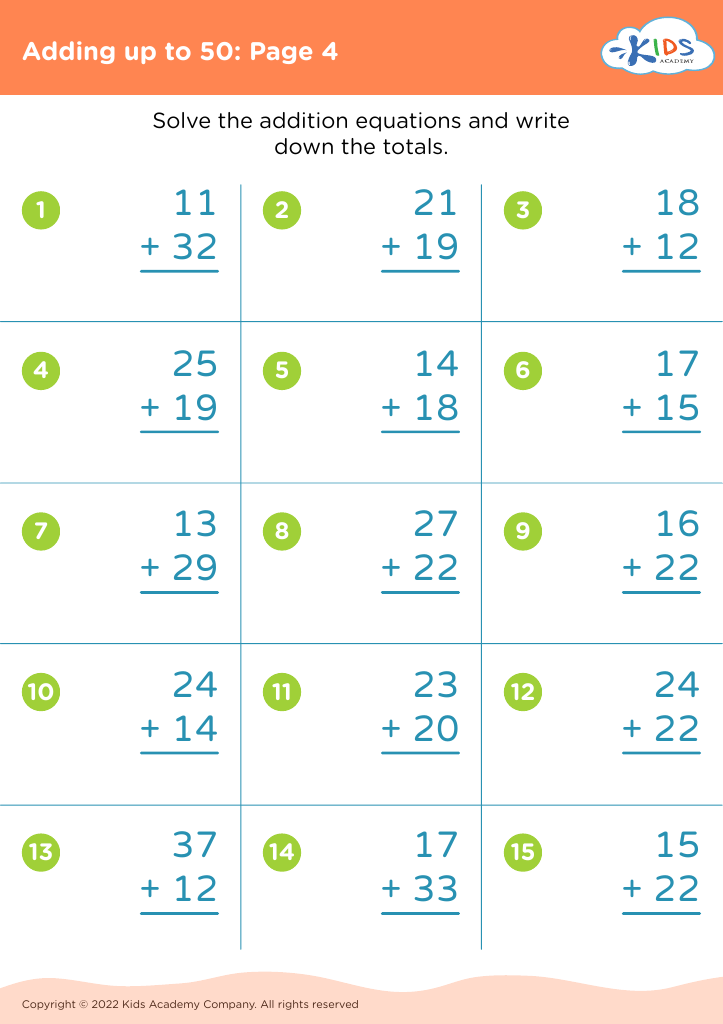
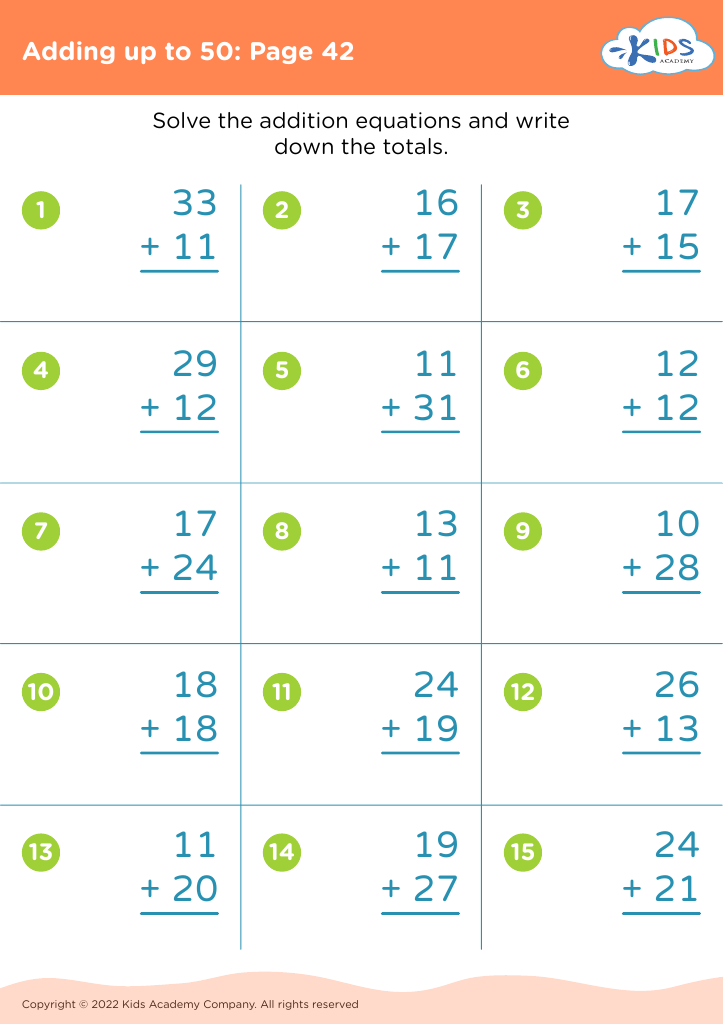
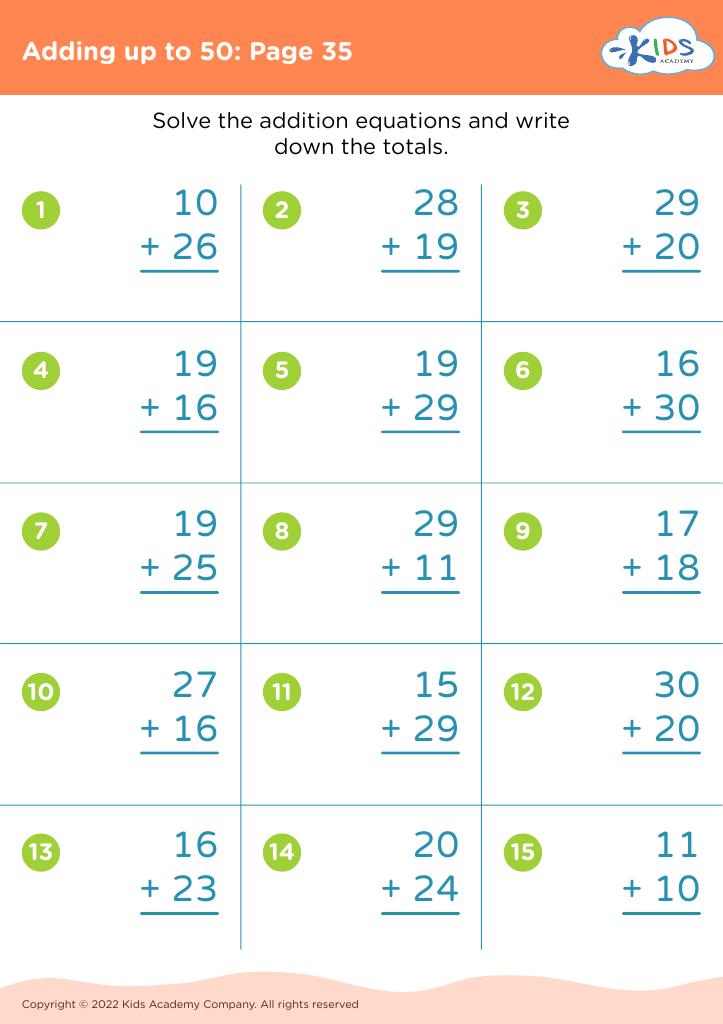
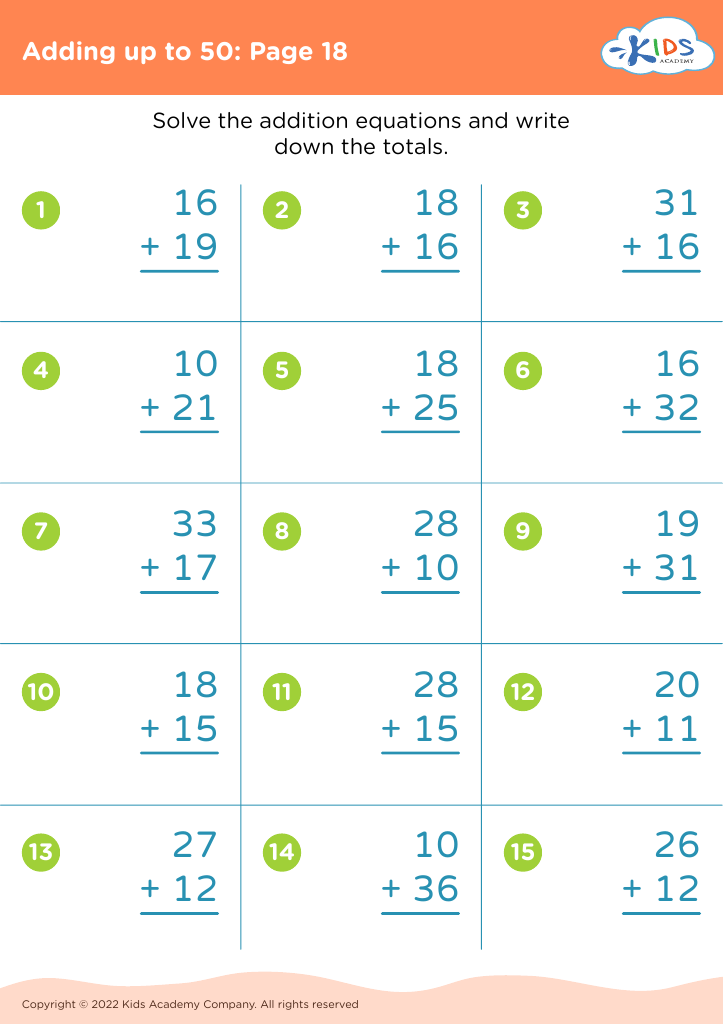
Learning to add up to 50 builds a strong number sense and fluency with basic arithmetic, which are essential for more advanced math topics. It strengthens mental math capabilities and understanding of numerical relationships, enhancing a child’s ability to tackle increasingly complex problems as they progress through their education.
Aside from academic benefits, early math skills foster critical thinking, pattern recognition, and logical reasoning, which are broadly applicable in life. Parents and teachers who prioritize these areas help children build a strong foundation for future learning, boost their confidence, and enable a positive, productive attitude towards mathematics and learning in general.