Basic Addition Adding up to 50 with Regrouping Worksheets for Ages 4-7
3 filtered results
-
From - To
Unlock your child's math potential with our engaging Basic Addition Worksheets designed for ages 4-7! Focusing on adding numbers up to 50, these worksheets introduce the concept of regrouping through playful exercises and vibrant illustrations. Tailored for early learners, they help reinforce essential addition skills while making learning fun and interactive. Each worksheet encourages critical thinking and problem-solving, allowing children to build confidence in their math abilities. Parents and educators can easily print these resources, ensuring that practice at home or in the classroom is accessible and enjoyable. Give your child the foundation they need for a bright mathematical future!
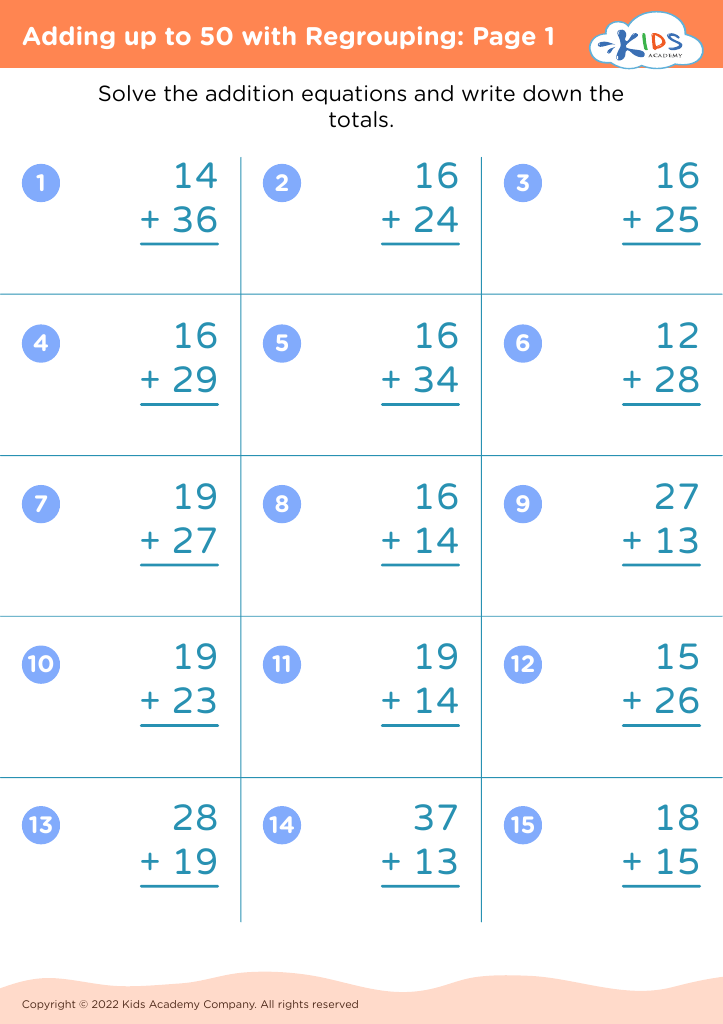
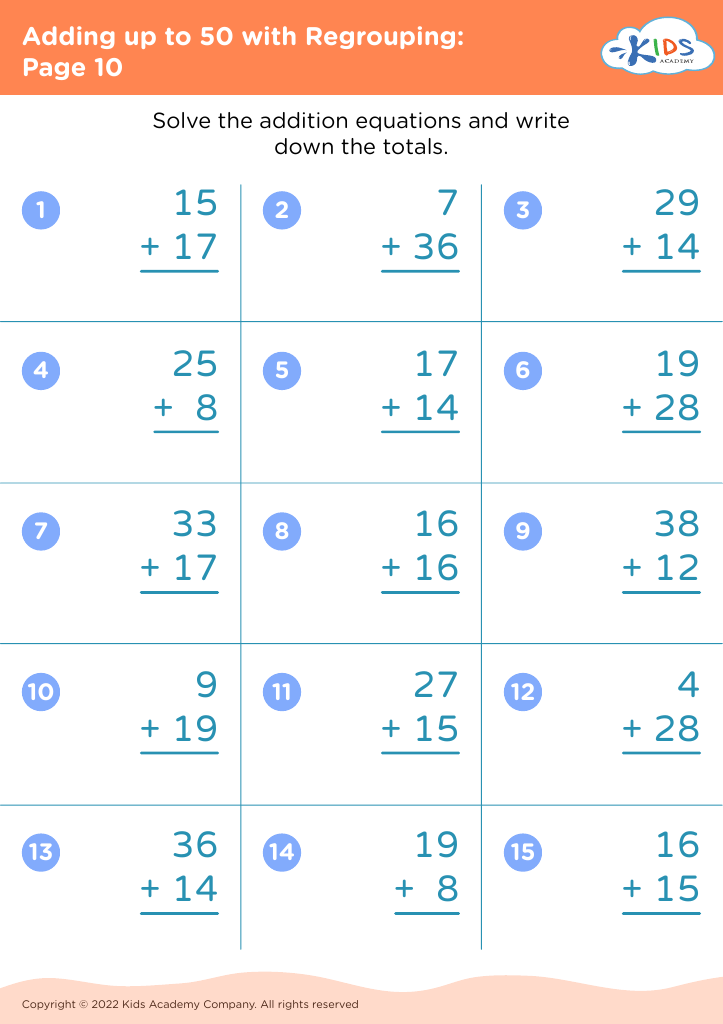
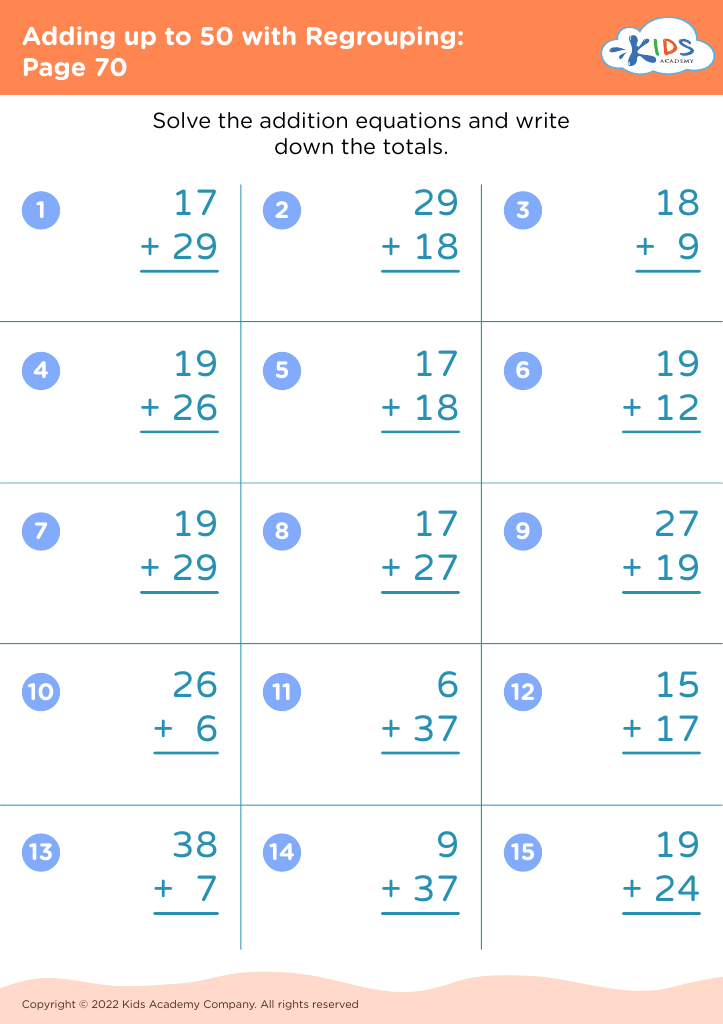


Basic addition, particularly adding numbers up to 50 with regrouping, is foundational for young learners aged 4-7. This concept is essential as it not only develops numerical fluency but also enhances critical thinking and problem-solving skills. Parents and teachers should recognize that mastering addition with regrouping supports children's cognitive growth, helping them grasp more complex mathematical concepts in the future.
For instance, as children encounter larger numbers, using regrouping reinforces their understanding of place value, teaching them how to organize and manipulate numbers effectively. It cultivates perseverance, as children learn to work through challenges and build confidence in their mathematical abilities.
Moreover, skills in addition and regrouping have real-world applications, allowing children to navigate everyday situations such as counting money, sharing items, or organizing groups. Additionally, it establishes a strong math foundation which is crucial within standardized education systems, influencing children's overall academic performance.
Engaging in basic addition through interactive and playful approaches can make learning enjoyable, fostering a positive attitude towards mathematics. Therefore, both parents and teachers should prioritize teaching addition with regrouping, as it prepares children for future math success and promotes a lifelong love of learning.