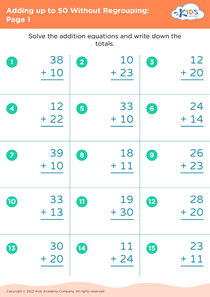
Shape Recognition Adding up to 50 with Regrouping Worksheets for Ages 4-7
6 filtered results
-
From - To
Discover our engaging "Shape Recognition Adding up to 50 with Regrouping Worksheets" tailored for children aged 4-7. These worksheets seamlessly combine essential math skills with vibrant shape recognition activities, creating a fun learning experience. Designed to introduce young learners to regrouping techniques, they help children enhance their number sense while exploring various shapes. With a variety of interactive exercises, kids will develop critical thinking and problem-solving abilities as they practice addition up to 50. Perfect for classroom use or at-home enrichment, these worksheets lay a strong foundation for early math proficiency. Dive in today and inspire a love for shapes and numbers!
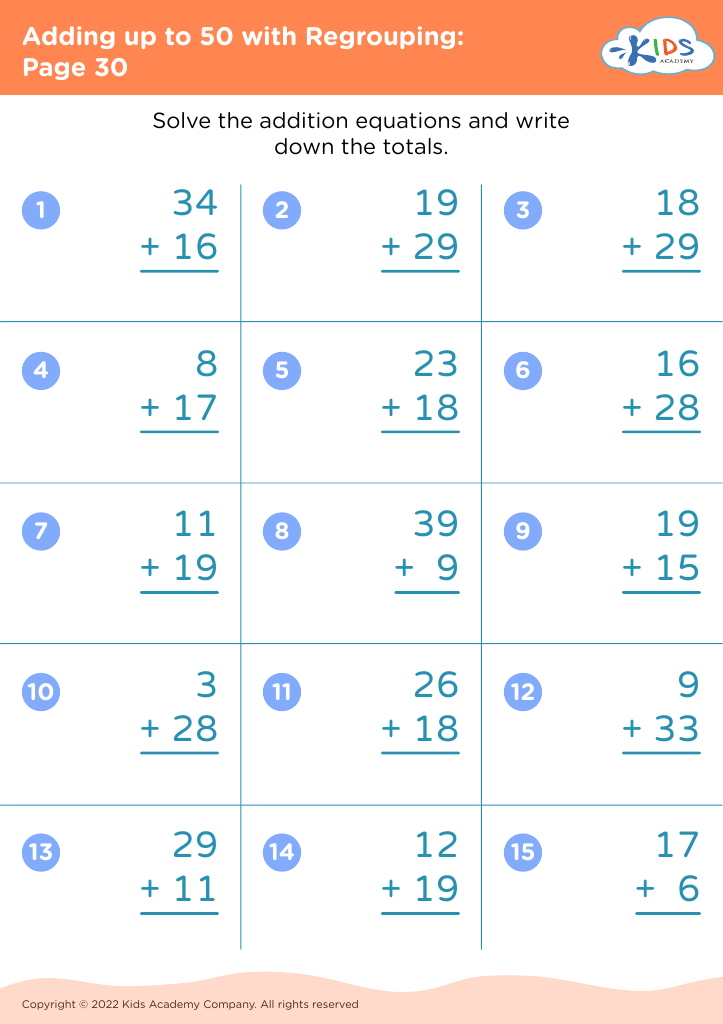
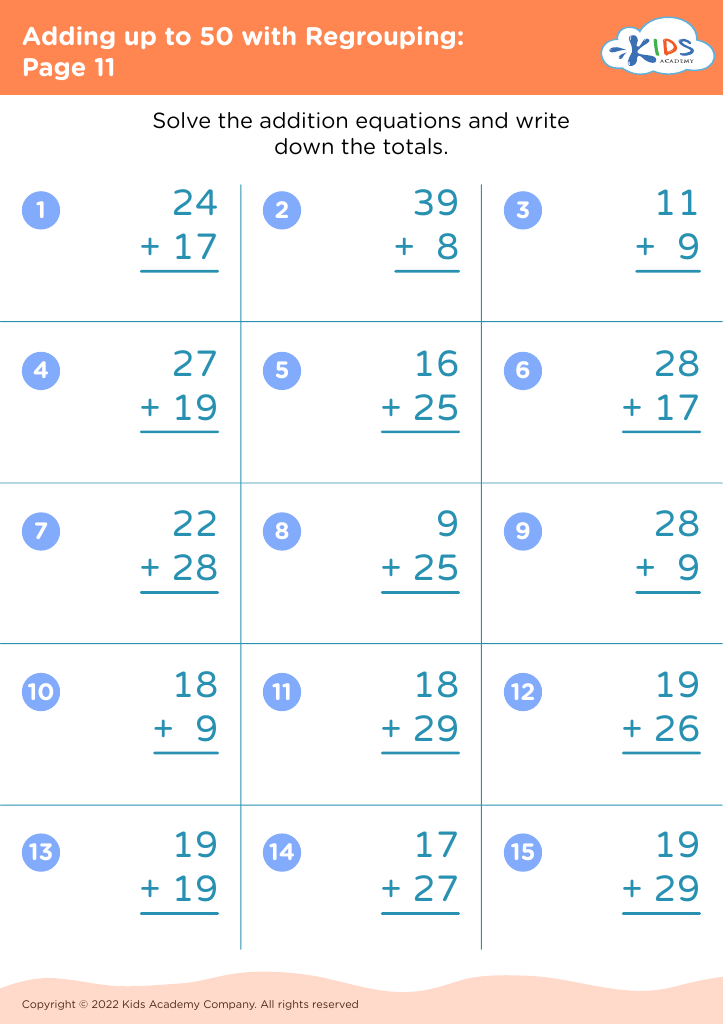
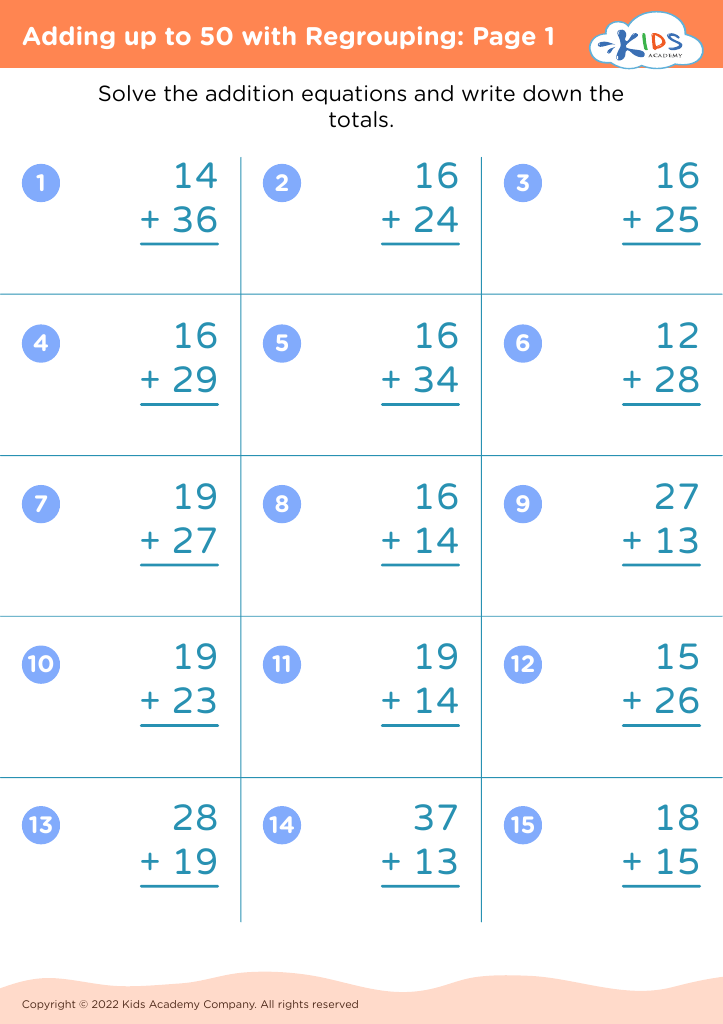
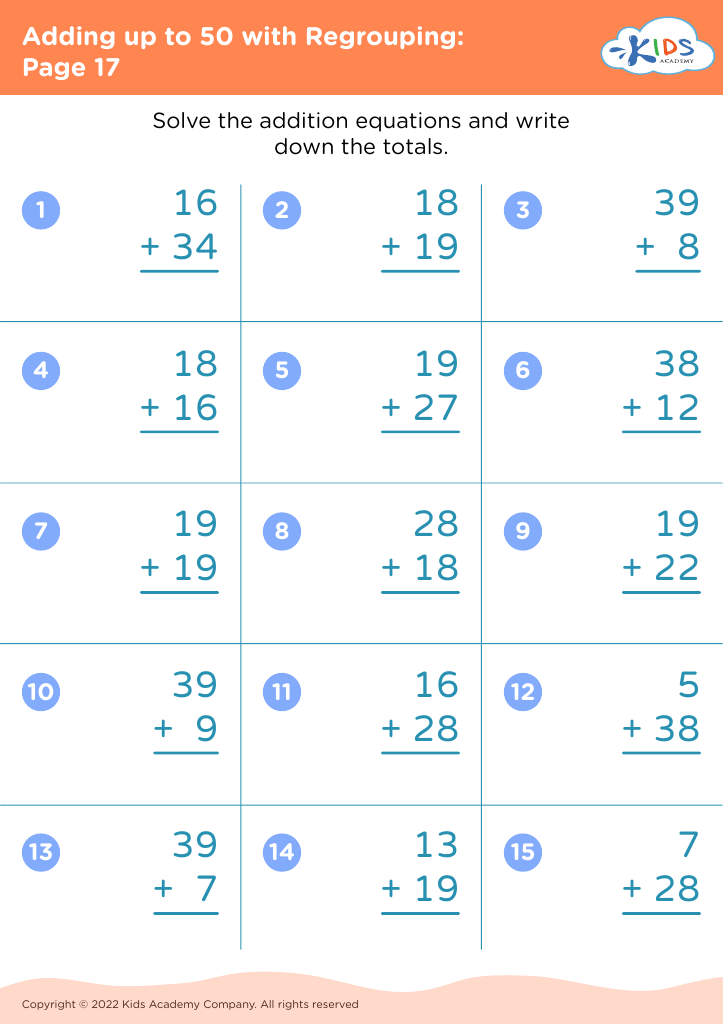
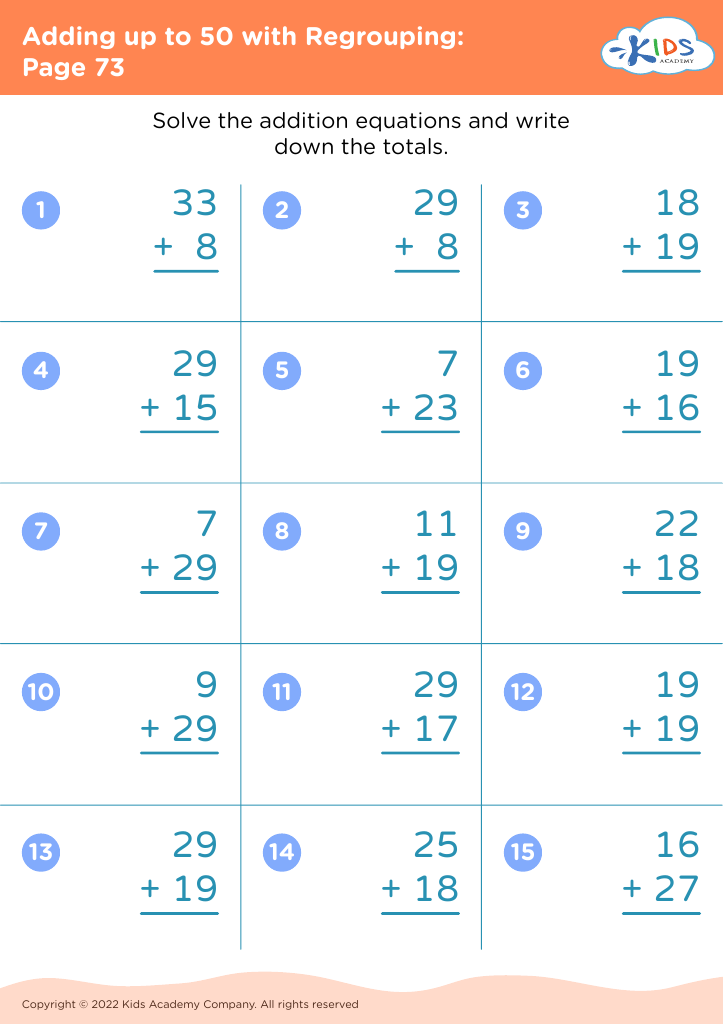
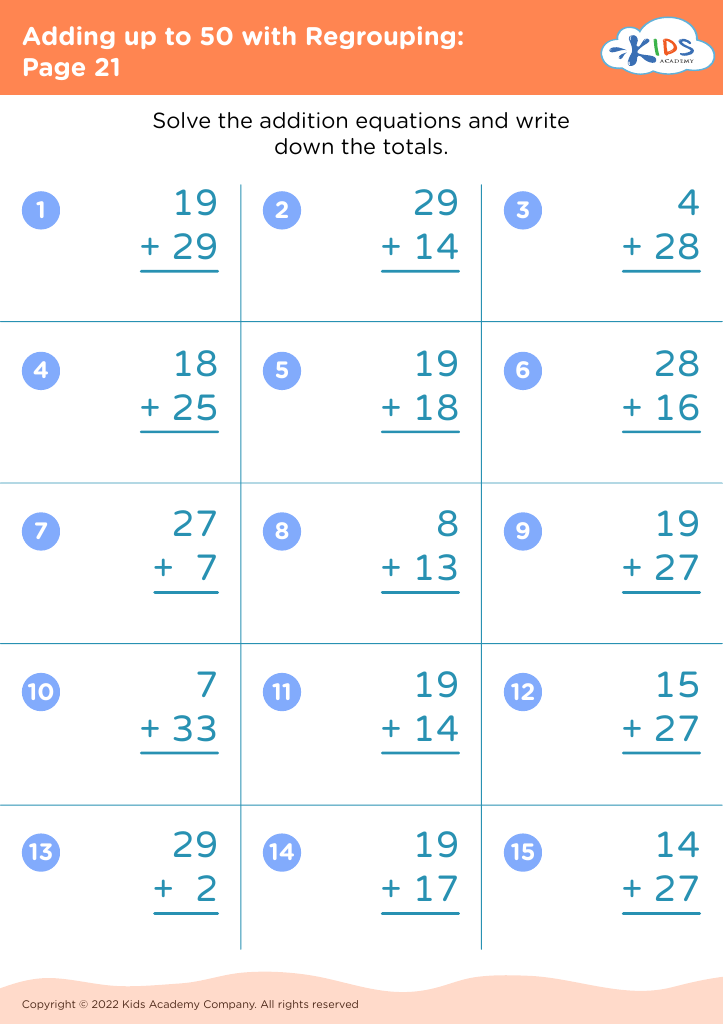


Shape recognition and mathematical skills, such as adding up to 50 with regrouping, are foundational for children aged 4–7. Understanding shapes enhances spatial awareness, critical for problem-solving and everyday tasks. This basic knowledge fosters creativity and helps children recognize patterns, essential for later subjects like geometry and art.
Simultaneously, mastering addition with regrouping builds numerical fluency. At this age, children are developing their ability to understand the concept of numbers, and teaching them addition beyond simple sums prepares them for more complex math in later years. Regrouping fosters cognitive flexibility as it encourages students to manipulate numbers in various ways, enhancing their reasoning skills.
When parents and teachers unite their efforts to promote these skills, they can support children's overall cognitive development. Proficiently recognizing shapes and performing addition with regrouping equips children with the tools needed for critical thinking and real-world problem-solving.
Moreover, building confidence in early learning stages sets a positive tone for future academic endeavors. By caring about these key areas, parents and teachers can lay a strong educational foundation, equipping children with necessary tools for academic achievement and life skills as they progress through school. Celebrating achievements in shape recognition and math will inspire a lifelong love for learning.