Addition Practice Adding up to 50 Without Regrouping Worksheets for Ages 4-7
6 filtered results
-
From - To
Boost your child's math skills with our "Addition Practice: Adding Up to 50 Without Regrouping" worksheets, designed specifically for ages 4-7. These engaging and colorful worksheets help young learners master basic addition concepts through fun and interactive exercises. Each worksheet focuses on adding numbers within 50, ensuring students solidify their understanding without the complexity of regrouping. Perfect for home or classroom use, these worksheets promote both independent practice and parent-teacher guidance. Foster a strong math foundation while making learning enjoyable! Visit our website to download your free worksheets and watch your child's confidence soar in addition.
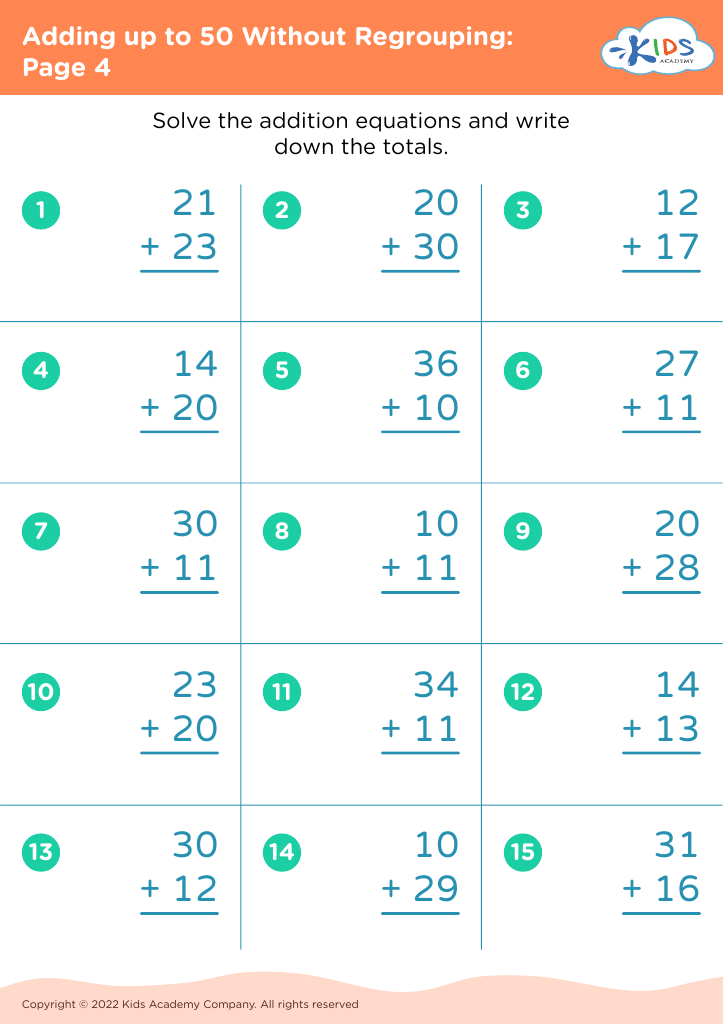
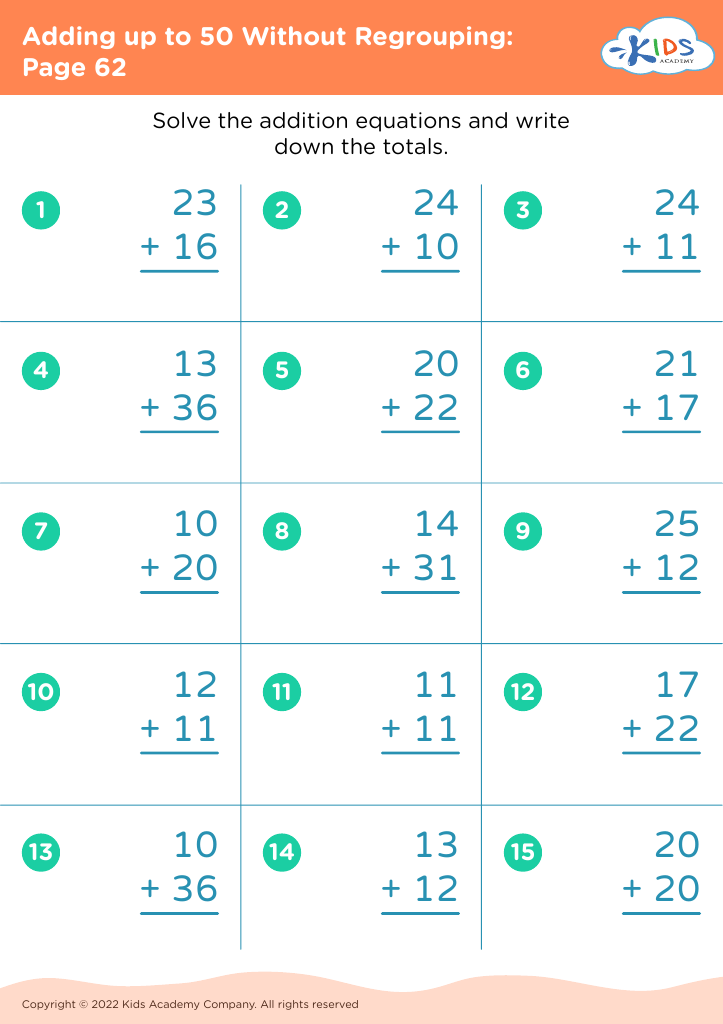
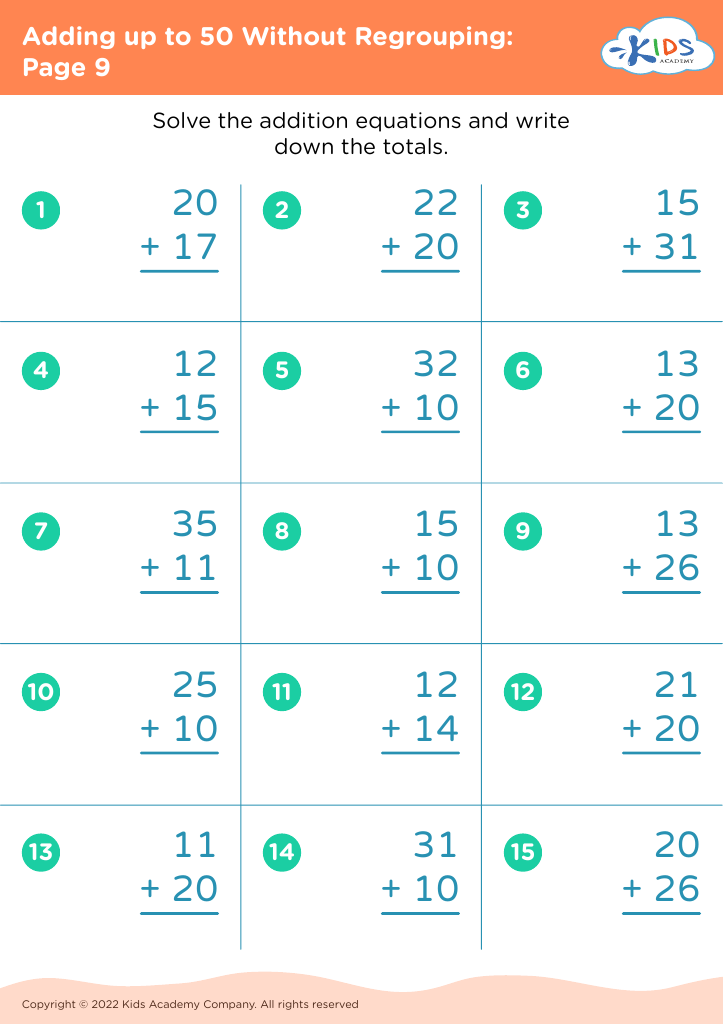
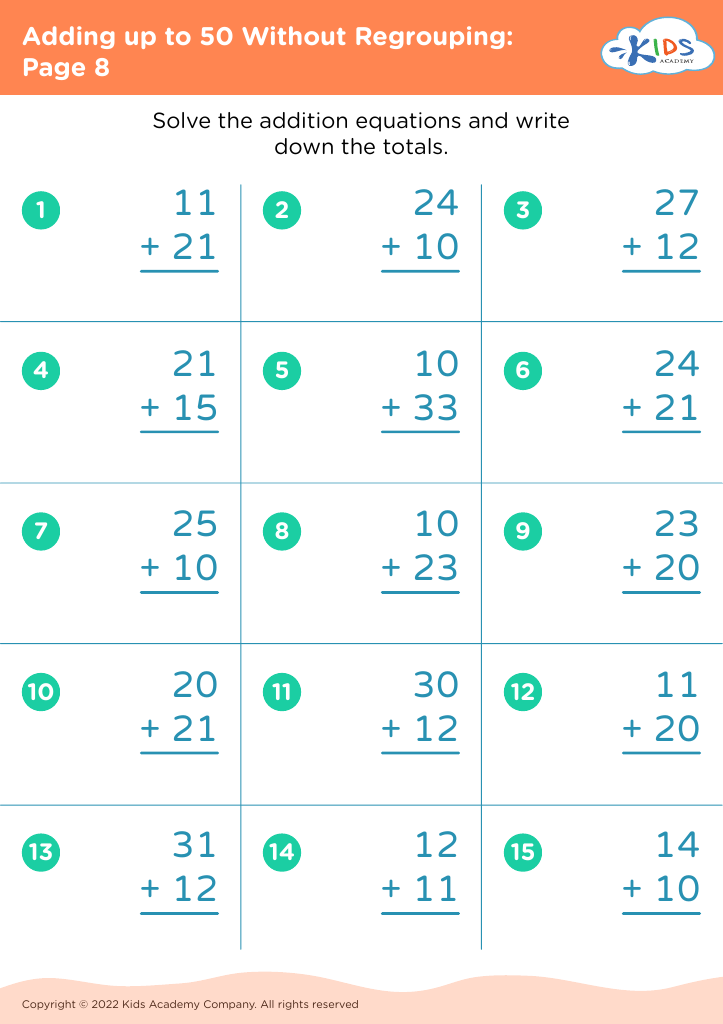
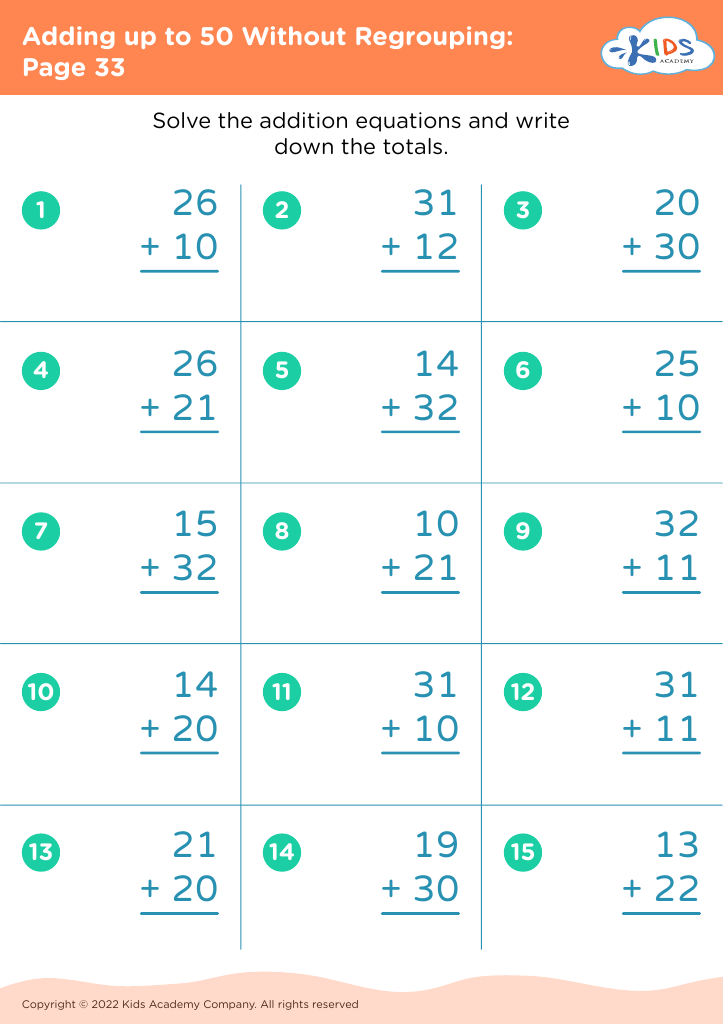
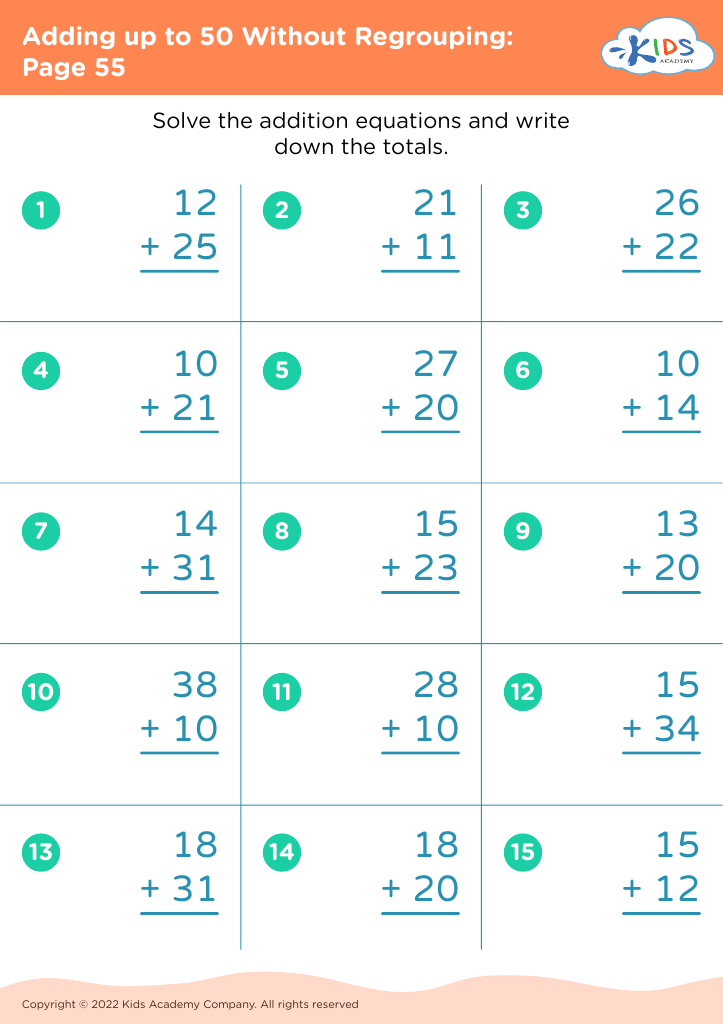


Addition practice, particularly focusing on adding numbers up to 50 without regrouping, is crucial for children ages 4-7 for several reasons. First, mastering basic addition lays the foundation for all future mathematics. At this age, children are developing their number sense, which is essential for understanding values, relationships between numbers, and more complex operations.
Practicing addition up to 50 helps young learners gain fluency and confidence in solving problems. This skill is not only important academically but also enhances their everyday problem-solving abilities. When children rotate between different methods of adding, they learn to explore mathematical concepts creatively, fostering a love for the subject.
Additionally, structured practice in math, including addition, can significantly sharpen cognitive skills like memory and logical reasoning. Engaging in regular practice allows children to become comfortable with numbers, ultimately benefiting them in higher math levels and other disciplines.
Lastly, involving parents or caregivers in this practice nurtures a supportive learning environment, reinforcing the value of education in the home. By investing time in addition practice, parents and teachers show children that learning can be enjoyable and empowering, setting a positive precedent for their academic journey ahead.