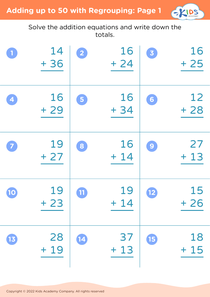
Basic Math Skills Adding up to 50 Without Regrouping Worksheets for Ages 4-7
6 filtered results
-
From - To
Explore our engaging “Basic Math Skills: Adding Up to 50 Without Regrouping Worksheets” designed for children aged 4 to 7! Perfect for early learners, these worksheets focus on developing foundational addition skills in a fun, interactive way. Each activity encourages children to practice adding two numbers together without regrouping, helping to build confidence and fluency in basic math. With vibrant illustrations and varied exercises, kids will enjoy reinforcing their numerical understanding while enhancing critical thinking and problem-solving abilities. These worksheets are an ideal resource for teachers and parents aiming to support young mathematicians in their learning journey. Start adding fun to math today!
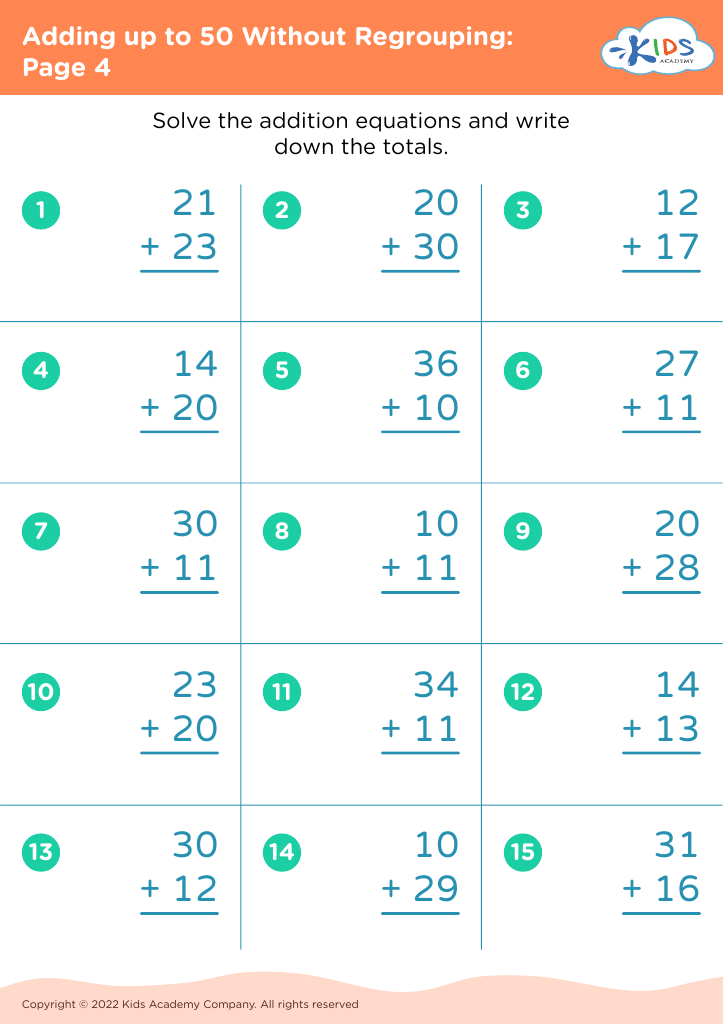
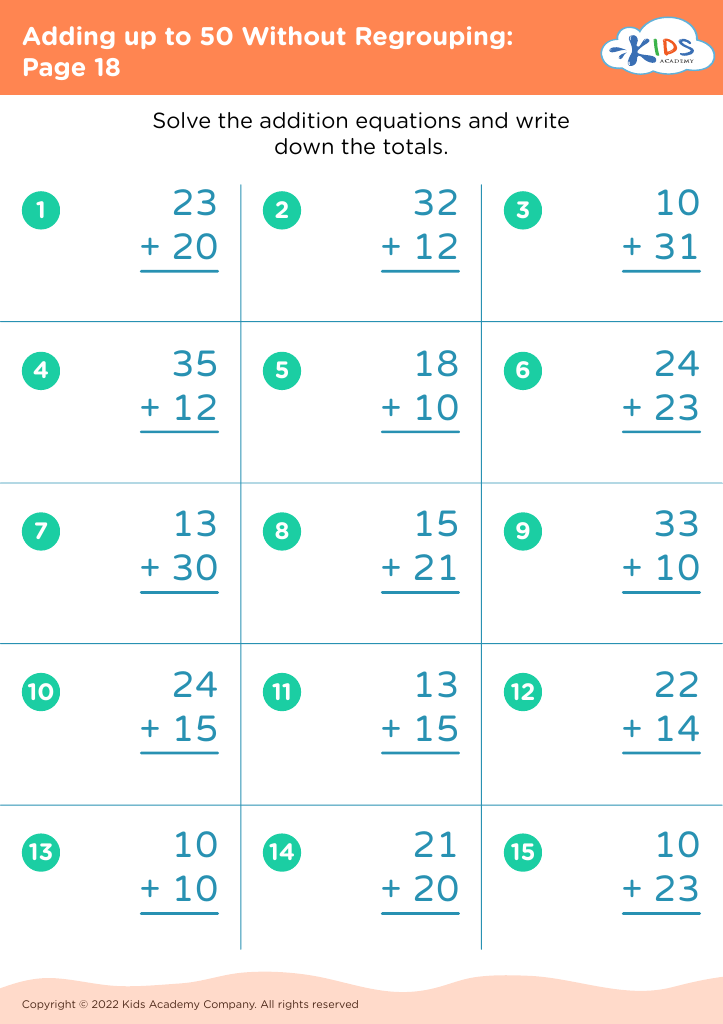
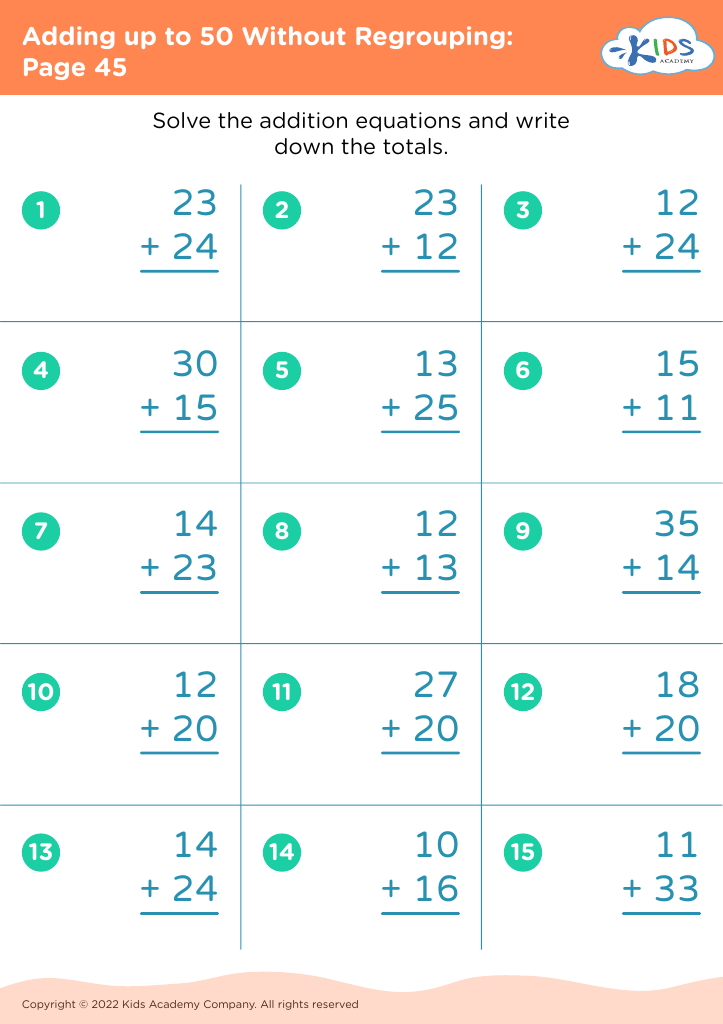
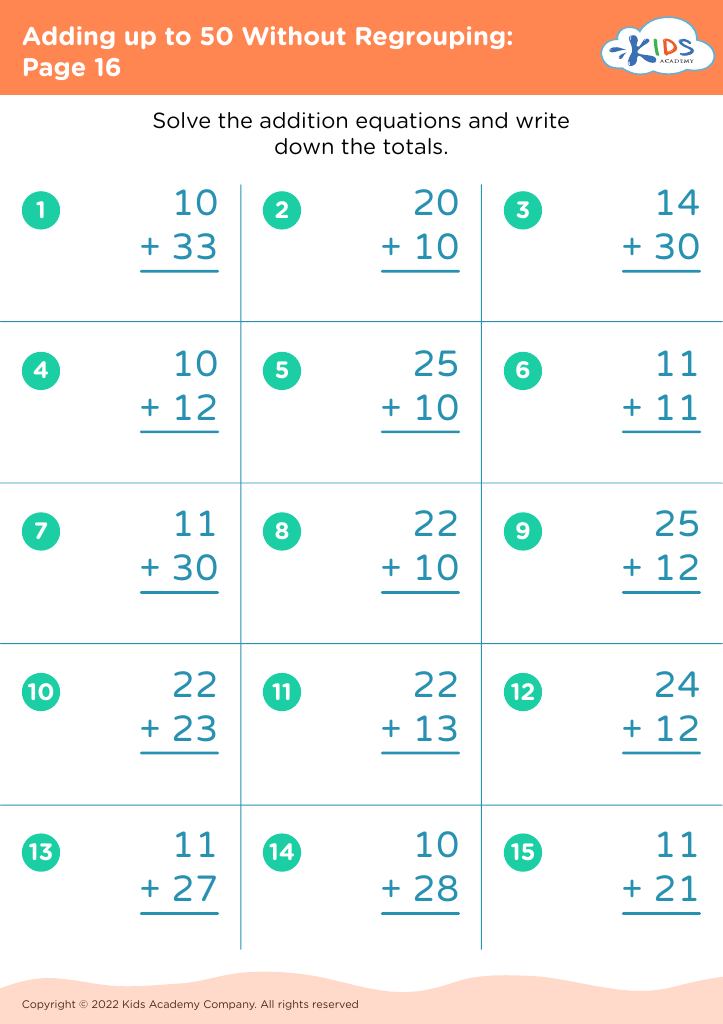
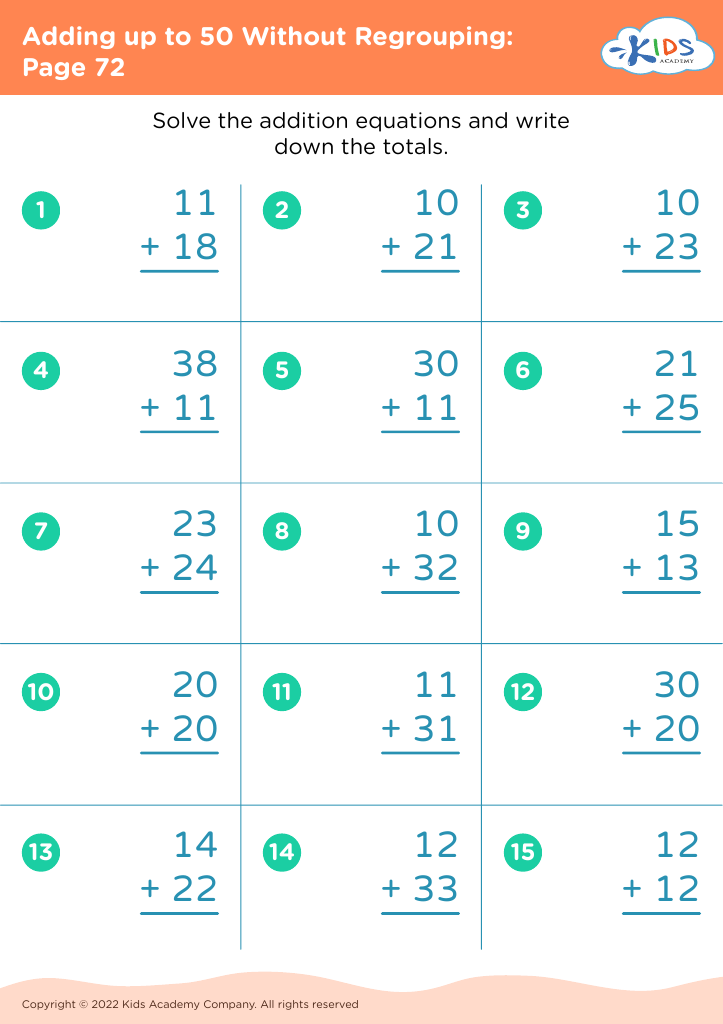
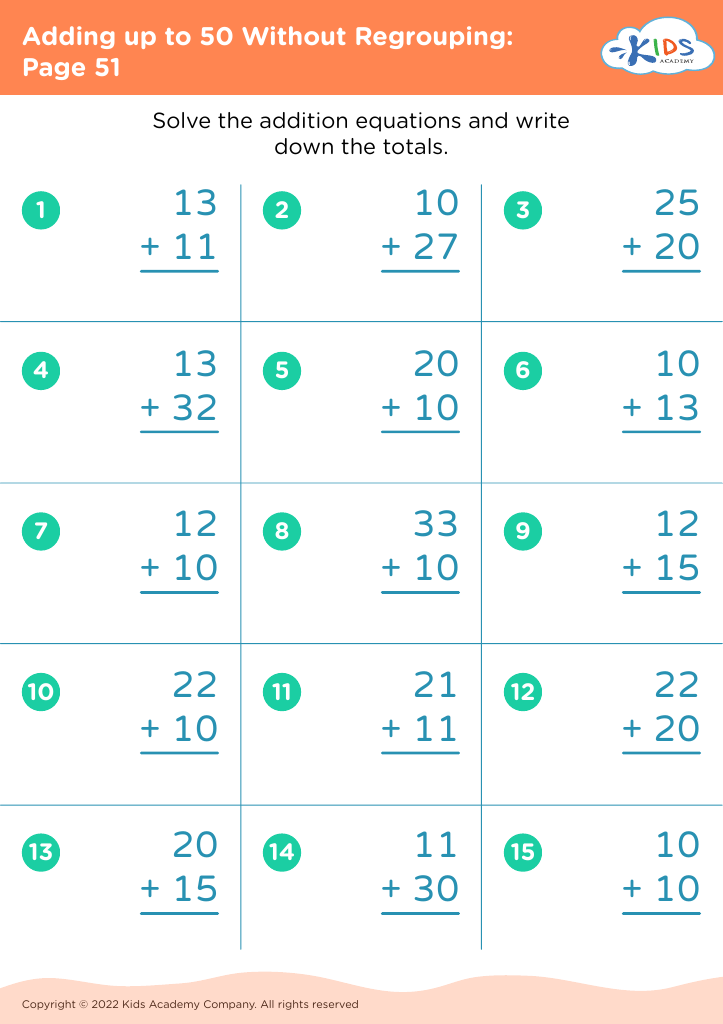


Basic math skills, such as adding numbers up to 50 without regrouping, play a crucial role in the cognitive development of children aged 4-7. For parents and teachers, fostering these skills lays the foundation for future mathematical understanding and problem-solving abilities. Mastering simple addition helps children develop number sense, enhancing their confidence and encouraging a positive attitude towards math.
Beyond academics, these skills support everyday decision-making. For instance, when children learn to add quantities, they also engage in critical thinking and logic. This builds a foundation for complex concepts they'll encounter later in their education. Additionally, proficiency in basic math promotes cognitive growth, as young learners begin to connect number relationships and patterns.
Furthermore, when parents and teachers emphasize learning these skills through fun, engaging methods, they cultivate a supportive and motivating environment. It reinforces to children that learning can be enjoyable, promoting lifelong learning habits. Ultimately, strong foundational skills in math contribute to overall academic success and have lasting impacts on a child's self-esteem and frustration tolerance. Therefore, both parents and teachers should prioritize teaching basic math skills to prepare children for future challenges and enrich their learning experiences.