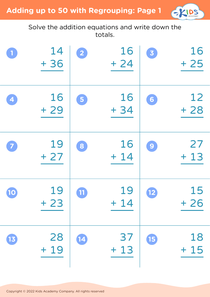
Enhance number recognition Adding up to 50 Without Regrouping Worksheets for Ages 4-7
3 filtered results
-
From - To
Welcome to our "Enhance Number Recognition Adding Up to 50 Without Regrouping Worksheets" designed specifically for children aged 4-7! These engaging worksheets will help your young learners confidently master basic addition skills without regrouping, fostering their understanding of numbers up to 50. Featuring colorful visuals and playful exercises, these worksheets encourage children to recognize numbers and practice their addition in a fun and supportive environment. Perfect for parents and educators, the worksheets promote the development of essential math skills while keeping students motivated. Enhance your child's numerical literacy today and pave the way for a strong mathematical foundation!
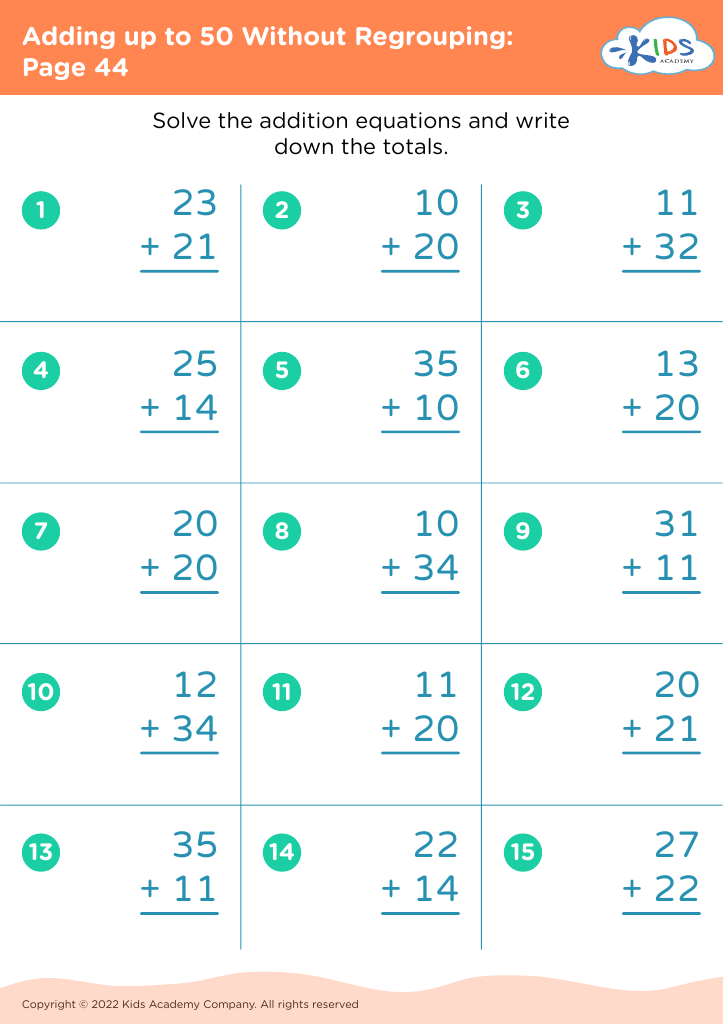
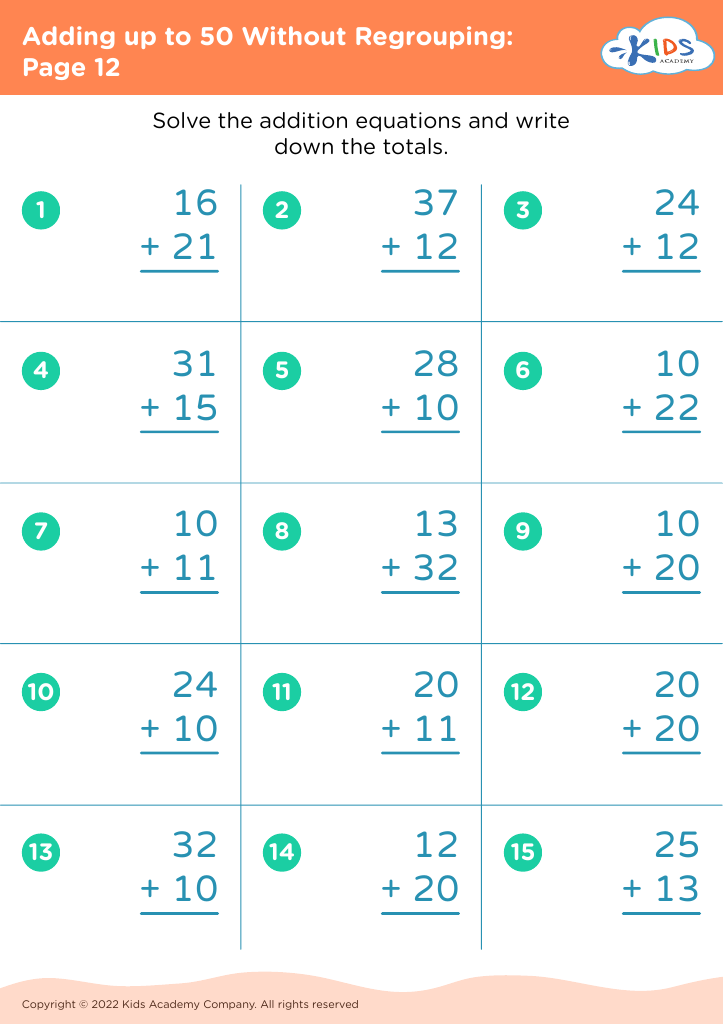
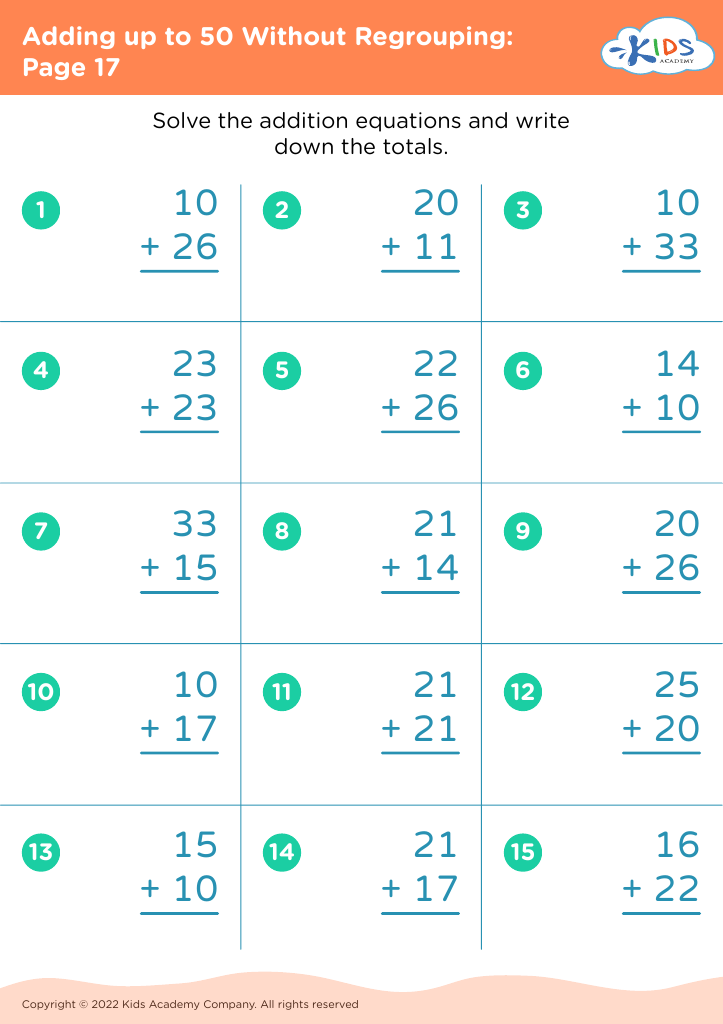


Number recognition and fundamental addition skills form the foundation of mathematical understanding for children aged 4 to 7. Enhancing number recognition, particularly when adding up to 50 without regrouping, is crucial for several reasons.
Firstly, mastering these skills helps to boost a child’s confidence and independence in math, which can have a positive effect on their overall academic performance. Children who recognize numbers easily can then focus on the conceptual understanding of addition, allowing them to develop critical thinking skills.
Secondly, number recognition is essential for real-world applications such as telling time, managing money, and measuring ingredients for cooking, providing practical experiences that reinforce learning. When children practice adding numbers up to 50 without regrouping, they develop fluency in simpler addition, allowing them to tackle more complex problems later on with ease.
Lastly, engaging in activities that simplify number recognition and addition keeps learning enjoyable and less intimidating, creating a supportive environment that fosters a love for math. As parents and teachers, emphasizing these skills nurtures not only academic growth but also supports lifelong learning and problem-solving abilities in children. Thus, focusing on enhancing number recognition and addition is vital for fostering a well-rounded educational experience.