Identifying shapes Adding up to 50 Without Regrouping Worksheets for Ages 4-7
6 filtered results
-
From - To
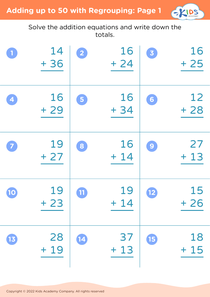
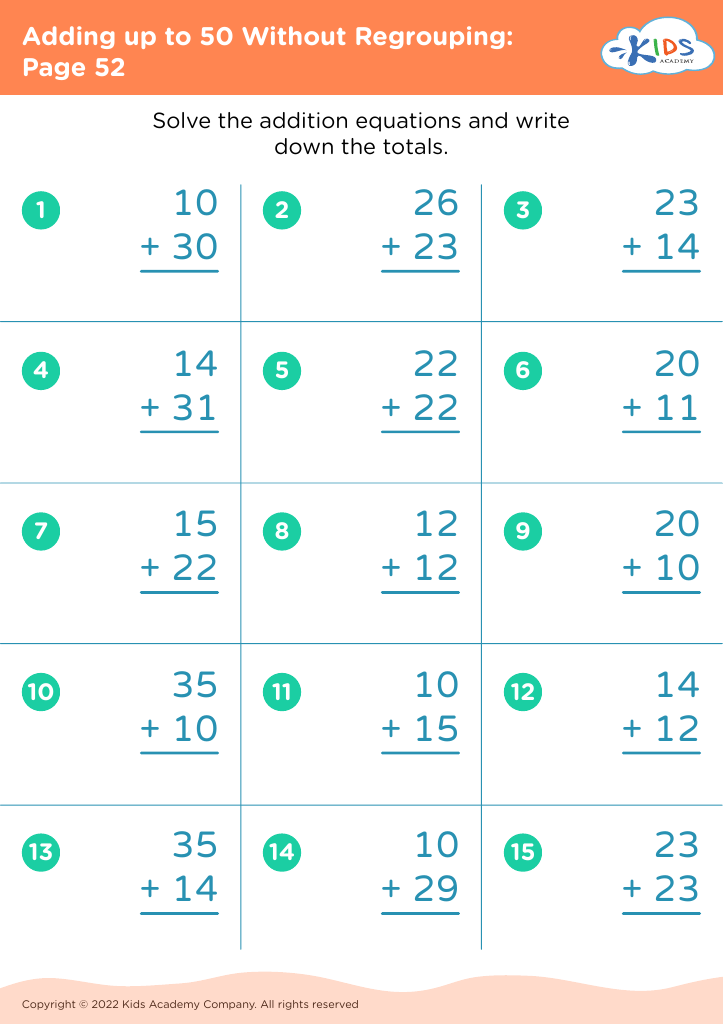
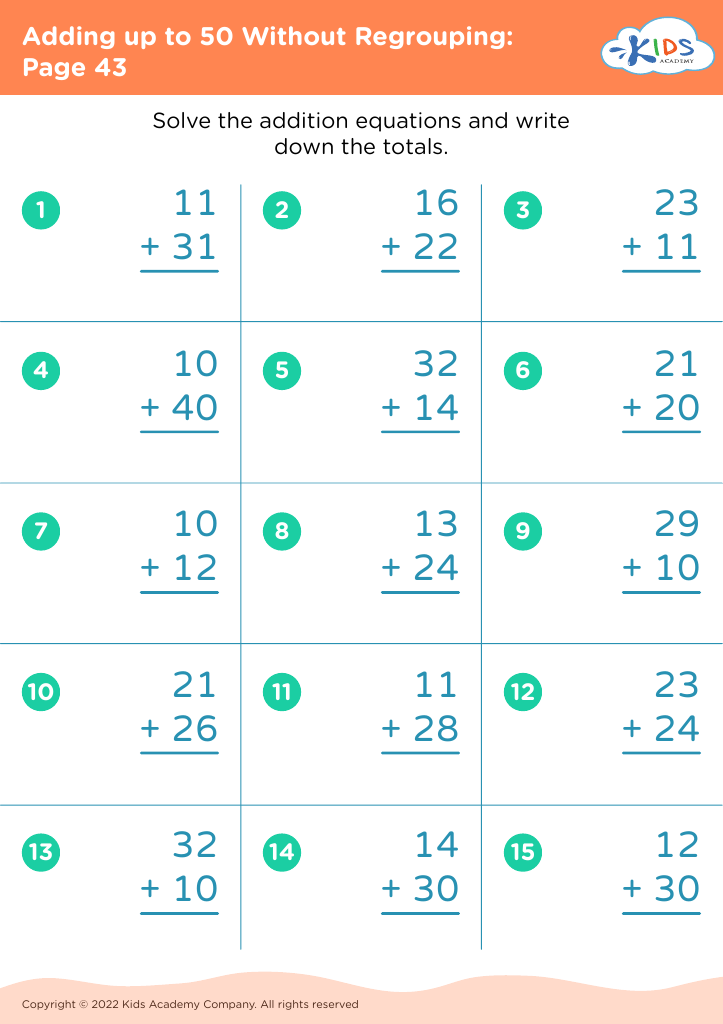
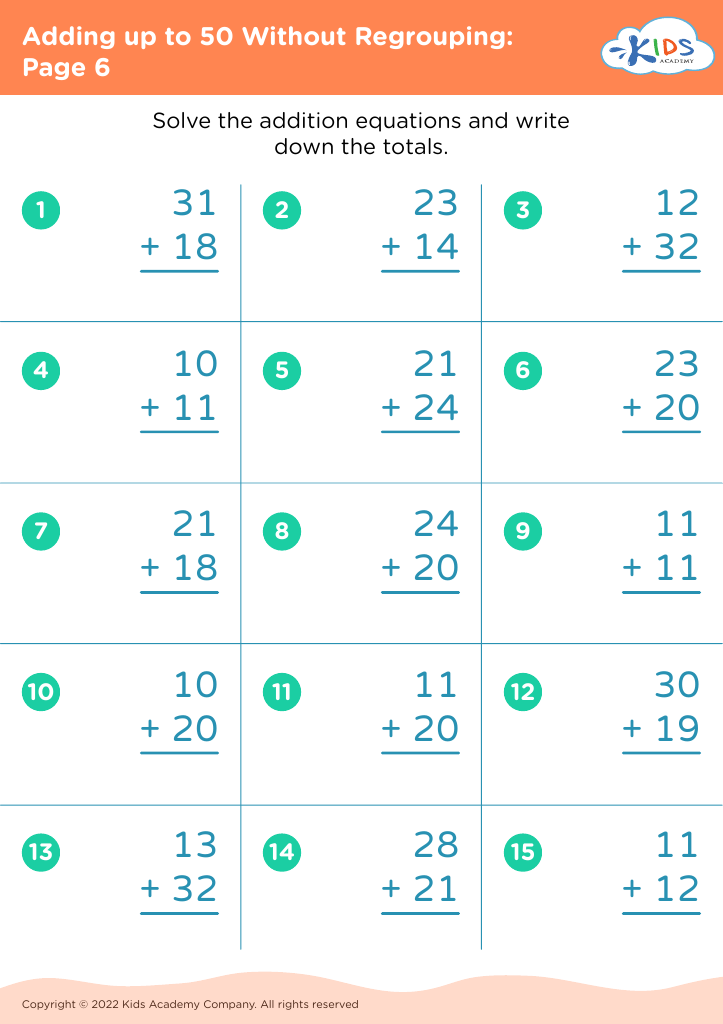
Explore our fun and engaging "Identifying Shapes Adding Up to 50 Without Regrouping Worksheets" designed for children ages 4-7! These worksheets help young learners enhance their math skills by practicing addition without regrouping while simultaneously reinforcing their shape recognition. Each worksheet presents a variety of shapes, allowing kids to identify and categorize them as they solve addition problems, promoting critical thinking and visual learning. Ideal for home or classroom use, these worksheets ensure that foundational math concepts are enjoyable and accessible. Encourage your child's development in both math and geometry with these resourceful and interactive worksheets today!
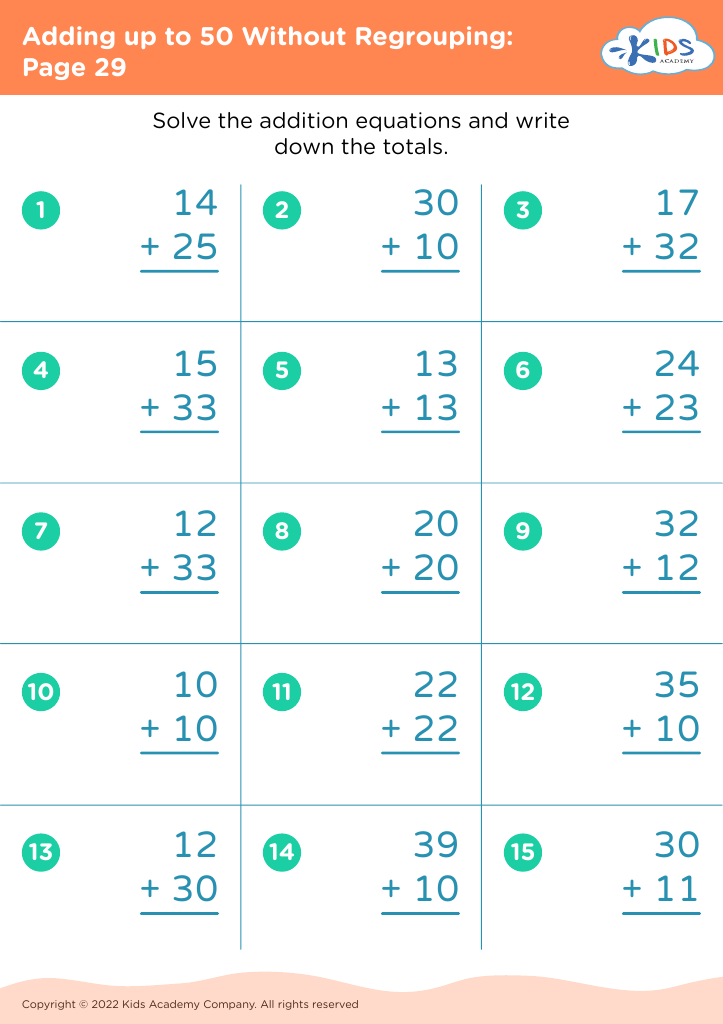
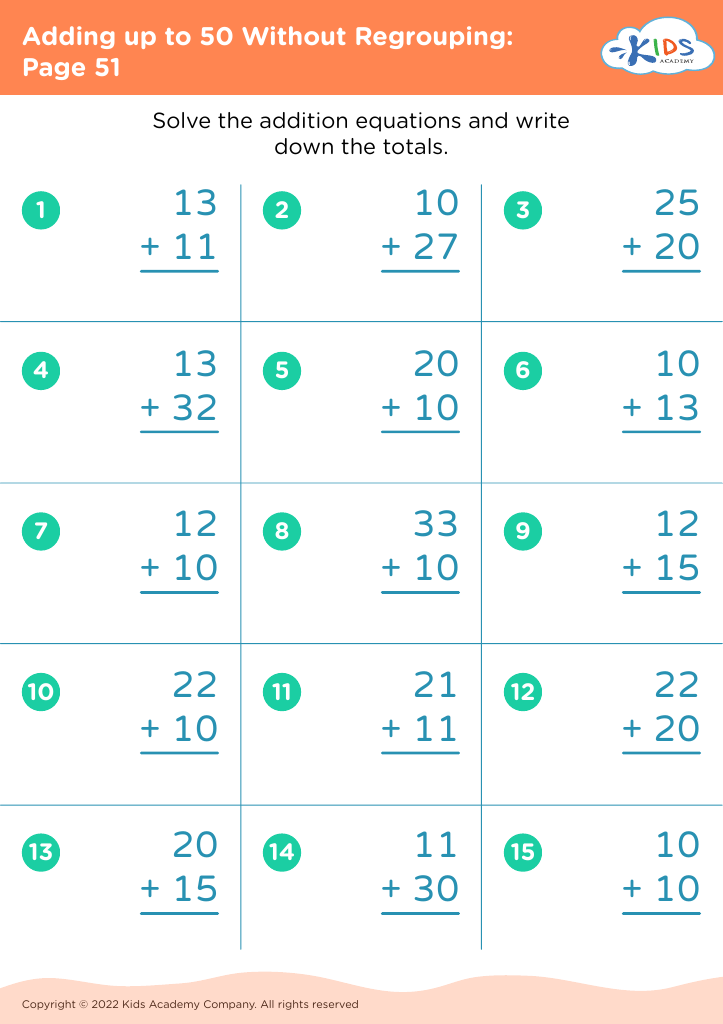
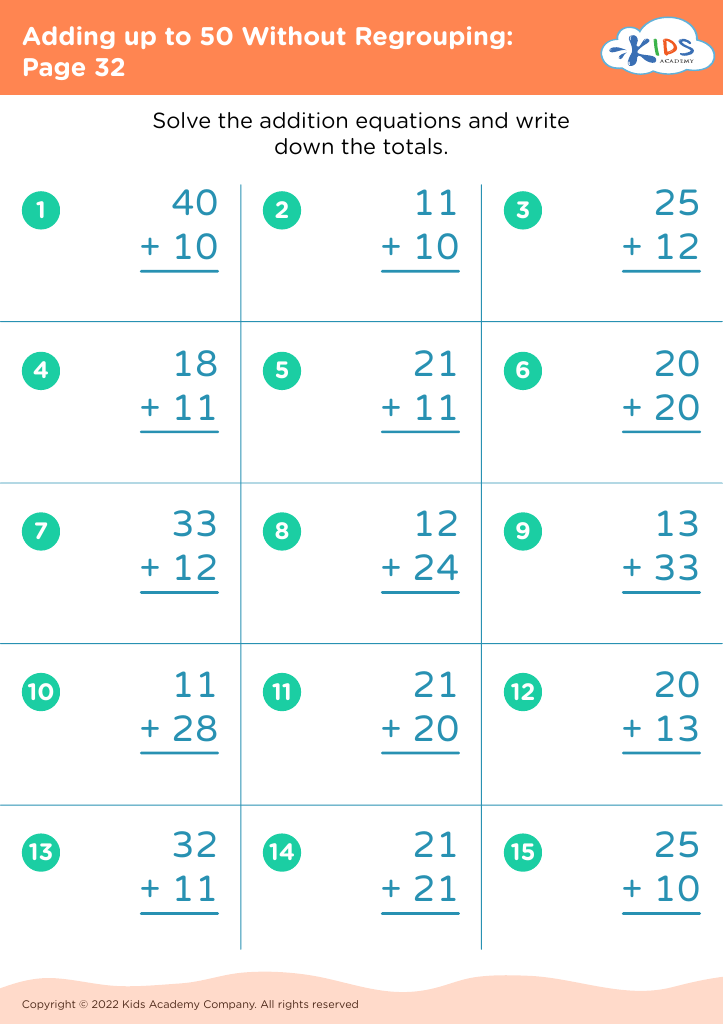


Identifying shapes and mastering addition without regrouping are foundational skills in early childhood education for children aged 4-7. Understanding shapes helps children develop spatial awareness, improve their fine motor skills, and enhance their ability to classify and group objects. This recognition is critical not only for fortifying math skills but also for subjects like art and science, where geometry plays a significant role.
On the other hand, learning to add numbers up to 50 without regrouping builds essential numerical fluency. This skill strengthens a child’s counting ability, enhances their understanding of basic math concepts, and serves as a gateway to more complex arithmetic operations in later grades. It boosts confidence and promotes problem-solving skills that are applicable in everyday situations.
For parents and teachers, focusing on these foundational elements encourages a holistic approach to learning. Engaging children in activities that promote shape identification and addition—like games and hands-on projects—makes the learning process enjoyable, which can instill a love for learning from an early age. Hence, investing time in these skills now lays a secure groundwork for future academic success, ensuring a smoother transition into more advanced math and critical thinking tasks.