Reading comprehension Adding up to 50 Without Regrouping Worksheets for Ages 4-7
3 filtered results
-
From - To
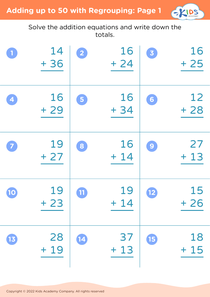
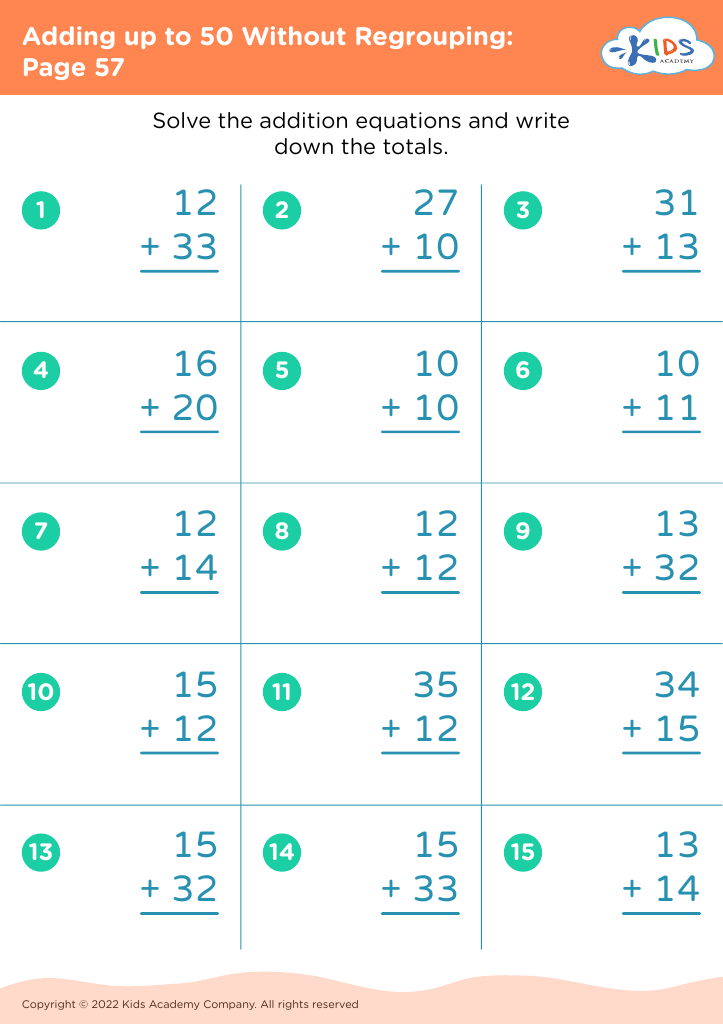
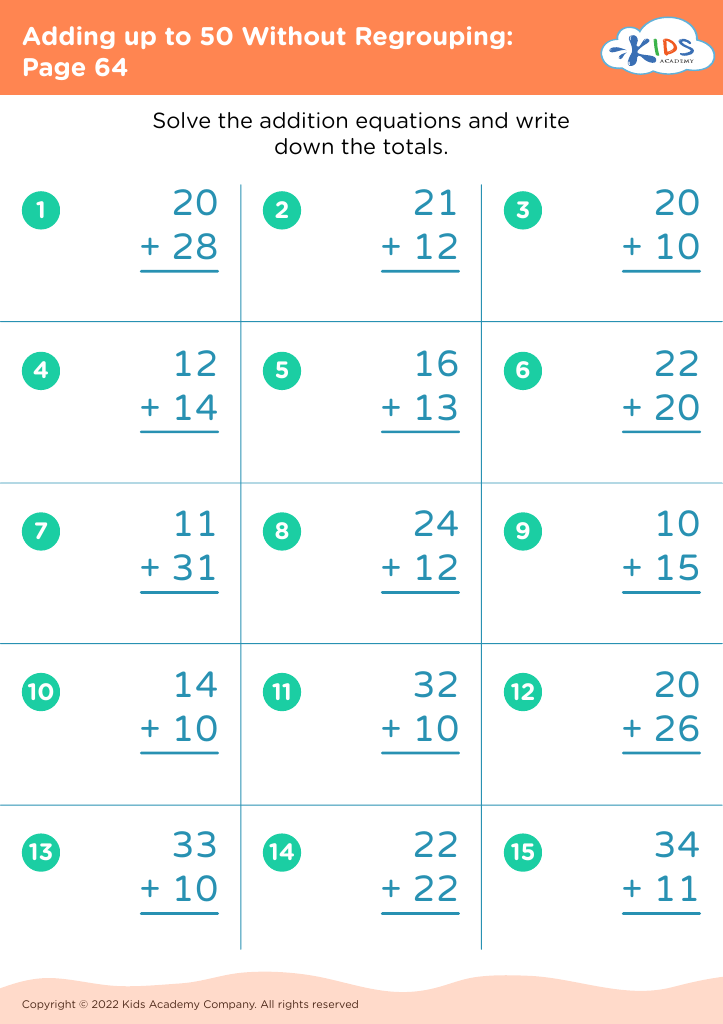
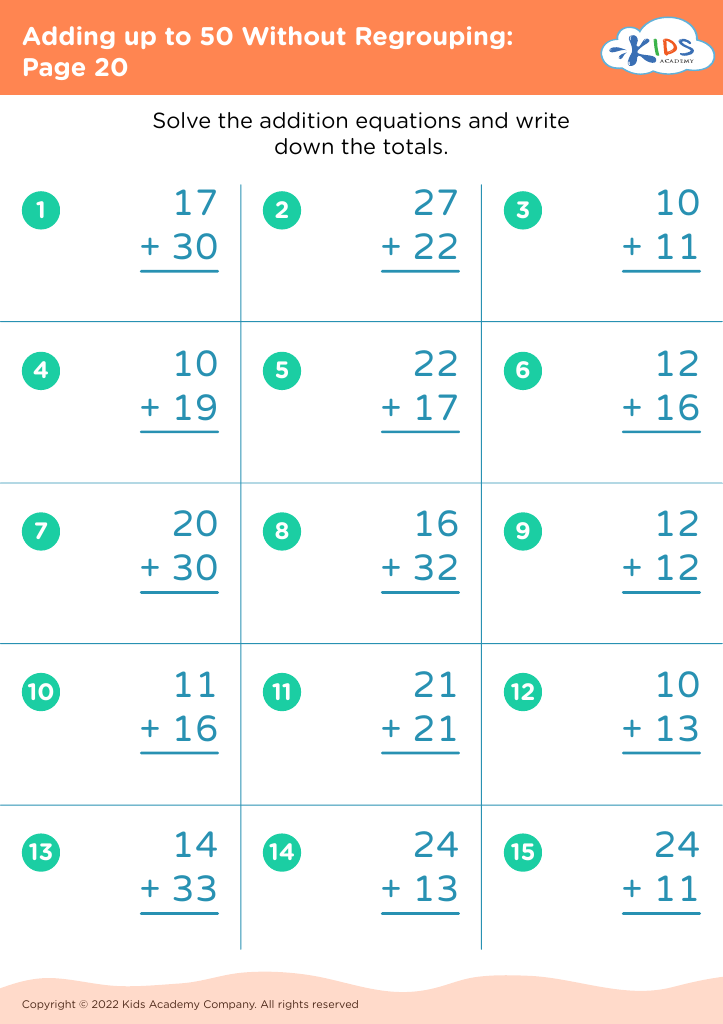
Enhance your child's math skills with our "Reading Comprehension Adding up to 50 Without Regrouping Worksheets" designed for ages 4-7. These worksheets seamlessly blend reading and math, asking young learners to solve engaging addition problems while honing their reading comprehension skills. Perfect for deliberate skill-building, our sheets force young mathematicians to build a concrete understanding of addition and a keen eye for details in word problems. Interactive, fun, and educational, they're an ideal resource for both classroom use and homeschooling. Dive in to help your child strengthen their abilities and develop a love for numbers and language.


Reading comprehension and early math skills like adding up to 50 without regrouping are essential components of early childhood education, and parents and teachers should certainly care about both. For ages 4-7, mastering these skills sets the foundation for future academic success and aids overall cognitive development.
Reading comprehension allows children to understand and derive meaning from text. This skill is fundamental not just for language arts, but for all subjects, as it impacts their ability to absorb information, follow instructions, and enjoy educational materials like stories. Comprehending what they read enables young children to develop critical thinking skills, improve vocabulary, and expand their worldviews.
On the other hand, learning to add numbers up to 50 without regrouping introduces basic arithmetic skills crucial for later complex math concepts. It prepares children for more advanced operations involving addition, subtraction, and beyond. Mastering these early skills boosts confidence, enhances problem-solving abilities, and encourages logical thinking.
Both reading comprehension and basic arithmetic help build a solid educational cornerstone. Teachers and parents should focus on nurturing these skills through engaging activities, supportive environments, and personalized instruction. Ensuring proficiency in these areas will help children become well-rounded learners poised for long-term success.