Recognizing shapes Adding up to 50 Without Regrouping Worksheets for Ages 4-7
5 filtered results
-
From - To
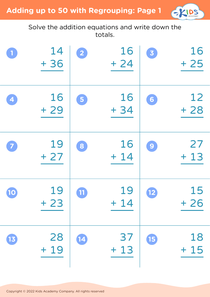
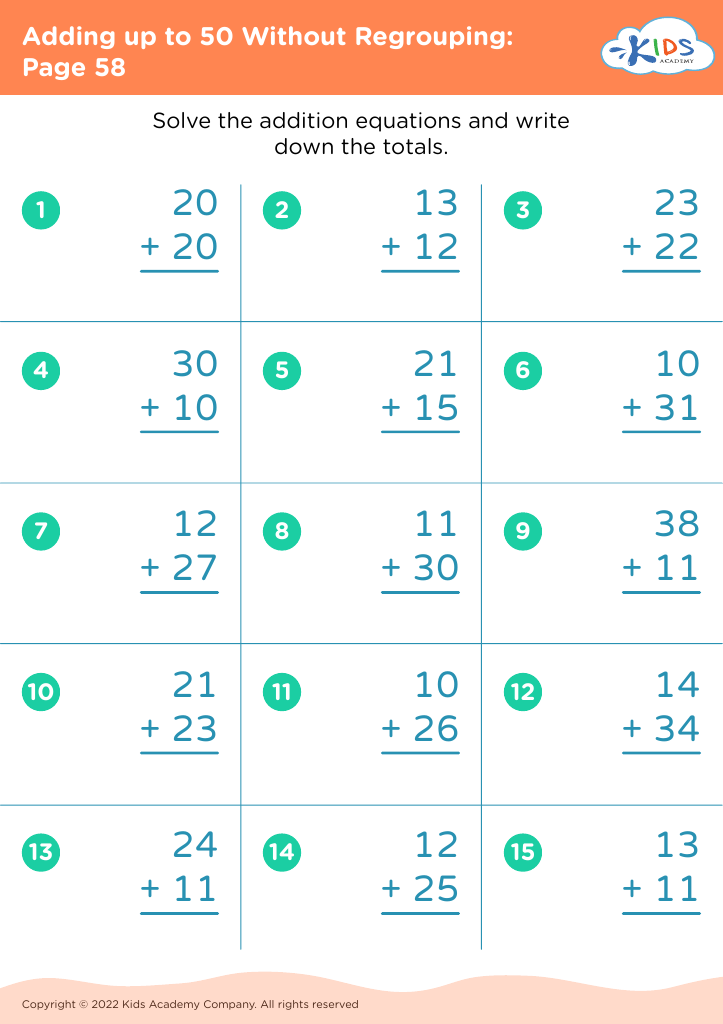
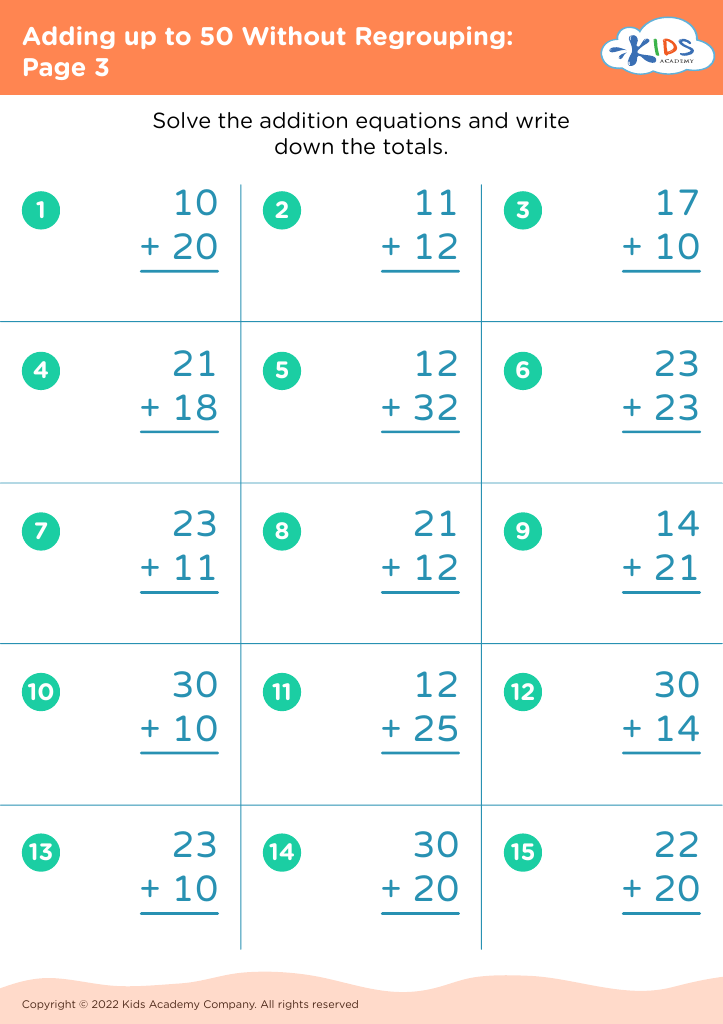
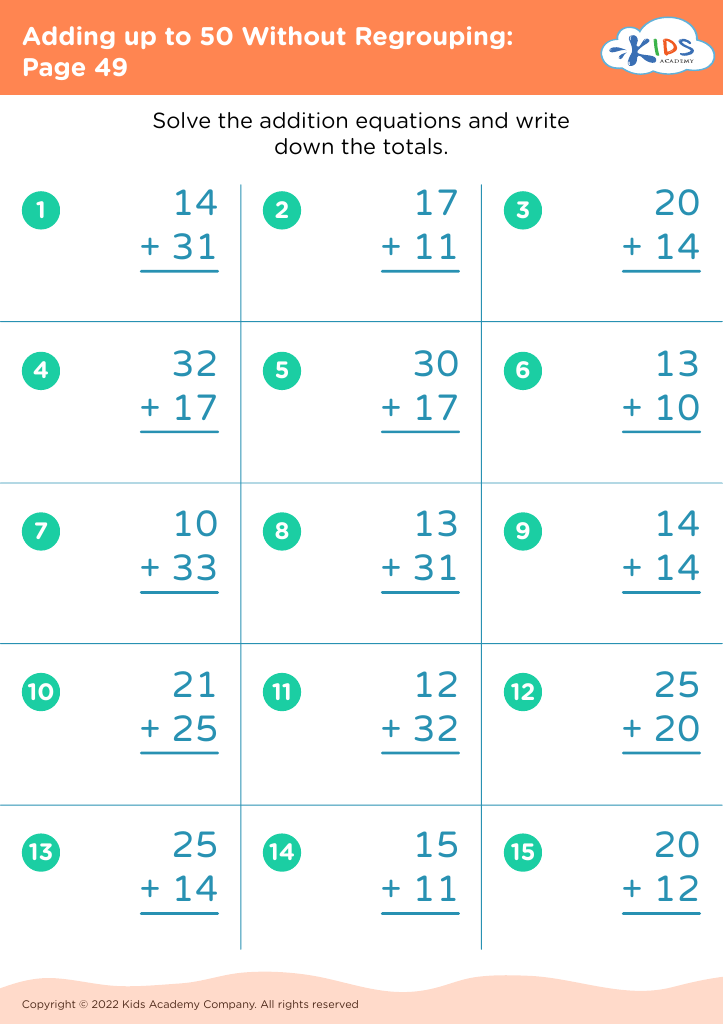
Empower young minds with our engaging worksheets designed specifically for ages 4-7. Our "Recognizing Shapes Adding up to 50 Without Regrouping" worksheets blend fundamental math skills with fun shape recognition activities, enhancing both numerical and geometric understanding. These worksheets offer a seamless learning experience by combining essential addition practice with colorful shape diagrams, aiding cognitive development and fine motor skills. Perfect for parents and educators, our meticulously crafted resources ensure that early learners can progress confidently in math while enjoying the process. Make learning fun and fundamental with our enriching, interactive activities. Start the journey towards math proficiency today!
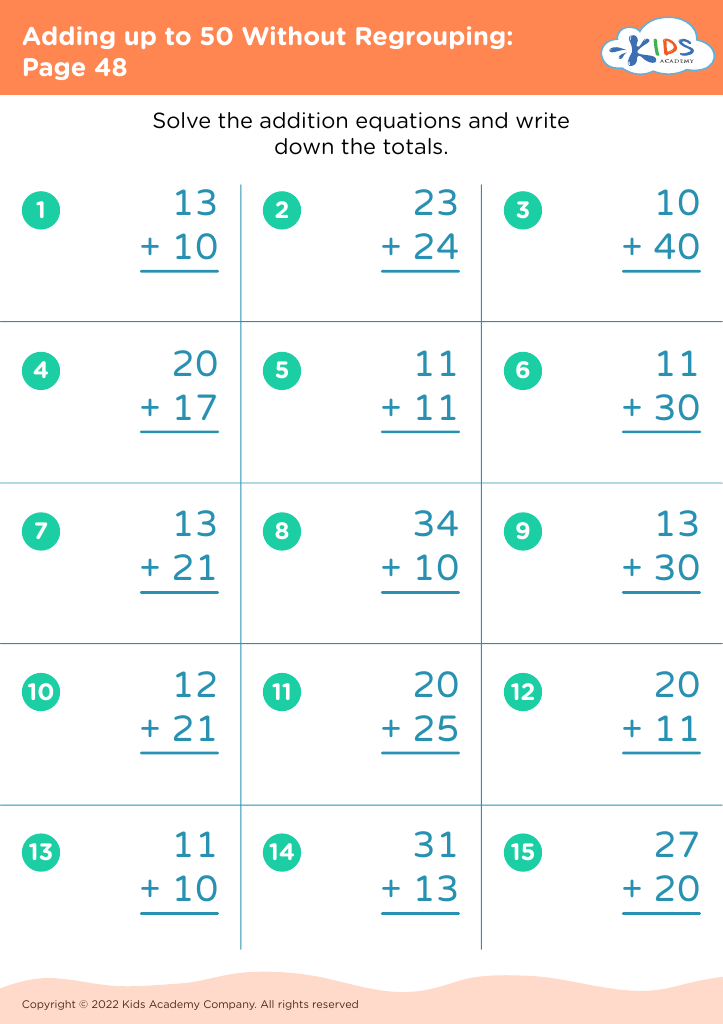
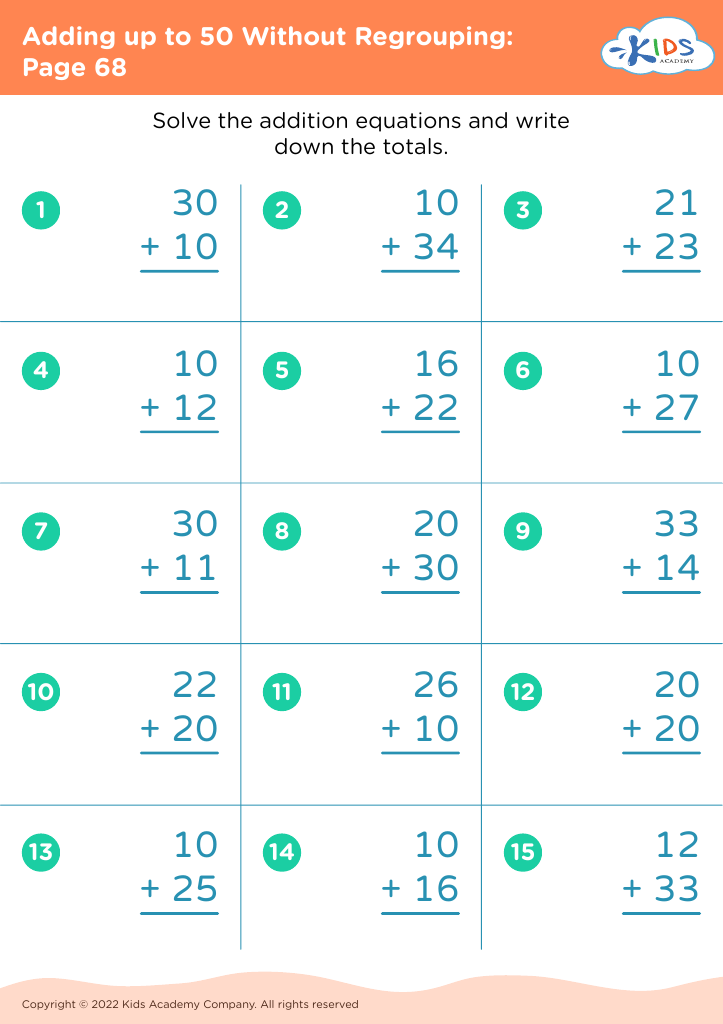


Recognizing shapes and adding up to 50 without regrouping are foundational skills in early childhood education that significantly impact cognitive development and future academic success. At ages 4-7, children's brains are highly receptive to visual and numerical information, making it crucial for parents and teachers to prioritize these activities.
Recognizing shapes enhances spatial awareness, an essential component in various fields like math, science, and art. By identifying and differentiating between shapes, children learn to observe and describe the world, laying the groundwork for geometry and other complex subjects. Shapes are also the basis for letter and number formation, which are integral to literacy and numeracy skills.
Adding up to 50 without regrouping introduces basic arithmetic, reinforcing the concept of counting and number sense. It builds a child's confidence and ease in handling small number operations through concrete examples before advancing to more complex calculations. This skill promotes problem-solving, logical thinking, and memory enhancement, crucial for overall intellectual development.
Therefore, incorporating these fundamental skills into the learning journey equips children with a strong mathematical foundation and visual literacy, preparing them for more advanced concepts. For parents and teachers, facilitating this aspect of learning fosters an enriching, supportive environment for early intellectual growth.