Understanding fractions Adding up to 50 Without Regrouping Worksheets for Ages 4-7
13 filtered results
-
From - To
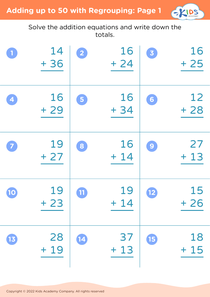
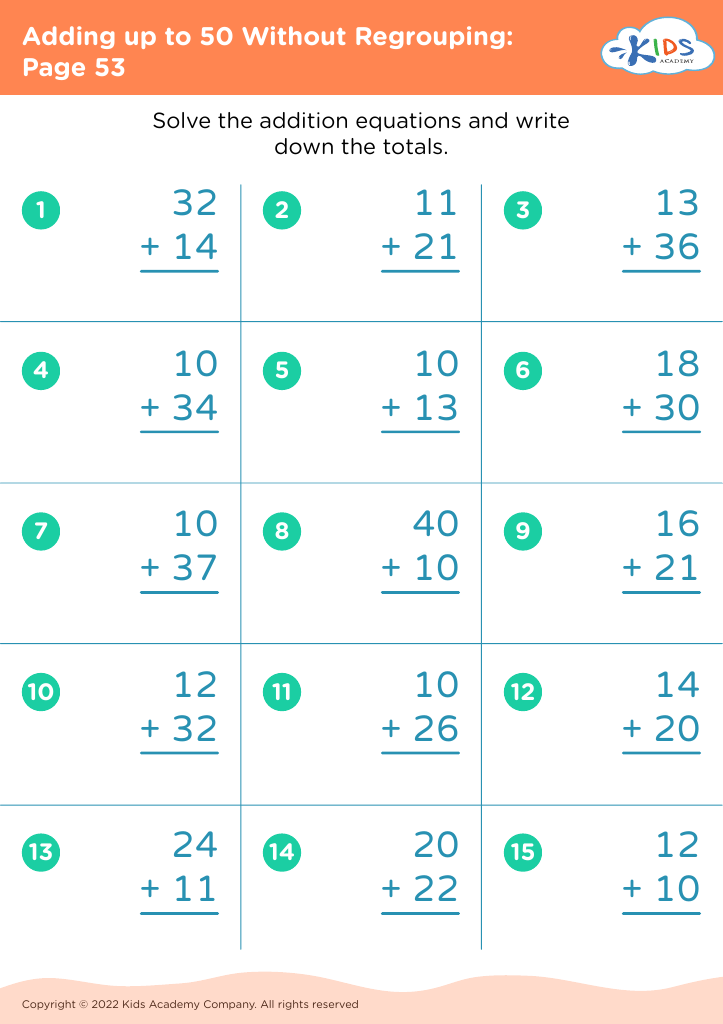
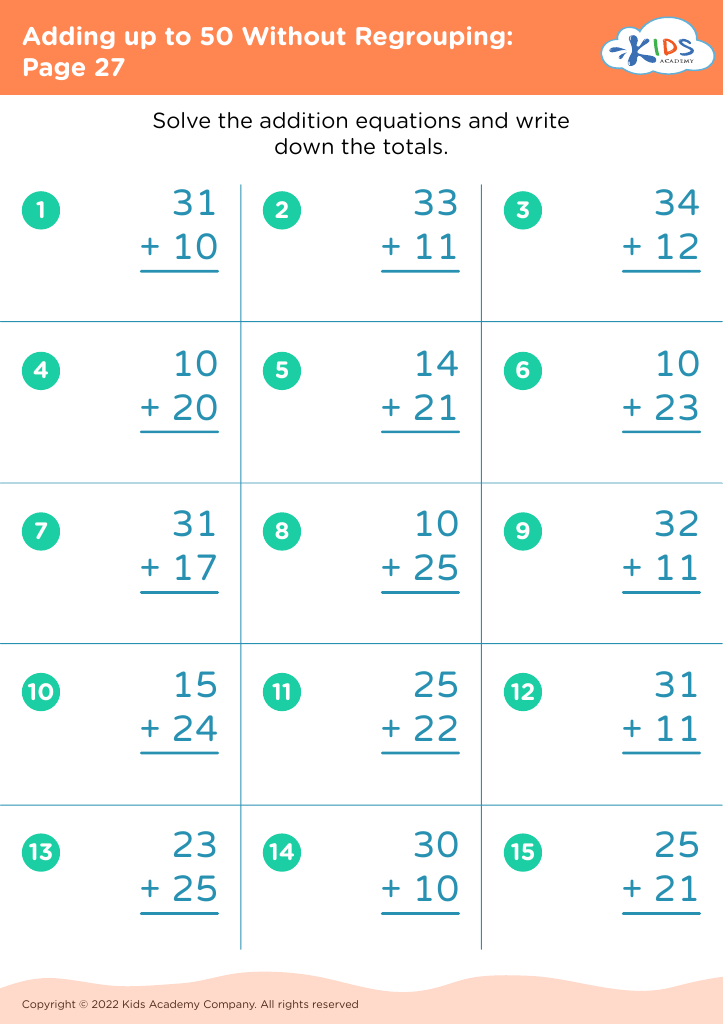
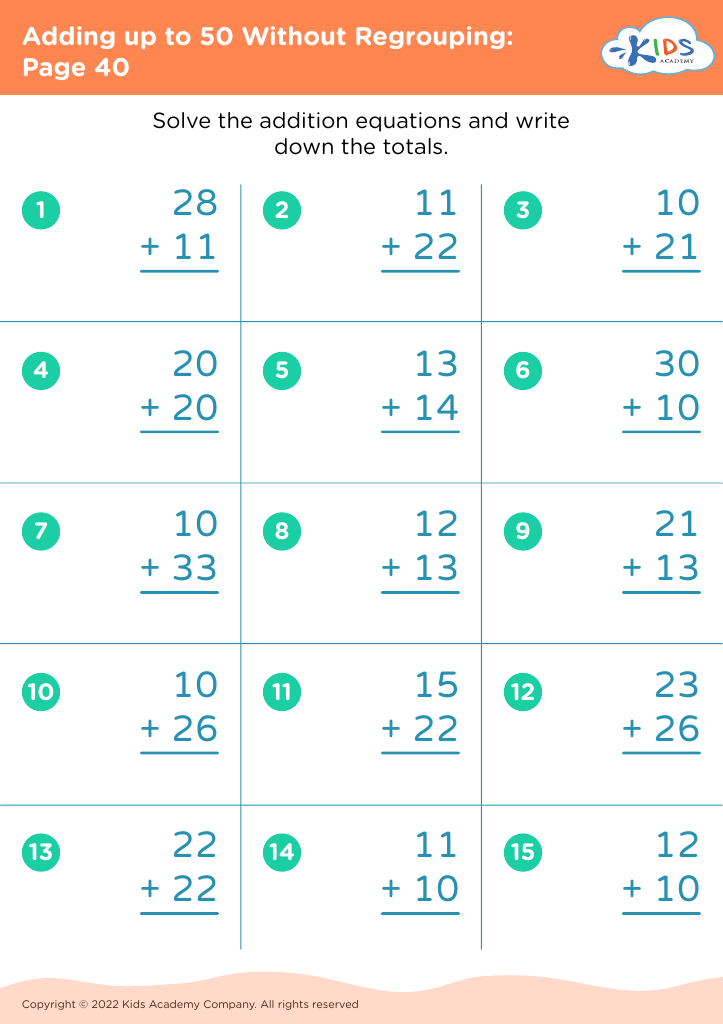
Unlock the magic of math for young learners with our "Understanding Fractions: Adding Up to 50 Without Regrouping Worksheets" tailored for ages 4-7. These thoughtfully designed worksheets help children grasp the concept of fractions while providing practice for addition up to 50, all without the complexity of regrouping. Through engaging exercises and fun visuals, kids will build a strong foundation in basic math skills and develop confidence in their abilities. Ideal for both classroom and home use, our worksheets make learning fractions enjoyable and stress-free. Foster a love for numbers in your little ones today!
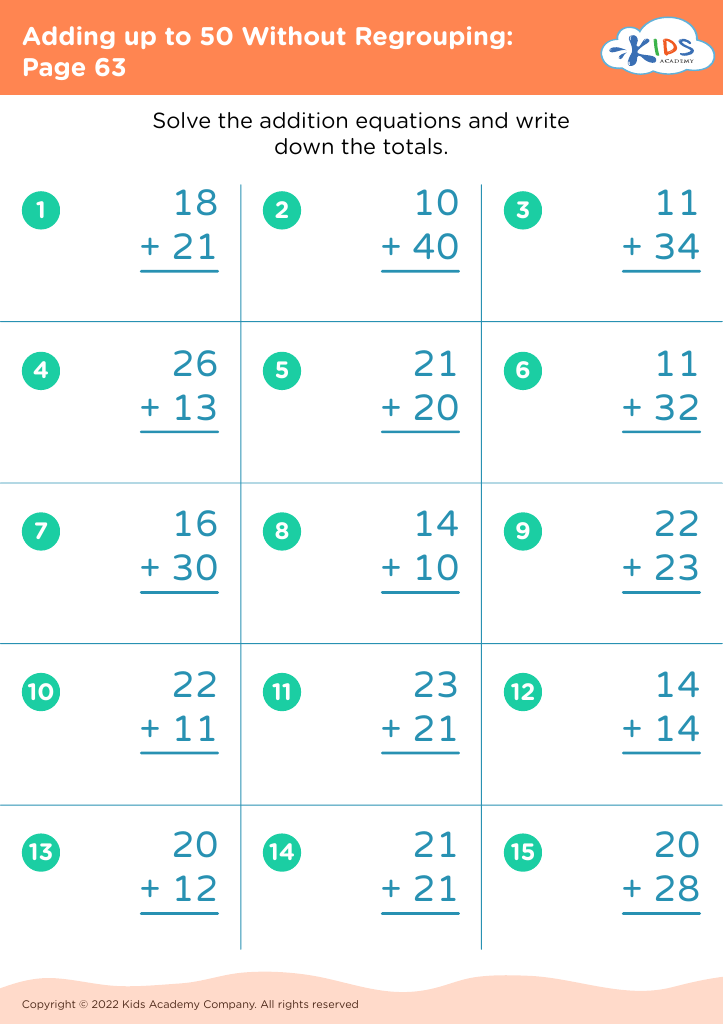
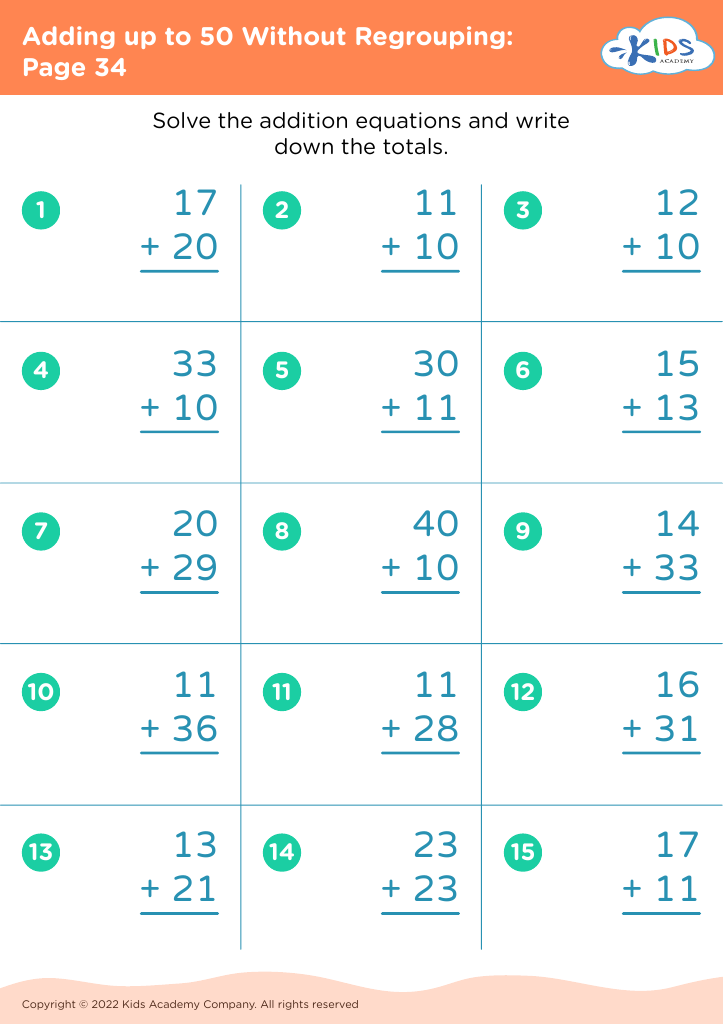
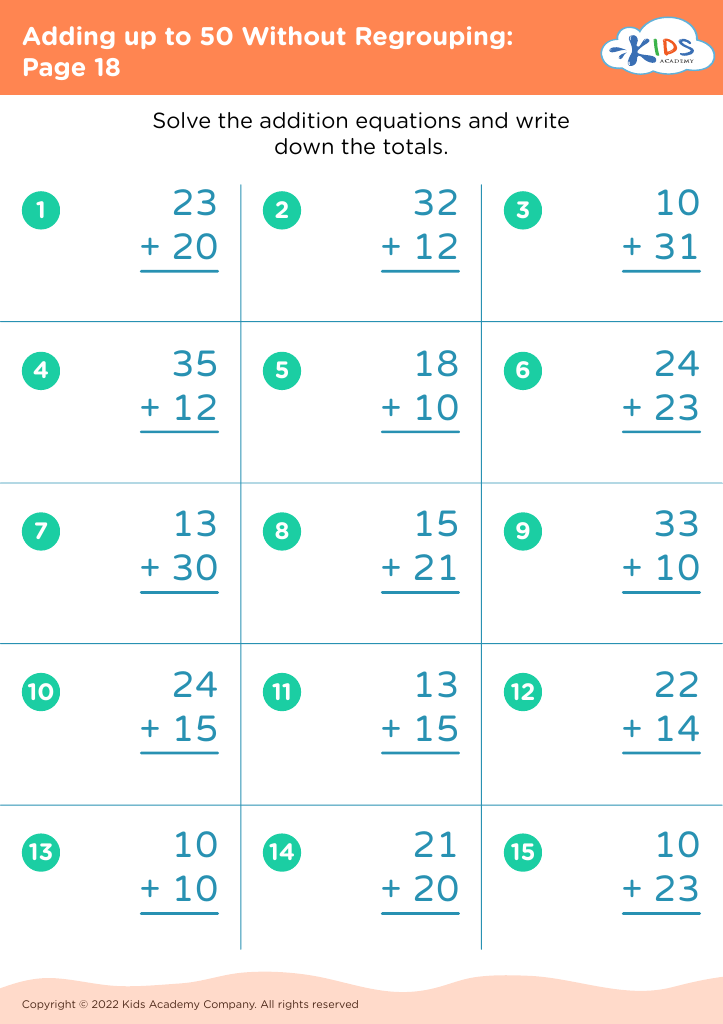
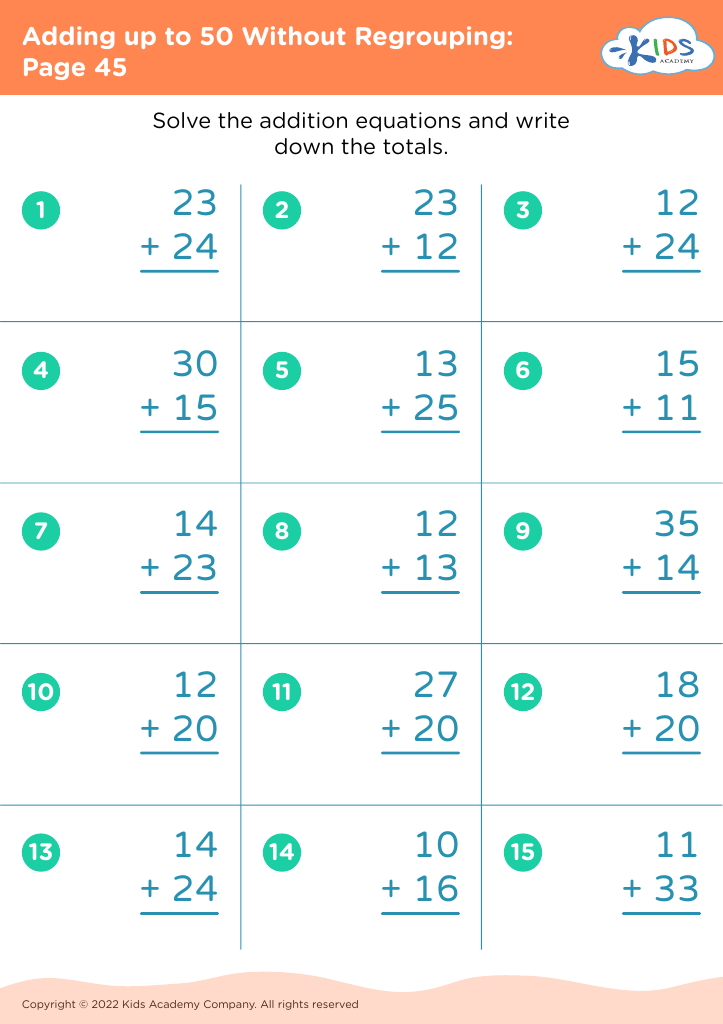
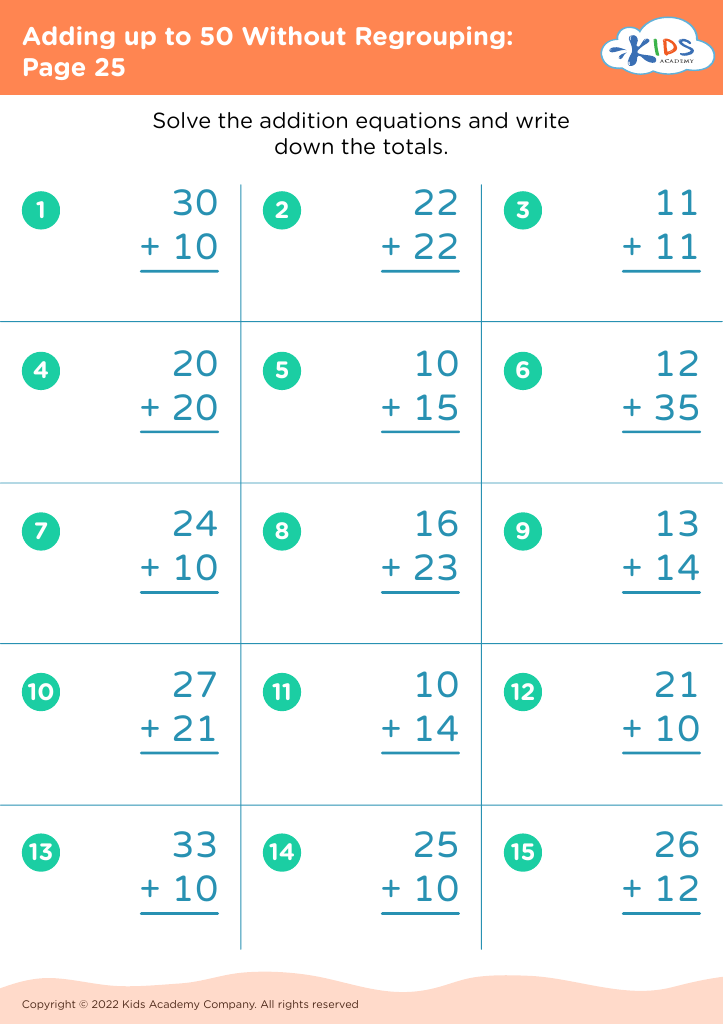
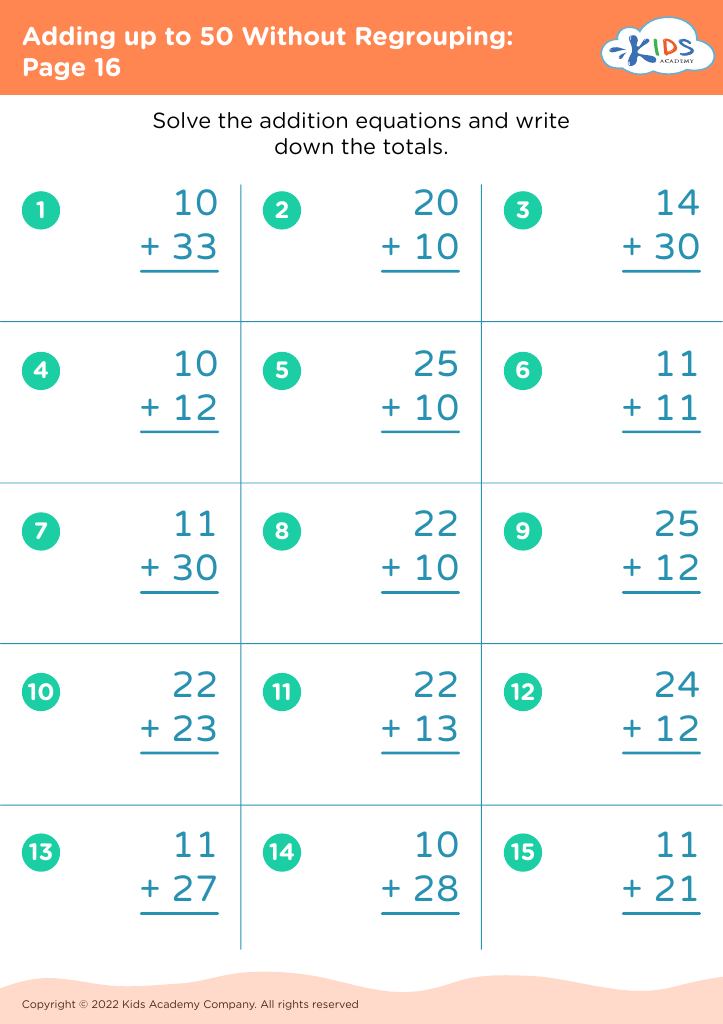
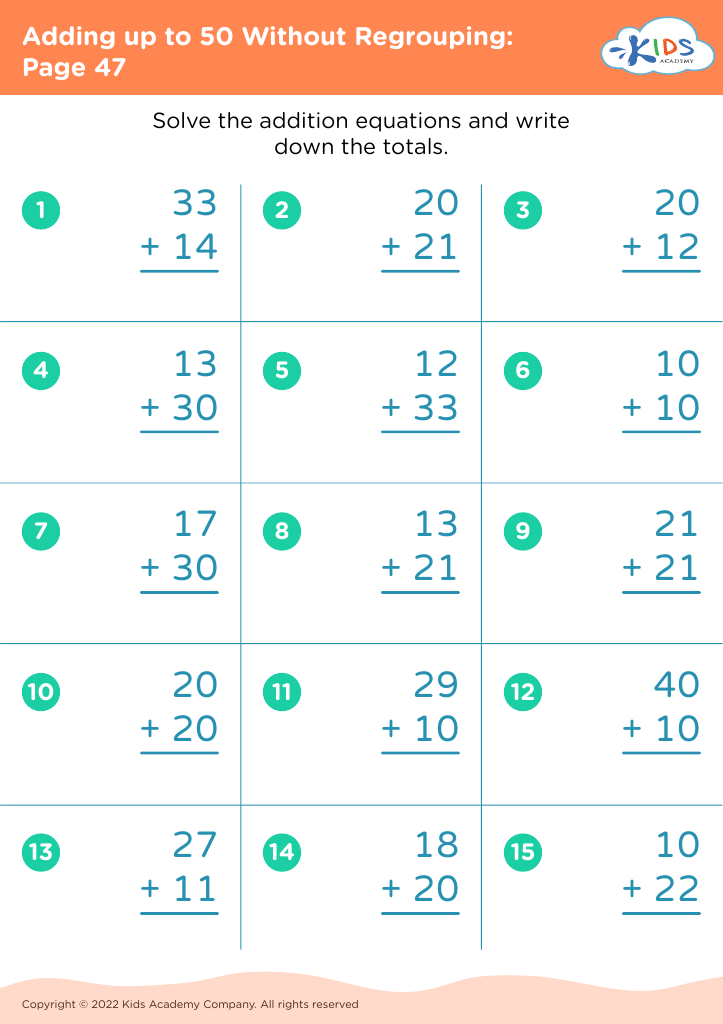
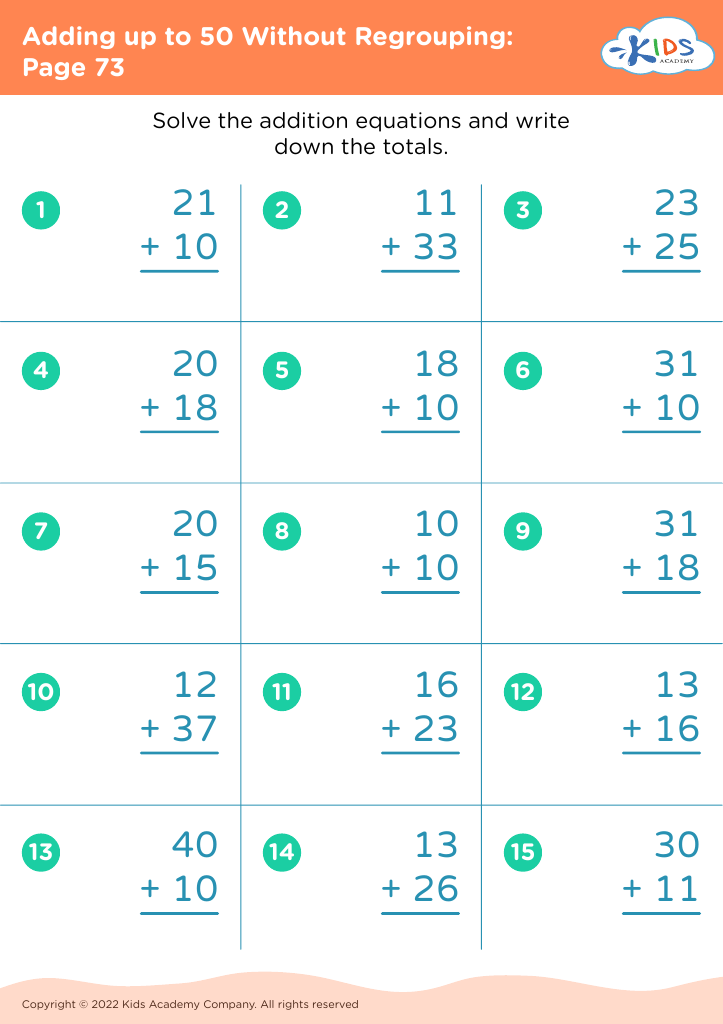
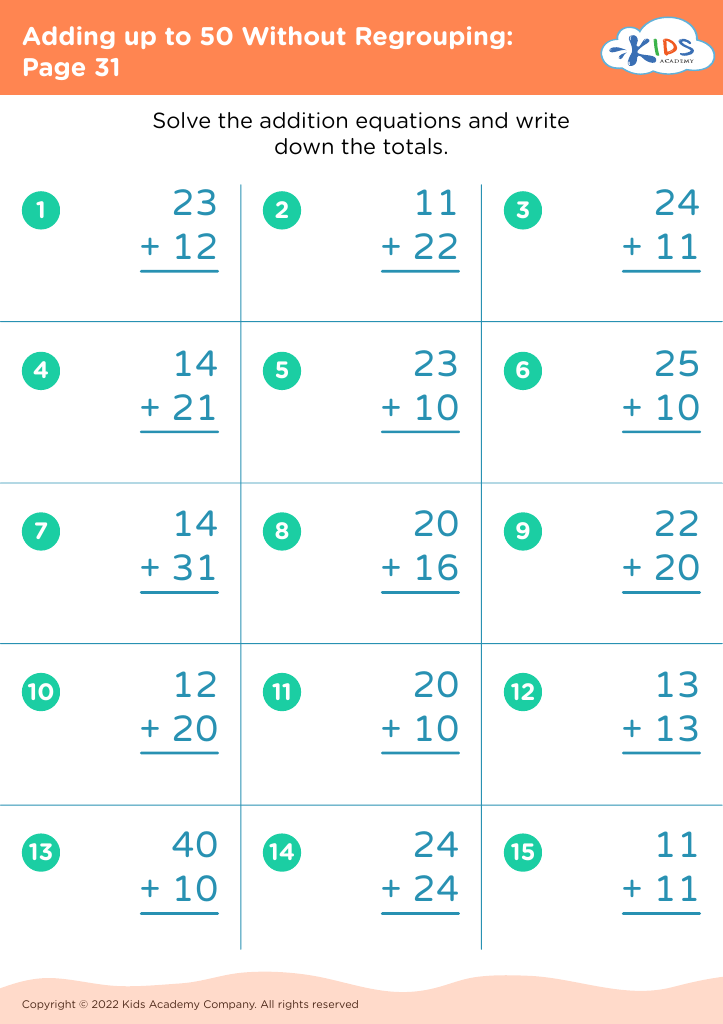
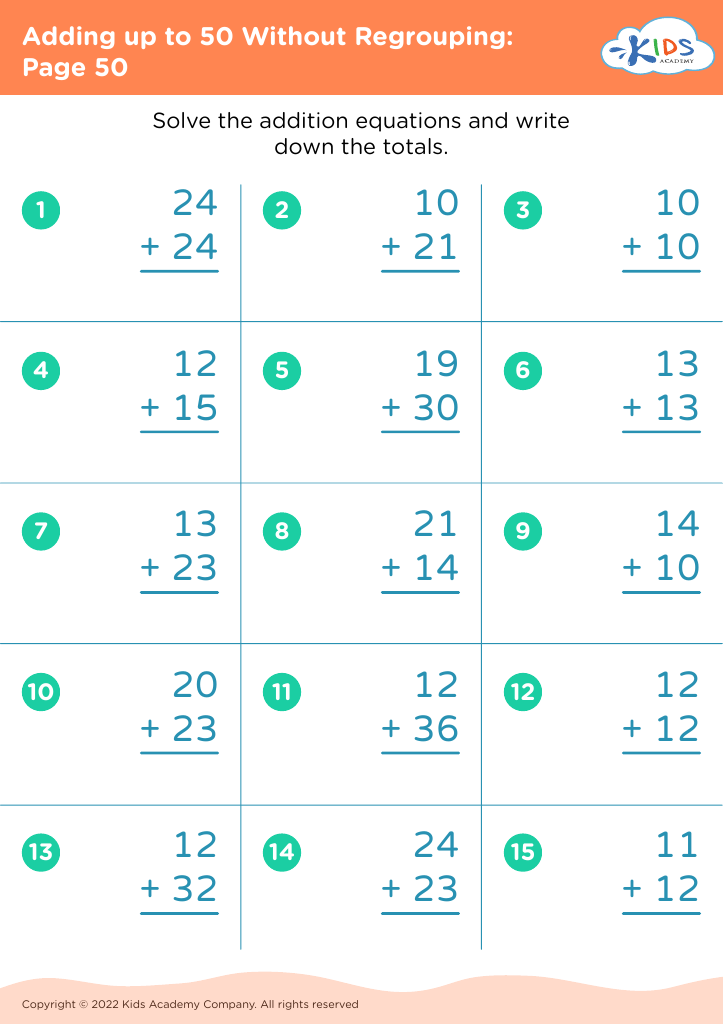


Understanding fractions and basic addition without regrouping for young children, ages 4-7, serves as critical building blocks for their mathematical development. For parents and teachers, it’s essential to recognize that these foundational skills support future learning and cognitive abilities. First, grasping the concept of fractions helps children develop a sense of proportion and division, which are crucial in everyday tasks and advanced mathematics. For instance, when kids understand that half of a pizza is the same as two quarters, they’re engaging in a hands-on, practical use of fractions.
Second, adding up to 50 without regrouping reinforces arithmetic fluency and number sense. Proficiency in these skills reflects a child’s ability to handle numbers confidently, setting a foundation for more complex operations such as multiple-digit addition, subtraction, and ultimately multiplication and division. Furthermore, achieving this without regrouping simplifies the learning process, enabling young learners to build confidence and appreciate the structure and patterns in numbers.
For early brain development, engaging with these concepts enhances problem-solving, logical reasoning, and critical thinking. Therefore, nurturing these skills ensures academic success, encourages a lifelong interest in mathematics, and equips children with tools to navigate their daily lives effectively.
By focusing on these fundamental aspects, we lay down a robust mathematical bedrock that supports a child's overall academic journey.