Real-life application Addition and Subtraction Word Problems Worksheets for Ages 4-7
3 filtered results
-
From - To
Discover the perfect tool to nurture essential math skills in young learners with our "Real-life Application Addition and Subtraction Word Problems Worksheets for Ages 4-7." Tailored to foster practical learning, these worksheets engage children in solving everyday math problems, combining fun challenges with skill-building. Our expertly designed sheets help children understand the real-life relevance of addition and subtraction, promoting critical thinking and problem-solving. They follow age-appropriate learning objectives, ensuring children gain confidence and excel in early-grade math. Spark your child's interest in math by connecting classroom lessons to life beyond school! Discover our worksheets today and watch them thrive.
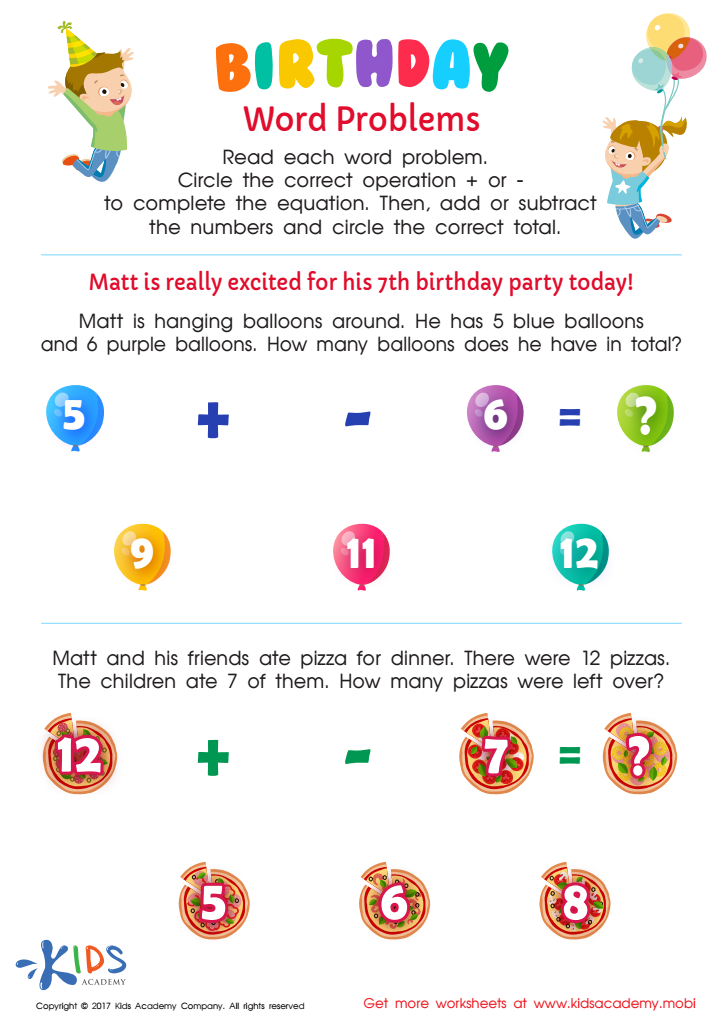
Birthday Word Problems Substraction Worksheet
 Assign to My Students
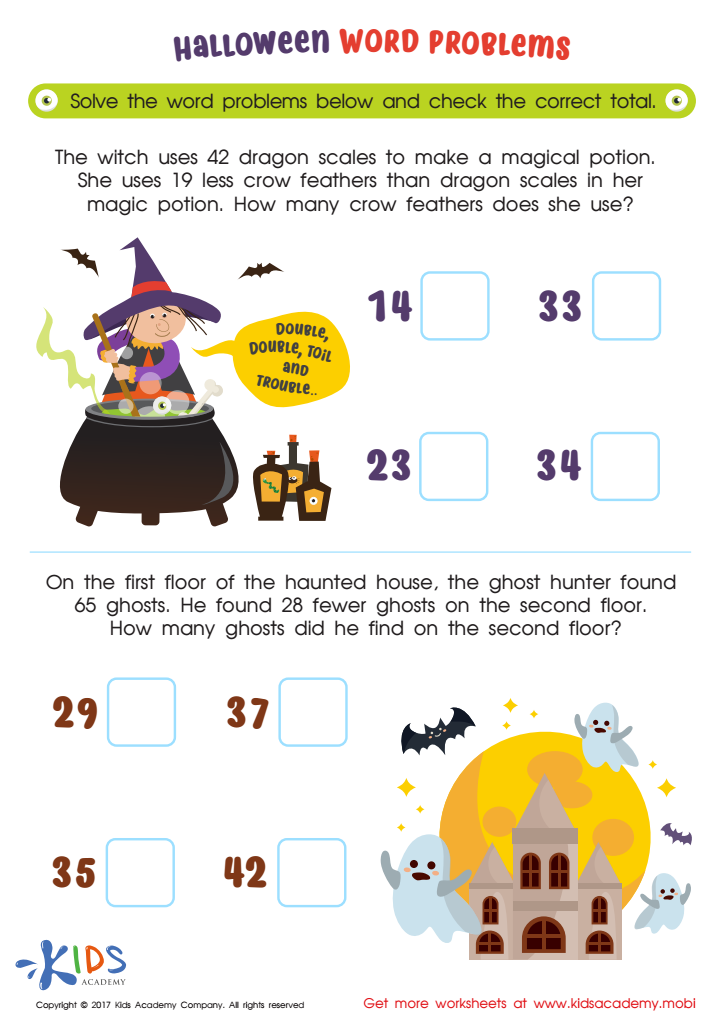
Halloween Word Problems Printable
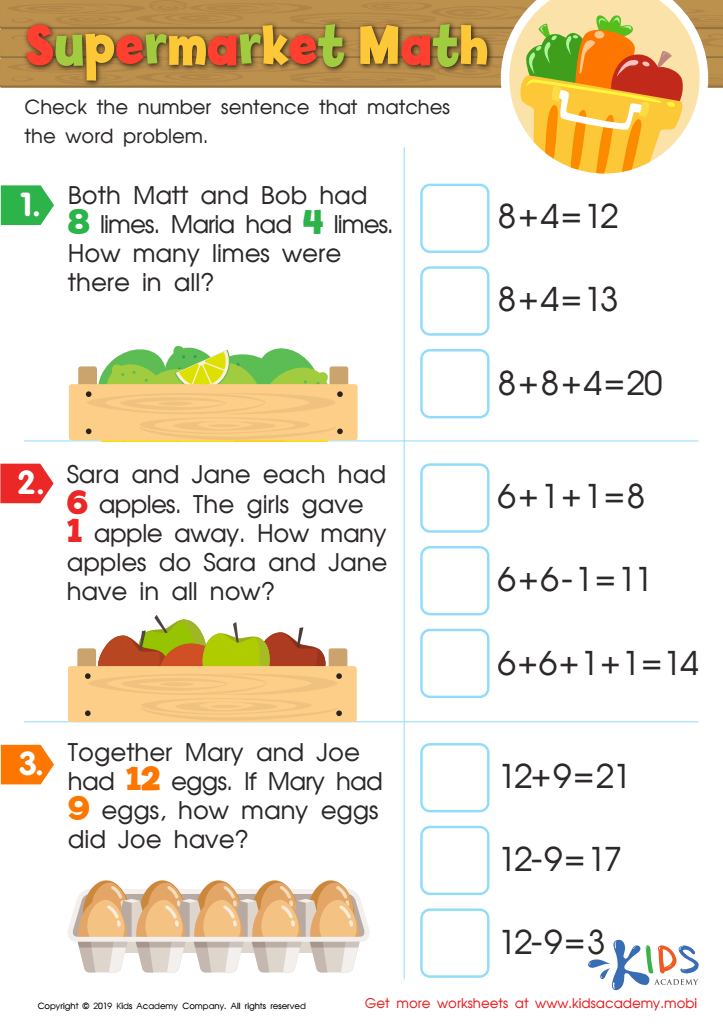
Supermarket Math Worksheet








Parents and teachers play a crucial role in nurturing the foundational math skills of children aged 4-7, and incorporating real-life addition and subtraction word problems is vital. At this tender age, children are incredibly curious and learn best when concepts are connected to their everyday experiences. By using real-life scenarios for math problems, young learners can understand the practical relevance, making the subject not only more interesting but also more comprehensible.
Firstly, real-life word problems integrate seamlessly into everyday activities that children already understand and enjoy, like counting toys, sharing snacks, or comparing the number of friends at a playdate. These familiar contexts make abstract numbers and operations tangible and meaningful.
Moreover, solving addition and subtraction problems in real-life scenarios helps develop critical problem-solving skills. Children begin to understand how math is used in practical decision-making, enhancing their logical thinking and reasoning abilities. This sets a strong foundation for complex mathematical concepts they will encounter later in their education.
Finally, engaging in these activities strengthens communication and social skills. Discussing and solving word problems with peers or parents promotes collaboration and language development. As a result, children not only learn math better but also appreciate its value in their daily lives, fostering a positive attitude towards the subject from an early age.