Enhancing math skills Addition & Subtraction Worksheets for Ages 4-7
6 filtered results
-
From - To
Discover our engaging Addition & Subtraction Worksheets for Ages 4-7, designed to enhance early math skills. Perfect for young learners, our printable worksheets offer a fun and effective way to practice essential addition and subtraction concepts. With thoughtfully crafted exercises, children develop their arithmetic abilities while enjoying colorful and interactive content. Ideal for homeschooling or supplementary classroom activities, our worksheets support critical thinking and boost confidence in math. Accessible and user-friendly, these resources help lay a solid foundation for future mathematical success. Visit our page today to start fostering a love for math in your child!
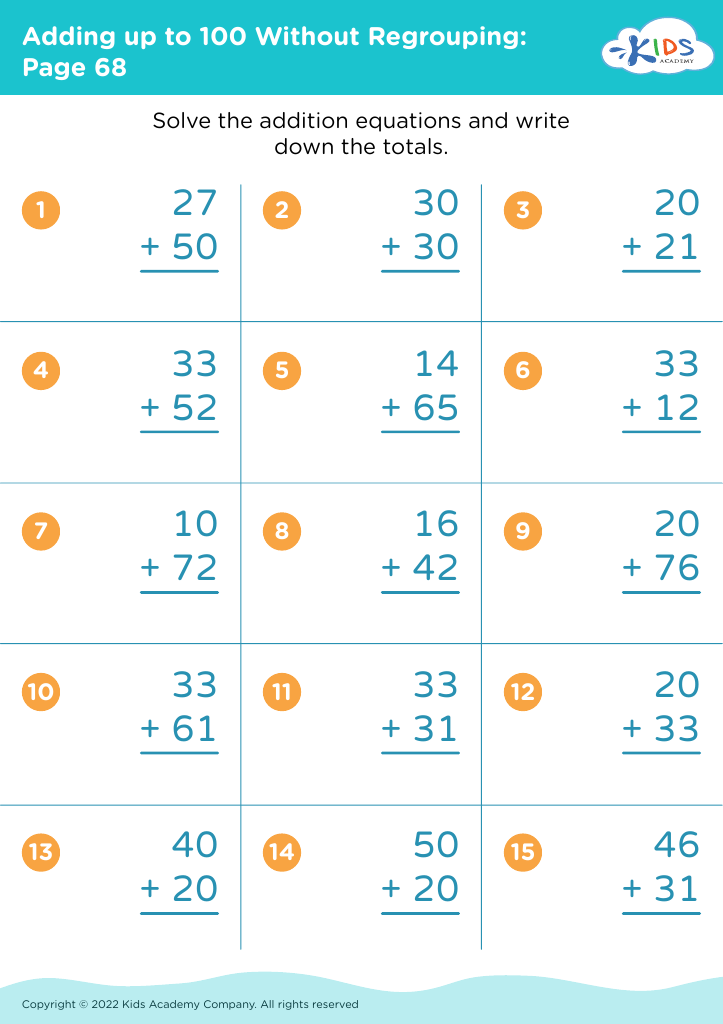
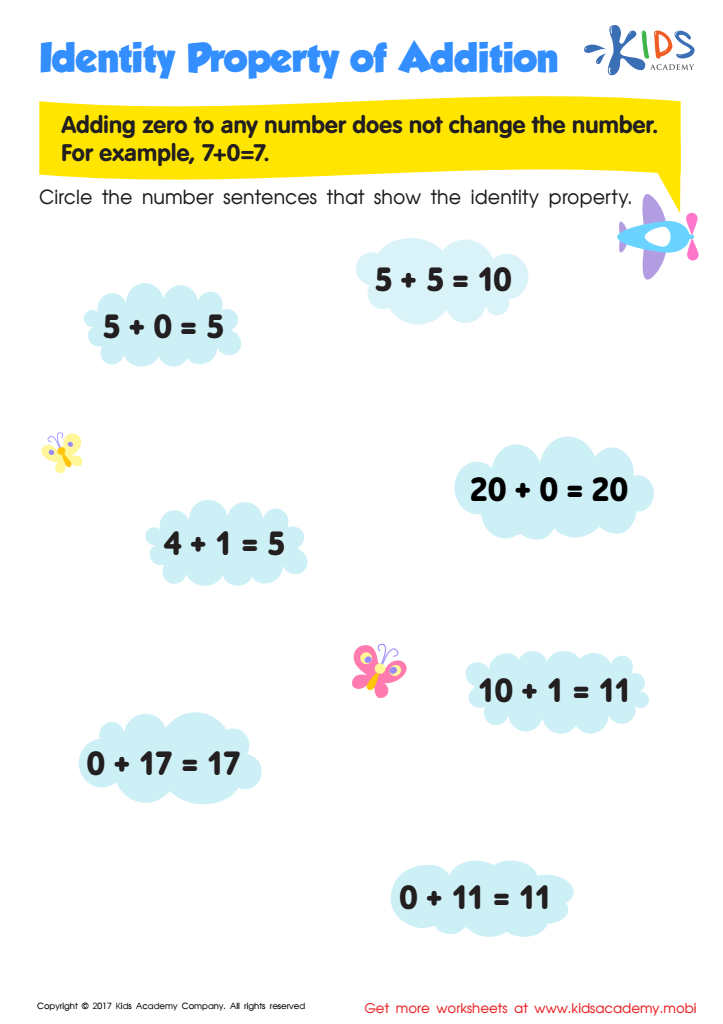
Identity Property of Addition Worksheet
 Assign to My Students
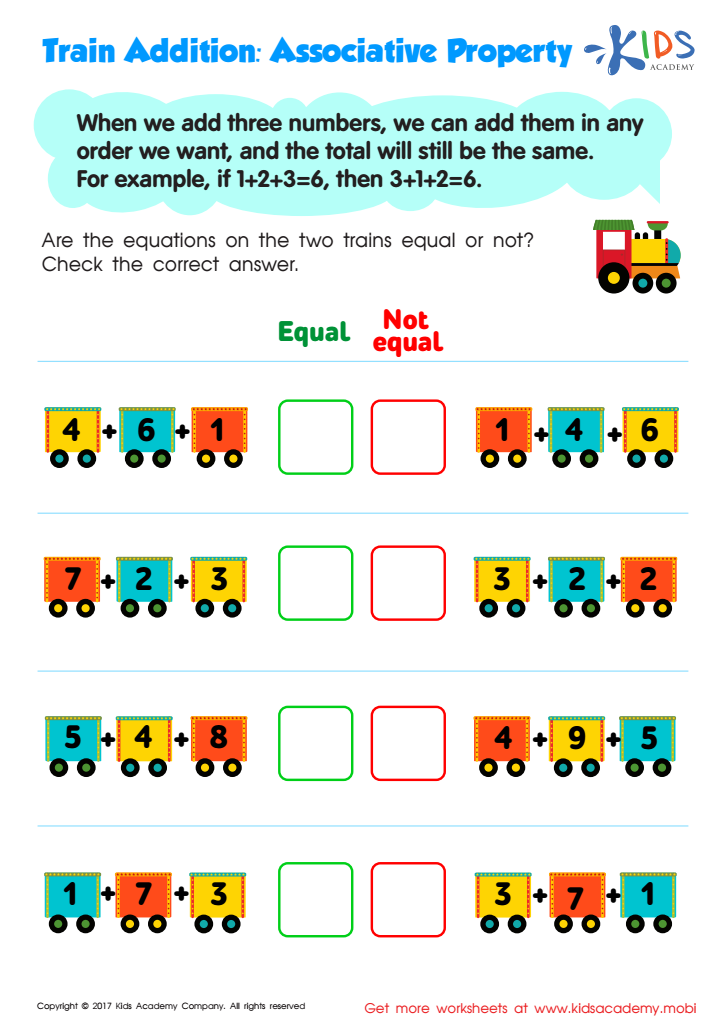
Train Addition: Associative Property Worksheet
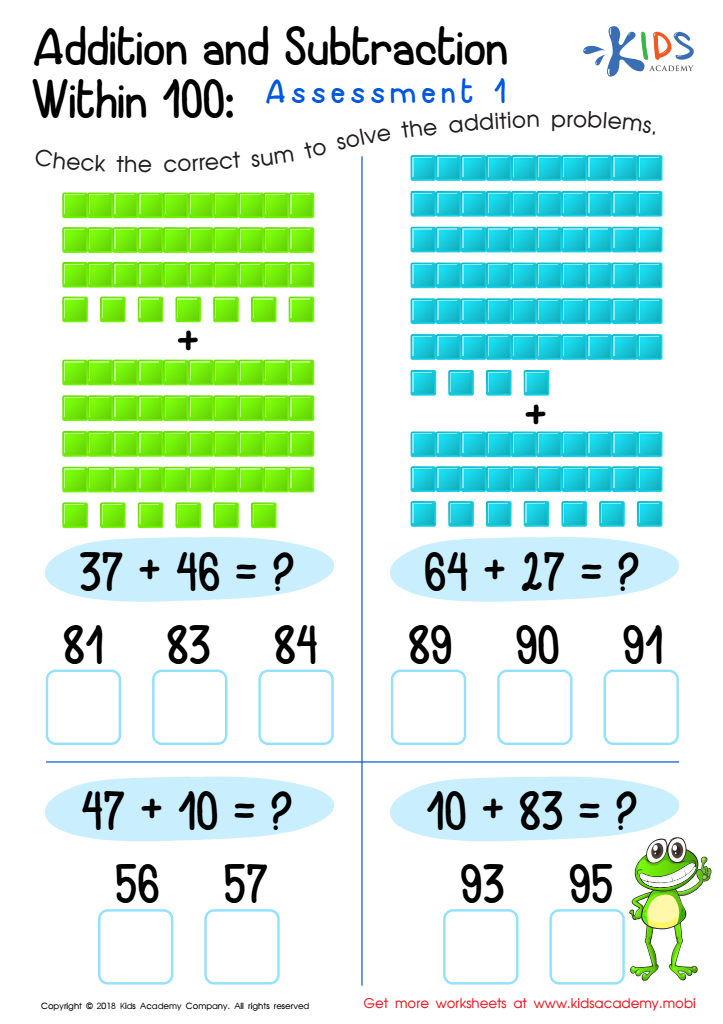
Addition and Subtraction Within 1: Assessment 1 Worksheet
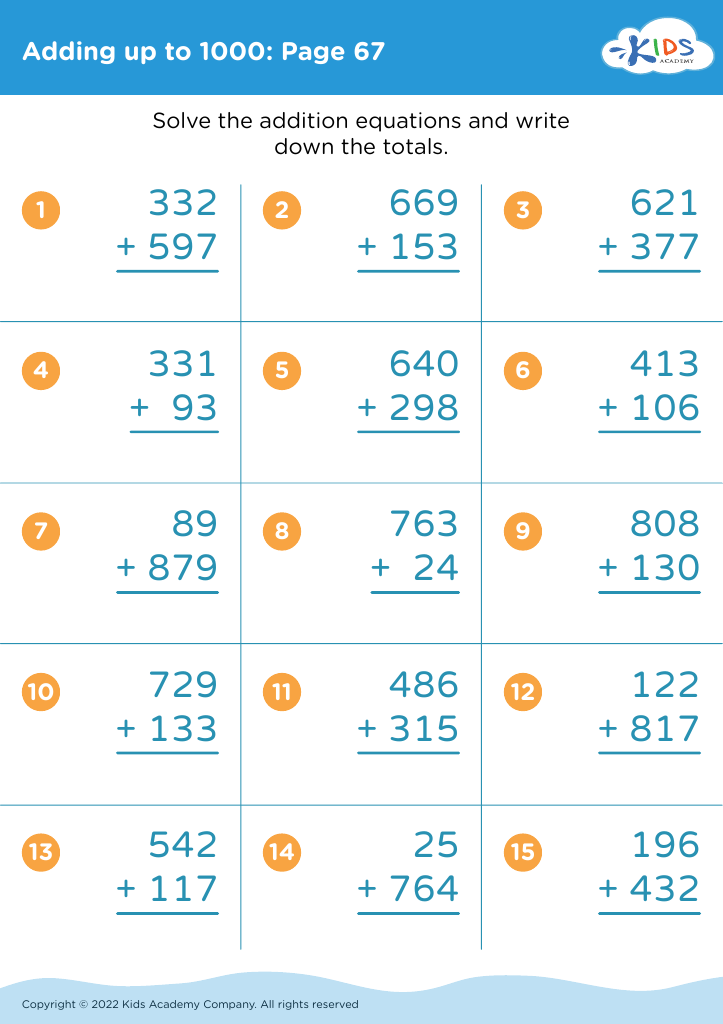








Enhancing math skills, particularly addition and subtraction, for children aged 4-7 is crucial for several substantial reasons. At this developmental stage, children's brains are especially receptive to learning new concepts, making it an ideal time to establish a strong foundation in mathematics. Early exposure to addition and subtraction helps cultivate logical thinking and problem-solving skills, which are critical for academic success in later years.
When children learn these basic arithmetic skills early on, they gain confidence in their ability to tackle more complex mathematical concepts in the future. This foundational knowledge also integrates into their daily lives, enabling them to understand quantity, manage resources, and make decisions based on numerical information. Furthermore, early mathematical skills have been shown to correlate with better performance not only in math-related subjects but across the academic board, including reading and writing, as they enhance cognitive development and analytical reasoning.
Parents and teachers play a pivotal role in creating an engaging and supportive environment for learning these skills. By incorporating fun activities and real-life applications, they can foster a positive attitude towards mathematics, making the learning process enjoyable and relevant. Ultimately, investing in early math education equips children with the tools necessary for lifelong learning and everyday problem-solving, giving them a solid basis from which to grow and succeed.








