Fine motor skills development Addition & Subtraction Worksheets for Ages 4-7
3 filtered results
-
From - To
Enhance your child's fine motor skills while they master addition and subtraction with our engaging worksheets designed for ages 4-7. These specially crafted activities encourage children to use their hands to build coordination and dexterity as they solve math problems. Worksheet tasks promote writing, tracing, and manipulating objects, turning learning into a fun-filled experience. Your child will not only grasp early math concepts but will also strengthen their hand-eye coordination, paving the way for future academic success. Dive into our collection of creative, educational resources that promote both cognitive and motor skill growth, setting the foundation for lifelong learning.
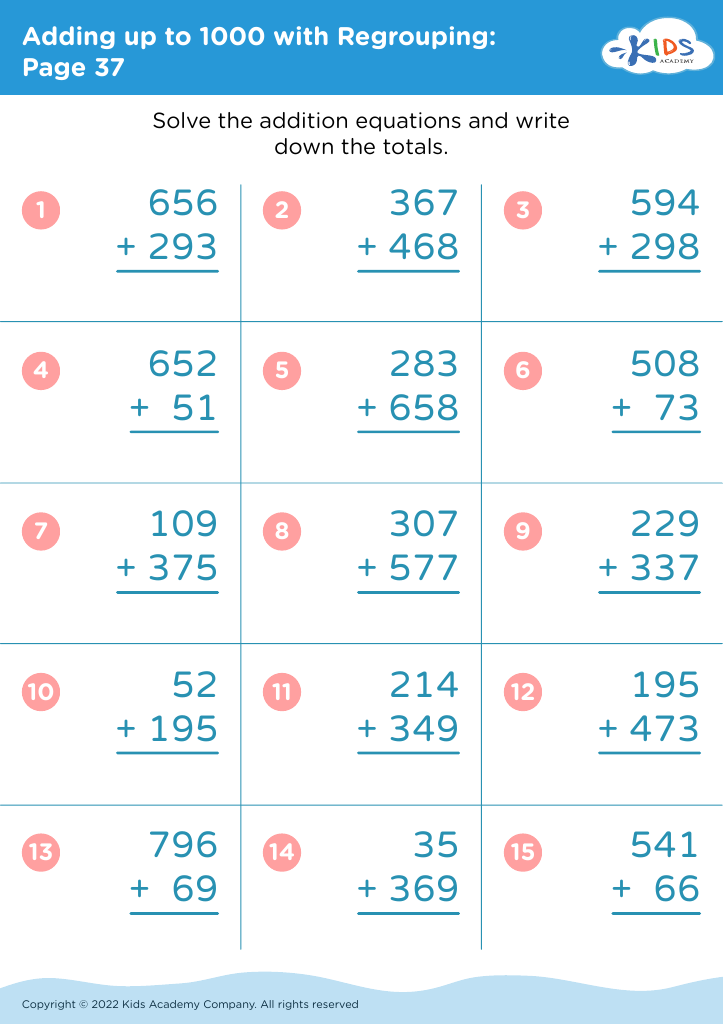
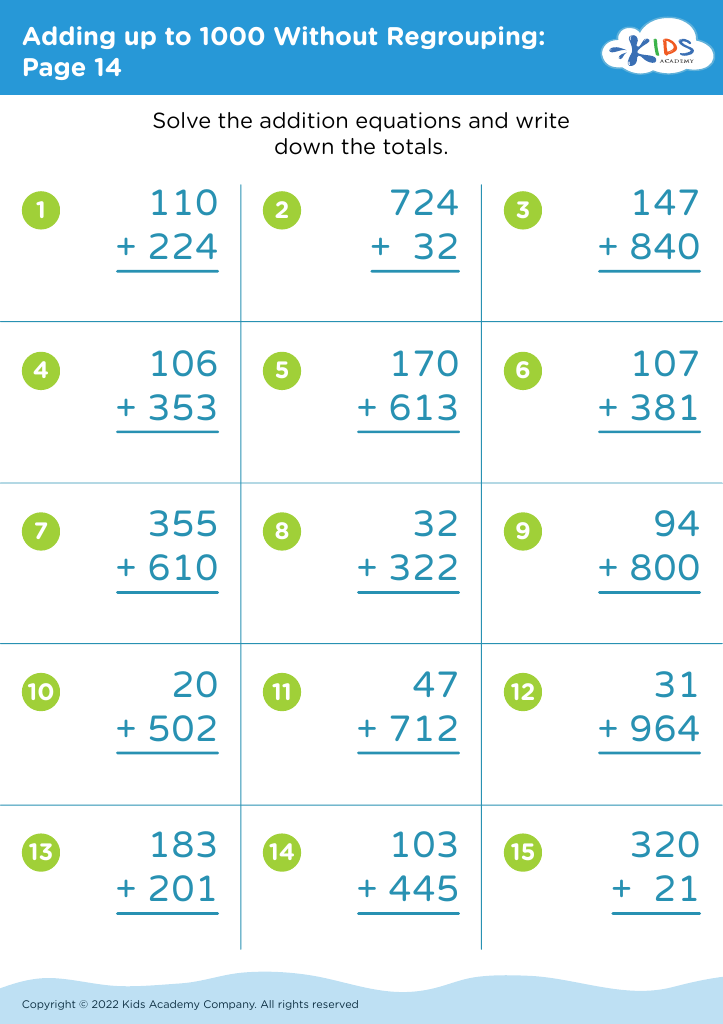
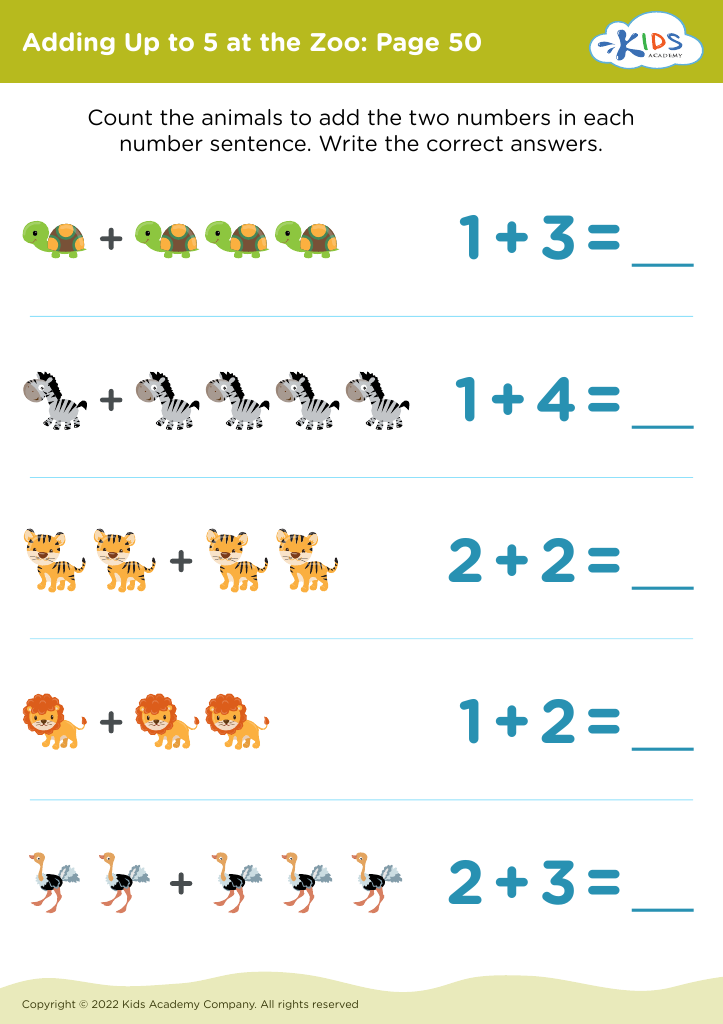








Fine motor skills are crucial for children aged 4-7 because they lay the foundation for both academic success and everyday tasks. At this stage, children are developing the dexterity required for writing, using scissors, and managing buttons or zippers. Strong fine motor skills enhance a child's ability to perform essential activities seamlessly.
When it comes to addition and subtraction, fine motor skills play an integral role in the manipulation of counting materials, such as counters or small blocks. Not only does this physical interaction reinforce math concepts, but it also promotes tactile learning. Furthermore, fine motor activities—like drawing numbers, using number lines, or working on math games—engage children visually and kinesthetically, helping them understand mathematics better.
For parents and teachers, fostering fine motor skills is more than just enhancing math abilities; it is about nurturing a child's confidence and independence in performing daily tasks. By providing opportunities for practice through engaging activities, such as arts and crafts or interactive games, adults can significantly impact a child's cognitive and physical development. This holistic growth is vital in building a strong foundation for lifelong learning and problem-solving skills.








