Check out this FREE Trial Lesson on Addition & Subtraction for age 4-7!

Short and Long Vowel Sort

Favorites
With answer key
Interactive
  • 4-7
  • Improve counting skills
  • Addition & Subtraction
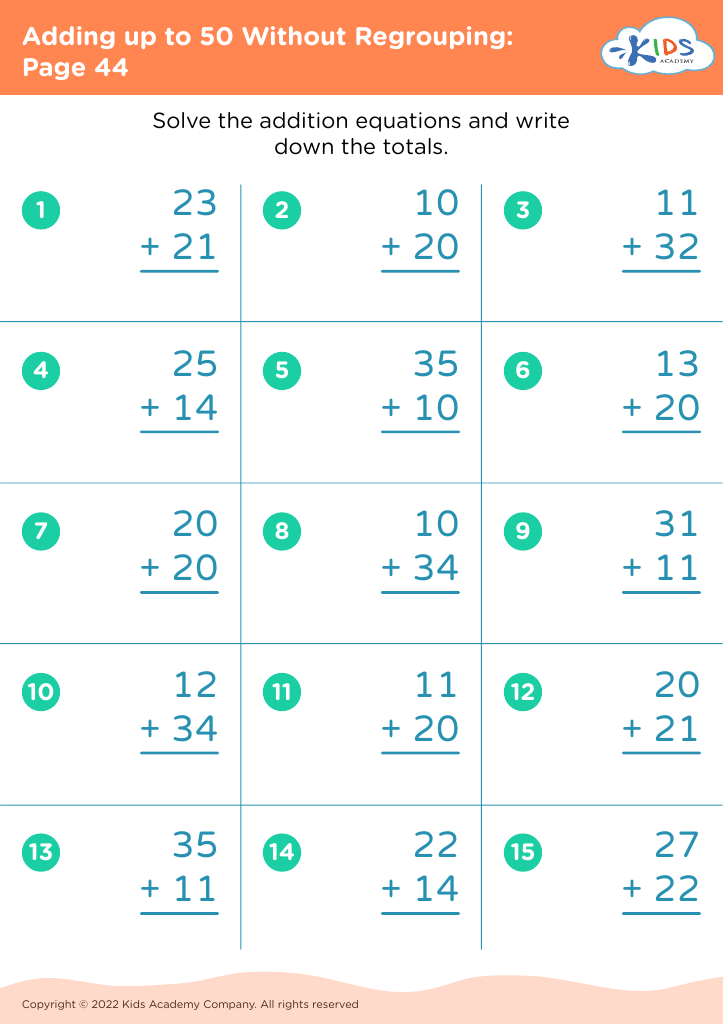
Adding up to 50 Without Regrouping: Page 44
Worksheet
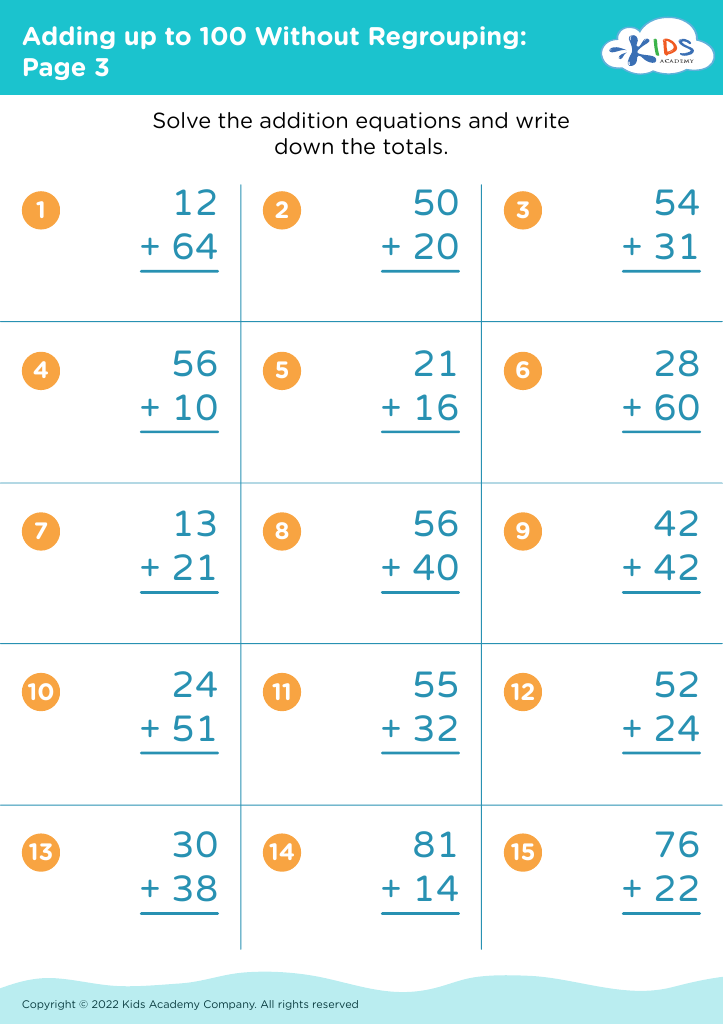
Adding up to 100 Without Regrouping: Page 3
Worksheet
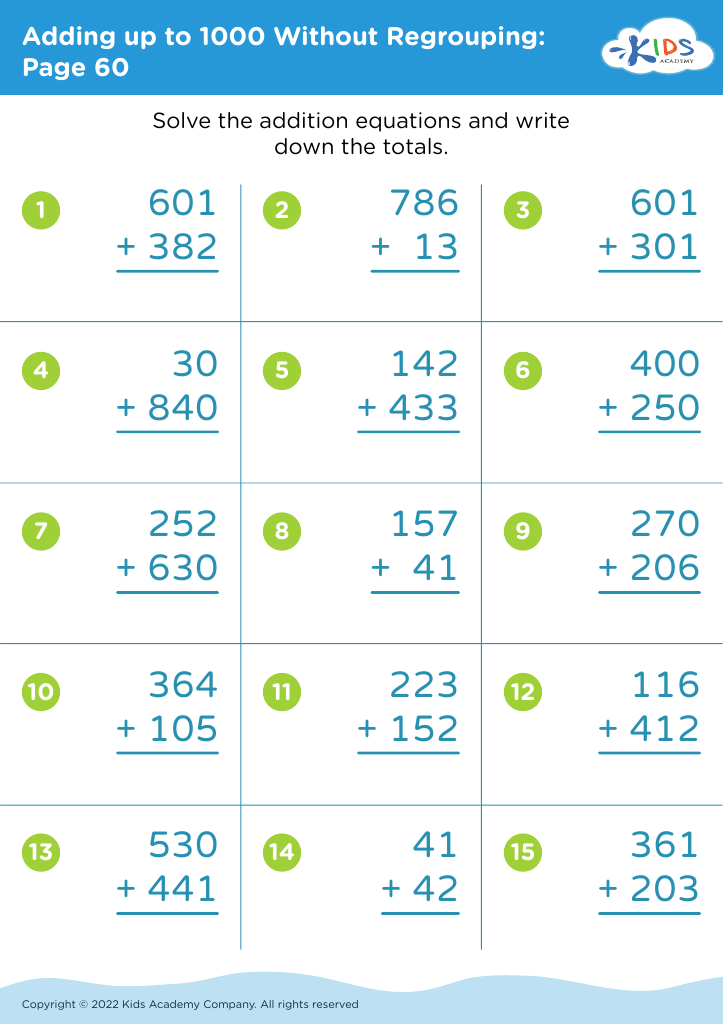
Adding up to 1000 Without Regrouping: Page 60
Worksheet
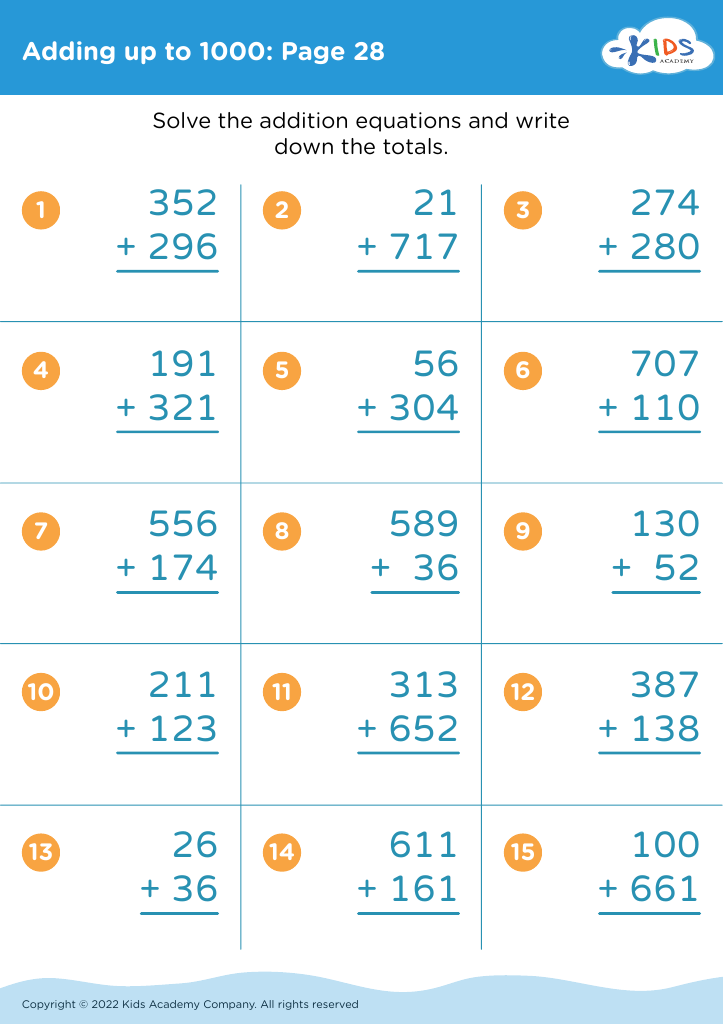
Adding up to 1000: Page 28

Adding up to 1000: Page 28

Adding up to 1000: Page 28
Worksheet
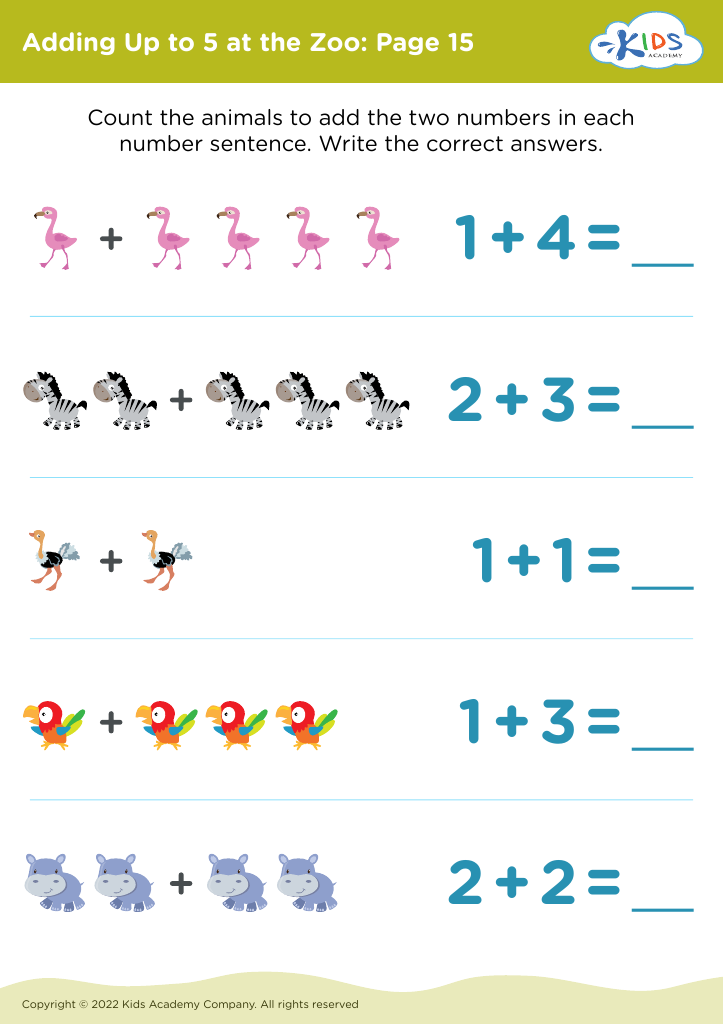
Adding Up to 5 at the Zoo: Page 15
Worksheet
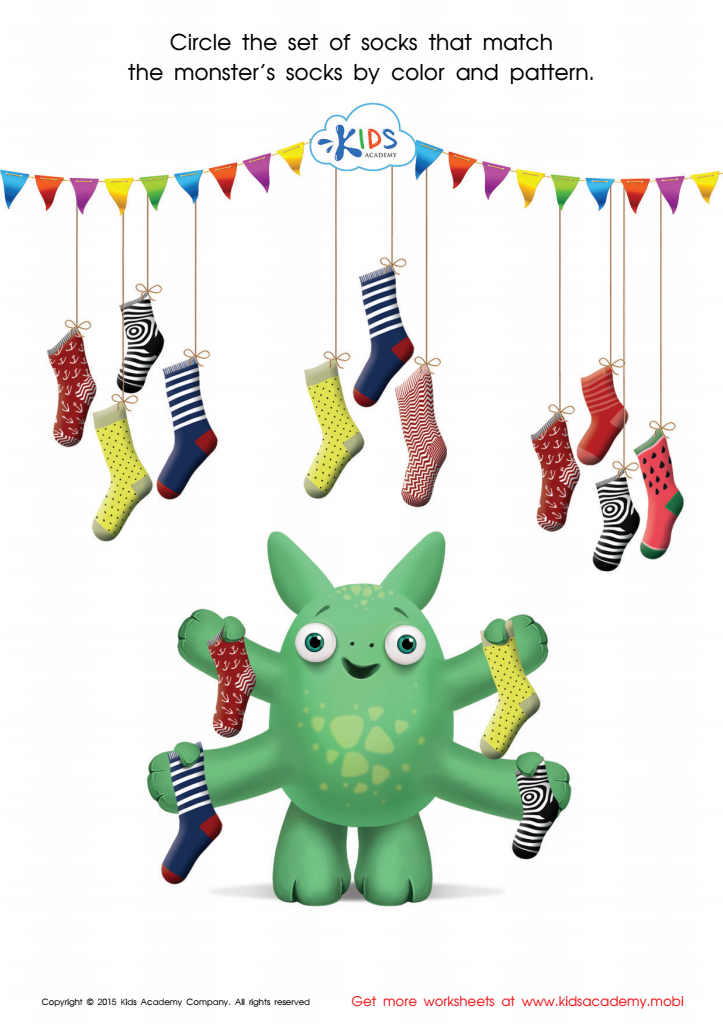
Math Game: Connecting the Monster’s Socks

Connecting the Monster's Socks Printable

The cute monster did some washing yesterday, but now he can't put his socks back together! Children must focus on the color and pattern to make the right matches, improving their cognitive and fine motor skills. Get more educational games by Kids Academy!
Connecting the Monster's Socks Printable
Worksheet
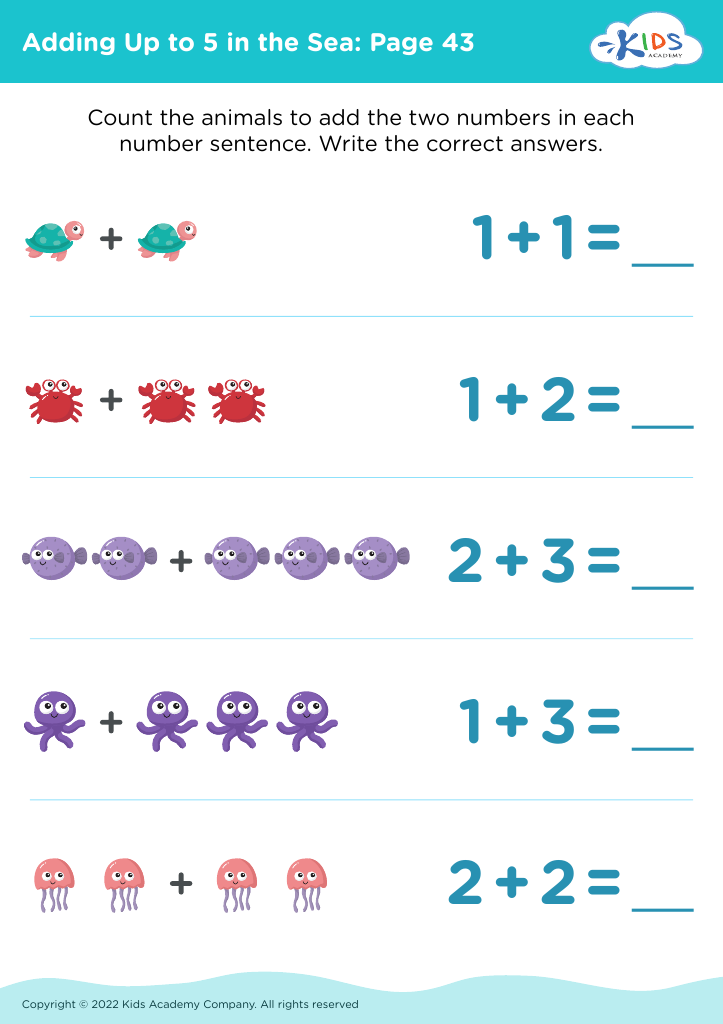
Adding Up to 5 in the Sea: Page 43
Worksheet
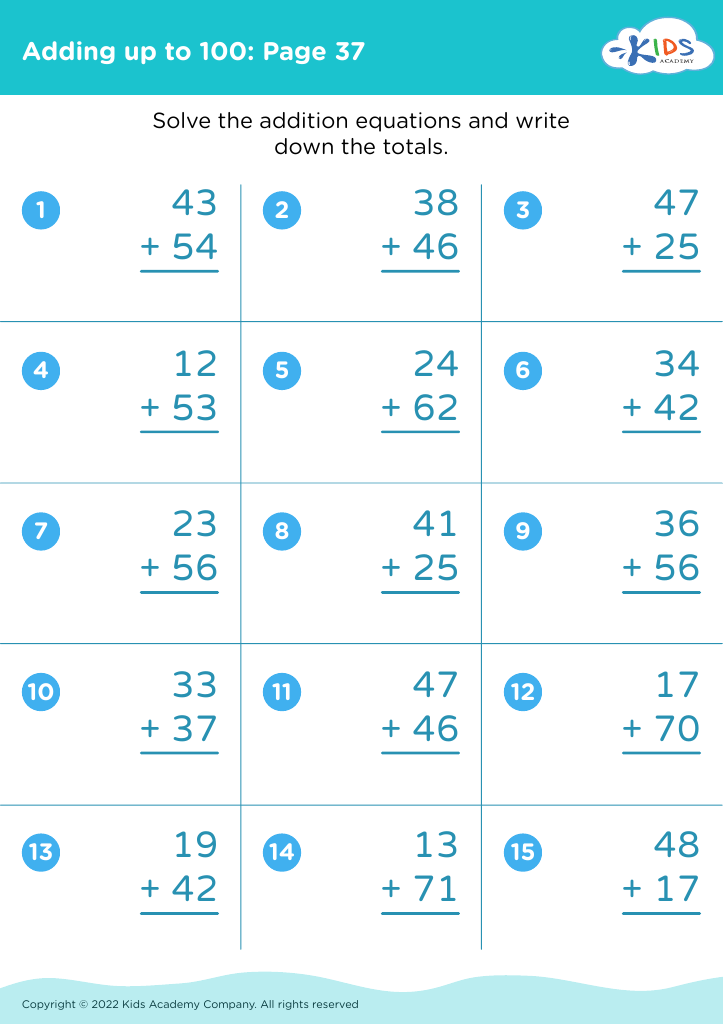
Adding up to 100: Page 37

Adding up to 100: Page 37

Adding up to 100: Page 37
Worksheet
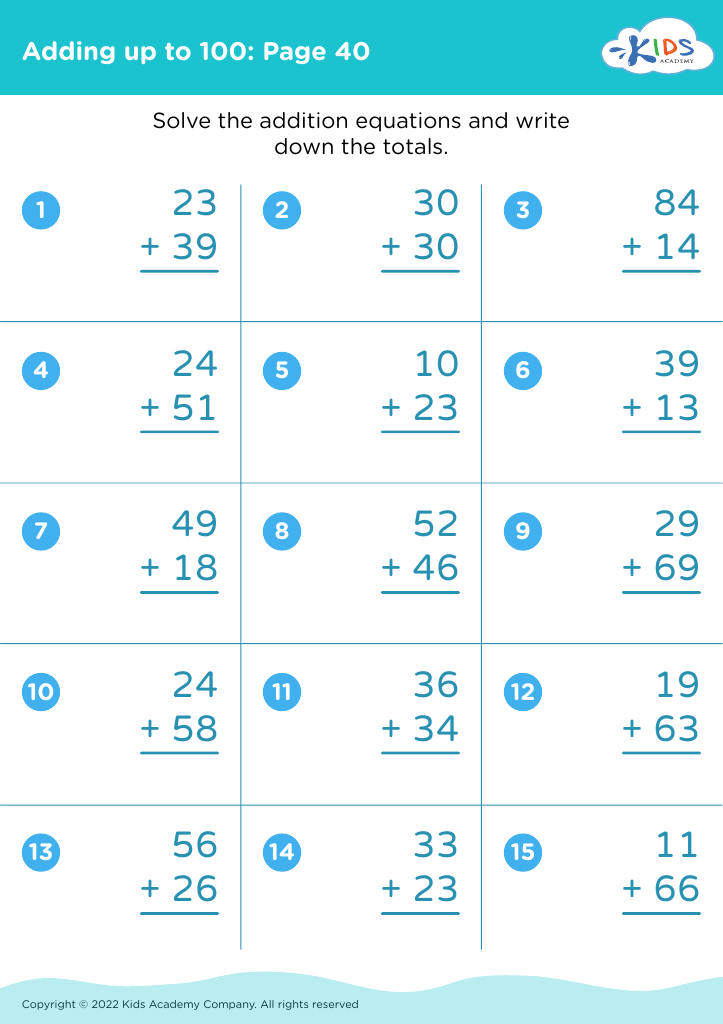
Adding up to 100: Page 40

Adding up to 100: Page 40

Adding up to 100: Page 40
Worksheet
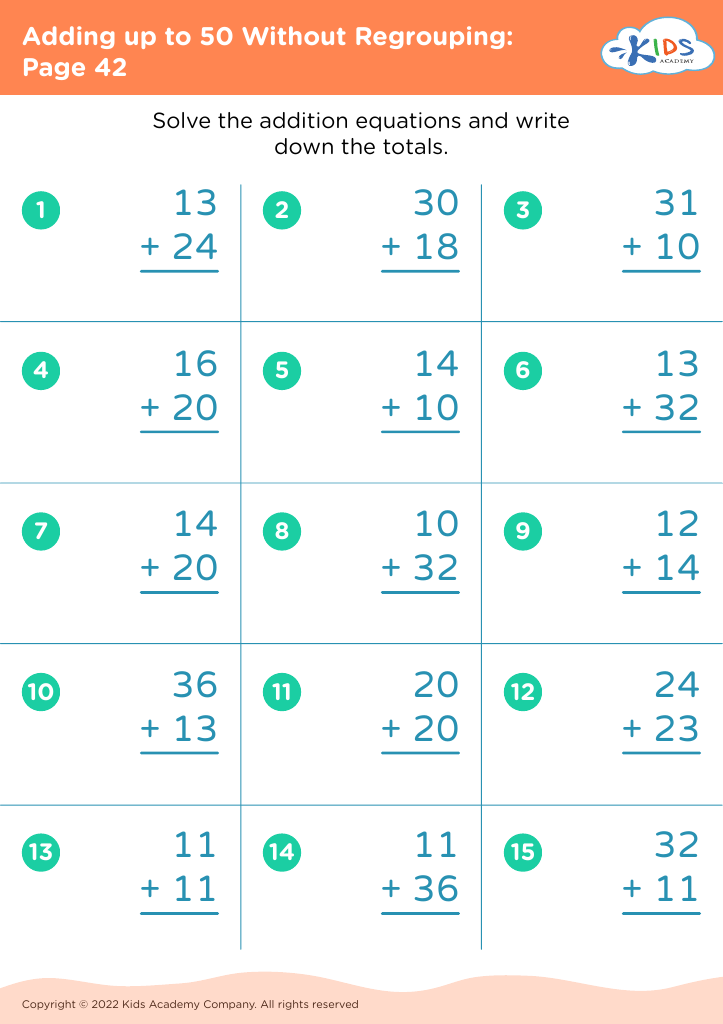
Adding up to 50 Without Regrouping: Page 42
Worksheet
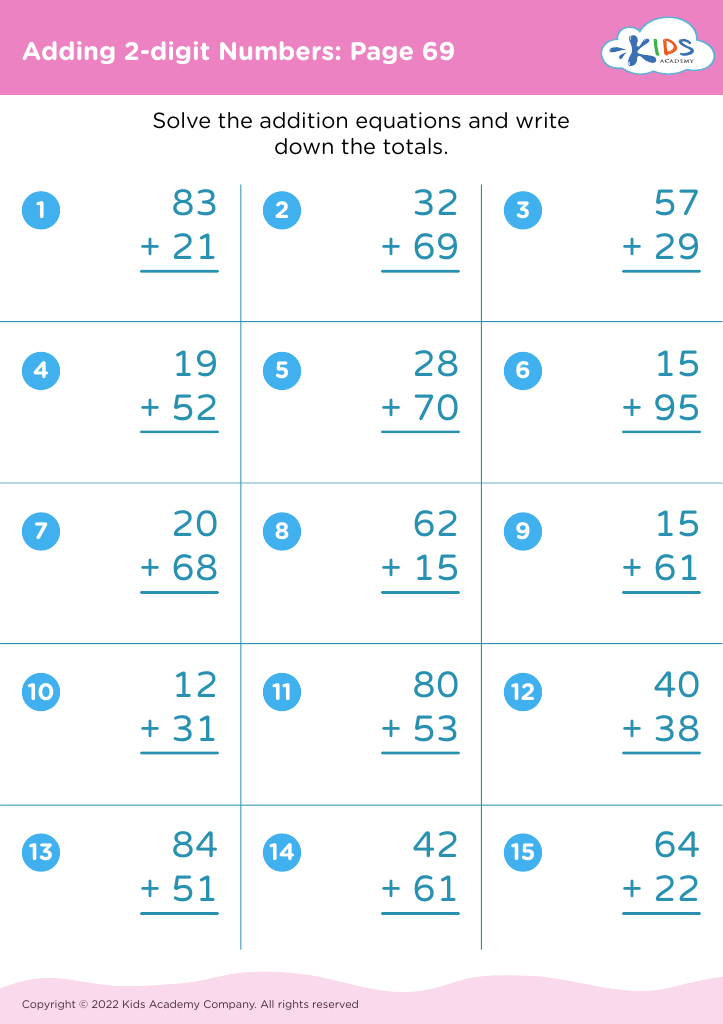
Adding 2-digit Numbers: Page 69

Adding 2-digit Numbers: Page 69

Adding 2-digit Numbers: Page 69
Worksheet
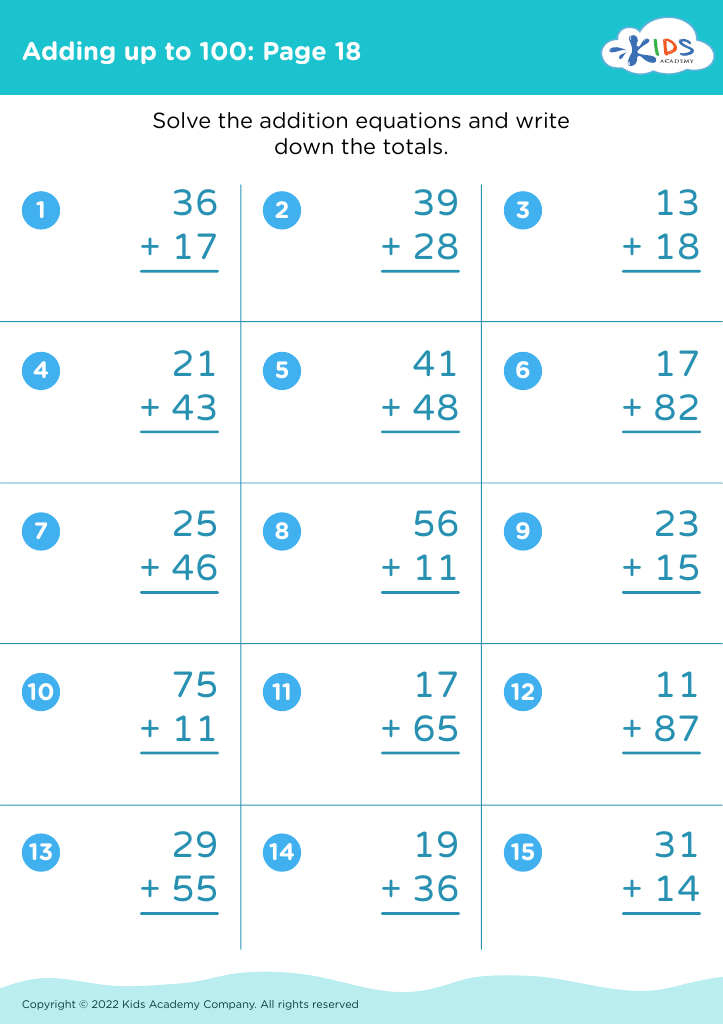
Adding up to 100: Page 18

Adding up to 100: Page 18

Adding up to 100: Page 18
Worksheet
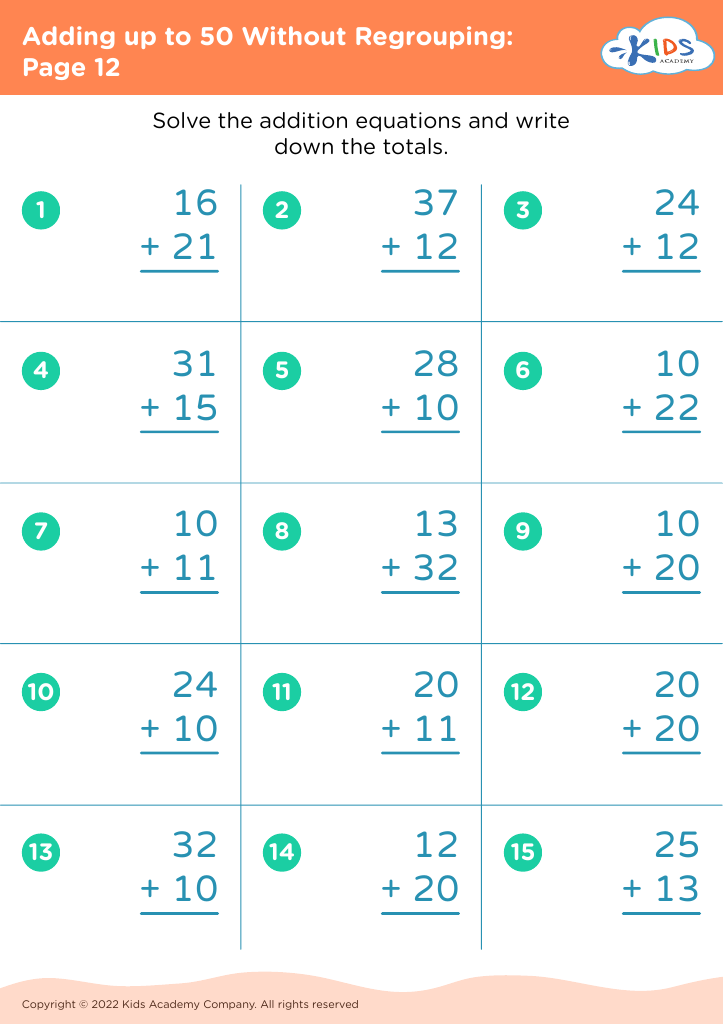
Adding up to 50 Without Regrouping: Page 12
Worksheet
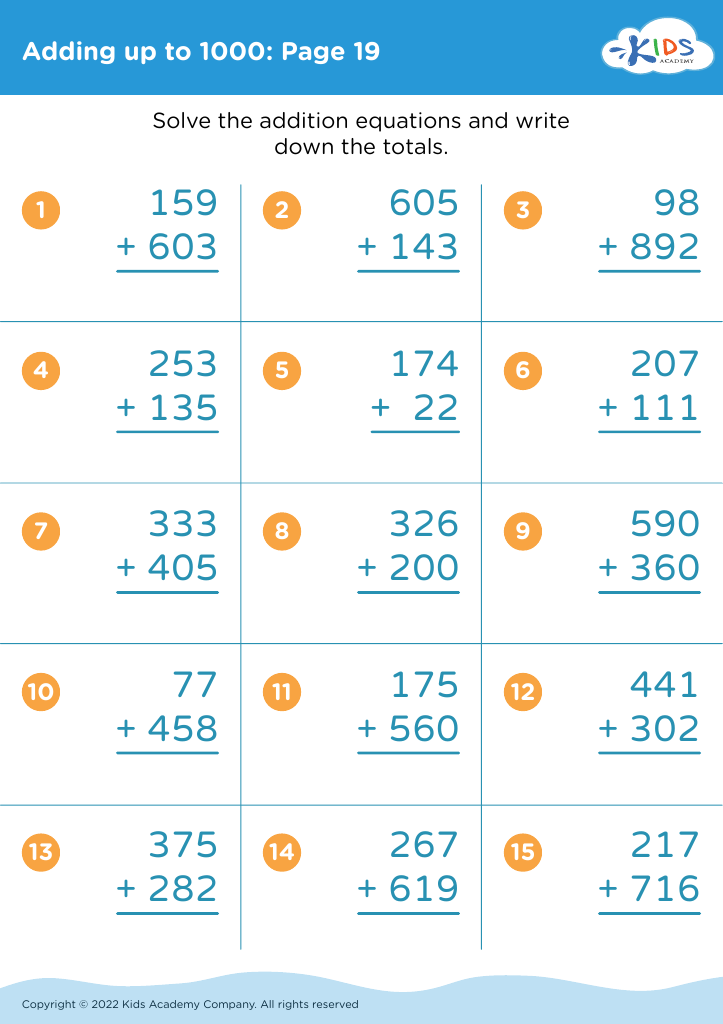
Adding up to 1000: Page 19

Adding up to 1000: Page 19

Adding up to 1000: Page 19
Worksheet
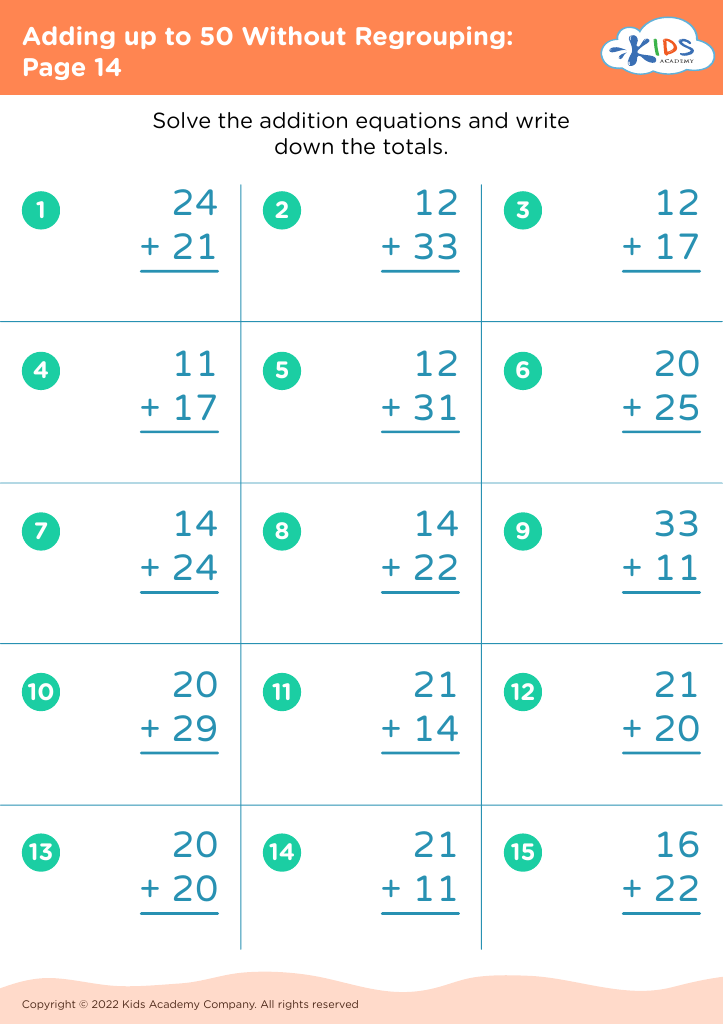
Adding up to 50 Without Regrouping: Page 14
Worksheet
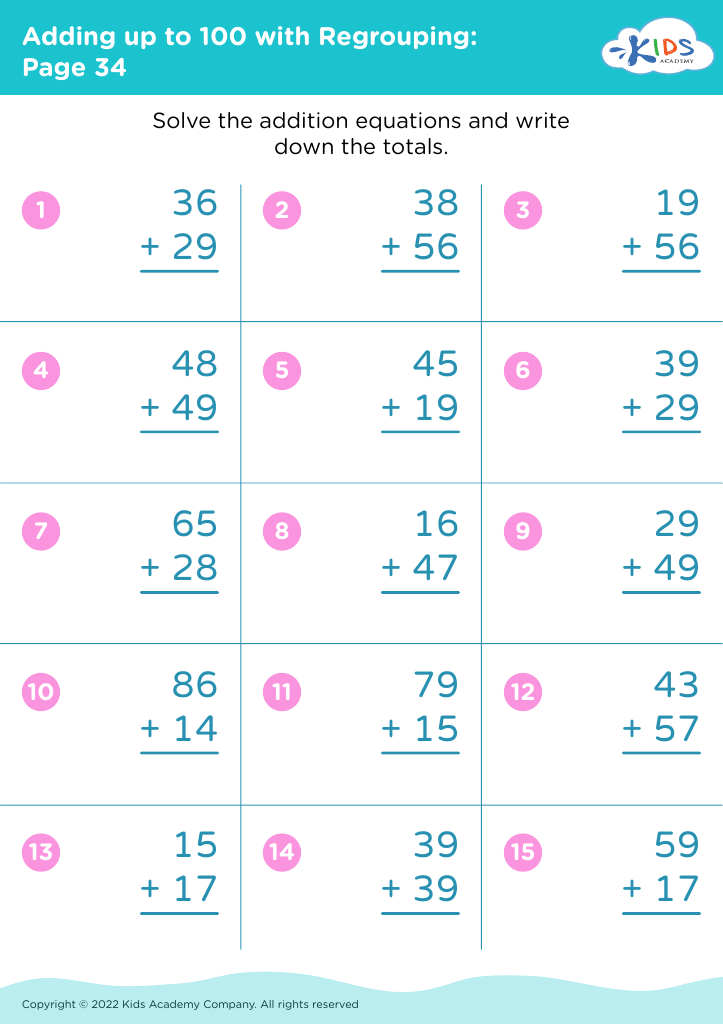
Adding up to 100 with Regrouping: Page 34
Worksheet
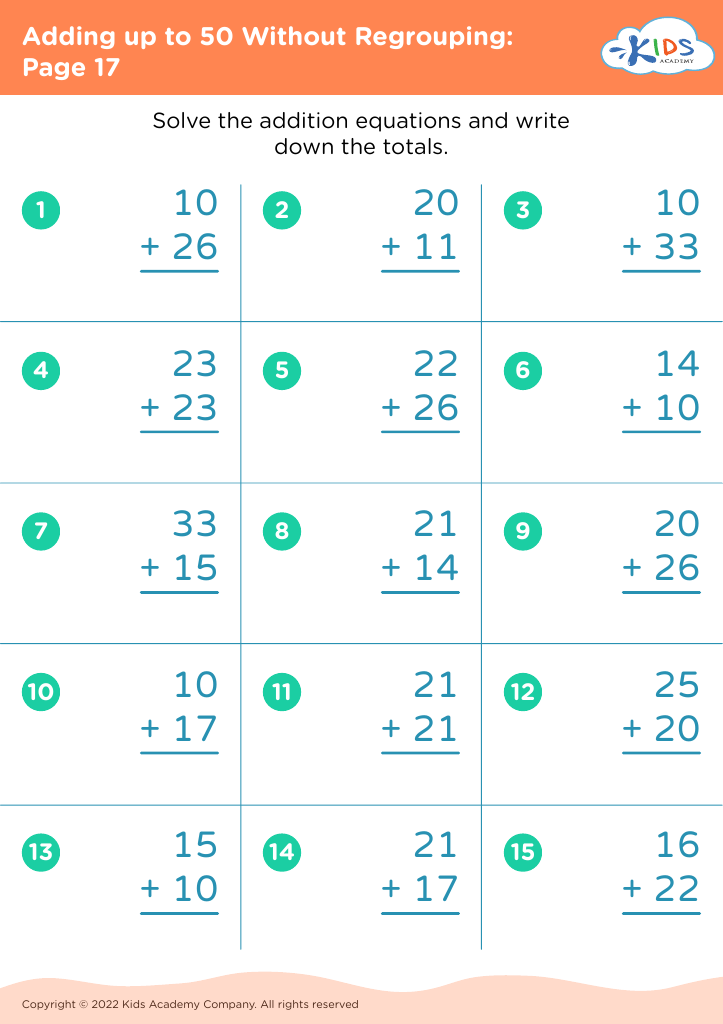
Adding up to 50 Without Regrouping: Page 17
Worksheet
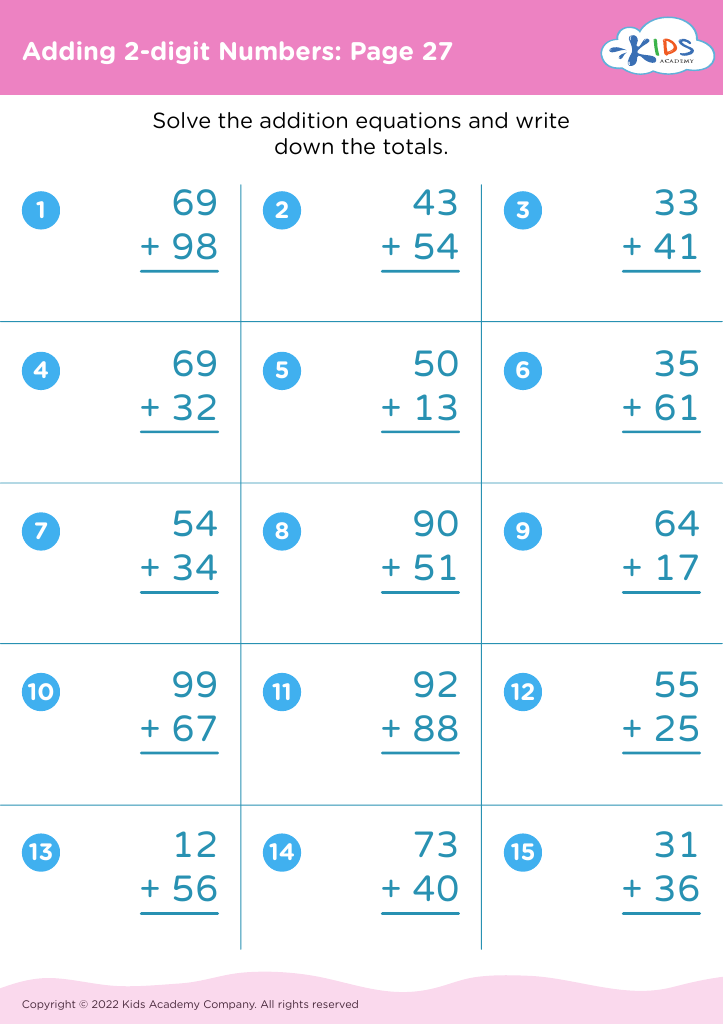
Adding 2-digit Numbers: Page 27

Adding 2-digit Numbers: Page 27

Adding 2-digit Numbers: Page 27
Worksheet
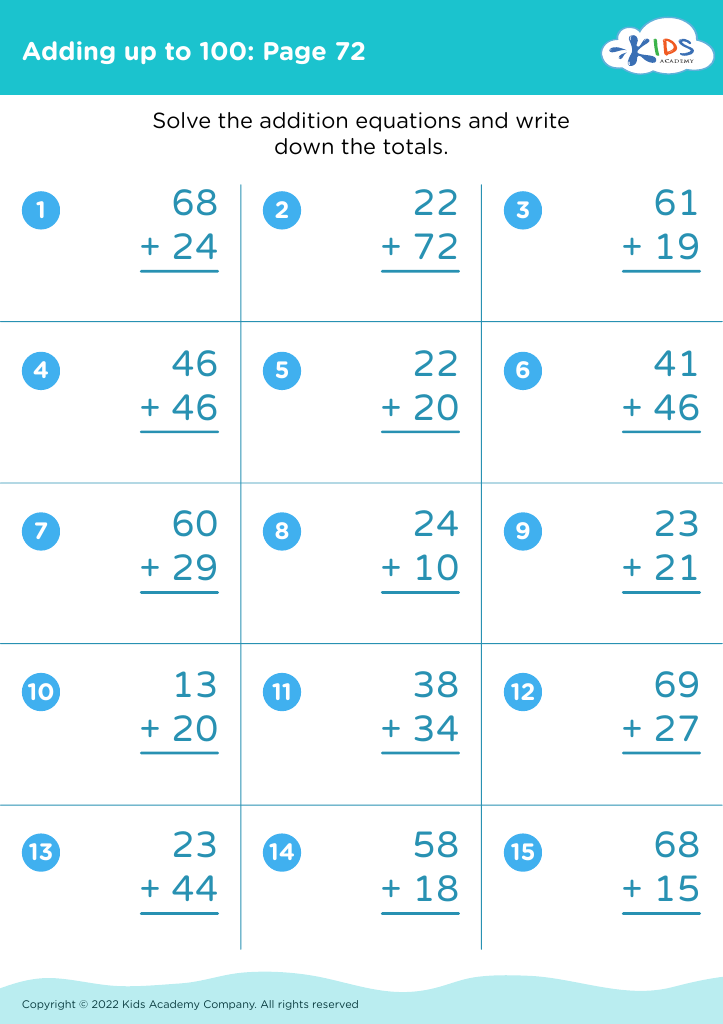
Adding up to 100: Page 72

Adding up to 100: Page 72

Adding up to 100: Page 72
Worksheet
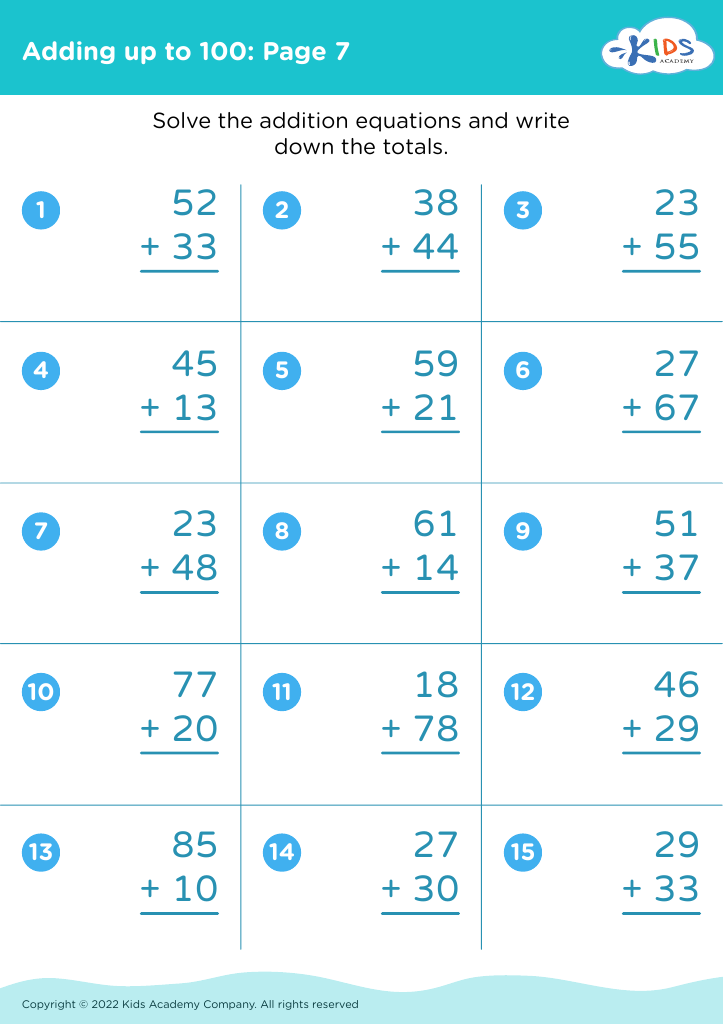
Adding up to 100: Page 7

Adding up to 100: Page 7

Adding up to 100: Page 7
Worksheet
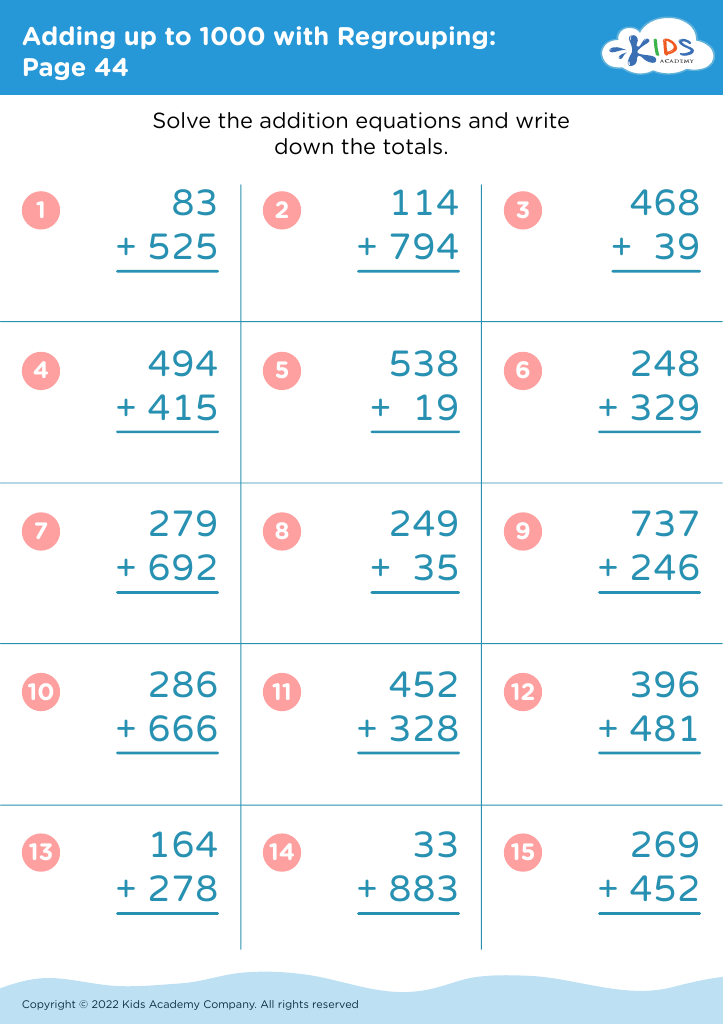
Adding up to 1000 with Regrouping: Page 44
Worksheet
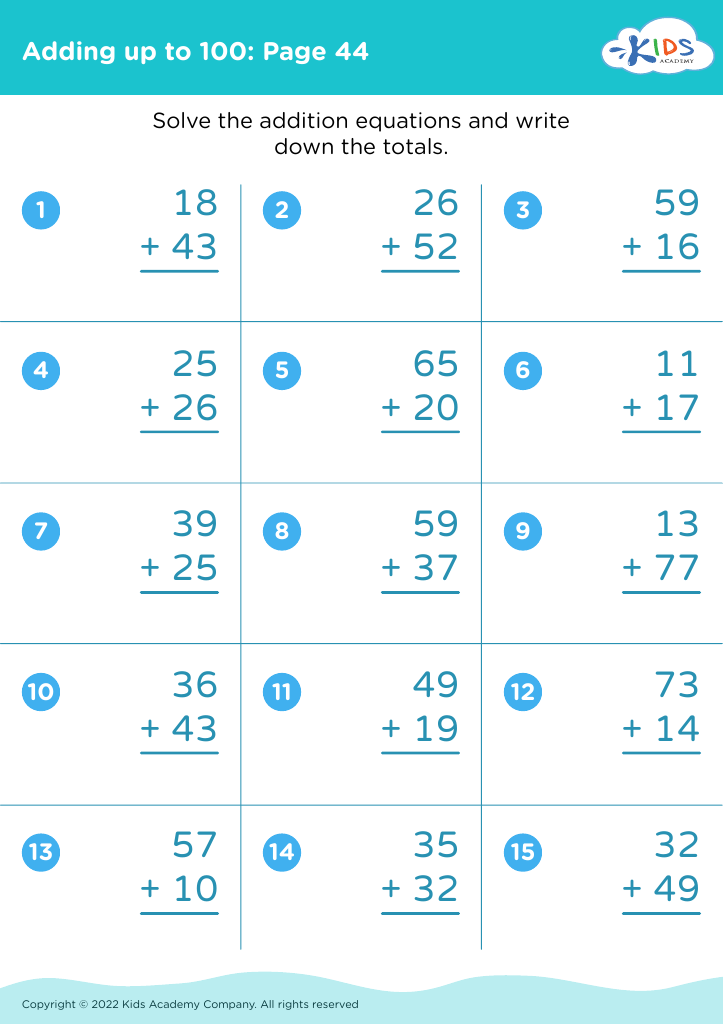
Adding up to 100: Page 44

Adding up to 100: Page 44

Adding up to 100: Page 44
Worksheet


Counting skills, along with addition and subtraction, form the foundation of mathematical understanding for children aged 4 to 7. These early skills are crucial because they set the stage for more complex mathematical concepts later on. When parents and teachers prioritize the improvement of counting, addition, and subtraction skills, they equip children with essential tools for daily life and academic success.

Firstly, mastering these skills enhances children's confidence in their abilities. By becoming comfortable with numbers, children are more likely to engage in mathematics enthusiastically. Furthermore, counting and basic operations develop logical thinking, problem-solving abilities, and critical reasoning—their application extends beyond math and into other areas of learning.

Additionally, strong counting and arithmetic foundations help children understand broader mathematical concepts such as place value, multiplication, and division. These skills also play an essential role in real-life situations, from managing money to understanding time and quantities.

Finally, fostering a love for numbers at an early age can spark interests in careers related to science, technology, engineering, and mathematics (STEM). Therefore, parents and teachers must actively support and encourage children in developing these skills to promote a well-rounded and successful educational experience.