Improving math skills Addition & Subtraction Worksheets for Ages 4-7 - Page 2
29 filtered results
-
From - To
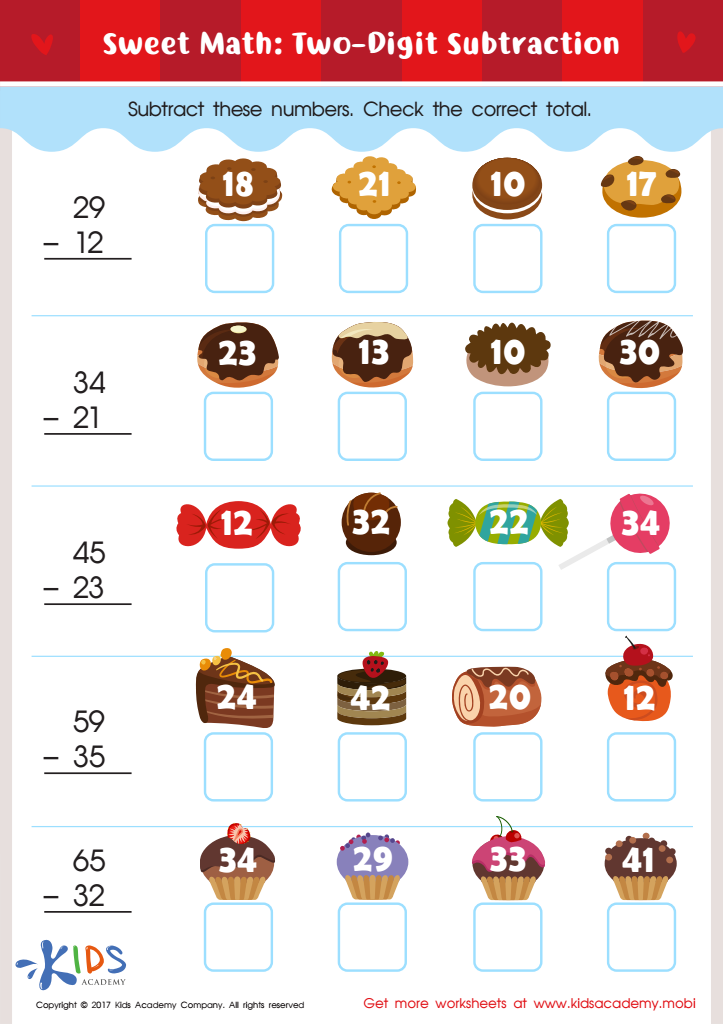
Two Digit Subtraction Worksheet
 Assign to My Students
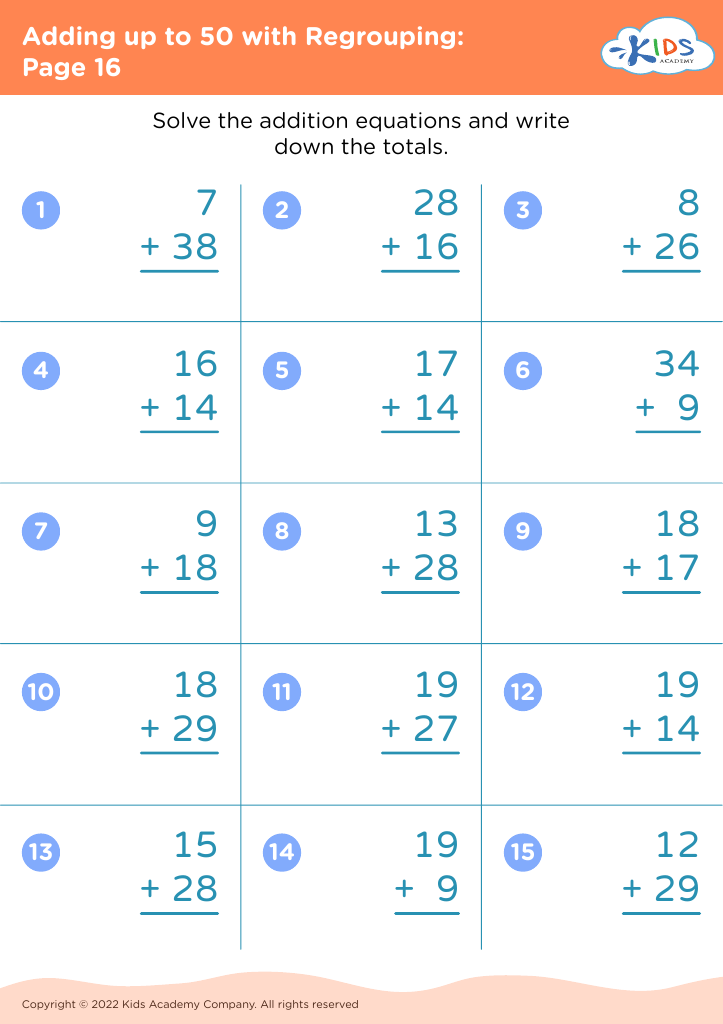
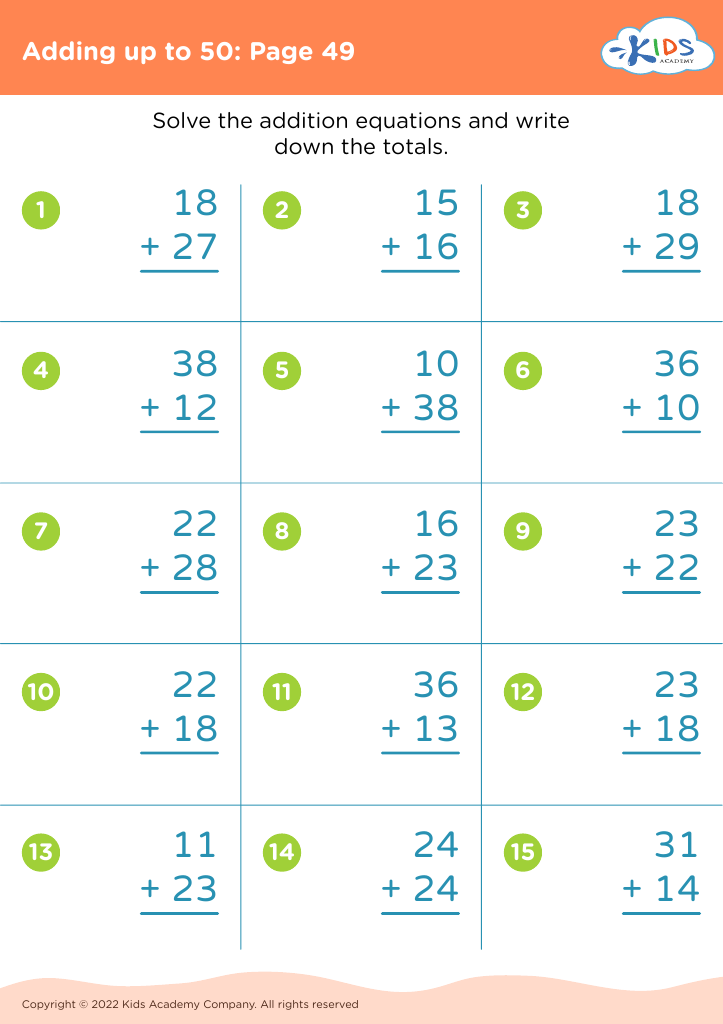
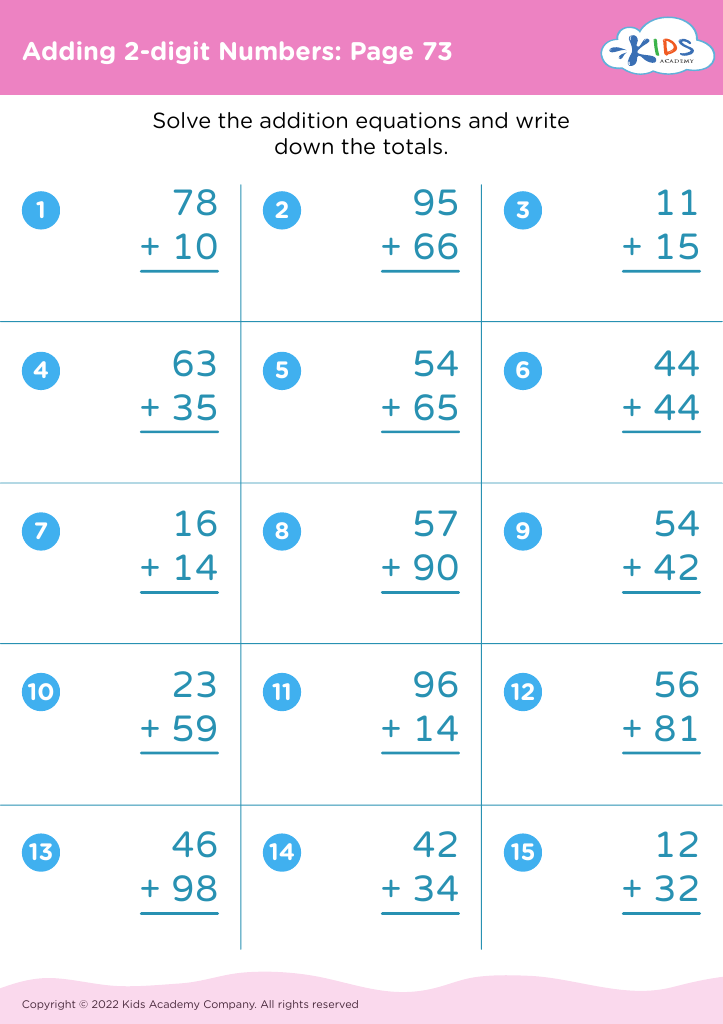
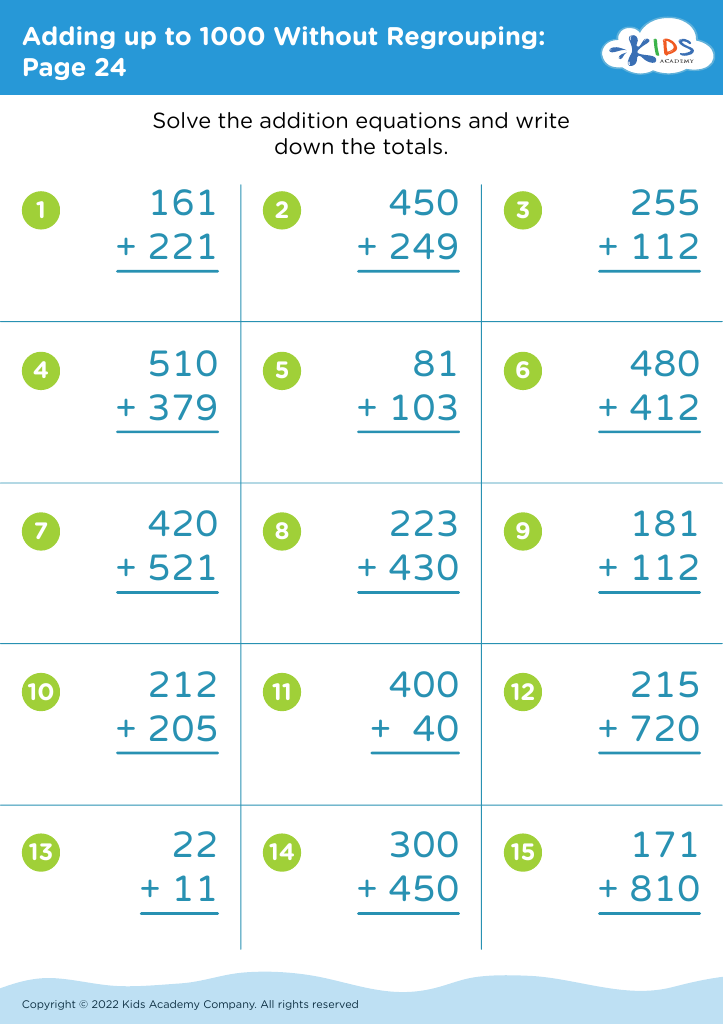








Parents and teachers should prioritize improving addition and subtraction skills for children aged 4-7 because these foundational math skills are crucial for cognitive development and academic success. During these formative years, children’s brains are highly receptive to learning new concepts, and mastering basic arithmetic can enhance critical thinking, problem-solving abilities, and logical reasoning. Addition and subtraction serve as the building blocks for more complex math topics that children will encounter in later grades, such as multiplication, division, and algebra.
Early proficiency in these skills boosts a child’s confidence and fosters a positive attitude towards math, reducing anxiety and promoting a growth mindset. Moreover, math skills are not limited to academic settings; they are essential in daily life, helping children understand concepts like time, money, and measurement. Building a strong foundation in these areas prepares children for real-world scenarios and decision-making processes. In a society where STEM (Science, Technology, Engineering, and Mathematics) fields are increasingly important, early math skills can open doors to future educational and career opportunities. By investing in early math education, parents and teachers can ensure children have the tools they need for lifelong learning and success.








