Numerical reasoning Addition & Subtraction Worksheets for Ages 4-7
3 filtered results
-
From - To
Discover our engaging Numerical Reasoning Addition and Subtraction Worksheets designed specifically for children ages 4-7. These interactive resources help young learners develop foundational math skills through stimulating activities that promote critical thinking and problem-solving. Each worksheet targets essential concepts, encouraging kids to practice addition and subtraction in a fun, engaging manner. With colorful illustrations and relatable scenarios, children will gain confidence as they progress in their arithmetic abilities. Perfect for home or classroom use, our worksheets support early math education and make learning an enjoyable experience. Help your child thrive in numbers while building a strong mathematical foundation!
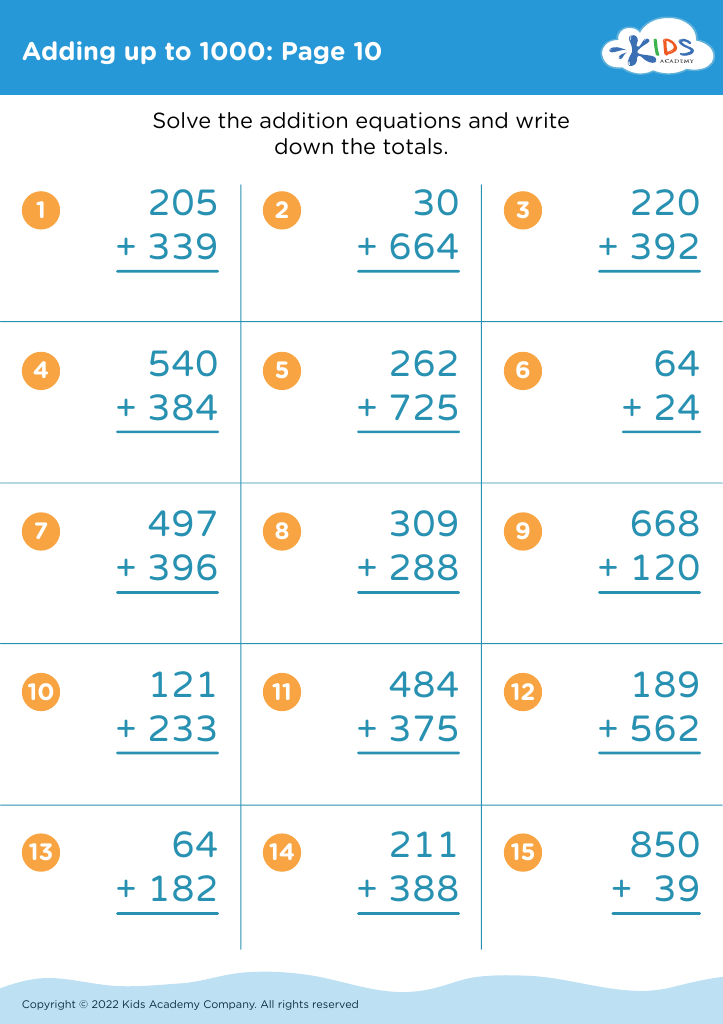
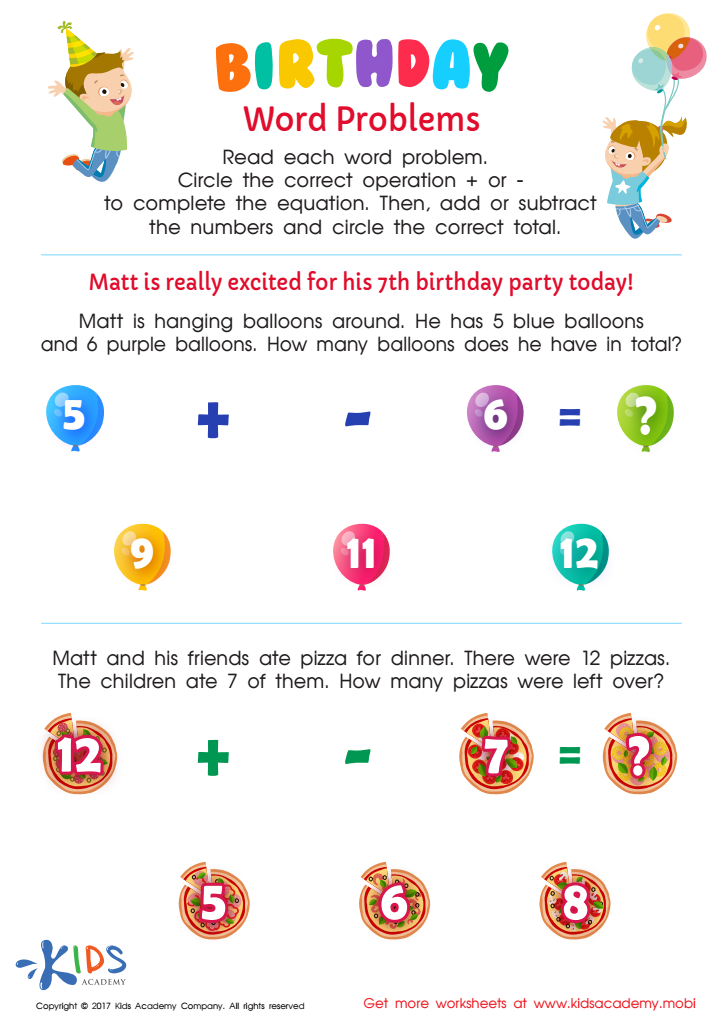
Birthday Word Problems Substraction Worksheet
 Assign to My Students








Numerical reasoning, particularly in addition and subtraction, is crucial for children aged 4-7 as it lays the foundation for their mathematical understanding. At this stage, children develop essential cognitive skills, and mastering these basic operations promotes critical thinking and problem-solving abilities. Early proficiency in addition and subtraction enhances overall numerical fluency, helping children to understand the relationships between numbers and how they work together.
Furthermore, a solid grasp of these concepts is vital for everyday life skills, from managing finances to making sense of quantities in cooking or shopping. By encouraging numerical reasoning, parents and teachers equip children with the confidence to tackle more complex math in later grades, reducing the anxiety often associated with learning.
Supporting children in these early years fosters a growth mindset, as they learn to view challenges as opportunities for learning. Engaging in fun activities surrounding addition and subtraction can make learning enjoyable and collaborative, strengthening the bond between children, parents, and teachers. Therefore, prioritizing numerical reasoning in early education not only aids academic success but also prepares children for future educational and real-world experiences. It is vital to recognize that early investment in these skills pays off in long-term mathematical competence and confidence.








