Understanding number sequence Addition & Subtraction Worksheets for Ages 4-7
4 filtered results
-
From - To
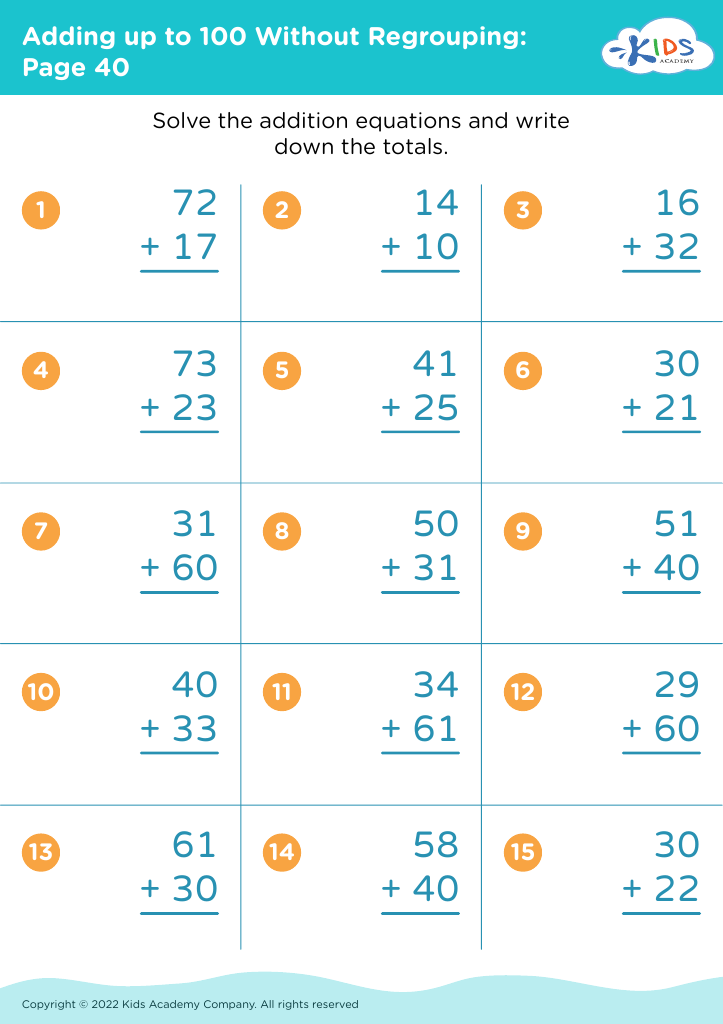
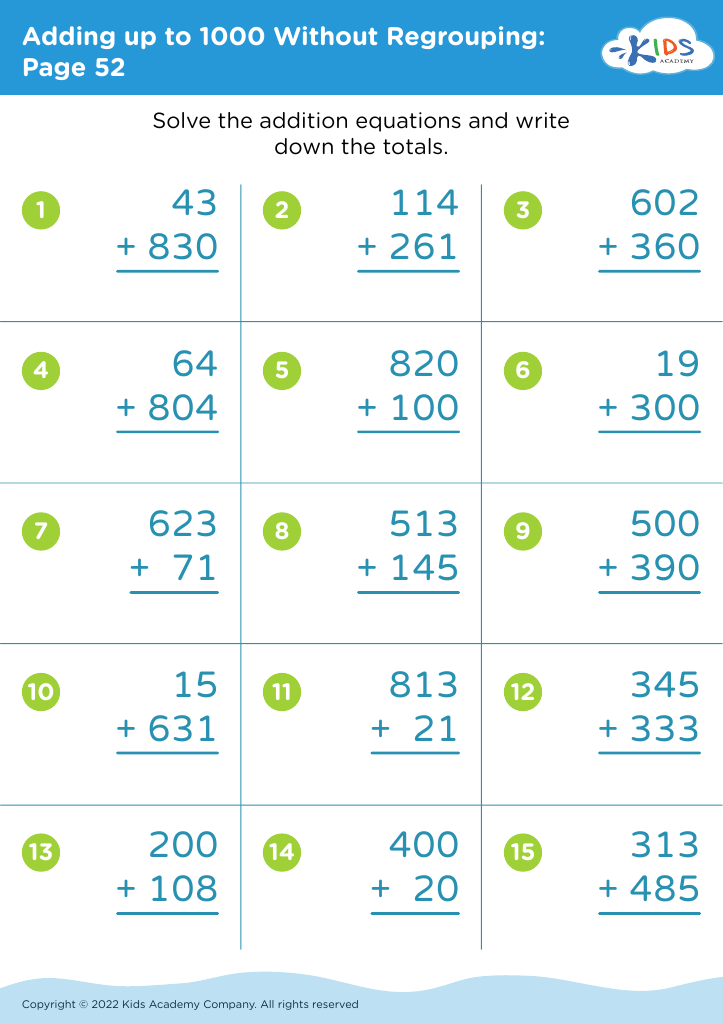
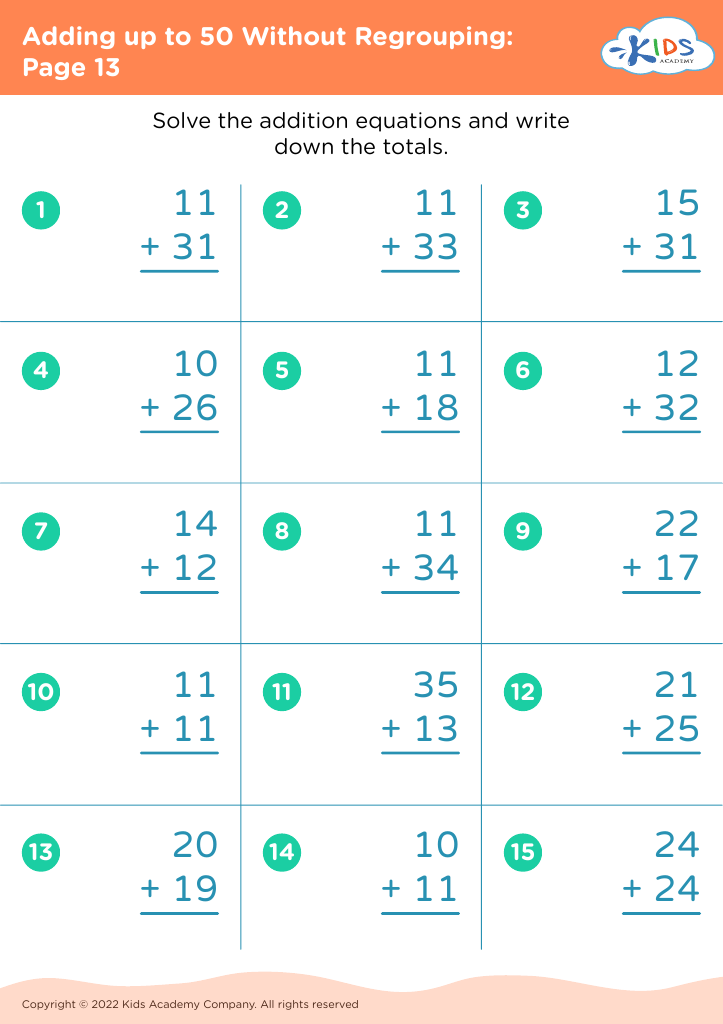
Explore our "Understanding Number Sequence Addition & Subtraction Worksheets" designed specifically for children ages 4-7. These engaging and interactive worksheets aim to reinforce essential math skills by helping young learners grasp the concept of number sequences. Through fun and colorful exercises, kids will practice identifying patterns, enhancing their addition and subtraction abilities in a playful way. Our resources encourage the development of critical thinking and problem-solving skills, preparing children for future math challenges. Perfect for home or classroom use, these worksheets make learning math fun and effective! Get started on building a strong mathematical foundation for your child today!
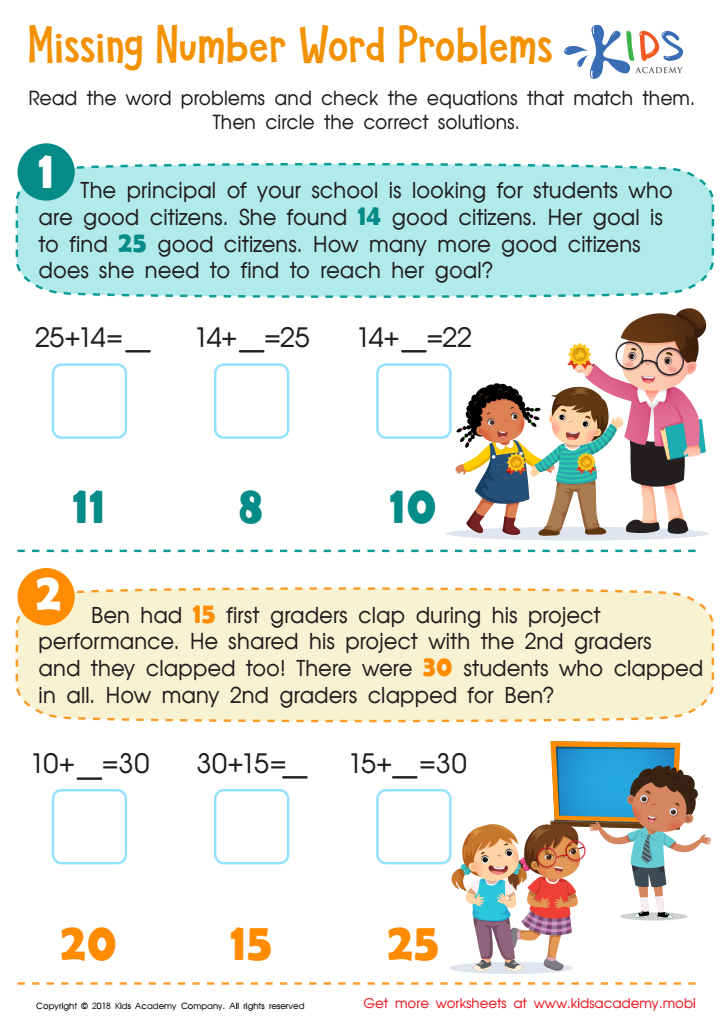
Missing Number Word Problems Worksheet
 Assign to My Students








Understanding number sequences, as well as addition and subtraction, is foundational in early childhood education, particularly for children aged 4 to 7. At this developmental stage, children are building essential numeracy skills that form the basis for later mathematical understanding.
Firstly, mastering number sequences helps children recognize patterns and develop a sense of order, which is crucial for problem-solving. These skills facilitate mental math strategies, allowing them to perform addition and subtraction more efficiently as they progress in their studies.
Secondly, addition and subtraction are not just isolated computations; they lay the groundwork for future mathematical concepts like multiplication and division. A solid grasp of these basic operations enhances cognitive skills—encouraging logical thinking and reasoning.
Moreover, involving parents in this learning process can enhance a child's mathematical confidence and engagement. Simple activities, such as counting objects at home or playing games that incorporate basic arithmetic, deepen their understanding while fostering family bonds.
Investing attention in these foundational skills ensures that children are not only prepared for advanced math but also develop a positive attitude towards learning early on. Educators and parents alike play a crucial role in nurturing these early numeracy skills, paving the way for lifelong academic success.








