Addition of fractions Addition Worksheets for Ages 4-7
3 filtered results
-
From - To
Explore our engaging Addition of Fractions Worksheets designed specifically for young learners aged 4-7. These fun and interactive printables help children grasp the foundational concepts of adding fractions through colorful visuals and relatable scenarios. Our worksheets foster critical thinking and build confidence as kids practice adding fractions with like denominators. Ideal for home or classroom use, these resources support early math skills and enhance comprehension in a playful way. Encourage your child's love for learning as they explore the world of fractions! Access a variety of exercises and watch them excel in mathematics while having fun. Start their journey today!
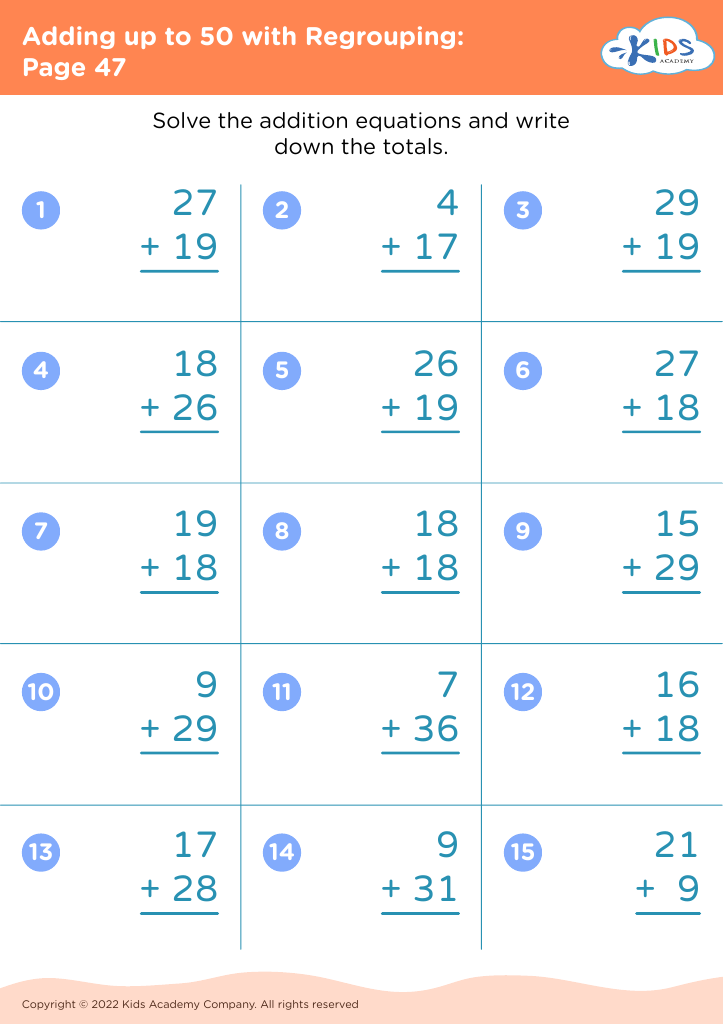
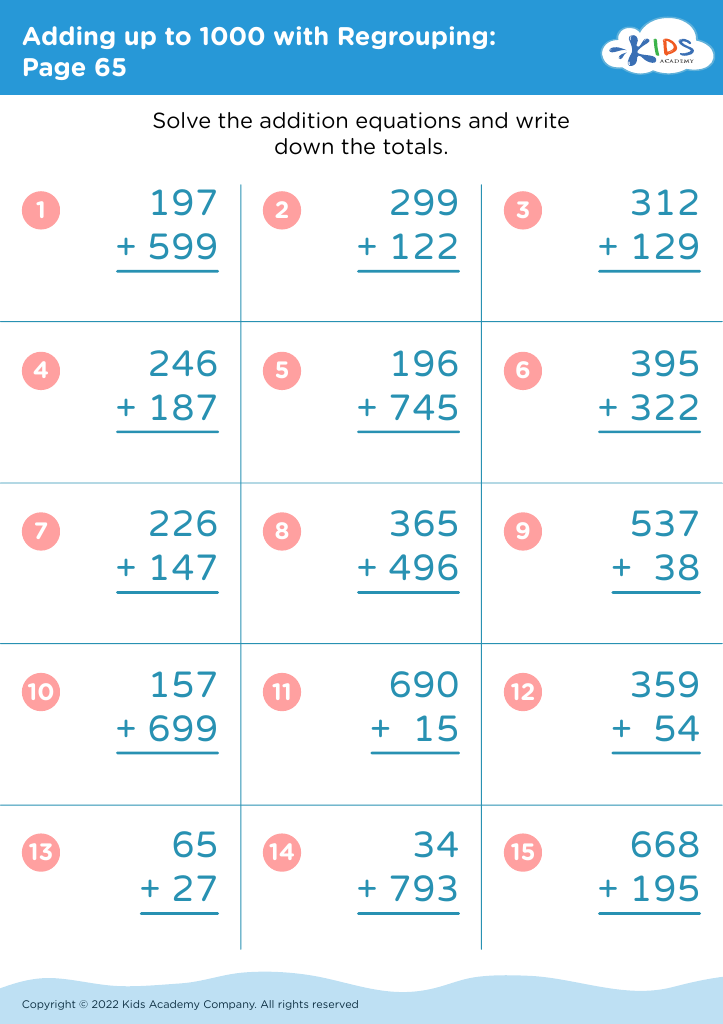
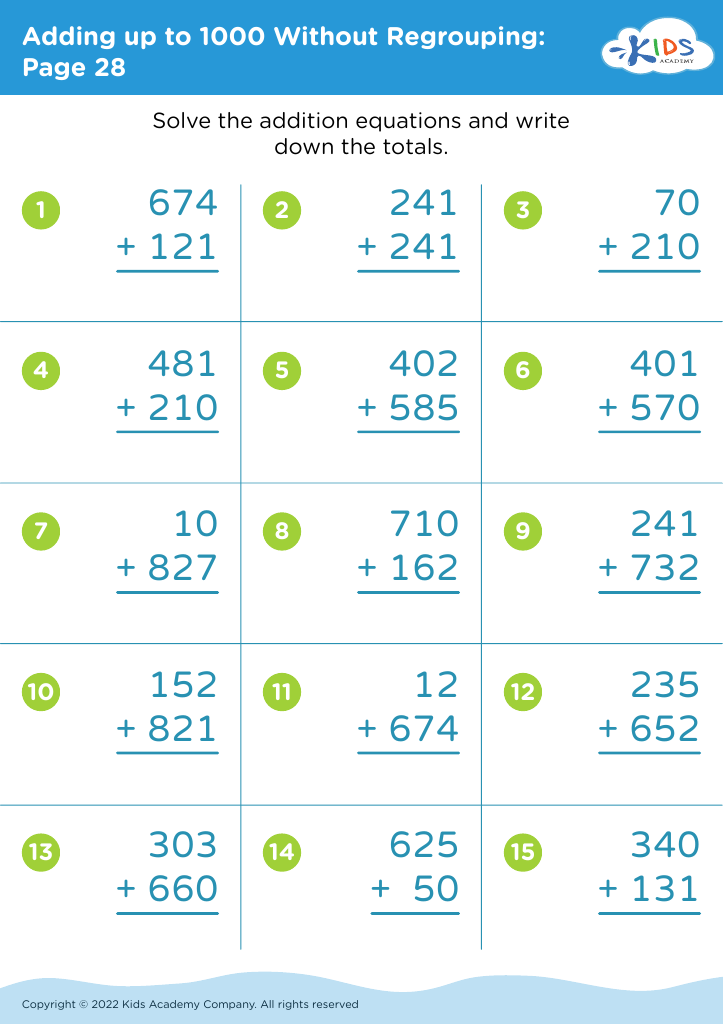








Addition of fractions is a crucial mathematical skill for children aged 4-7, laying the foundation for more complex math concepts in the future. Understanding and mastering this concept at an early age helps develop critical thinking and problem-solving skills, allowing children to approach mathematics with confidence.
For parents and teachers, it’s essential to focus on the addition of fractions as it encourages the understanding of parts of a whole, which is foundational for later skills in fractions, ratios, and proportional reasoning. Engaging in activities that involve visual aids, such as pie charts and manipulatives, can help solidify these concepts.
Moreover, discussing real-life applications—like sharing food or measuring ingredients—makes learning fractions relevant and enjoyable. It fosters a collaborative learning environment, promoting a positive attitude towards math.
Additionally, working on fraction addition with children builds their numerical literacy. When children are comfortable with fractions, they can tackle more challenging mathematical concepts with ease, benefiting their overall academic growth.
In summary, focusing on this early mathematical skill not only nourishes academic success but also instills a lifelong appreciation for mathematics in children.








