Basic arithmetic comprehension Addition Worksheets for Ages 4-7
3 filtered results
-
From - To
Discover a fun and engaging approach to learning with our Basic Arithmetic Comprehension Addition Worksheets for Ages 4-7. Specially designed to develop foundational math skills, these printable worksheets make learning addition an enjoyable experience for young learners. Each worksheet is crafted to enhance your child’s understanding of arithmetic through interactive exercises and colorful visuals. Watch them gain confidence as they solve problems and build essential skills for future math success. Encourage your child’s love for learning with our expertly created worksheets, and give them the tools they need to excel in math through play and practice!
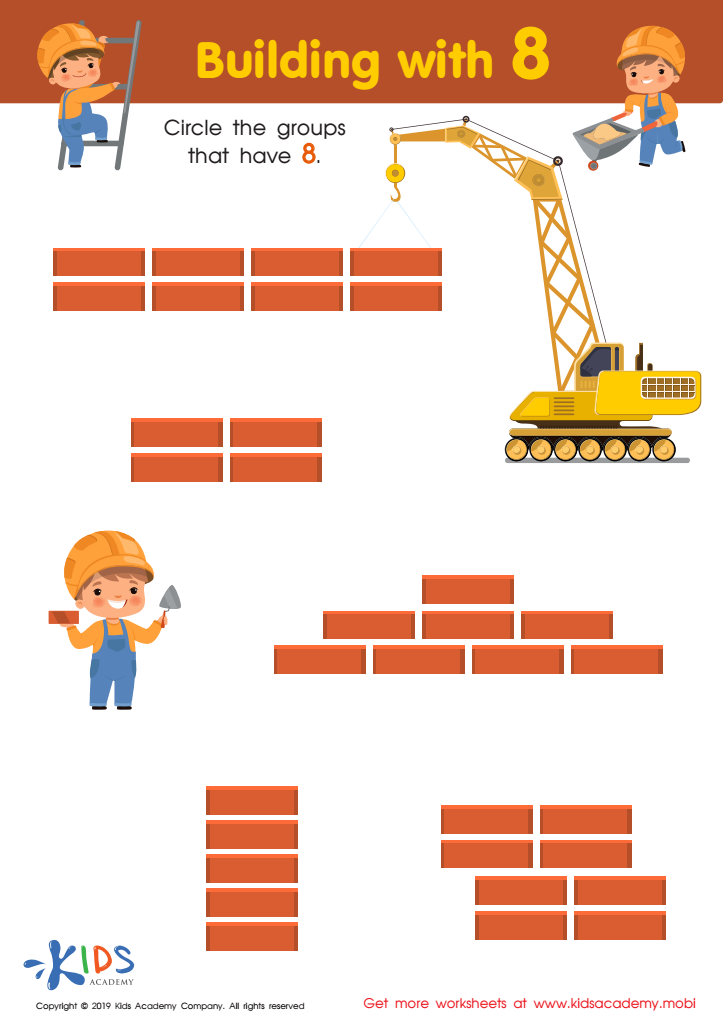
Building with 8 Worksheet
 Assign to My Students
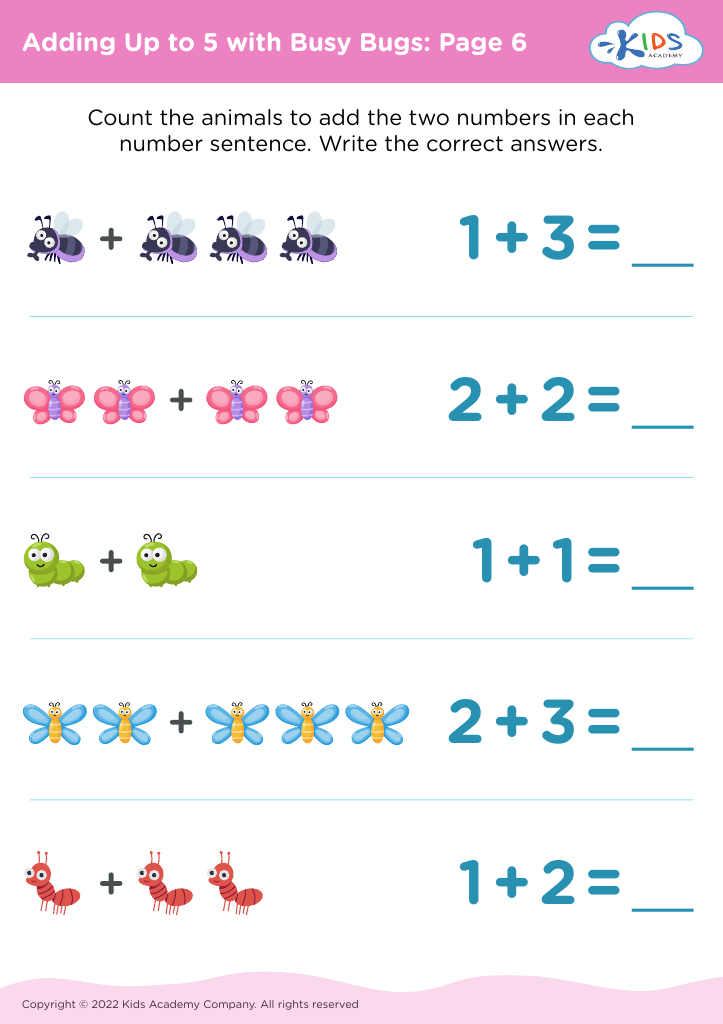
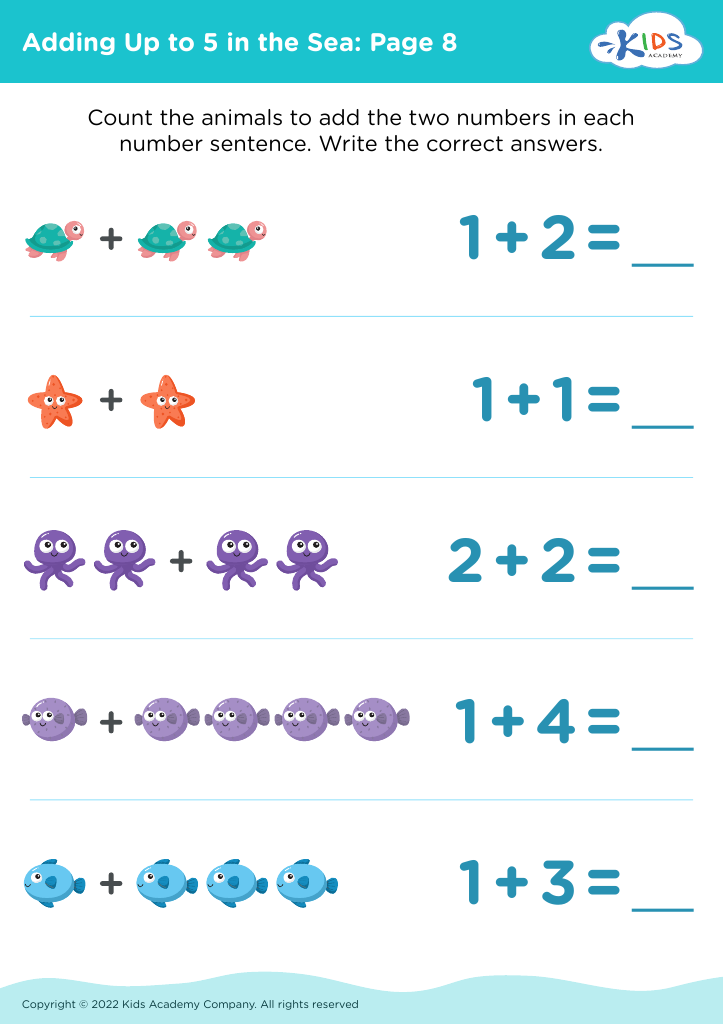








Basic arithmetic comprehension, particularly addition, for children ages 4-7 forms a critical foundation for their future learning. At this young age, children's brains are rapidly developing and are highly receptive to new information. By mastering addition early on, children gain confidence in their ability to tackle other mathematical concepts as they progress through school.
Parents and teachers should care about fostering basic arithmetic for several key reasons. First, addition skills are fundamental to everyday activities, from counting toys to managing allowances, which helps children relate math to real-life situations. Second, a solid grasp of basic math helps children develop strong problem-solving skills. They learn to process information logically and arrive at solutions systematically, skills that are valuable across all subjects and in everyday decision-making.
Furthermore, early math skills are often predictive of later academic success. Studies show that proficiency in early math is a strong indicator of future achievement not just in mathematics, but also in other areas such as reading comprehension. This is because math teaches valuable skills such as sustained attention and perseverance.
In summary, supporting basic arithmetic comprehension in young children sets them up for a lifetime of learning, critical thinking, and practical application, making it a key area of focus for both parents and educators.








