Basic arithmetic understanding Addition Worksheets for Ages 4-7
4 filtered results
-
From - To
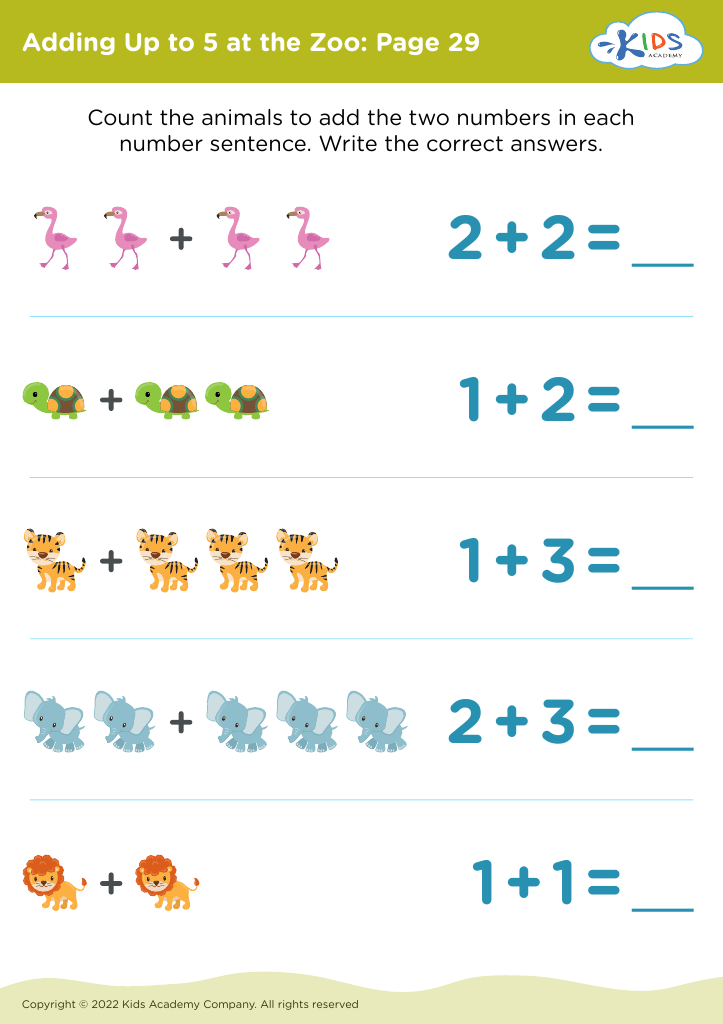
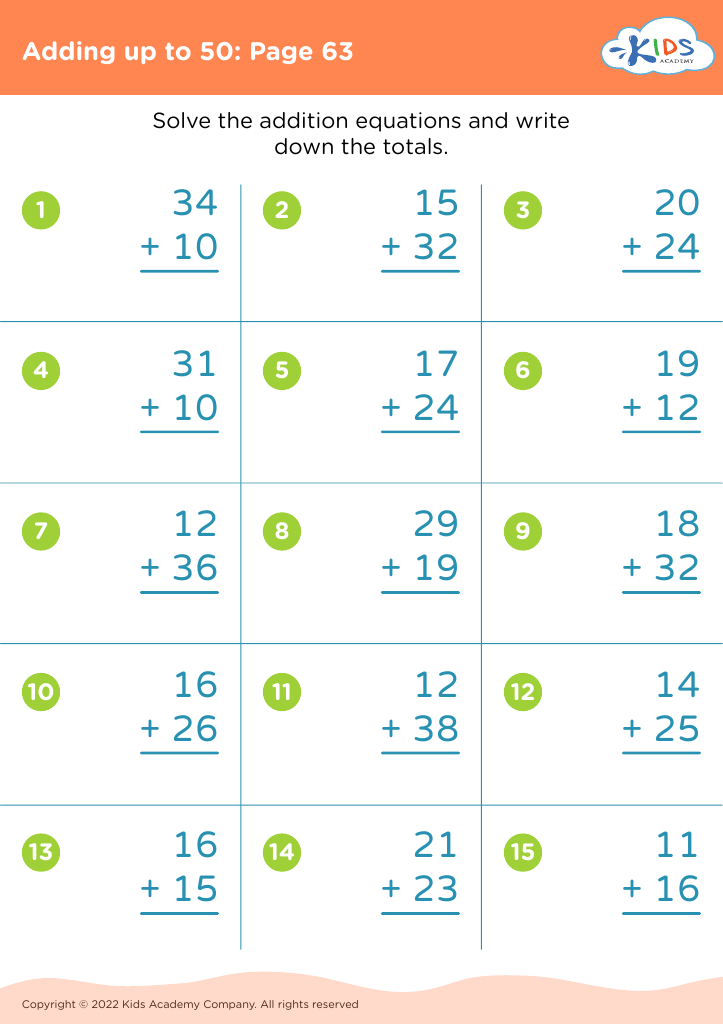
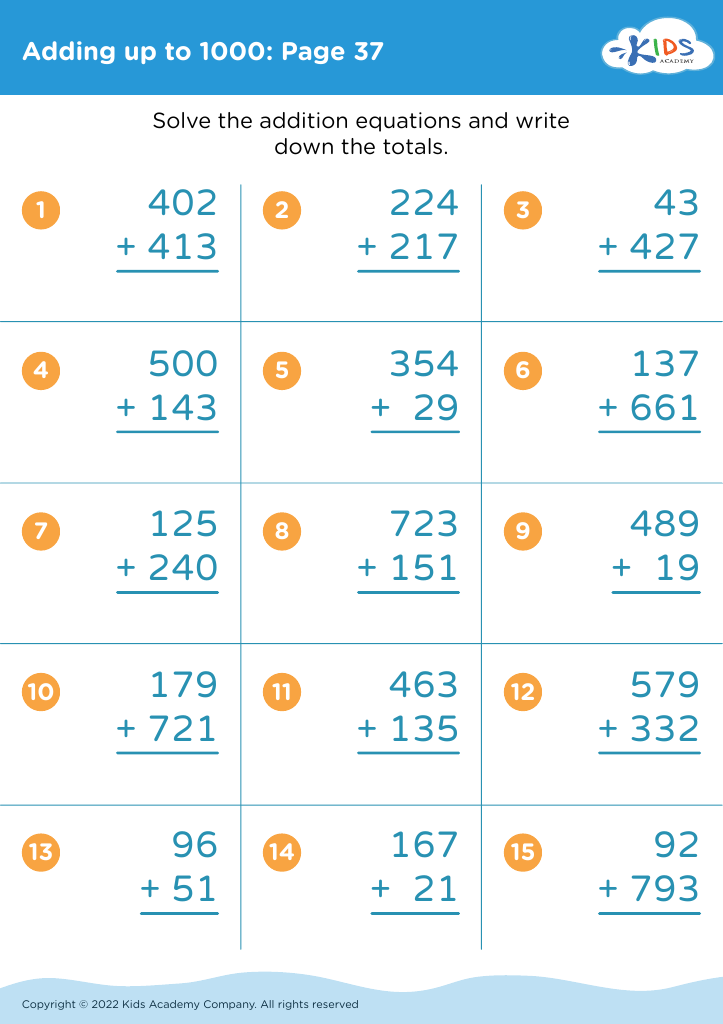
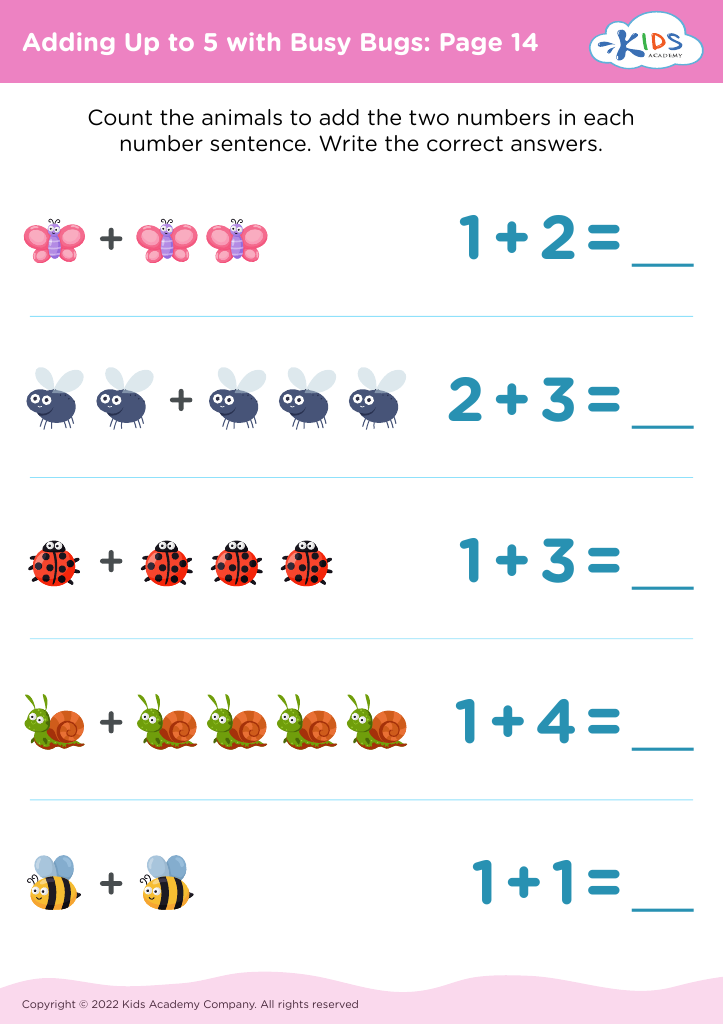
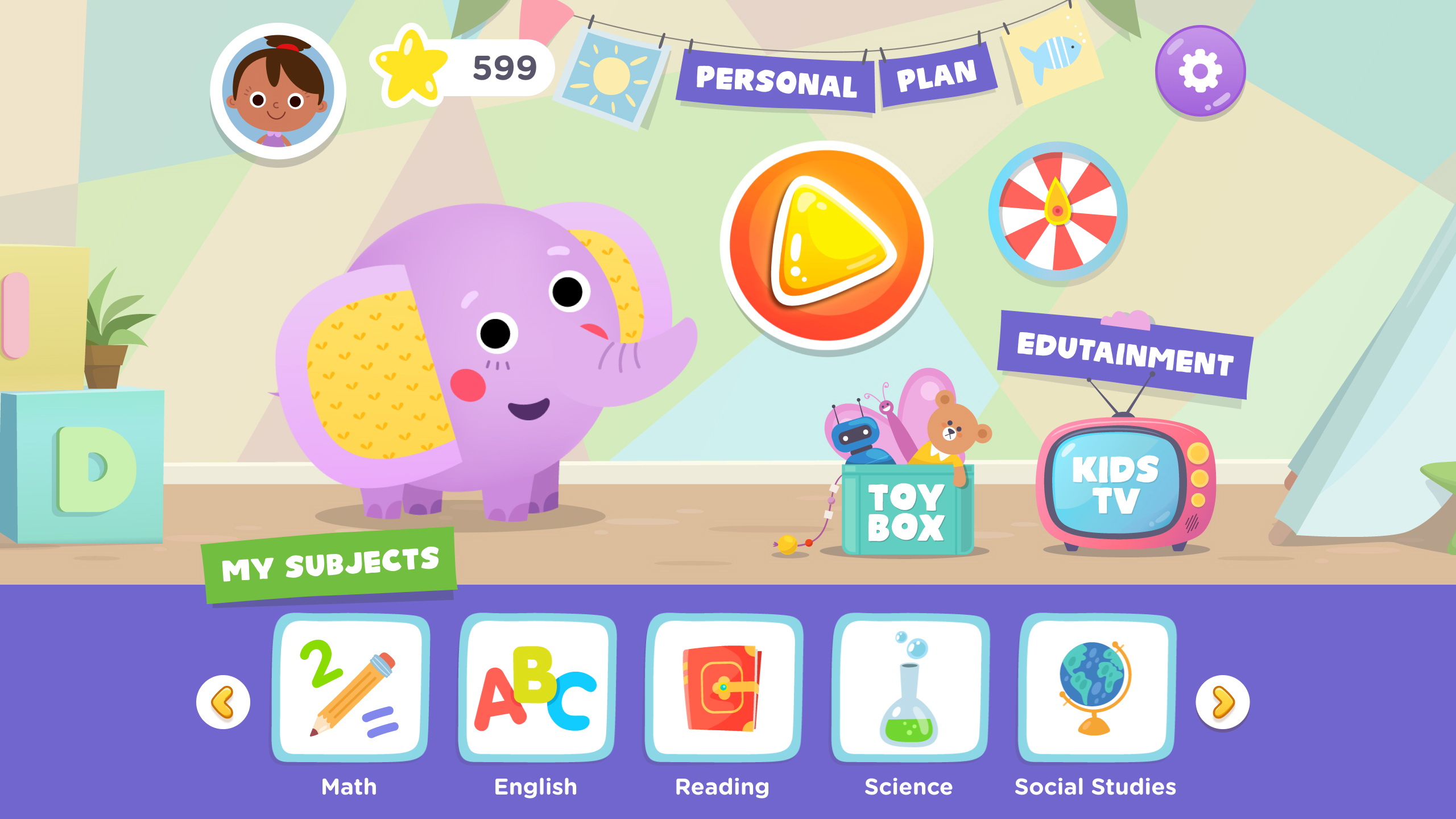
Discover our curated selection of Basic Arithmetic Understanding Addition Worksheets designed specifically for children aged 4-7. These engaging, printable worksheets are perfect for developing foundational math skills and fostering a love for learning. Each worksheet focuses on addition fundamentals, utilizing visually appealing illustrations and simple exercises to make learning fun and effective. With varied and age-appropriate activities, young learners can practice and gain confidence in their addition abilities while preparing for more advanced math challenges. Help your child build a strong arithmetic foundation with our expertly crafted addition worksheets at Kids Academy!







Basic arithmetic, particularly addition, forms the foundation for a child’s future success in mathematics and analytical thinking. For children aged 4-7, understanding addition is crucial because it introduces them to numerical concepts and patterns in a simple and engaging way. Mastery of addition at a young age encourages cognitive development by enhancing logical thinking, problem-solving skills, and memory retention.
Addition is more than just learning to count—it teaches children that numbers represent quantities that can be manipulated. This practical understanding is essential as it transcends into real-life situations like sharing toys, dividing snacks, or comparing amounts. Moreover, developing confidence in basic arithmetic early on can prevent math-related anxiety, making children more likely to enjoy and pursue advanced mathematical studies later.
For teachers and parents, fostering a solid grasp of addition paves the way for teaching more complicated concepts, such as subtraction, multiplication, and division. Engaging activities like counting games, interactive apps, and hands-on experiences using objects like blocks or beads can make the learning process enjoyable. Additionally, showing genuine enthusiasm and encouragement can motivate children to practice regularly. By prioritizing basic arithmetic skills, parents and teachers set a crucial educational precedent that builds a lifetime of learning and analytical competence.








