
Basic math learning Addition Worksheets for Ages 4-7
3 filtered results
Difficulty Level
Grade
Age
-
From - To
Subject
Activity
Standards
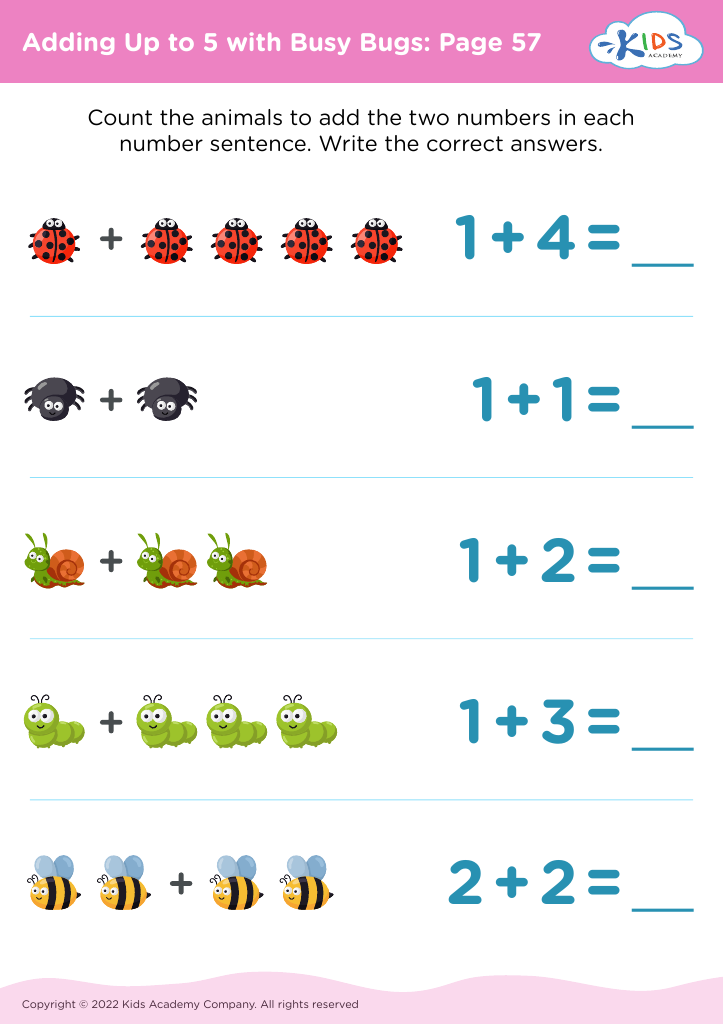
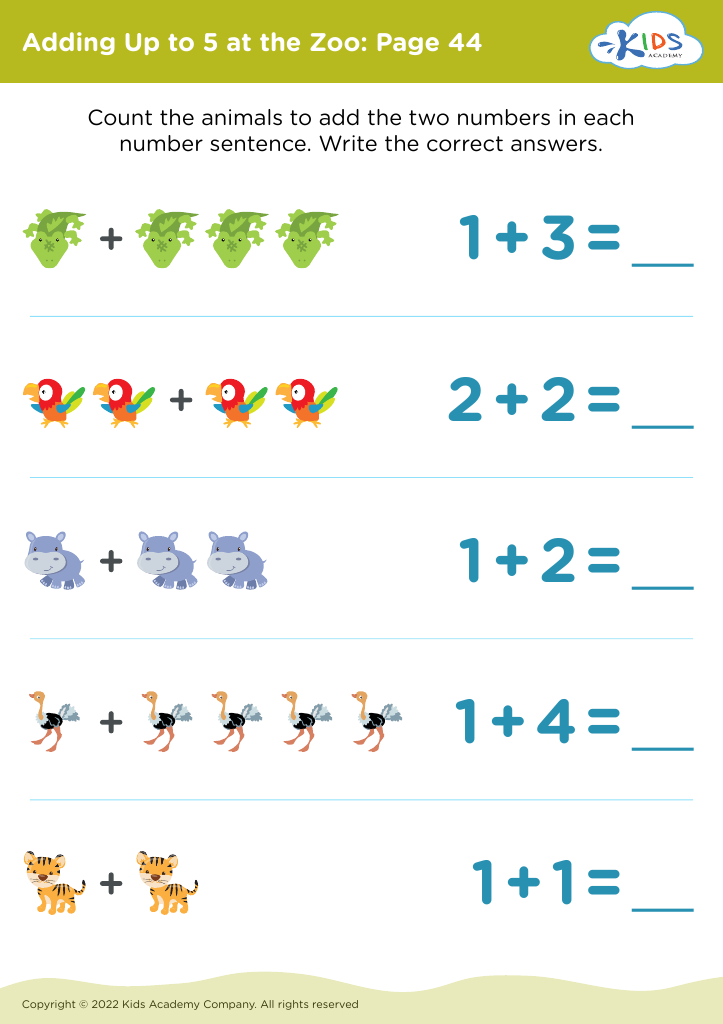
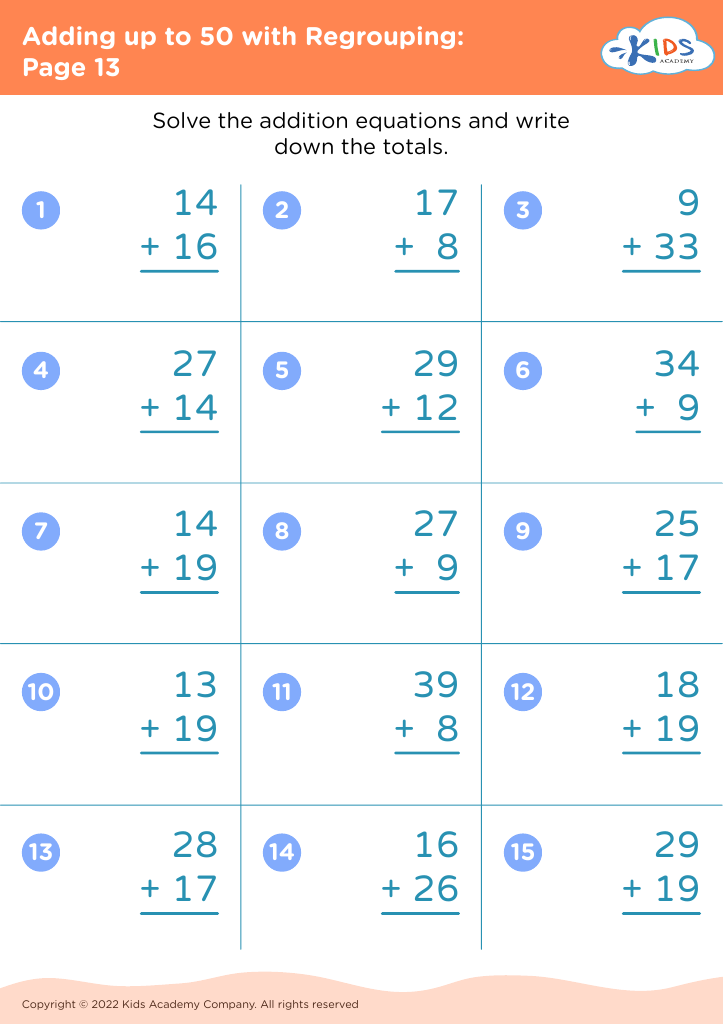
Discover engaging and educational basic math learning addition worksheets designed specifically for children aged 4-7. These printable worksheets are perfect for reinforcing foundational math skills, helping young learners practice simple addition in a fun and interactive way. Our worksheets include colorful visuals and playful themes to keep kids entertained while mastering important math concepts. Ideal for both classroom use and homeschooling, these resources provide a stepping-stone for children to build their confidence and proficiency in math. Support your child's early math learning journey with these carefully curated addition worksheets, fostering a strong mathematical foundation for future success.
Favorites
With answer key
Interactive
Join Kids Academy for Free
Who is primarily going to use this learning content?








Parents and teachers play a critical role in shaping young children’s educational experiences, especially in foundational subjects like math. At ages 4-7, young minds are at a pivotal stage for cognitive and developmental growth. Fostering basic math skills, especially addition, at this age sets a cornerstone for future academic success and everyday problem-solving abilities.
Understanding addition helps build a child’s confidence and competence in handling numbers, which is essential as math becomes more complex. Early exposure to addition allows kids to see patterns and relationships between numbers, fostering an intuitive sense of how numbers work together. This lays the groundwork for more advanced mathematical concepts such as subtraction, multiplication, and division.
Moreover, integrating addition into daily activities makes math relevant and engaging for children, turning abstract concepts into tangible, manageable tasks. For example, counting toys, adding up snacks, or participating in simple games can make learning math fun and natural.
From a socio-emotional perspective, succeeding in basic math can also improve a child’s self-esteem and encourage a positive attitude towards learning. Parents and teachers should actively care about and engage in basic math learning for young children because it builds critical thinking skills, nurtures curiosity, and prepares them for a lifetime of learning and problem-solving.








