Compare fractions Addition Worksheets for Ages 4-7
5 filtered results
-
From - To
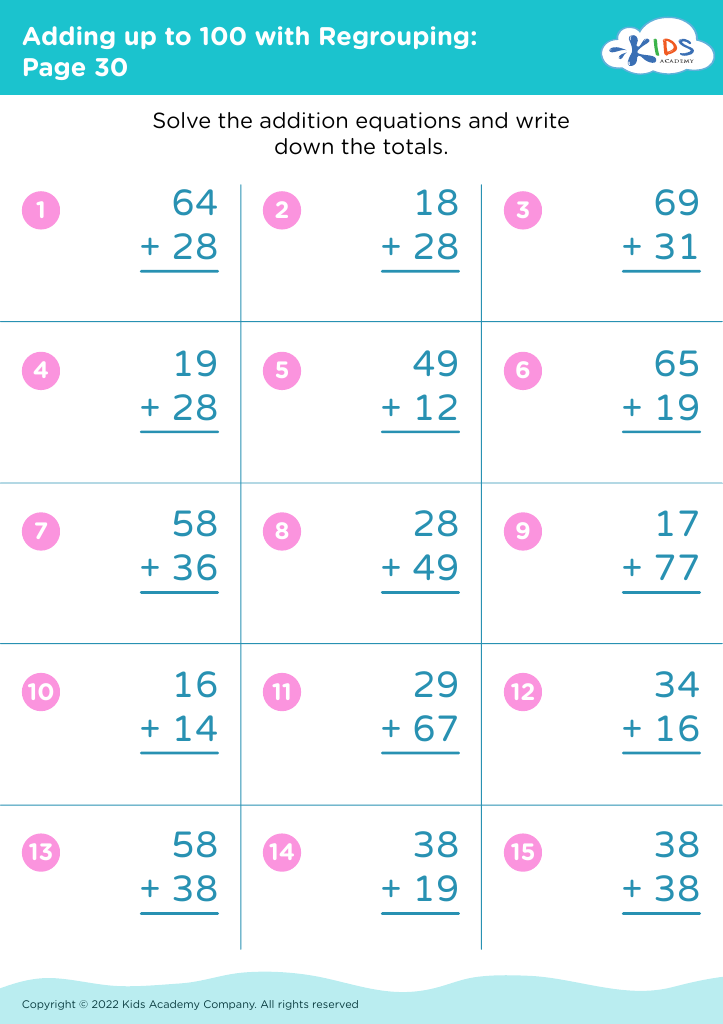
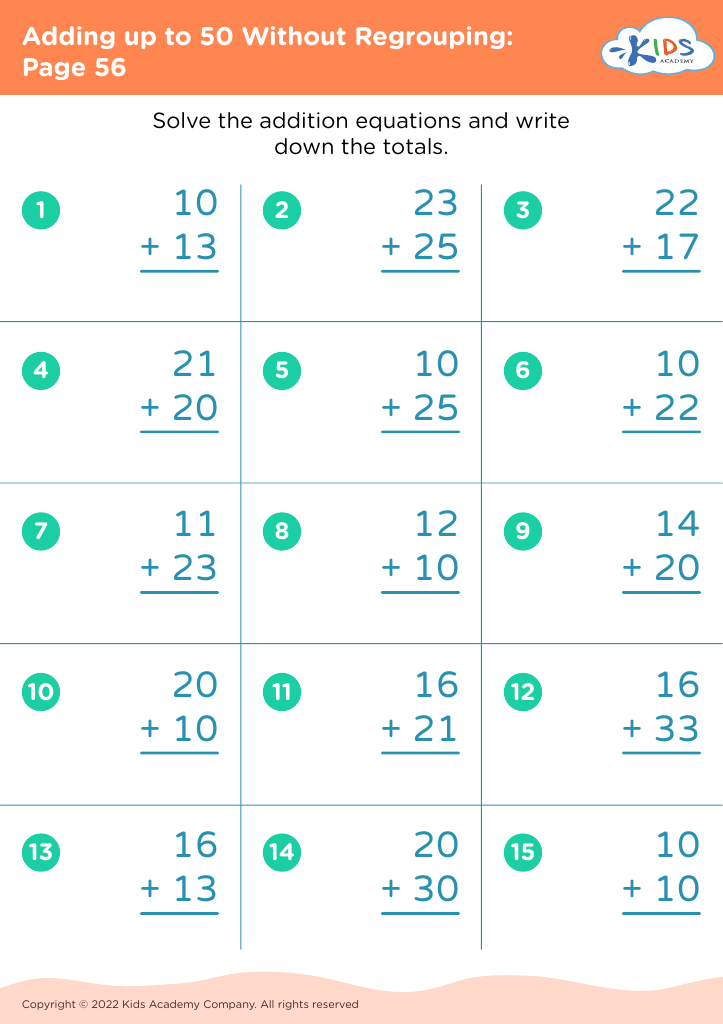
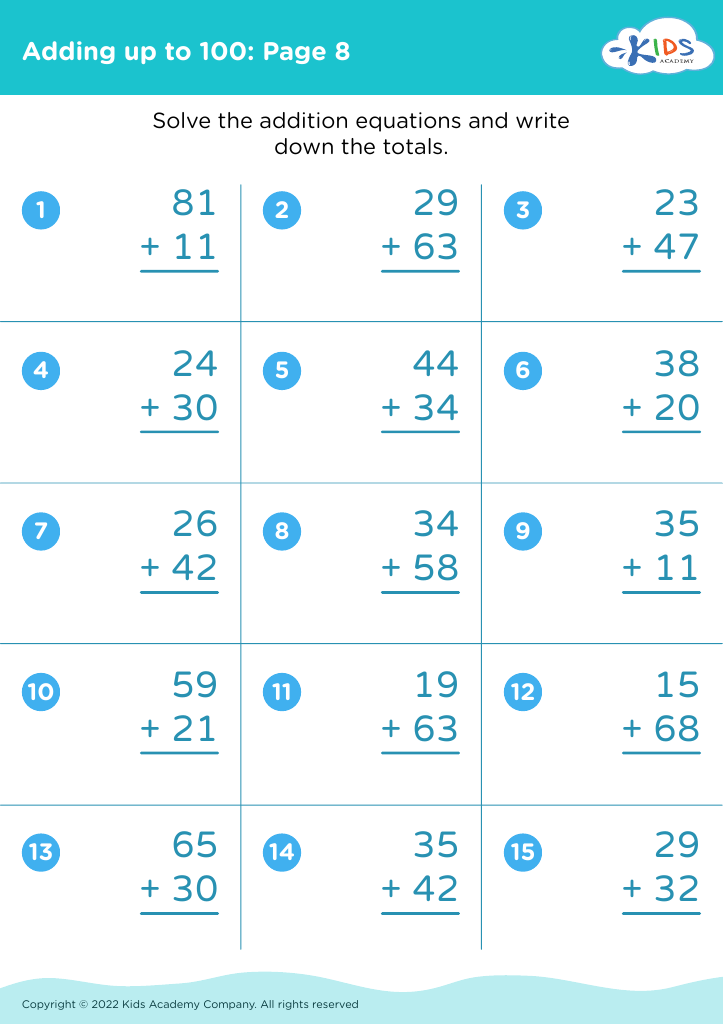
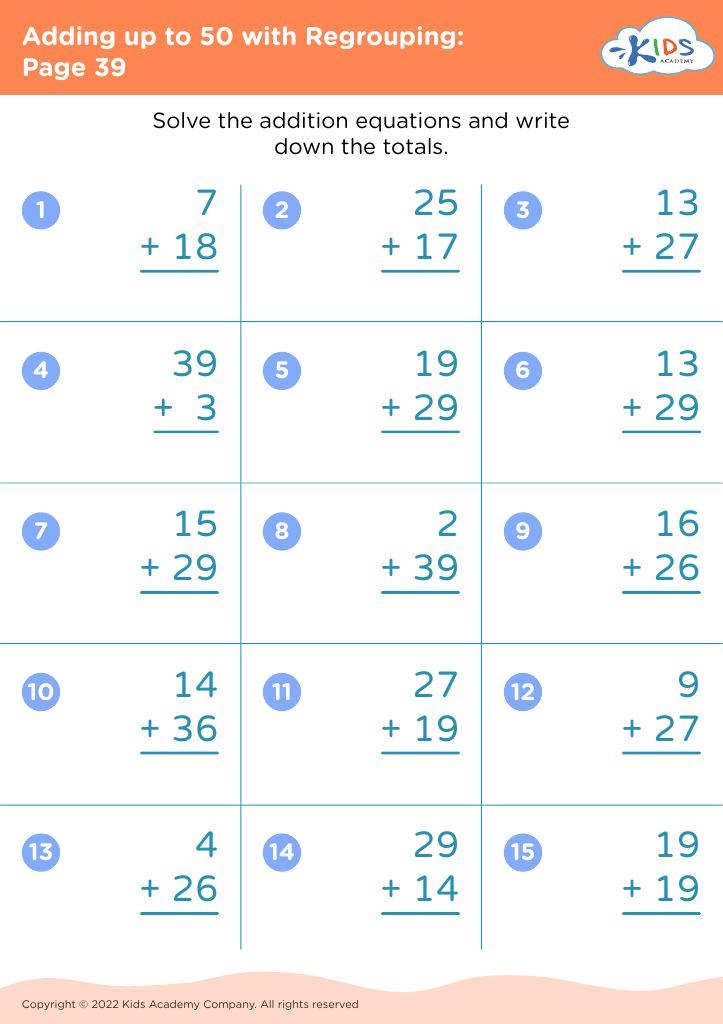
Welcome to our Compare Fractions Addition Worksheets designed for children aged 4-7! These engaging worksheets help young learners develop their understanding of fractions through fun and interactive activities. As they compare fractions, kids will strengthen their addition skills while building a solid mathematical foundation. Our resources are tailored to promote critical thinking and problem-solving in a playful manner. With colorful visuals and age-appropriate tasks, these worksheets encourage independent learning and make mastering fractions enjoyable. Perfect for homeschooling or classroom use, our Compare Fractions Addition Worksheets are essential tools to foster a love for math in early learners. Explore today!
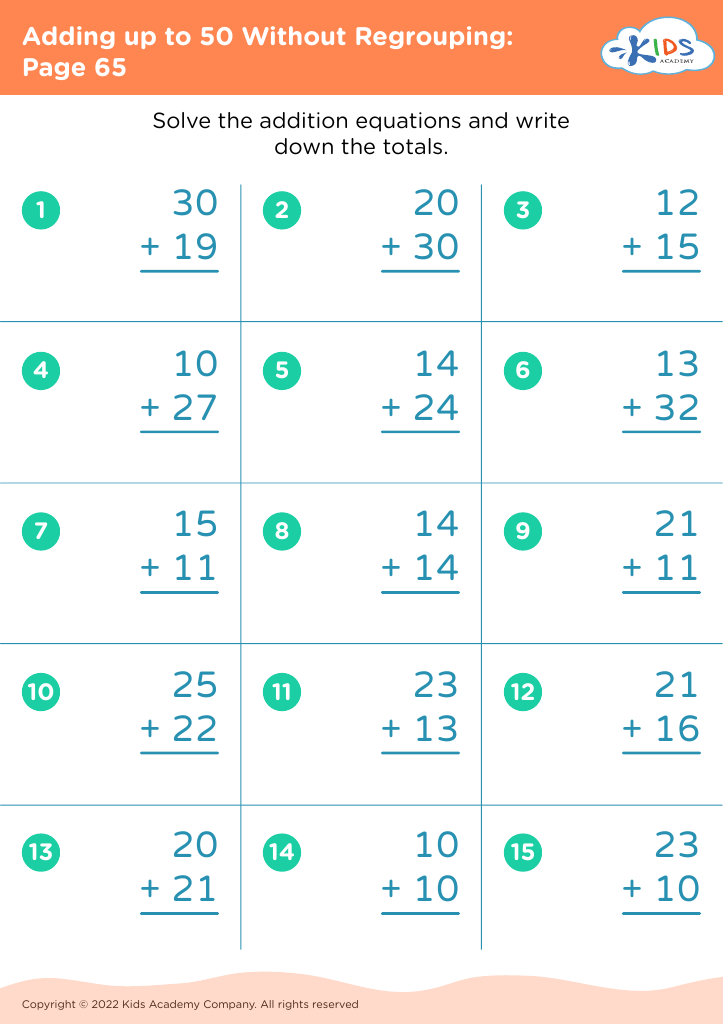








Teaching children about comparing fractions and addition from ages 4-7 is essential for several reasons. Firstly, early exposure to mathematical concepts like fractions lays the groundwork for more complex mathematical understanding later on. It helps children develop essential problem-solving skills and promotes logical thinking.
Fractions are a fundamental part of our daily lives—think of sharing pizza or measuring ingredients for a recipe. By engaging with compare fractions and addition at a young age, children learn to understand parts of a whole, fostering a sense of fairness and cooperative sharing. Such early mathematical experiences can build confidence and positive attitudes toward math, easing future learning challenges.
Additionally, discussing fractions promotes language skills by introducing new vocabulary, such as numerator and denominator, helping to strengthen overall communication abilities.
Moreover, from a broader perspective, these activities can enhance children's concentration, attention to detail, and pattern recognition—skills that are valuable in not just math, but in all aspects of learning and development.
Ultimately, parents and teachers should prioritize these concepts, ensuring that children not only grasp foundational math but also foster a lifelong love for learning and exploration in all subjects.








